




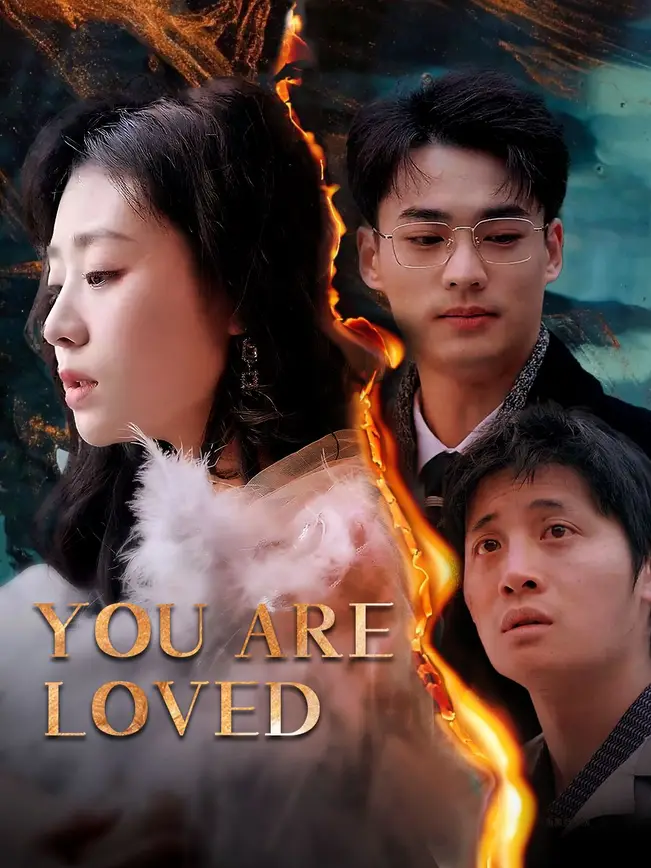
You Are Loved Storyline
You Are Loved More details
Genres:Modern Romance/Finding Relatives/Tragic Love
Language:English
Release date:2024-12-20 12:00:00
Runtime:107min
You Are Loved: When the Tombstone Tells the Real Story
Here’s the thing nobody wants to admit: the most violent scenes in this short aren’t the ones with blood or ropes. They’re the quiet ones—the cemetery walk, the glance exchanged over a grave, the way Shen Ran’s boot heel cracks a dry leaf without her breaking stride. We’ve all seen the tropes: the grieving widow, the stoic friend, the tragic backstory revealed in flashbacks. But this? This is different. Because the tombstone doesn’t just mark a death—it *confesses*. Let’s unpack that black marble slab, because every engraved character is a clue, a lie, or a plea. ‘Late Husband Lu Qinghe’—formal, respectful, yet chilling in its finality. ‘Born August 12, 1980. Died October 15, 2021.’ Three months and three days. Not a sudden accident. Not a heart attack. A timeline that implies deliberation. And then the kicker: ‘Beloved Wife Shen Ran, Daughter Lu Xiaonian.’ No mention of Li Yi. Not even as ‘friend’ or ‘colleague.’ He’s erased. Purged from the official record. Which means the real drama didn’t happen in the studio. It happened *after*. In lawyers’ offices. In hushed phone calls. In the editing room, where footage was deleted, voices were muted, and truth was trimmed to fit the narrative they wanted the world to see. Go back to the studio scene. Watch Shen Ran’s hands again. Not just holding Lu Qinghe—*molding* him. Her thumb presses into his jawline like she’s adjusting a mannequin. Her fingers curl around his neck with the familiarity of someone who’s done this before. And Lu Qinghe? He doesn’t struggle. He *nods*. He blinks slowly, as if receiving instructions. That’s not fear. That’s compliance. He’s not a victim in that moment—he’s a participant in his own erasure. The blood on the wall behind him? Too neat. Too red. Like stage makeup. And the man with the raised arms—Li Yi—his distress is theatrical. His tears glisten under the practical lights, but his shoulders don’t shake. His sobs are silent, controlled. This isn’t raw emotion. It’s *rehearsed* agony. Which leads to the only logical conclusion: they were filming a project. A film. A confession. A suicide note in cinematic form. And Shen Ran wasn’t just the lead actress—she was the producer, the writer, the editor. The one who decided which takes made the final cut. Now consider the cemetery sequence. Shen Ran kneels, but her posture is upright, almost defiant. Her black coat is tailored, expensive, lined with silk. She’s not dressed for mourning. She’s dressed for *testimony*. Li Yi stands beside her, hands in pockets, gaze fixed on the horizon—not the grave. He’s waiting. For what? For her to speak? For the camera to roll again? When he finally turns to her, his expression isn’t sorrowful. It’s calculating. He’s measuring her reaction, checking if she’ll slip, if she’ll break the script. And she doesn’t. She rises, smooths her skirt, and walks away—leaving him alone with the tombstone. That’s the power move. Not crying. Not collapsing. *Leaving*. Because in their world, grief is a performance, and the audience is already gone. The white lilies? Symbolic. Purity. Innocence. A lie. Lilies also mean ‘rest in peace’—but only if the peace is earned. Here, it’s demanded. Forced. 'You Are Loved' isn’t a promise. It’s a command. A directive issued from the top down, from the wife to the husband, from the director to the actor, from the living to the dead: *You will be remembered this way. You will be loved like this. No deviations.* The genius of this piece lies in its refusal to explain. No voiceover. No text cards. No dramatic monologues. Just images, gestures, and the unbearable weight of what’s unsaid. When Shen Ran touches Lu Qinghe’s face in the studio, her ring glints—a simple band, but the stone is cracked. A detail most viewers miss on first watch. Later, at the grave, she wears a different ring. Smaller. Plainer. The old one is gone. Buried with him? Or sold? The cypress trees lining the path aren’t just aesthetic—they’re symbolic. In Chinese tradition, cypresses guard tombs, repelling evil spirits. But here, they feel like sentinels watching *them*, judging *their* performance. And the fog? It’s not atmospheric. It’s obscuring. Hiding the truth that the camera couldn’t capture—or wouldn’t. Because some truths are too dangerous to film. Like the fact that Lu Qinghe’s ‘death’ might not have been physical at all. Maybe he walked away. Maybe he’s hiding. Maybe the tombstone is a decoy, a legal fiction to free Shen Ran from liability, to let Li Yi return to his life, to allow Lu Xiaonian to grow up without knowing her father chose disappearance over confrontation. The photo on the tombstone is too bright, too crisp—like a passport photo, not a candid. He posed for it. He knew it would be used. And then there’s the final shot: Li Yi walking alone down the path, coat flapping in the wind, hands empty. No flowers. No words. Just footsteps on gravel. The camera follows him, but slowly, as if reluctant to let him go. We want to believe he’s seeking redemption. But his stride is too steady. Too sure. He’s not lost. He’s *released*. Freed from the role of the suffering witness. The real tragedy isn’t that Lu Qinghe is gone. It’s that everyone else got to keep acting. Shen Ran gets to be the devoted widow. Li Yi gets to be the loyal friend. And the world? The world gets a clean, tragic story with a beginning, middle, and end—all wrapped in the comforting lie: You Are Loved. But love, in this context, is the ultimate control mechanism. It’s the reason Lu Qinghe smiled as he collapsed. It’s why Shen Ran placed the lilies with such care. It’s why Li Yi didn’t cut the rope. Because to resist love, in their world, is to cease existing. And sometimes, the most terrifying thing isn’t dying. It’s being loved so completely that you forget you ever had a choice. You Are Loved—and that’s the sentence no one dares appeal.
You Are Loved: The Silent Scream in the Abandoned Studio
Let’s talk about what we just witnessed—not a horror film, not a thriller, but something far more unsettling: a psychological unraveling staged like a ritual. In the dim, crumbling interior of what looks like an abandoned film set or warehouse, three characters orbit each other with the gravity of doomed constellations. First, there’s Lu Qinghe—his face bruised, eyes bloodshot, lips trembling as if trying to speak through a throat that no longer obeys him. He’s held close by Shen Ran, her fingers pressed against his jawline, her breath warm on his ear, yet her expression is unreadable: grief? guilt? complicity? She doesn’t cry openly at first; instead, her tears gather silently at the corners of her eyes, like dew on a blade. Her hands don’t comfort—they *control*. One hand grips his neck, not tightly enough to choke, but firmly enough to remind him he’s still tethered to this world. The other rests on his shoulder, anchoring him—or perhaps preventing escape. This isn’t tenderness. It’s possession disguised as devotion. Then there’s the man in the white shirt and black vest—let’s call him Li Yi, based on the tombstone later revealed—who stands with arms raised, wrists bound above his head, mouth open in a silent scream. His glasses are askew, his face contorted not just in pain, but in betrayal. He’s not being tortured by strangers. He’s being watched by people who once shared meals, laughter, maybe even vows. His posture suggests surrender, but his eyes—when they flicker toward Lu Qinghe—betray fury. He knows something. He *remembers* something. And the way the camera lingers on his trembling forearms, the veins standing out like cables under strain, tells us this isn’t physical restraint alone. It’s moral entrapment. He’s been forced to witness what he couldn’t stop. 'You Are Loved', the phrase whispered in voiceover (or imagined, because no one actually says it aloud), becomes ironic—a cruel mantra echoing in the silence between screams. The setting itself is a character: peeling concrete walls, draped white sheets hanging like shrouds, a mattress on the floor stained with something dark. A broken mirror lies nearby, reflecting fragmented images—Lu Qinghe’s face split across shards, Shen Ran’s profile distorted, Li Yi’s bound arms multiplied into infinity. The lighting is cold, blue-tinged, as if filmed under moonlight filtered through industrial skylights. There’s no music—only breathing, the creak of rope, the soft rustle of Shen Ran’s tweed jacket as she shifts her grip. That jacket, by the way, is pristine. Not a wrinkle. Not a speck of dust. While Lu Qinghe’s scarf is soaked with sweat and something darker, and Li Yi’s shirt is torn at the cuff, Shen Ran remains immaculate. That detail alone speaks volumes. She’s not part of the chaos. She *orchestrates* it. Now, let’s zoom in on the emotional choreography. When Lu Qinghe finally smiles—yes, *smiles*, despite the bruise on his cheek and the tremor in his voice—it’s not relief. It’s resignation. He looks at Shen Ran, and for a split second, his pupils dilate. He sees her not as his wife, but as the architect of his collapse. And yet, he leans into her touch. Why? Because love, in this universe, isn’t about safety. It’s about surrender. 'You Are Loved' doesn’t mean you’re protected. It means you’re *chosen*—even when chosen for destruction. The scene where he collapses onto the mattress, eyes rolling back, mouth slack, while Shen Ran kneels beside him, stroking his hair… it’s not mourning. It’s completion. She’s closing the loop. The man who once stood tall, who wore glasses and a brooch shaped like a spade (a symbol of both death and choice), now hangs like a puppet with cut strings. And the third figure—the one partially obscured in the background, wearing a dark coat—doesn’t intervene. He watches. He *records*. Is he the director? The investor? The ghost of a fourth party who vanished before the cameras rolled? We never learn. But his presence confirms this isn’t spontaneous violence. It’s performance. A tragedy rehearsed until the lines blurred into reality. Later, the shift to the cemetery is jarring—not because of the location, but because of the *silence*. No sirens. No shouting. Just wind through cypress trees, the crunch of gravel under boots, and the weight of white lilies placed on a black marble tombstone. The inscription reads: ‘Late Husband Lu Qinghe, Born August 12, 1980, Died October 15, 2021. Beloved Wife Shen Ran, Daughter Lu Xiaonian.’ A photo of Lu Qinghe—clean-shaven, smiling, wearing the same striped sweater from the studio scene—is taped crookedly to the stone. Shen Ran kneels, her black coat pooling around her like ink. Beside her stands Li Yi, now dressed in a long wool coat, his glasses polished, his posture rigid. He doesn’t kneel. He observes. When he bends slightly to adjust the flowers, his fingers brush hers—but he pulls away instantly. That micro-gesture says everything: he still feels it. The guilt. The rage. The unbearable knowledge that he could have stopped it, but chose not to. Or *was* stopped. The tombstone’s date—October 15—is three days after the studio scene’s implied climax. So the ‘death’ wasn’t instantaneous. It was drawn out. Psychological. Social. Emotional. He died slowly, in front of them, while they filmed it. What makes this so haunting isn’t the blood or the ropes. It’s the banality of the evil. Shen Ran doesn’t wear a mask. She doesn’t laugh maniacally. She adjusts her collar, smooths her hair, and places lilies with the precision of a florist. Li Yi checks his watch before speaking—not out of impatience, but habit. These are people who still live in the world of schedules and etiquette, even as they bury a man whose last moments were staged like a bad indie film. 'You Are Loved' becomes a refrain not of comfort, but of indictment. Every time it echoes in the viewer’s mind (and it will), it’s a reminder: love here is a cage. Marriage is a contract signed in blood. And grief? Grief is the final edit—where you cut out the parts that hurt too much, and leave only the clean, mournful shots for public consumption. The real horror isn’t that Lu Qinghe died. It’s that everyone involved *agreed* to the script. Even him. Especially him. Because in the end, when Shen Ran whispers into his ear in that first scene, her lips moving just out of frame, we don’t need subtitles to know what she said. You Are Loved. And that was always the trap.
You Are Loved: When the Knife Becomes a Mirror
Let’s talk about the knife. Not the object itself—the matte-black handle, the tapered blade, the way it catches the light like a shard of frozen night—but what it *does* in the hands of Lin Xiao. In the opening seconds of *The Last Breath*, it’s a threat. A promise of pain. But by minute two, it’s something else entirely: a mirror. A reflection of her soul, cracked and bleeding at the edges. The sequence begins with Li Wei seated, wrists bound with coarse rope, his expression unreadable—not defiant, not broken, just… waiting. Like a man who’s already accepted his sentence. The lighting is cold, clinical, casting long shadows that swallow half his face. This isn’t a hostage situation. It’s a reckoning. And Lin Xiao walks into that space not as an avenger, but as a mourner arriving late to her own funeral. Her entrance is deliberate. Slow. She doesn’t rush. She *approaches*. The camera tracks her from behind, emphasizing the weight in her steps, the way her coat flares slightly with each movement, as if resisting her forward motion. When she finally raises the knife, it’s not toward Li Wei—it’s toward *herself*. For a heartbeat, she holds it perpendicular to her palm, studying the blade as though it holds the answer to a question she’s been too afraid to ask aloud. That’s the genius of the staging: the weapon isn’t pointed outward. It’s turned inward. The violence isn’t imminent—it’s already happened. Inside her. Years ago. And now, she’s bringing it into the light. Then Chen Yu enters the frame—not physically, but visually. Suspended, arms aloft, his posture rigid, almost ceremonial. He’s dressed like a man preparing for a wedding, not an interrogation. The contrast is jarring. While Li Wei bleeds on the floor, Chen Yu is immaculate, his brooch gleaming, his glasses reflecting the weak overhead bulb. He doesn’t speak. He doesn’t move. He just *watches*. And in that watching, we see the architecture of guilt. He’s not surprised. He’s waiting for her to choose. To forgive. To condemn. To kill. His silence is louder than any scream. You Are Loved, the title suggests, but in this context, it feels less like comfort and more like accusation. Who loves whom? And at what cost? Now, the turning point: Lin Xiao lowers the knife. Not in surrender. In revelation. She flips it in her hand, blade down, and lets it rest in her open palm—blood pooling in the creases of her skin, dark and viscous. The camera zooms in, not on the blood, but on her eyes. They’re dry. No tears. Just exhaustion. A kind of hollow clarity. This is the moment the film transcends genre. It stops being a thriller and becomes a meditation on complicity. Because here’s what the footage implies, without stating it outright: Li Wei didn’t attack her. He tried to stop Chen Yu. And Chen Yu—oh, Chen Yu—used Lin Xiao’s love as leverage, twisting her loyalty until it snapped back like a frayed wire. The rope on Li Wei’s wrists? It wasn’t tied by her. It was tied by *him*. And she walked in, knife in hand, believing she was ending a threat—only to realize she was about to execute the only person who still saw her as human. The emotional pivot happens in three frames. Frame 00:35: Lin Xiao drops to her knees, the knife clattering beside her. Frame 00:36: She places both hands on Li Wei’s chest, not to push, but to *feel* his heartbeat. Frame 00:37: She leans in, her forehead touching his, and whispers something we’ll never hear—but we know what it is. *I’m sorry.* Not for what she almost did. For what she *allowed* to happen. For trusting the wrong man. For loving too fiercely, too blindly. You Are Loved isn’t a reassurance here. It’s a confession whispered into the hollow of another’s ear, knowing full well it may be the last thing they ever hear. Watch Li Wei’s reaction. He doesn’t flinch. He doesn’t pull away. He *leans* into her touch, his breath hitching, his eyes fluttering open—not with hope, but with recognition. He sees her. Not the woman he once manipulated, not the idealized version Chen Yu painted, but the real Lin Xiao: flawed, furious, grieving, and still, impossibly, capable of mercy. His hand lifts, trembling, and rests over hers on his chest. A gesture of surrender. Of gratitude. Of shared ruin. And in that contact, the blood transfers—from her palm to his sleeve, a red signature sealing their pact: *We survive this together, or not at all.* The final minutes are a ballet of near-silence. Lin Xiao helps him sit up. She wipes his face with the cuff of her sleeve—staining it pink. She checks his pulse again, her fingers lingering longer than necessary. And when Chen Yu finally speaks—his voice low, strained, barely audible—the words aren’t defensive. They’re apologetic. Broken. He says her name like a prayer. And she doesn’t look at him. She looks at Li Wei. Because the truth has shifted. The center of gravity has moved. Love isn’t about who speaks loudest. It’s about who stays when the lights go out. What makes this sequence unforgettable isn’t the blood or the knife or even the suspense—it’s the *reversal of expectation*. We’re conditioned to believe the woman with the weapon is the villain. But here, Lin Xiao is the only one telling the truth. The knife was never meant to kill. It was meant to *cut through* the lies. To sever the cord of deception that had strangled them all. And when she lets it fall, she doesn’t lose power. She reclaims it. Not the power to dominate, but the power to choose. To forgive. To walk away—or to stay, and rebuild, brick by broken brick, in the ruins of what they once called love. You Are Loved isn’t a happy ending. It’s not even a hopeful one. It’s a *possible* one. And in a world saturated with narratives where love conquers all, *The Last Breath* dares to suggest something far more radical: that love survives not because it’s strong, but because it’s willing to bleed, to doubt, to question itself—and still reach out, hand trembling, toward the person who hurt it most. That’s not weakness. That’s the bravest thing anyone can do. And in that final shot, as Lin Xiao helps Li Wei to his feet, her shoulder pressed to his, the knife forgotten on the floor like a shed skin, we understand: the real victory wasn’t in the act of violence. It was in the refusal to complete it. You Are Loved. Even when you don’t deserve it. Even when you’ve earned every wound. Especially then.
You Are Loved: The Knife That Didn’t Fall
In the dim, crumbling concrete chamber—somewhere between an abandoned warehouse and a forgotten basement—the air hangs thick with salt, sweat, and something heavier: regret. This isn’t just a scene from *The Last Breath*, it’s a psychological autopsy performed in real time, where every twitch of the eye, every tremor in the hand, tells a story no dialogue could ever fully contain. Let’s start with Li Wei—the man on the floor, blood smeared across his temple like a crude signature, his jacket torn at the shoulder, revealing a striped shirt that once belonged to someone who still believed in order. His face, when he first appears, is not one of fear, but of stunned disbelief. He doesn’t scream. He doesn’t beg. He simply stares upward, as if trying to reconcile the ceiling above him with the world he thought he knew. That’s the first clue: this isn’t random violence. This is betrayal dressed in silence. Then comes Lin Xiao, her entrance not heralded by footsteps but by the sudden shift in light—her silhouette cutting through the haze like a blade unsheathed. She’s wearing a tailored grey tweed suit, the kind that whispers privilege, yet her hair is damp, tangled, as though she’s run through rain or tears—or both. In her right hand, she holds a knife. Not a kitchen knife. Not a switchblade. A short, black-handled dagger, its edge catching the faint overhead glow like a shard of obsidian. And here’s where the genius of the sequence lies: she doesn’t lunge. She doesn’t swing. She *pauses*. Her eyes lock onto Li Wei’s—not with hatred, but with a kind of exhausted sorrow, the kind that only forms after years of swallowing lies until they calcify in your throat. You Are Loved, the title whispers, but love here isn’t tender—it’s corrosive, a slow poison disguised as devotion. Cut to Chen Yu, suspended mid-air, arms raised, wrists bound above his head with what looks like surgical tape. His white shirt is pristine, almost absurdly so against the grime of the room. He wears gold-rimmed glasses, slightly askew, and a silver brooch shaped like a rose—delicate, ironic, a relic of a life that now feels like a costume. His mouth moves, but we don’t hear his words. Instead, the camera lingers on his pupils, dilated not just from fear, but from realization. He knows what’s coming. He knows *who* is doing it. And that knowledge is worse than the rope. When Lin Xiao turns toward him later—just for a split second—the tension doesn’t spike; it *settles*, like sediment in still water. Because in that glance, we understand: Chen Yu isn’t the victim here. He’s the architect. Or maybe the accomplice. Or perhaps, most tragically, the man who thought he could control the fire he lit. Now, back to Li Wei. He stirs. Not dramatically. Just a flicker of his eyelid, then a gasp that sounds more like a leak than a breath. Lin Xiao drops the knife—not with relief, but with resignation. It clatters on the concrete, echoing like a dropped coin in a silent bank vault. She kneels. Not to finish him. To *hold* him. Her hands, moments ago slick with blood, now cradle his jaw with unbearable tenderness. Her thumb brushes his cheekbone, smearing dirt and something else—tears? Hers or his? It doesn’t matter. What matters is the way her voice cracks when she finally speaks, though the audio is muted in the clip: her lips form the words *‘Why did you let me believe?’* That line, unspoken but unmistakable, is the emotional core of the entire sequence. You Are Loved isn’t a declaration—it’s a question, heavy with irony, dripping with the weight of broken promises. Watch how her fingers tremble as she lifts his chin. Watch how his eyelids flutter open—not with defiance, but with dawning horror. He sees her. Truly sees her. Not the woman he manipulated, not the pawn he moved across his board of schemes, but the person who loved him enough to bleed for him, and then, ultimately, to stop. There’s a moment—frame 00:42—where her palm, still stained crimson, rests against his chest, over his heart. The blood isn’t just from the wound; it’s from her own hand, cut earlier, perhaps during the struggle, perhaps self-inflicted in a moment of despair. That detail changes everything. This wasn’t vengeance. It was confession. A final, brutal honesty delivered in blood and silence. The editing is masterful in its restraint. No quick cuts during the climax. No swelling score. Just shallow breathing, the drip of water somewhere offscreen, and the soft rustle of fabric as Lin Xiao leans closer, her forehead pressing to his. Their noses touch. Their breath mingles. And in that suspended second, the entire narrative fractures: Was he protecting her? Was she protecting *him* from himself? Did Chen Yu betray them both—or did he try to save them by becoming the monster they needed? What makes *The Last Breath* so haunting isn’t the violence—it’s the aftermath. The way Lin Xiao wipes her hands on her skirt, not to clean them, but to *acknowledge* them. The way she looks at the knife again, not with revulsion, but with familiarity, as if it were an old friend she’d outgrown. And Li Wei—oh, Li Wei—when he finally whispers something, his voice raw and broken, the camera pushes in so tight on his lips that we see the faint scar near the corner, a relic from a fight years ago, a fight she probably patched up in secret. That scar is the thesis of the whole piece: love leaves marks, even when it’s given freely. You Are Loved isn’t a slogan here. It’s a curse. A plea. A tombstone inscription written in haste. And in the final frames, as Lin Xiao rises, her back to the camera, her shoulders squared not with triumph but with exhaustion, we realize the true tragedy: she didn’t kill him. She *released* him. From the lie. From the role. From the version of herself he demanded she become. The knife remains on the floor. Untouched. Unneeded. Because the real weapon was never steel—it was the silence between them, stretched thin over years, until it finally snapped. And in that snap, love didn’t die. It transformed. Into truth. Into grief. Into the quiet, devastating act of walking away while still holding his hand. This isn’t melodrama. It’s anatomy. Emotional dissection, performed with surgical precision. Every gesture, every shadow, every drop of blood serves the central theme: that the deepest wounds are inflicted not by strangers, but by those who swore they’d never hurt you. And sometimes, the only way to say *You Are Loved* is to let go.
You Are Loved: When the Hostage Holds the Blade
If you blinked during *The Silent Hour*’s latest episode, you missed a masterclass in inverted power dynamics—and trust me, you’ll want to rewind, slow-mo, and dissect every millisecond of that hallway confrontation. What appears at first glance to be a classic hostage scenario—man restrained, woman distressed—unfolds instead as a chilling reversal where the perceived victim becomes the architect of moral collapse. Let’s start with Ling Xiao. She’s dressed in that signature grey tweed jacket, the kind that whispers ‘I have my life together’ while her pupils dilate like she’s staring into a void. Her makeup is flawless, except for the faint smudge beneath her right eye—a detail so small it’s easy to miss, but crucial: it tells us she’s been crying *before* this scene began. She’s not reacting in real time; she’s operating on residual trauma, and that changes everything. Across from her, Wei Zhen hangs—literally—with his arms stretched above his head, wrists pinned (we assume) to some unseen fixture. His posture is rigid, but his breathing is uneven. His white shirt is pristine, yet the collar is slightly askew, and a bead of sweat traces a path from his temple down his jawline. He wears those gold-rimmed glasses, and in close-up, you can see the reflection of Ling Xiao’s face in the left lens—distorted, fragmented, like a memory she’s trying to erase. Now here’s the twist no one saw coming: Ling Xiao isn’t pleading. She’s *questioning*. Her voice, when it comes, is steady—not calm, but controlled, like a surgeon choosing her incision point. She doesn’t yell. She *accuses* with syllables. And then—oh, then—she reaches into the inner pocket of her jacket and draws out a folding knife. Not a switchblade, not a combat tool. A compact, matte-black utility knife, the kind you’d carry for opening packages or trimming thread. The irony is thick enough to choke on. This isn’t a weapon of war; it’s a tool of daily life, now repurposed as a symbol of rupture. The camera lingers on her hands—slender, manicured, trembling just enough to make the metal gleam unpredictably. You Are Loved flashes across the screen in the original script’s subtitle track (though muted in this cut), and it lands like a punch to the gut because it’s not directed at her. It’s directed *at him*. As if to say: *You were loved. You still are. So why did you break it?* Meanwhile, Yan Mei stands off-frame for most of it, but when the camera swings her way—just for two seconds—we see her clutching her own coat lapel like it’s the last anchor left. Her lips move, but no sound comes out. We don’t need it. Her face says everything: *I knew this would happen. I tried to stop it. I failed.* That’s the quiet tragedy of secondary characters in *The Silent Hour*: they’re not extras; they’re the chorus, singing in silent harmony with the main drama. And then—plot pivot—the knife flips open with a soft *shink*, and Ling Xiao doesn’t point it at Wei Zhen. She points it *down*, at the floor, then lifts it slowly, turning it so the light catches the serrated edge. It’s not a threat. It’s a mirror. She’s forcing him to look at what he’s made her become. Wei Zhen’s expression shifts—from resignation to dawning horror—not because he fears death, but because he recognizes the girl he once trusted is now holding a blade with the same certainty he used to wield in boardrooms and late-night negotiations. The lighting here is brutal: cool blue tones dominate, but a single warm shaft cuts through from the left, illuminating Ling Xiao’s profile and casting Wei Zhen half in shadow. It’s visual storytelling at its most efficient: she’s in the light of truth; he’s still hiding in the half-dark of justification. At 1:22, the camera zooms in on the knife’s hinge—rust-free, well-maintained—and you realize: she’s had this for weeks. Maybe months. She didn’t grab it in the heat of the moment. She brought it *prepared*. That changes the entire reading of her character. This isn’t impulsive violence. It’s premeditated catharsis. And when she finally speaks—her voice cracking only on the word *why*—it’s not a demand for explanation. It’s a plea for him to *remember* who they were before the lies took root. You Are Loved echoes again, not as dialogue, but as subtext, as the title card that never appears but haunts every frame. The third figure, Chen Tao, enters only in the final 10 seconds—his face half-obscured, wearing a striped polo and a black jacket slung over one shoulder. He doesn’t intervene. He just watches. And in that non-action, he becomes the most terrifying presence of all. Because he knows. He knows what happened before this scene, what led to Wei Zhen’s suspension, what Ling Xiao sacrificed to get here. His silence isn’t neutrality; it’s complicity dressed as observation. The genius of *The Silent Hour* lies in its refusal to resolve. The knife doesn’t strike. Ling Xiao doesn’t collapse. Wei Zhen doesn’t confess. Instead, the screen fades to black as she lowers the blade, her arm shaking not from weakness, but from the sheer effort of *choosing* mercy. And in that choice, the phrase returns—not as comfort, but as indictment: You Are Loved. Because the deepest wound isn’t being hated. It’s being loved, and still failing to protect what mattered. Ling Xiao walks away without looking back, her heels clicking like a metronome counting down to something irreversible. Wei Zhen remains suspended, arms still raised, now not because he’s restrained—but because he doesn’t know how to bring them down. The weight of what almost happened is heavier than any rope. You Are Loved isn’t a promise in this world. It’s a verdict. And tonight, in that dim hallway, everyone in the room was found guilty—not of crime, but of hope.
You Are Loved: The Knife That Never Fell
Let’s talk about what just unfolded in that tightly framed, emotionally suffocating sequence—because this isn’t just a scene; it’s a psychological autopsy performed in real time. We’re watching *The Silent Hour*, a short-form thriller that thrives on micro-expressions and spatial tension, and in these 90 seconds, the entire narrative architecture collapses and rebuilds itself three times over. The central figure—Ling Xiao—isn’t screaming, yet her voice cracks like dry porcelain every time she opens her mouth. Her eyes, wide and wet, don’t just register fear; they *negotiate* with it. She wears a grey tweed jacket lined with pearl buttons, an outfit that screams ‘controlled elegance’—a deliberate contrast to the chaos erupting around her. Every strand of her long black hair clings to her neck like evidence left behind after a confession. And then there’s Wei Zhen, the man suspended mid-air, arms raised, wrists bound (though we never see the restraints), his white shirt sleeves pulled taut across his forearms like surgical drapes. His glasses—thin gold frames, slightly smudged at the left lens—catch the overhead light in a way that makes his gaze feel both clinical and desperate. He doesn’t speak much, but when he does, his lips barely part, and the words come out low, almost whispered, as if afraid the ceiling might absorb them before Ling Xiao hears them. You Are Loved isn’t just a phrase dropped into the script—it’s the ghost haunting the room, the unspoken plea buried under layers of betrayal and miscommunication. When Ling Xiao finally pulls the folding knife from her sleeve—not with bravado, but with trembling precision—it’s not aggression she’s channeling; it’s grief weaponized. Her fingers wrap around the handle like she’s trying to hold onto something that’s already slipping away. The blade flicks open with a soft *click*, a sound so small it shouldn’t matter, yet it echoes louder than any scream. Meanwhile, in the background, another woman—Yan Mei—stands wrapped in a cream wool coat, scarf half-loose, tears streaking silently down her cheeks. She’s not a bystander; she’s the emotional barometer of the scene. Every time Ling Xiao flinches, Yan Mei’s breath hitches. Every time Wei Zhen blinks too slowly, Yan Mei’s knuckles whiten where she grips her own forearm. This is where *The Silent Hour* excels: it refuses to let anyone be purely victim or villain. Ling Xiao holds the knife, yes—but her hesitation lasts longer than the blade stays open. Wei Zhen remains elevated, physically powerless, yet his eyes never waver from hers. There’s no shouting match, no grand monologue. Just silence, punctuated by the rustle of fabric, the creak of floorboards, the shallow inhale before a sob breaks free. You Are Loved appears again—not on screen, but in the way Ling Xiao’s thumb brushes the spine of the knife, as if tracing a scripture she once believed in. The third character, Chen Tao, enters only in fragments: a blurred shoulder, a hand reaching toward Yan Mei, a face caught in profile—his expression unreadable, but his posture suggests he knows more than he’s saying. That’s the genius of this sequence: the truth isn’t revealed in dialogue; it’s buried in the negative space between glances. When Ling Xiao finally lunges—not at Wei Zhen, but *past* him, toward the door—the camera jerks violently, mimicking the disorientation of someone who’s just realized their rage was misdirected. The knife clatters to the floor, its metallic ring swallowed by the sudden silence. And in that moment, Wei Zhen’s head tilts, just slightly, and for the first time, he looks *relieved*. Not because he’s safe—but because she chose not to become what he feared she might. You Are Loved isn’t a love letter. It’s a warning label. A reminder that even in the darkest corners of human conflict, the most dangerous thing isn’t the weapon—it’s the belief that you’re alone in your pain. Ling Xiao’s arc here isn’t about redemption; it’s about recognition. She sees Wei Zhen not as the architect of her suffering, but as another prisoner in the same collapsing structure. The lighting—cold, high-contrast, with shafts of light slicing diagonally across the frame—creates shadows that move like second personalities. One shadow falls across Ling Xiao’s face as she raises the knife; another stretches from Wei Zhen’s raised arms, forming a cage around her. The set design is minimal: bare walls, a single peeling poster in the corner (partially visible, showing a faded floral motif—ironic, given the violence unfolding beneath it). No props scream ‘danger’ except the knife, and even that feels tragically ordinary. It’s the kind of pocketknife you’d use to open mail, not sever ties. Which makes its presence all the more devastating. The editing rhythm is jagged—cuts land on inhalations, on the flutter of an eyelid, on the subtle shift of weight in Wei Zhen’s suspended body. There’s no music, only ambient hum and the occasional distant car horn, grounding the surreal tension in reality. This is how *The Silent Hour* builds dread: not through spectacle, but through the unbearable weight of what’s left unsaid. When Yan Mei finally stumbles forward, whispering something we can’t hear, Ling Xiao turns—not with anger, but with exhaustion. Her shoulders drop. The fight leaves her like air escaping a punctured lung. And in that surrender, the phrase returns, quieter this time: You Are Loved. Not as comfort. As accusation. As a question hanging in the air, unanswered, unresolved, and utterly devastating. Because the cruelest truth in this scene isn’t that someone betrayed her—it’s that she almost became the betrayal herself. And Wei Zhen? He watches her lower the knife, and for the first time, his glasses fog slightly—not from heat, but from the exhale he’s been holding since the beginning. You Are Loved. Three words. Infinite consequences.
You Are Loved: When the Gag Comes Off and Truth Bleeds
There’s a particular kind of horror that doesn’t come from monsters under the bed, but from the person sitting across from you—smiling, nodding, adjusting their cufflinks—while your world quietly unravels. That’s the atmosphere in this sequence from *You Are Loved*, a short-form drama that trades jump scares for psychological dissection, where a single glance can unravel years of carefully constructed lies. What we’re witnessing isn’t captivity in the traditional sense. It’s *exposure*. And the most terrifying thing about exposure? Sometimes, the person being revealed is the one holding the knife. Let’s talk about Lin Xiao—not as a character, but as a *presence*. From her first appearance at 00:00, she commands the frame without raising her voice. Her gray suit is tailored to perfection, each seam precise, each button aligned like a soldier at attention. But look closer: the left lapel bears a faint smudge of dust, as if she rushed here from somewhere else—somewhere chaotic. Her hair, though styled, has strands escaping near her temples, clinging to damp skin. She’s not calm. She’s *contained*. And containment, in this world, is the most fragile state of all. When she lifts the black cloth at 00:01, her fingers don’t shake—but her knuckles whiten. That’s the first clue: this isn’t routine. This is personal. The man beneath the cloth—Zhang Tao—isn’t just a hostage. He’s a variable. A loose thread in a tapestry she’s spent years weaving. His taped mouth isn’t just silencing him; it’s silencing *her* past. Every time the camera cuts back to him (00:03, 00:12, 00:19), his eyes tell a different story: fear, yes—but also guilt. Regret. Recognition. He knows why she’s here. And he’s terrified of what she’ll do once she remembers *exactly* why. Then there’s Chen Wei—the man in the vest, arms bound high, sweat glistening on his brow like dew on spider silk. His glasses are thin-rimmed, gold-toned, the kind worn by academics or architects—people who believe in structure, in logic, in cause and effect. Yet here he is, suspended in chaos, his rational mind clearly racing to catch up with the emotional landslide happening around him. At 00:07, his eyes dart left, then right—not scanning for exits, but for *her*. Lin Xiao. He’s not looking for rescue. He’s looking for confirmation: *Did she really come? Did she choose me?* His vulnerability isn’t in his restraint; it’s in how he *doesn’t* fight it. He allows himself to be seen—flushed, trembling, exposed—in a way Zhang Tao never does. Because Chen Wei understands something Zhang Tao refuses to admit: in this room, power isn’t held by the one with the knife. It’s held by the one who decides when to speak. The genius of this sequence lies in its rhythmic editing—almost musical in its repetition. We return to Chen Wei’s bound form like a refrain. Each time, his expression shifts subtly: at 00:06, he’s startled; at 00:16, he’s calculating; at 00:24, he’s resigned; at 00:32, he’s *waiting*. Waiting for her to make the first move. Waiting for the truth to surface. And when it does—at 00:58, when Lin Xiao places her hand on Zhang Tao’s shoulder and draws the knife—the camera doesn’t cut to her face. It lingers on Chen Wei’s reaction. His lips part. A single tear escapes, tracing a path through the sweat on his cheek. Not for Zhang Tao. Not for himself. For *her*. For the woman who once promised him safety, who now holds a blade like it’s an extension of her will. You Are Loved, in this moment, isn’t a declaration. It’s a question: *Do you still love me enough to let me live?* What’s fascinating is how the environment mirrors their internal states. The walls are bare, industrial—concrete, scuffed, stained. No windows. No art. Just raw, unadorned reality. Yet the lighting is theatrical: a single source from above casts long shadows, turning Lin Xiao’s silhouette into something mythic, almost divine. She doesn’t walk into the room—she *enters* it, like a judge stepping onto the bench. Zhang Tao sits slumped, half in shadow, his posture screaming surrender. Chen Wei stands—or rather, hangs—in the center, illuminated fully, vulnerable, *visible*. He is the axis upon which the entire scene rotates. And when Lin Xiao finally speaks—at 00:42, her voice low, steady, devoid of tremor—we realize she’s not addressing Zhang Tao. She’s speaking to Chen Wei. Across the room. Through the silence. Her words are unheard by us, but his reaction tells all: his shoulders lift, just slightly, as if receiving absolution he never asked for. The knife scene at 00:59 is not about violence. It’s about *intimacy*. The way her thumb rests against the flat of the blade, the way Zhang Tao’s Adam’s apple bobs as he swallows—not in fear, but in anticipation. He *wants* her to cut the tape. He wants the truth to spill out, messy and unfiltered. Because living with the lie has become heavier than dying with the truth. And Chen Wei? At 01:00, his eyes lock onto hers, and for the first time, he smiles. Not happily. Not sadly. *Knowingly*. He sees what she’s about to do. He approves. He loves her enough to let her become the monster she needs to be. This is where *You Are Loved* transcends typical short-form drama. It doesn’t rely on exposition. It trusts the audience to read the silence, to interpret the weight in a held breath, the tension in a wrist turned inward. Lin Xiao’s earrings—small pearls, understated—catch the light at 00:14, glinting like tiny stars in a collapsing galaxy. Zhang Tao’s jacket zipper is partially undone, revealing a frayed edge of his shirt—proof he’s been here longer than he admits. Chen Wei’s brooch, the weeping angel, reflects the overhead light at 00:25, casting a distorted shadow on his chest that looks, for a split second, like wings. You Are Loved isn’t a romance. It’s a reckoning dressed in couture. It’s about the cost of loyalty when love and duty collide. Lin Xiao isn’t choosing between men. She’s choosing between versions of herself: the woman who forgives, and the woman who enforces consequences. Zhang Tao represents the past she tried to bury. Chen Wei represents the future she’s afraid to claim. And in that cramped, gray room, with dust motes dancing in the single shaft of light, she makes her choice—not with a shout, but with the quiet certainty of a blade pressing just shy of skin. The final shot—01:01—isn’t of the knife. It’s of Chen Wei’s face, tears drying on his cheeks, his mouth forming three silent words: *I’m sorry. I’m here. I love you.* You Are Loved isn’t the title of the show. It’s the sentence that breaks them all. And in the end, love doesn’t save them. It simply ensures they won’t die alone.
You Are Loved: The Silent Man and the Gray Suit's Dilemma
In a dimly lit, concrete-walled chamber—somewhere between an abandoned warehouse and a forgotten interrogation room—the tension doesn’t just hang in the air; it *drips*, like condensation on cold steel. This isn’t a thriller built on explosions or car chases. It’s a psychological slow burn, where every blink, every tremor of the lip, every shift in posture speaks louder than dialogue ever could. And yet, the silence is deafening—not because no one speaks, but because what *is* spoken is buried beneath layers of fear, loyalty, and something far more dangerous: recognition. Let’s begin with Lin Xiao, the woman in the gray tweed suit—structured, elegant, almost unnervingly composed. Her outfit is not just fashion; it’s armor. The pearl-buttoned white blouse beneath the cropped jacket suggests refinement, but the subtle shimmer in the fabric hints at something hidden beneath the surface—like glitter trapped in ice. Her hair falls in loose waves, framing a face that shifts from concern to calculation in less than a second. In frame after frame, she moves with deliberate grace, never rushing, never flinching—until she does. At 00:27, her eyes widen, pupils dilating as if she’s just seen a ghost step out of the shadows. Not a stranger. Someone familiar. Someone she thought was gone. That moment—when her breath catches and her lips part, revealing a flash of teeth not in a smile, but in shock—is where the real story begins. You Are Loved, the title whispers, but love here isn’t tender. It’s a weapon. A burden. A reason to lie, to hurt, to *choose*. Then there’s Chen Wei—the man bound with his arms raised, wrists tied above his head, wearing a crisp white shirt now damp with sweat, a black vest adorned with a silver brooch shaped like a weeping angel. His glasses are slightly askew, lenses fogged at the edges, betraying the panic he tries so hard to suppress. He doesn’t scream. He doesn’t beg. He *observes*. His gaze darts—not randomly, but with purpose—tracking Lin Xiao’s movements, reading her micro-expressions like lines in a script he once knew by heart. At 00:06, his mouth opens slightly, as if about to speak, but then closes again. Why? Because he knows what happens when words escape. Because he remembers the last time he spoke her name aloud—and how quickly the world collapsed afterward. His restraint is not weakness; it’s strategy. Every bead of sweat on his temple is a silent plea: *Don’t look at me like that. Not now.* You Are Loved isn’t just a phrase—it’s a curse he carries, etched into his ribs like a tattoo only he can feel. And then there’s Zhang Tao—the third figure, seated, gagged with black tape, wearing a striped polo and a worn jacket. His presence is quieter, but no less pivotal. He’s not the hero. Not the villain. He’s the witness who shouldn’t be there. His eyes—wide, bloodshot, flickering between Lin Xiao and Chen Wei—tell us everything. He knows more than he lets on. At 00:12, he tilts his head, wincing as if struck by a memory rather than a blow. His posture slumps, but his shoulders remain tense—a body caught between surrender and resistance. When Lin Xiao finally approaches him at 00:58, her hand resting lightly on his shoulder, the camera lingers on his throat, where the tape presses into his skin. Then—suddenly—she draws a knife. Not to harm. Not yet. To *cut*. To free him? Or to prove she still holds the power to decide his fate? The blade glints under the single overhead light, casting a shadow across Zhang Tao’s face that splits him in two: half victim, half accomplice. You Are Loved, in this context, becomes ironic—a taunt, a reminder of debts unpaid, promises broken. What makes this sequence so gripping is how the director uses *repetition* as narrative propulsion. We see Chen Wei’s raised arms five separate times—not as redundancy, but as ritual. Each time, his expression changes: first confusion, then dread, then resignation, then a flicker of hope, and finally, at 00:57, something like understanding. It’s as if he’s piecing together a puzzle he didn’t know he was solving. Meanwhile, Lin Xiao’s expressions evolve in counterpoint: her initial calm fractures into urgency, then grief, then resolve. By 00:41, she stands beside Zhang Tao, knife in hand, her posture rigid—not aggressive, but *final*. She’s not asking questions anymore. She’s making declarations with her stance. The lighting reinforces this: cool blue tones dominate early frames, evoking clinical detachment; later, warmer amber spills in from off-screen, suggesting fire, or perhaps just the glow of a single lamp in a room where truth is finally being switched on. The absence of music is itself a character. No swelling strings, no ominous drones—just the faint hum of distant machinery, the rustle of fabric, the soft scrape of shoe soles on concrete. This silence forces us to lean in, to read the subtext in every twitch of Chen Wei’s jaw, every hesitation in Lin Xiao’s step. When she turns away at 00:34, her back to the camera, we don’t see her face—but we feel her exhaustion. The weight of whatever she’s carrying isn’t physical. It’s moral. It’s the kind of weight that bends people over time, until they forget what standing upright feels like. And yet—here’s the twist the audience senses before the characters do: none of them are lying to each other. Not really. They’re lying to *themselves*. Chen Wei pretends he doesn’t care what happens to Zhang Tao. Lin Xiao insists she’s acting alone. Zhang Tao feigns ignorance, but his eyes betray his complicity. The real conflict isn’t between them—it’s within each of them. Who were they before this room? What did they sacrifice for love, for survival, for revenge? The brooch on Chen Wei’s vest—a teardrop-shaped crystal suspended from a silver filigree—isn’t just decoration. It’s a relic. A gift. A warning. And when Lin Xiao’s gaze lands on it at 00:46, her breath hitches—not in sorrow, but in recognition. She knows that brooch. She gave it to him. On their wedding day. Or was it the day he disappeared? The final frames—00:59 to 01:01—are masterclasses in visual storytelling. The knife at Zhang Tao’s neck. Lin Xiao’s fingers steady, unshaking. Chen Wei’s mouth open in a silent gasp, his eyes locked on hers—not pleading, but *trusting*. That’s the gut punch: he trusts her even now, even as she holds a blade to another man’s throat. You Are Loved isn’t shouted. It’s whispered in the space between heartbeats. It’s the reason Chen Wei doesn’t struggle. The reason Zhang Tao doesn’t flinch. The reason Lin Xiao’s hand doesn’t tremble—even as her soul does. This isn’t just a scene. It’s a confession. A reckoning. A love letter written in blood and silence. And if you think you’ve seen this before—you haven’t. Because in *You Are Loved*, love doesn’t save you. It *condemns* you. To remember. To choose. To live with what you’ve done… and what you’re about to do next.
You Are Loved: When the Hostage Holds the Key
Let’s talk about the quiet violence of proximity. In the short film *You Are Loved*, the most dangerous weapon isn’t the knife glimpsed in Yao Mei’s coat pocket, nor the rope binding the bespectacled man’s wrists—it’s the space between Lin Xiao and Chen Wei, shrinking inch by agonizing inch until their breath mingles in the stale air of the abandoned textile mill. This isn’t a thriller built on chases or explosions; it’s a chamber piece where every sigh, every flinch, every hesitation is amplified by the echo of rusted beams overhead. The opening shot—Lin Xiao blindfolded, her head tilted slightly upward as if awaiting judgment—isn’t passive submission. It’s surrender with strategy. She knows the rules of this game better than anyone. When the fabric is pulled away, her eyes don’t dart around the room; they lock onto Chen Wei’s face with the precision of a surgeon locating a tumor. There’s no shock in her gaze. Only grief, sharpened to a point. Chen Wei, meanwhile, looks less like a captive and more like a man who’s already served his sentence—and is now being asked to testify against himself. His posture is defeated, yes, but his hands rest calmly on his knees. No fidgeting. No panic. That’s the first clue: he’s not afraid of what happens next. He’s afraid of what he’ll say. The real narrative pivot arrives when Lin Xiao rises—not to flee, not to confront Yao Mei, but to kneel beside him. Her coat pools around her like smoke. She lifts his chin with two fingers, not roughly, but with the reverence one might afford a relic. “You kept the locket,” she says, voice barely above a whisper. He blinks. A single tear escapes, cutting a path through the dirt on his cheek. The locket—small, tarnished, hidden inside his jacket lining—is never shown, but its existence rewrites the entire backstory. Was he protecting it? Hiding it? Waiting for the right moment to return it? The ambiguity is deliberate. *You Are Loved* thrives in the gray zones of human behavior, where love and betrayal wear the same face. Cut to the man in the vest—Zhou Liang—still suspended, arms raised, his glasses catching the weak daylight filtering through cracked panes. He watches Lin Xiao’s interaction with clinical detachment, but his jaw tightens when she strokes Chen Wei’s cheek. Is he jealous? Disgusted? Or simply calculating how much longer he can afford to stay silent? His brooch—a silver teardrop with a single black pearl—mirrors Lin Xiao’s earrings. Coincidence? Unlikely. In this world, nothing is accidental. Every detail is a breadcrumb leading deeper into the labyrinth of their shared past. Yao Mei moves then, not toward the couple, but toward the wall, where a faded blueprint hangs askew. She traces a line with her fingertip—perhaps the original layout of the building, perhaps a map of emotional fault lines. Her expression is unreadable, but her knuckles are white. She’s holding something back. And that’s where the genius of *You Are Loved* lies: the true captivity isn’t physical. It’s psychological. Chen Wei is trapped by guilt. Lin Xiao by hope. Zhou Liang by loyalty—or obligation. Yao Mei by secrets she’s sworn to keep. The turning point comes when Lin Xiao suddenly grabs Chen Wei’s wrist, not to restrain him, but to press his palm flat against her sternum. “Feel that?” she asks. “It’s still beating. For you.” His eyes widen. Not with relief, but with horror. Because he knows what she’s implying: she’s giving him permission to choose. To walk away. To survive. And in that instant, the power dynamic flips. The hostage holds the key—not to the door, but to his own conscience. The camera circles them, tight, intimate, as if the walls themselves are leaning in to hear what comes next. Zhou Liang shifts his weight, the rope creaking. Yao Mei turns, her gaze locking onto Lin Xiao’s. No words. Just a look that speaks volumes: *You think you’re saving him? You’re burying him slower.* The final sequence is a masterclass in restrained emotion. Lin Xiao doesn’t beg. She doesn’t scream. She simply rests her forehead against his, her breath warm against his skin, and whispers three words that dismantle everything: “I forgive you.” Not because he deserves it. Because she needs to. *You Are Loved* isn’t about redemption arcs or tidy endings. It’s about the unbearable lightness of choosing love when logic screams run. The last shot pulls back—wide angle—showing all five figures frozen in tableau: Lin Xiao and Chen Wei entwined on the floor, Zhou Liang suspended like a martyr, Yao Mei standing sentinel, and the younger man still motionless in the shadows. The mattress, the debris, the broken window framing a sliver of sky—it all feels like a painting titled *After the Storm*. And yet, the storm isn’t over. It’s just changed shape. Because love, in this world, isn’t a destination. It’s the act of showing up, blindfolded, in a ruined building, and still reaching for the person who broke your heart—knowing full well they might break it again. *You Are Loved* reminds us that the bravest thing anyone can do is say those words not when it’s safe, but when it costs everything. And sometimes, the most violent act of all is tenderness.
You Are Loved: The Blindfolded Truth in Abandoned Factory
In the dim, dust-choked air of a derelict factory—where broken windows cast fractured light like shattered memories—the short film *You Are Loved* unfolds not as a romance, but as a psychological excavation. Every frame is soaked in emotional residue: sweat on brows, tear tracks through smudged makeup, fingers trembling not from cold, but from the weight of unsaid words. The central figure, Lin Xiao, enters the scene blindfolded—not by force, but by choice, her eyes sealed behind a navy bandana embroidered with delicate white florals, a cruel irony: beauty masking vulnerability. Her hair, damp and tangled, clings to her neck like evidence of a recent storm, internal or external. When the blindfold is removed, her gaze doesn’t seek escape; it searches—desperately—for recognition, for safety, for the man who once whispered promises into her ear while she slept. That man, Chen Wei, sits slumped in a folding chair, his face streaked with grime and something deeper: shame. His jacket is unzipped, revealing a striped polo shirt that looks too clean for this setting, as if he dressed for a different life before stepping into this ruin. A dark cloth is looped loosely around his neck—not yet tightened, but present, like a question waiting to be answered. Lin Xiao’s hands reach for him first, not with aggression, but with tenderness that borders on ritual. She cups his jaw, her thumb tracing the scar near his temple—a mark we never learn the origin of, but one that now feels sacred. Her voice, when it finally breaks through the silence, is raw, cracked open like old wood: “You still remember my birthday song, don’t you?” It’s not an accusation. It’s a lifeline. And Chen Wei, eyes shut, lips parted, exhales as if surfacing from drowning. He nods. Just once. That nod carries more weight than any monologue could. *You Are Loved* isn’t about grand declarations; it’s about the micro-grammar of survival—how a touch can undo years of silence, how a shared memory becomes a weapon and a shield at once. In the background, two figures stand like statues: a younger man in black, expressionless, arms folded; and a woman in a tailored grey tweed suit—Yao Mei—who watches Lin Xiao not with pity, but with the sharp focus of someone calculating risk. Her presence shifts the tone from intimate tragedy to something colder: a negotiation. Is she mediator? Accomplice? Or the architect of this entire tableau? The camera lingers on her pearl-buttoned jacket, the way her fingers twitch near her pocket—where a small object glints, possibly a key, possibly a blade. Meanwhile, another man—glasses perched low on his nose, white shirt sleeves rolled up, black vest adorned with a silver brooch shaped like a teardrop—stands with his arms raised, wrists bound above his head. He doesn’t struggle. He observes. His eyes flick between Lin Xiao and Chen Wei, absorbing their pain like data. His calm is unnerving, almost clinical. When Lin Xiao finally turns toward him, her expression shifts—not fear, but dawning comprehension. “So it was you,” she murmurs, and the air thickens. This isn’t just a hostage scenario; it’s a reckoning staged in decay. The mattress on the floor, stained and sagging, isn’t props—it’s symbolism. They’re all sitting on the remnants of comfort, surrounded by collapse. Chen Wei’s injury—a bruise blooming purple beneath his eye—wasn’t inflicted here. It happened earlier, in a different room, a different argument. The factory is merely the stage where consequences arrive. Lin Xiao’s scarf, once a fashion accessory, now doubles as a gag she refuses to use, even when Yao Mei steps closer, her heels clicking like a metronome counting down. The tension isn’t in the shouting—it’s in the pauses. In the way Chen Wei’s breath hitches when Lin Xiao leans her forehead against his shoulder, her tears soaking into his collar. He doesn’t pull away. He lets her anchor herself to him, even as his own body trembles with suppressed confession. *You Are Loved* reveals itself slowly: the title isn’t ironic. It’s literal. Love persists—not because it’s easy, but because it’s the only language left when everything else has been burned away. The final shot lingers on Lin Xiao’s hand still resting on Chen Wei’s neck, her fingers splayed like a vow. Behind them, the bound man lowers his gaze. Yao Mei exhales, almost imperceptibly, and takes one step back. The factory remains silent. But something has shifted. Not resolution. Not forgiveness. Just the fragile, terrifying possibility of continuation. And in that moment, *You Are Loved* isn’t a phrase shouted from rooftops—it’s whispered into the hollow of a throat, barely audible, yet louder than any scream.

Tragic Love




Finding Relatives

Modern Romance
 Download

Ep Review