




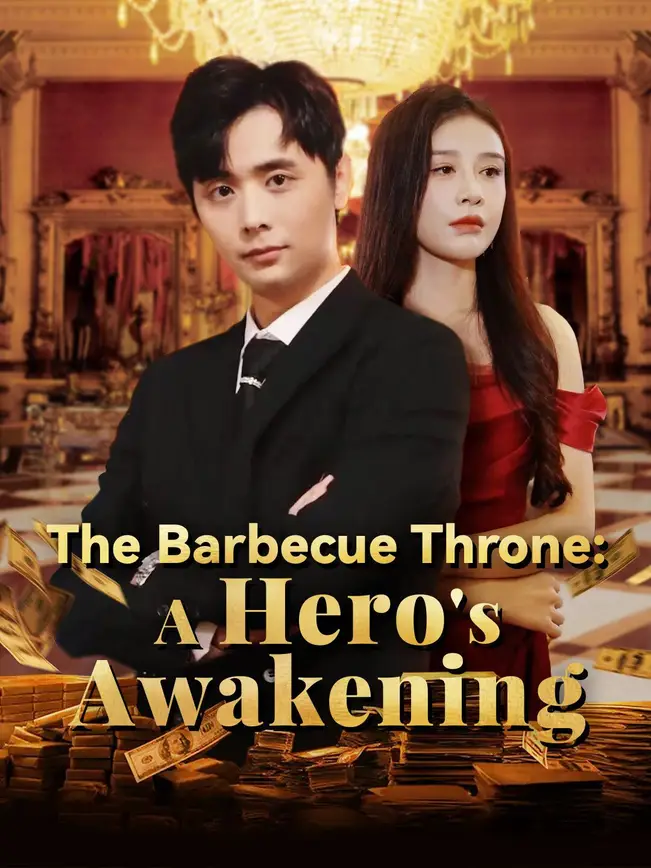
The Barbecue Throne: A Hero's Awakening Storyline
The Barbecue Throne: A Hero's Awakening More details
Genres:Underdog Rise/Revenge/Return of the King
Language:English
Release date:2024-12-03 21:00:00
Runtime:139min
The Barbecue Throne: A Hero's Awakening — The Silence After the Storm
There’s a particular kind of stillness that follows violence—not the peaceful quiet of resolution, but the heavy, trembling silence of aftermath, where every breath feels like trespassing. That’s the space *The Barbecue Throne: A Hero's Awakening* occupies in its most haunting moments: not during the clash of steel or the burst of spectral energy, but in the seconds after Jian lowers his arm, and Master Lin’s body hits the ground with a sound too soft for such a fall. We’ve seen warriors fall before. But this? This feels like the end of an era. Not because Master Lin is dead—he’s not, not yet—but because his authority has shattered, and no amount of incantation or ancestral blade can glue it back together. Let’s dissect the anatomy of that final exchange. Master Lin, ever the pedagogue, tries one last lesson: he points, he scolds, he invokes names—‘the old ways,’ ‘the covenant,’ ‘your father’s shame.’ But Jian doesn’t flinch. He doesn’t argue. He simply *listens*, and in that listening, he disarms the elder more effectively than any spell. Because what Master Lin doesn’t realize is that Jian stopped believing in the script long before the fight began. The leather coat isn’t armor; it’s rejection. The chain around his neck isn’t decoration; it’s a reminder of chains he’s already broken. When the golden energy surges up his arm, it’s not power he’s channeling—it’s grief, rage, and the terrifying clarity that comes when you realize the people who raised you were lying to protect their own legacy. The supporting players aren’t extras. They’re mirrors. Lian, crouched beside the wounded, her velvet sleeves smudged with dirt and blood, doesn’t cry. She *calculates*. Her eyes lock onto Jian not with gratitude, but with assessment. She’s weighing whether he’s savior or successor—and the answer terrifies her. Then there’s General Rui, whose final act—grabbing the spear, planting it like a tombstone—is less about defiance and more about dignity. He knows he’s outmatched. So he reclaims narrative control. In a world where power is performative, his gesture says: *You may win the battle, but I decide how I’m remembered.* That’s the subtle brilliance of *The Barbecue Throne: A Hero's Awakening*: it treats every character as the protagonist of their own tragedy. Now, let’s talk about the spear. Not the flashy one with red tassels—that’s theatrical, meant for ceremony. The real symbol is the plain wooden staff Jian wields early on, then abandons when the golden energy erupts. Why? Because raw power doesn’t need ornament. The moment he drops it, he rejects the idea that strength must be *presented*. He moves beyond ritual into instinct. And that’s when Master Lin panics—not because Jian is strong, but because he’s unpredictable. Tradition fears chaos. Order fears improvisation. The elder’s final expression isn’t pain; it’s existential dread. He sees in Jian the ghost of his own youth, before dogma calcified his choices. The environment plays co-star. Those rolling hills aren’t backdrop; they’re witnesses. The gravel road, littered with broken straps and discarded belts, tells a story of discarded identities. Even the lighting shifts with psychology: when Jian hesitates, the sun dips behind a cloud, casting long shadows that stretch like fingers across the ground. When he commits, the light flares—not white, but amber, the color of roasted meat, of embers, of the ‘barbecue’ in the title. Yes, the title is ironic. There’s no feast here. Only ash. The ‘throne’ isn’t occupied; it’s vacant, waiting for someone foolish or brave enough to sit. And Jian? He walks away from it. Not because he’s humble. Because he understands the throne isn’t a seat—it’s a trap. Every ruler who sat there became what Master Lin is now: rigid, righteous, and ultimately irrelevant. What lingers isn’t the VFX, but the silence. The way Jian’s hand trembles *after* the energy fades. The way he glances at his palm, as if surprised it’s still his. *The Barbecue Throne: A Hero's Awakening* doesn’t glorify power—it interrogates its cost. Every victory here leaves a scar that doesn’t bleed, but whispers. And that whisper? It’s the sound of a hero realizing he’s not becoming a legend. He’s becoming a warning. The final shot—Jian walking toward the ridge, spear slung over his shoulder, back straight but shoulders slightly hunched—says everything. He’s not triumphant. He’s burdened. He’s awake. And the world, for all its green hills and quiet roads, will never be quiet again. Because some awakenings don’t bring light. They bring fire. And fire, as anyone who’s ever tended a barbecue knows, doesn’t ask permission before it consumes.
The Barbecue Throne: A Hero's Awakening — When the Sword Speaks, the World Trembles
Let’s talk about what just unfolded in that deceptively quiet rural stretch—where gravel crunches underfoot, green hills loom like silent judges, and a bald man in layered black robes holds a katana not as a weapon, but as a verdict. This isn’t just action; it’s ritual. The opening frames of *The Barbecue Throne: A Hero's Awakening* don’t rush—they *breathe*. The elder, Master Lin, stands with his sword sheathed, fingers wrapped around the tsuka like he’s holding back a storm. His face is calm, almost serene, but his eyes flicker—not with fear, but with the weight of inevitability. He knows what’s coming. And so do we, because the camera lingers on the red tassels tied to the spear lying nearby, half-buried in dust, like a forgotten omen. That’s the first clue: this isn’t a fight. It’s a reckoning. Then enters Jian, the younger man in the leather coat—his posture tight, his gaze darting between Master Lin and the ground where others already lie motionless. He doesn’t speak much, but his silence speaks volumes. When he finally lifts his head, there’s no bravado, only calculation. He’s not here to win. He’s here to survive. And yet, something shifts when he picks up that spear. Not the ornate one with gold fittings—the plain wooden staff, stripped bare, like a confession. That moment—when the golden energy flares along his forearm, crackling like live wire—isn’t CGI spectacle. It’s psychological rupture. For the first time, Jian *feels* power not as inheritance, but as consequence. *The Barbecue Throne: A Hero's Awakening* thrives on these micro-revelations: the way Master Lin’s smirk vanishes the second Jian’s aura ignites, how the wind stirs only when blood hits the earth, how the woman in velvet—Lian, whose name we learn only from a whispered plea—clutches her ribs not in pain, but in betrayal. What makes this sequence unforgettable isn’t the choreography (though the whip-snap of the red-energy dome is stunning), but the emotional asymmetry. Master Lin fights like a man who’s already lost—he gestures, he scolds, he points, as if trying to lecture fate itself. His final collapse isn’t dramatic; it’s pathetic. He clutches his throat, mouth open in a soundless gasp, eyes wide not with shock, but with dawning horror: he misjudged the boy. He thought Jian was still learning. He didn’t realize Jian had already unlearned obedience. Meanwhile, Jian doesn’t gloat. He doesn’t even look down at the fallen. He stares past them, toward the horizon, where smoke curls from a distant ridge—perhaps the site of the titular barbecue, perhaps the next battlefield. The title, *The Barbecue Throne: A Hero's Awakening*, suddenly clicks: it’s not about grilling meat. It’s about the slow roasting of identity, the charring of old selves over open flame. The throne isn’t made of wood or jade—it’s built from the ashes of those who stood in the way. And let’s not ignore the supporting cast’s tragic elegance. The man in the fur-collared coat—General Rui—doesn’t die quietly. He staggers, coughs blood onto his medals, then grabs the spear not to strike, but to *plant*, driving it into the earth like a flag. His last act isn’t defiance; it’s surrender to meaning. He chooses symbolism over survival. That’s the quiet genius of *The Barbecue Throne: A Hero's Awakening*—it refuses binary morality. No one is purely good or evil. Master Lin believes he’s preserving order. Jian believes he’s claiming autonomy. Lian believes she’s avenging her brother. Even the fallen soldiers, sprawled in the dirt, wear uniforms that blend military precision with ceremonial embroidery—suggesting they serve a tradition older than nations. The setting reinforces this: no city skyline, no neon, just dirt roads and wild grass, where history isn’t archived—it’s buried, waiting to be unearthed by the right hands. The visual language is equally deliberate. Notice how every time energy flares—red for Master Lin, gold for Jian—the color bleeds into the environment: leaves tremble, dust rises in spirals, even the light shifts from cool daylight to a feverish amber. This isn’t just ‘magic’; it’s emotional resonance made visible. When Jian finally raises the spear overhead, the camera circles him in a single, unbroken take—no cuts, no edits—forcing us to sit with his transformation. We see the sweat on his temple, the tremor in his wrist, the way his knuckles whiten not from strain, but from restraint. He could end it now. He doesn’t. That hesitation—that moral friction—is where *The Barbecue Throne: A Hero's Awakening* transcends genre. It’s not about who wins the duel. It’s about who survives the truth. And the ending? Jian plants the spear. Not in triumph. In exhaustion. The metal tip sinks into the gravel with a soft thud—no fanfare, no music swell. Just silence, and the sound of Master Lin’s ragged breathing as he lies on his back, staring at clouds that look exactly like the ones from twenty years ago, when he first took the oath. The cycle isn’t broken. It’s paused. For now. *The Barbecue Throne: A Hero's Awakening* leaves us not with answers, but with a question whispered on the wind: When the next challenger arrives, will Jian raise the spear—or offer the hilt?
The Barbecue Throne: A Hero's Awakening — The Weight of a Golden Hilt
There’s a particular kind of stillness that only exists right before violence erupts—a suspended breath, a tilt of the head, the subtle shift of weight from one foot to the other. In *The Barbecue Throne: A Hero's Awakening*, that stillness isn’t empty. It’s loaded. Like the moment when Xiao Man stands half a step behind Li Zeyu, her sword held low, not in surrender, but in readiness. Her eyes don’t scan the crowd; they lock onto the man in the fur-collared coat—Zhou Feng—who’s shouting, gesturing wildly, veins standing out on his neck like exposed roots. He’s not angry. He’s terrified. And that’s what makes him dangerous. Fear dressed as fury is the most unpredictable weapon on the field. Zhou Feng thinks he’s commanding the scene. He doesn’t realize he’s just the spark. The real fire is already smoldering in Li Zeyu’s silence. Let’s talk about the costume design, because it’s doing heavy lifting here. Li Zeyu’s black leather coat isn’t just stylish—it’s armor of a different kind. It’s modern, yes, but the cut is sharp, the seams precise, like he’s trying to contain something volatile beneath. Underneath, the plain black tee is a refusal to perform. No embroidery, no insignia. Just fabric and flesh. Contrast that with Chen Wei’s three-piece suit—impeccable, expensive, suffocating. His tie is knotted too tight, his cuffs buttoned to the wrist, as if he’s afraid of letting anything slip. And when he falls, the suit wrinkles in all the wrong places, exposing the fragility beneath the polish. That’s not accidental. The wardrobe tells us who these men are before they speak a word. Chen Wei wears authority like a borrowed coat. Li Zeyu wears it like skin. Master Guan, meanwhile, is pure contradiction. His robes are traditional, yes—but the double-buckled belt, the leather chest plate, the shaved head with its faint scar above the temple… this isn’t a monk who meditates in temples. This is a man who’s walked through fire and kept walking. When he points, it’s not with arrogance, but with the certainty of someone who’s counted the cost of every decision. His voice, when it comes, is low, resonant—not loud, but impossible to ignore. He doesn’t say ‘you will die.’ He says, ‘you have already chosen your grave.’ And in that sentence, *The Barbecue Throne: A Hero's Awakening* delivers its moral core: fate isn’t written by gods. It’s signed in blood, inked in hesitation, sealed with a single misstep. The fight itself is choreographed like a dance of regrets. No flashy flips, no wirework acrobatics—just brutal, grounded exchanges. Li Zeyu blocks a strike with his forearm, gritting his teeth as the impact vibrates up his bones. Chen Wei tries to recover, lunging with desperation, but his form is off. He’s thinking three moves ahead, but his body is stuck in the last one. That’s the tragedy of over-preparation: you forget how to react. When Li Zeyu disarms him—not with force, but with timing—he doesn’t gloat. He looks down at the fallen man, and for a split second, his expression softens. Not pity. Recognition. They’re two sides of the same coin: one chose power, the other chose purpose. And purpose, as *The Barbecue Throne: A Hero's Awakening* reminds us, is heavier than gold. Then—the breaking point. The golden hilt, so ornate, so symbolic, snaps under the strain of a parry gone wrong. Not in slow motion. Not with fanfare. Just a clean, brutal fracture. The camera cuts to the ground, where the pieces lie like discarded relics. A child could pick them up and not know they once belonged to a legend-in-the-making. Li Zeyu stares at the broken weapon, and for the first time, doubt flickers across his face. Not fear. Doubt. What good is a hero without a sword? What good is a vow without a vessel? That’s when Xiao Man moves—not to comfort him, but to stand shoulder-to-shoulder, her blade now raised not in defense, but in solidarity. She doesn’t speak. She doesn’t need to. Their alliance isn’t declared; it’s demonstrated, one shared breath at a time. The final sequence is pure visual poetry. Master Guan draws his own sword—not to attack, but to demonstrate. He slices the air, and for a heartbeat, the sunlight catches the edge, turning it into a ribbon of liquid gold. Then he lowers it. Offers it—not to Li Zeyu, but to the ground between them. A challenge. A test. A threshold. Li Zeyu doesn’t take it. He kneels instead, picks up the largest fragment of his broken hilt, and presses it into his palm until it draws blood. That’s the climax of *The Barbecue Throne: A Hero's Awakening*: heroism isn’t inherited. It’s forged in the moment you choose to carry the broken thing, rather than discard it. The throne isn’t made of jade or iron. It’s built from the weight of what you refuse to leave behind. And as the wind stirs the dry grass, and the distant hills watch silently, one truth settles like dust: the barbecue isn’t just a meal. It’s a promise. And promises, once made, cannot be unlit.
The Barbecue Throne: A Hero's Awakening — When Swords Clash in the Dust
Let’s talk about that moment—when the gravel crunches underfoot, when the wind carries the scent of dry grass and old blood, and when a man in a black leather coat finally stops pretending he’s just passing through. That’s the heartbeat of *The Barbecue Throne: A Hero's Awakening*—not the grand speeches or the ornate swords, but the quiet shift in posture, the flicker in the eyes, the way Li Zeyu grips his golden-hilted blade like it’s not a weapon, but a confession. He stands beside Xiao Man, who holds her own sword with the calm of someone who’s already seen too much—and yet, she hasn’t flinched. Not once. That tells you everything. This isn’t a story about power; it’s about the unbearable weight of choice when every path leads to ruin. The scene opens with tension coiled tighter than the spring in an antique crossbow. Chen Wei, in his tailored emerald suit, looks like he walked out of a boardroom meeting—until he speaks. His voice is smooth, almost amused, but his fingers twitch near his pocket where a folded letter rests. You can tell he’s rehearsed this confrontation three times in his head, each version ending differently. But reality doesn’t care about rehearsals. When the bald monk—Master Guan, whose robes hang loose like a warning flag—steps forward, the air changes. Not with thunder, not with music, but with silence. That’s the genius of *The Barbecue Throne: A Hero's Awakening*. It knows that the loudest moments are often the ones where no one speaks. Master Guan doesn’t raise his voice. He raises his finger. And in that gesture, decades of discipline, regret, and unspoken vows collapse into a single point of accusation. Then comes the fall. Not metaphorically—the actual, bone-jarring collapse of Chen Wei onto the dirt, his polished shoes scuffed, his tie askew, his dignity shattered like cheap porcelain. The camera lingers on his face—not in slow motion, but in real time, as if daring us to look away. And we don’t. Because we’ve all been there: the moment you realize your cleverness has outpaced your wisdom. Chen Wei thought he could negotiate with ghosts. He forgot that some men don’t bargain—they remember. Behind him, the older man with the white beard and indigo robe watches without moving. His expression isn’t judgmental. It’s weary. Like he’s seen this play out before, in different clothes, on different soil. That’s the layered storytelling *The Barbecue Throne: A Hero's Awakening* excels at: every background figure has a past, every glance carries consequence. Li Zeyu doesn’t rush in. He waits. He watches the dust settle. His hand rests on the hilt, but he doesn’t draw. Not yet. That restraint is more terrifying than any slash. Because when he does move—oh, when he moves—it’s not with rage, but with precision. The golden light flares not from magic, but from the sun catching the edge of his blade as he pivots, redirecting an attack meant for Xiao Man. She doesn’t thank him. She nods. That’s their language. In a world where words are currency and lies are inflation, a nod is worth more than a vow. And then—the break. The sword shatters. Not dramatically, not with fire or smoke, but with a soft, sickening crack, like a dried twig snapping under pressure. The pieces hit the ground one by one: the brass guard, the wooden core, the fractured steel tip. The camera zooms in, not on the debris, but on Li Zeyu’s face. His breath hitches. Just once. That’s the moment *The Barbecue Throne: A Hero's Awakening* reveals its true theme: heroism isn’t about unbreakable weapons. It’s about what you do when yours fails. He picks up the largest shard—not to fight, but to hold. As if remembering something older than steel, older than grudges. Maybe it’s the memory of his father’s hands, calloused from forging blades that never saw battle. Maybe it’s the smell of charcoal and rice wine from the village hearth, where ‘barbecue’ wasn’t just food—it was ritual, resistance, remembrance. The final shot lingers on Master Guan, now holding his own sword upright, not in threat, but in offering. His lips move, but we don’t hear the words. We don’t need to. The silence says it all: *You’re not ready. But you will be.* And Li Zeyu? He doesn’t smile. He doesn’t frown. He simply closes his fist around the broken hilt—and steps forward. Not toward victory. Toward truth. That’s why *The Barbecue Throne: A Hero's Awakening* sticks in your ribs long after the screen fades: it doesn’t give you a hero. It gives you a man who chooses to become one, one fractured piece at a time.
The Barbecue Throne: A Hero's Awakening — The Silence Before the Flame
Let’s talk about the most dangerous weapon in *The Barbecue Throne: A Hero's Awakening*—not the ornate sword with its gilded guard, nor the whip coiled like a serpent in Commander Feng’s grip, but the *pause*. That half-second after Master Liang finishes speaking, when the wind dies, the birds stop calling, and even the distant hills seem to hold their breath. That’s where the real story lives. In those suspended moments, we don’t just watch characters—we witness the architecture of their souls being rearranged, brick by trembling brick. Master Liang, bald-headed and draped in monastic severity, doesn’t dominate the frame with volume; he dominates it with *stillness*. His robes—black over white, layered like armor made of ink and parchment—are a visual metaphor for his philosophy: truth is not loud, but layered. The double-buckled belt isn’t fashion; it’s constraint. Self-imposed. He carries his sword not as a threat, but as a reminder: *I am ready. But I choose not to act.* And that choice? That’s where the drama ignites. Commander Feng, by contrast, is all surface. His fur-trimmed cape flares dramatically in the breeze, his uniform crisp, his insignia gleaming—but his eyes betray him. Watch closely during his third confrontation with Master Liang: his jaw tightens, his knuckles whiten on the whip’s handle, yet his gaze flickers—not toward the monk, but toward Zhou Wei, standing quietly beside the altar table. Why? Because Feng senses the shift. He knows Zhou Wei isn’t just a bystander; he’s the next chapter. And that terrifies him more than any blade. Feng’s aggression isn’t born of strength; it’s born of obsolescence. He’s the last gasp of an old order, shouting into a room that’s already turned its back. His sneer in frame 0:05? It’s not confidence. It’s panic dressed in polish. The moment he raises the whip (0:17), the camera cuts not to Master Liang’s reaction, but to Lingyun’s face—her lips pressed thin, her fingers clutching the edge of her velvet sleeve. She’s not afraid for herself. She’s afraid *for him*. For Feng. Because she sees what he refuses to admit: he’s already lost. The battlefield isn’t the gravel path. It’s the space between intention and consequence—and Feng keeps stepping off the edge. Then there’s Elder Chen, the indigo-clad sage whose dragon embroidery seems to writhe when the light hits it just right. He doesn’t enter the scene; he *infiltrates* it. His first gesture—pointing, not at Master Liang, but past him, toward the horizon—is pure narrative misdirection. He’s not accusing. He’s redirecting. He forces everyone to look *away* from the immediate conflict and toward the larger pattern. That’s his power: he doesn’t fight the storm; he reveals the weather system that created it. When he speaks (again, silently, through expression and cadence), his voice—though unheard—resonates because we’ve learned to read his grammar: raised eyebrow = doubt, tilted chin = challenge, open palm = invitation to reconsider. His presence destabilizes Feng’s authority not by opposing it, but by rendering it irrelevant. In *The Barbecue Throne: A Hero's Awakening*, wisdom doesn’t shout over noise; it waits until the noise exhausts itself, then speaks one clear sentence that unravels everything. And Zhou Wei—the young man in the trench coat, chain necklace glinting like a secret. He’s the audience surrogate, yes, but also the catalyst. His decision to take the sword (0:28–0:31) isn’t impulsive; it’s inevitable. Notice how his hand doesn’t grab—it *accepts*. The sword rests on the table like an offering, and he receives it with the reverence of a priest taking communion. The camera lingers on the hilt: gold filigree, black lacquer, the faintest trace of wear near the guard—proof it’s been held before, by others who stood where he now stands. When he lifts it, he doesn’t test its weight. He *listens* to it. That’s the key. In this world, weapons have memory. And Zhou Wei hears the echoes: of past oaths, broken promises, fires lit and abandoned. His expression isn’t heroic. It’s haunted. He knows what comes next. Not glory. Responsibility. The barbecue throne isn’t a seat of honor; it’s a station where you tend the flame so others may eat. And tending flame requires patience, courage, and the willingness to burn your own hands. The women in this sequence—Lingyun and the unnamed figure in black velvet—are not decorative. They’re the emotional barometers. Lingyun’s qipao, delicate and embroidered with fading florals, mirrors her internal state: beautiful, resilient, but fraying at the edges. When she glances at Elder Chen, then at Feng, then back at Master Liang, her eyes tell a trilogy in three frames. She’s not choosing sides. She’s calculating survival. The other woman, standing behind Feng like a shadow given form, says nothing—but her posture speaks volumes. Shoulders squared, chin high, yet her fingers twitch near her hip, where a hidden dagger might rest. She’s not loyal. She’s waiting. Waiting to see who wins the silence. Because in *The Barbecue Throne: A Hero's Awakening*, loyalty is the first casualty of truth. The environment does heavy lifting here. No grand sets, no CGI-enhanced skies—just raw, unvarnished nature. The hills loom like judges. The gravel crunches underfoot like the sound of time running out. Even the banner—yellow with red fringe, hanging limp on its pole—feels symbolic: a standard that’s seen better days, yet still flies. When it flutters violently at 1:35, it’s not wind. It’s the universe exhaling. The moment before detonation. And Master Liang? He doesn’t react. He *smiles*. That smile—warm, knowing, almost tender—is the most radical act in the scene. He’s not mocking Feng. He’s pitying him. Not with condescension, but with sorrow. Because he sees the boy beneath the uniform, the fear beneath the bluster, the hunger beneath the rage. And in that recognition, he offers grace. Not forgiveness. Grace. The difference matters. This sequence succeeds because it trusts the audience. It doesn’t explain motivations; it reveals them through micro-expression: the way Master Liang’s thumb strokes the sword’s scabbard when he’s thinking, the way Zhou Wei’s breath hitches when Lingyun looks at him, the way Feng’s left eye twitches when Elder Chen mentions the ‘old pact.’ These aren’t acting choices; they’re archaeological digs. Each gesture uncovers a layer of history buried beneath the present conflict. *The Barbecue Throne: A Hero's Awakening* isn’t about swords clashing—it’s about identities colliding. And in that collision, something new is forged. Not a king. Not a general. A guardian. One who understands that the greatest fire isn’t the one that consumes, but the one that sustains. The final shot—Master Liang turning away, sword at his side, the hills swallowing his silhouette—doesn’t end the story. It invites us to keep watching. Because the most dangerous thing in this world isn’t a weapon. It’s the moment after the weapon is lowered, when everyone has to decide: what do we build with the ashes?
The Barbecue Throne: A Hero's Awakening — When the Sword Meets the Whispering Hills
In the quiet tension of a windswept valley, where green hills roll like forgotten scrolls and gravel paths whisper old secrets, *The Barbecue Throne: A Hero's Awakening* unfolds not with fanfare, but with the slow draw of a blade—and the even slower unraveling of pride. This isn’t a tale of grand battles or thunderous declarations; it’s a psychological duel staged in silence, punctuated by glances, gestures, and the weight of unspoken histories. At its center stands Master Liang, the bald monk-warrior whose robes—black, layered, cinched tight with double-buckled leather—speak of discipline forged in fire and restraint. His face, lined not just by age but by decades of withheld emotion, shifts like tectonic plates: from weary resignation to sudden, startling amusement, then back to cold resolve. He holds his sword—not drawn, but *present*, its wooden tsuka wrapped in aged cord, its saya etched with motifs that hint at lineage older than the mountains behind him. Every time he lifts it, even slightly, the air thickens. It’s not the weapon that commands attention—it’s the man who chooses when to let it speak. Contrast him with Commander Feng, draped in a fur-collared black coat that reeks of authority purchased rather than earned. His whip, coiled and ornate, is less a tool and more a prop—a symbol of control he clings to like a child to a rattle. His expressions are theatrical: snarls, sneers, a grimace that tries too hard to mimic menace. Yet watch closely—the moment he raises the whip toward Master Liang, his wrist trembles. Not from fear, but from uncertainty. He knows, deep down, that this isn’t about dominance. It’s about legitimacy. And legitimacy, in *The Barbecue Throne: A Hero's Awakening*, is never granted by rank or regalia—it’s seized by presence. Behind Feng stand two figures: a woman in velvet black, her eyes sharp as broken glass, and a younger man in a sleek trench coat, silent but radiating quiet intensity. That young man—Zhou Wei—is the fulcrum of the scene. He doesn’t speak much, yet when he finally reaches for the ceremonial sword resting on the white-draped table (a stark contrast to the earthy chaos around it), his fingers don’t hesitate. The camera lingers on his hand gripping the golden hilt, the intricate dragon patterns catching the light like dormant power waking. He doesn’t look at Feng. He looks at Master Liang. And in that glance lies the entire arc of the series: the passing of wisdom not through blood, but through recognition. Then there’s Elder Chen, in his indigo silk robe embroidered with a coiled dragon—subtle, elegant, dangerous. His entrance is understated, yet the shift in energy is immediate. Where Feng shouts, Chen *points*. Where Master Liang waits, Chen *questions*. His dialogue—though we hear no words, only the rhythm of his speech, the tilt of his head, the way his index finger jabs the air like a calligraphy brush striking paper—suggests he’s not here to fight, but to expose. He’s the moral compass disguised as a skeptic, the one who sees the rot beneath the polish. When he turns to the woman in the cream qipao—Lingyun, whose lace shawl trembles slightly with each breath—he doesn’t address her directly. He addresses the space between them, forcing her to choose: complicity or conscience. Her expression, caught mid-turn, is pure cinematic gold: lips parted, eyes wide not with terror, but with dawning realization. She knows something the others refuse to name. And that knowledge? It’s heavier than any sword. The setting itself is a character. No grand palace, no war-torn village—just an open field, a few poles, a banner fluttering with faded red fringe. The simplicity is deliberate. In *The Barbecue Throne: A Hero's Awakening*, power isn’t hoarded in vaults; it’s tested in the open, where wind carries whispers and shadows stretch long before dusk. The lighting is natural, almost documentary-style—no dramatic chiaroscuro, just the soft overcast glow of a day holding its breath. This isn’t fantasy escapism; it’s grounded mythmaking. Every rustle of fabric, every footstep on gravel, every sigh Master Liang exhales as he tilts his head skyward—it all feels *lived*. There’s no CGI spectacle, yet the tension is so thick you could slice it with Zhou Wei’s sword. What makes this sequence unforgettable is how it subverts expectation. We anticipate a clash—Feng’s whip against Liang’s blade, a burst of choreographed fury. Instead, we get stillness. Master Liang doesn’t flinch when Feng lunges (or rather, *pretends* to lunge). He smiles. Not mockingly, but with the quiet joy of a teacher watching a student finally grasp the first principle. That smile—brief, genuine, devastating—is the emotional core of the episode. It says: *I see you. I know your fear. And I’m not afraid of it.* Later, when Zhou Wei draws the sword fully, the camera circles him slowly, revealing the inscription on the blade’s spine: ‘For the Hearth, Not the Throne.’ A line that reframes everything. This isn’t about ruling. It’s about protecting. The barbecue throne—so absurdly named, yet so deeply symbolic—is not a seat of power, but a hearth where truth is grilled over open flame, where lies char and fall away. Feng’s rage isn’t about losing; it’s about being *seen*. And in *The Barbecue Throne: A Hero's Awakening*, being seen is the ultimate vulnerability. The final shot—Lingyun’s face, then the banner snapping in the wind, then Master Liang’s calm profile as he sheathes his sword without looking down—leaves us suspended. No resolution. Only implication. The real battle hasn’t begun. It’s simmering, like broth left too long on low heat. And we, the audience, are invited not to cheer, but to lean in. To wonder: Who truly holds the sword now? Who will sit at the barbecue throne when the smoke clears? The genius of *The Barbecue Throne: A Hero's Awakening* lies not in what it shows, but in what it withholds—forcing us to become active participants in the narrative, stitching meaning from silence, gesture, and the unbearable weight of unsaid things. This isn’t just a scene. It’s a manifesto written in posture and pause.
The Barbecue Throne: A Hero's Awakening — The Altar of Ashes and Ambition
Let’s talk about the dirt. Not metaphorical dirt—the real, gritty, sun-baked earth beneath Chen Kai’s knees in *The Barbecue Throne: A Hero's Awakening*. That dirt matters. It’s where dignity goes to die, and sometimes, where it’s reborn. The entire sequence plays out like a sacred theater staged in a forgotten roadside clearing: a white cloth spread over a low table, incense sticks burning unevenly, a small bronze censer exhaling smoke that curls like unanswered prayers. At its center sits the box—dark wood, worn smooth by generations of hands that opened it only to seal fate. And around it, the cast of characters aren’t just witnesses; they’re *components* of the ritual itself. Li Zhen, the enforcer in fur-trimmed authority, doesn’t merely hold the whip—he *conducts* the ceremony. His posture is rigid, yes, but watch his fingers: they flex subtly around the dragon-headed handle, not in aggression, but in reverence. This isn’t punishment. It’s purification by fire, delayed. The whip is a priest’s staff. The gravel is the confessional floor. Chen Kai’s transformation isn’t linear. It’s fractal. One moment he’s trembling, lips parted in silent protest; the next, he’s grinding his teeth, eyes locked on Li Zhen’s boots, calculating angles, distances, the exact arc needed to disarm. His leather jacket catches the light like armor half-remembered. And when Lin Xiao approaches—not with tears, but with quiet certainty—she doesn’t offer help. She offers *context*. Her voice, when it finally comes (though the video gives us no audio, the lip movements tell the story), is low, urgent, almost conspiratorial. She leans close, her perfume cutting through the scent of dust and burnt incense, and says something that makes Chen Kai’s breath hitch. Not ‘I’m sorry.’ Not ‘It’ll be okay.’ Something far more dangerous: ‘He’s waiting for you to choose.’ Choose what? To break? To beg? Or to *remember*? Because *The Barbecue Throne: A Hero's Awakening* hinges on memory—not of events, but of identity. The man kneeling isn’t the man who walked here. He’s the echo of someone who once stood taller, spoke louder, refused to bow. And the whip? It’s not meant to scar the body. It’s meant to jolt the soul awake. Then there’s the ensemble—the silent chorus. The woman in the schoolgirl-inspired outfit, suspenders stark against her white blouse, watches with the intensity of a scholar decoding ancient script. She’s not shocked. She’s *recording*. Every micro-expression, every shift in weight, every glance exchanged between Li Zhen and Elder Wang (whose indigo robe seems to absorb light rather than reflect it) is data in her mental ledger. And the bald man who strides in late, sword at his hip, belt buckled like a fortress gate—he doesn’t speak either. He simply points east, toward the cliffs, and the wind shifts. That gesture isn’t direction. It’s declaration. The throne isn’t here. It’s *there*, where the land ends and the sky begins. Where choices become irreversible. Where barbecue isn’t food—it’s alchemy. Meat seared over coals until the outside chars and the inside reveals its true texture. That’s the metaphor *The Barbecue Throne: A Hero's Awakening* lives by: you must be burned to be known. What’s chilling isn’t the violence implied, but the *restraint*. Li Zhen raises the whip three times. Each time, Chen Kai braces—but never collapses. His hands press into the ground, fingers digging, as if rooting himself to the earth so he won’t float away into despair. And in those seconds of suspended motion, we see it: the flicker of realization. He’s not being punished for what he did. He’s being tested for what he *will* do. The box on the altar? It doesn’t contain relics. It contains *names*. Names of those who failed the trial. Names of those who walked away. And one name—still unspoken, still uncarved—is his own. When Lin Xiao finally touches his back, her fingers linger just long enough to transmit a current: *You are still you.* Not the disgraced heir. Not the fallen prodigy. Just Chen Kai. The man who once lit the first fire of the season, who knew how to read the smoke, who understood that the best barbecue isn’t rushed—it’s waited for. That’s the core tension of *The Barbecue Throne: A Hero's Awakening*: heroism isn’t about strength. It’s about patience under fire. About holding your breath until the world forgets you’re still alive—and then exhaling fire. The final wide shot—grouped figures circling the altar, the flag snapping like a warning, Chen Kai still on his knees but now looking *up*, not at Li Zhen, but past him, toward the horizon—tells us everything. The throne isn’t vacant. It’s occupied by the ghost of expectation. And the only way to claim it is to stop begging for forgiveness… and start demanding justice—for yourself, from yourself. The whip hangs loose in Li Zhen’s hand. He’s done speaking. The rest is up to Chen Kai. And as the screen fades, we realize: the most dangerous moment isn’t when the whip falls. It’s when the man on his knees decides he’s tired of kneeling. *The Barbecue Throne: A Hero's Awakening* doesn’t end with a coronation. It ends with a question whispered into the wind: Are you ready to burn?
The Barbecue Throne: A Hero's Awakening — When the Whip Cracks, the Soul Trembles
In the sun-bleached gravel lot, where dust hangs like suspended memory and distant hills loom like silent judges, *The Barbecue Throne: A Hero's Awakening* unfolds not with fanfare, but with the slow, deliberate curl of a whip. The central figure—Li Zhen, draped in a black coat lined with silver-gray fur, his collar stiff as a judge’s decree—holds that whip not as a weapon, but as a symbol: a golden dragon head coiled around the grip, mouth open in eternal roar, teeth bared not to bite, but to *witness*. His face is a landscape of controlled fury—eyebrows knotted, lips pressed thin, then parted just enough to let out words that don’t so much speak as *accuse*. He doesn’t shout; he *condemns* with cadence. Every flick of his wrist sends the leather tongue snapping through air, not toward flesh yet, but toward dignity. And kneeling before him—knees sinking into dry earth, shoulders hunched like a man already buried—is Chen Kai, dressed in sleek black leather, a chain necklace glinting like a last defiant spark against his dark shirt. His eyes, when they lift, are not pleading. They’re calculating. They’re remembering. They’re waiting for the exact moment the whip breaks skin—or breaks something deeper. The scene breathes tension like a held breath. Behind Li Zhen stands Elder Wang, in indigo silk embroidered with dragons that seem to writhe under sunlight—a man whose silence carries more weight than any speech. His gaze never wavers from Chen Kai, but it’s not hatred in his eyes; it’s sorrow, layered over disappointment, like sediment in a still pond. Then there’s Lin Xiao, the woman in the velvet black dress, her earrings catching light like falling stars. She watches not Li Zhen, but Chen Kai—her expression shifting between pity and something sharper: recognition. She knows what this ritual means. She knows the box on the altar isn’t just wood and lacquer; it’s a vessel for vows, for bloodlines, for curses passed down like heirlooms. The red tassels tied to the staff beside it flutter in a breeze no one else feels. And when she finally steps forward—her heels clicking like a metronome counting down to inevitability—she doesn’t speak. She places a hand on Chen Kai’s shoulder. Not to comfort. To *anchor*. To say: I see you. I remember who you were before the fall. What makes *The Barbecue Throne: A Hero's Awakening* so unnerving is how it refuses melodrama. There’s no music swelling, no sudden cut to flashback. Just wind, gravel, and the sound of a man breathing too fast. Chen Kai’s trembling isn’t weakness—it’s the tremor of a dam holding back floodwaters. When he lifts his head again, his jaw sets, and for a split second, the fear vanishes. Replaced by something colder. Something older. That’s when Li Zhen’s smirk tightens—not triumph, but *anticipation*. He knows the game has changed. The whip isn’t meant to punish. It’s meant to *awaken*. And in that moment, the audience realizes: this isn’t about discipline. It’s about inheritance. The throne isn’t made of jade or gold. It’s forged in shame, tempered in silence, and claimed only when the heir dares to stand—not after being struck, but *because* he was struck and still chose to rise. The woman in white suspenders watches with narrowed eyes, fingers twisting the strap of her belt—she’s not just a bystander; she’s a keeper of records, a witness to oaths sworn in fire and ash. And the old man with the beard? He strokes his chin, whispering to the young woman clinging to his arm: ‘He’ll break before he bends… unless he remembers the taste of charcoal.’ Charcoal. Not coal. Not flame. *Charcoal*—the residue after fire has done its work. The core that remains. That’s the heart of *The Barbecue Throne: A Hero's Awakening*: heroism isn’t born in victory. It’s resurrected in the aftermath of humiliation, when the world expects you to crawl—and you choose to kneel, not in submission, but in preparation. The whip cracks again. This time, Chen Kai doesn’t flinch. He closes his eyes. And smiles. Just slightly. Like he’s heard a joke only he understands. The camera lingers on the wooden box—its floral inlay cracked at one corner, as if something inside once tried to escape. The ritual isn’t over. It’s just beginning. And somewhere beyond the frame, a flag—red and yellow, tattered at the edges—flaps against the sky, bearing no emblem, only the wind’s insistence. That flag doesn’t represent a kingdom. It represents a question: Who deserves to sit? Who dares to burn? Who will inherit the throne built not on conquest, but on the unbearable weight of truth? *The Barbecue Throne: A Hero's Awakening* doesn’t give answers. It leaves you kneeling beside Chen Kai, dirt under your nails, heart pounding, wondering if you’d rise—or if you’d finally let the whip decide for you.
The Barbecue Throne: A Hero's Awakening — The Unspoken War Behind the Velvet Curtain
Step into the boutique, and you’re not entering a store—you’re stepping into a chamber of unresolved history, where every garment hanging on the rack feels like a relic from a battle no one’s willing to name. The atmosphere in *The Barbecue Throne: A Hero's Awakening* isn’t defined by the plush carpet or the gleaming brass fixtures; it’s defined by the silence between Lin Xiao’s measured breaths, Wei Ran’s controlled stillness, and Chen Yu’s restless shifting. This isn’t shopping. This is interrogation dressed in couture. The red curtain in the background isn’t decor—it’s a threshold. Cross it, and you enter a different reality. Stay where you are, and you remain trapped in the limbo of half-truths and withheld apologies. Lin Xiao, our anchor in this storm, wears her professionalism like a second skin—but it’s fraying at the seams. Her white satin blouse, immaculate and luminous under the track lighting, contrasts sharply with the tension coiled in her shoulders. Notice how she never fully faces Wei Ran directly until the very end. Instead, she angles her body, offering partial profiles, as if protecting herself from the full force of whatever accusation hangs in the air. Her arms cross, uncross, cross again—each movement a punctuation mark in an internal monologue we’re only allowed to infer. When she smiles, it’s never with her eyes. Her lips rise, yes, but her gaze remains fixed just above Wei Ran’s shoulder, scanning the shelves, the mannequins, the exit. She’s not disengaged; she’s *monitoring*. She knows this conversation could detonate at any second, and she’s calculating escape vectors. Wei Ran, meanwhile, operates with the calm of someone who’s already won—until she hasn’t. Her black off-shoulder dress is striking, yes, but it’s her jewelry that tells the real story: star-shaped earrings dangling like tiny weapons, a pearl necklace that catches the light with every tilt of her head. She doesn’t need volume to dominate the room. A raised eyebrow, a slow blink, the way she folds her arms across her chest—not defensively, but *territorially*—all signal control. Yet watch closely: when Lin Xiao speaks (even silently), Wei Ran’s thumb rubs the inside of her wrist. A nervous tic. A betrayal of her composure. She’s not as unshaken as she pretends. And when Chen Yu finally interjects—his voice low, his gestures restrained but emphatic—her eyes flicker. Just once. A micro-expression of surprise, quickly masked. That’s the crack in the facade. That’s where the story lives. Chen Yu is the wildcard, the variable no one fully accounts for. His denim jacket is deliberately incongruous—a symbol of everyday life thrust into a world of bespoke precision. He doesn’t touch the clothes. He doesn’t admire the displays. He watches *them*. His role isn’t passive, though he often stands still. He’s the fulcrum. Every word Lin Xiao says, every glance Wei Ran exchanges—he registers it, processes it, and subtly shifts his weight in response. At one point, he glances toward the entrance, then back, as if expecting someone else to walk in and change the equation. Is he waiting for reinforcements? Or is he hoping someone will interrupt before things escalate? His hesitation isn’t weakness; it’s deliberation. He knows that in this space, a single misstep could unravel years of careful maintenance. The environment itself is complicit. The wooden shelves aren’t just storage—they’re archives. Each framed photo, each decorative deer figurine, each vase of red roses (fresh, but placed with clinical precision) speaks to a curated identity. This shop isn’t just selling suits; it’s selling *legacy*. And Lin Xiao, standing guard over it, is its reluctant custodian. When she gestures with her open palm—once, twice—it’s not invitation. It’s surrender. She’s saying, *I’ve held this long enough. What do you want me to do?* Wei Ran’s response? A slow exhale, a slight tilt of the chin, and then—finally—she speaks. We don’t hear the words, but we see Lin Xiao flinch. Not physically. Emotionally. Her eyelids flutter, her lips press together, and for a heartbeat, she looks younger, smaller, as if the weight of whatever was said has compressed her into a version of herself she thought she’d outgrown. This is where *The Barbecue Throne: A Hero's Awakening* reveals its true depth. The title promises spectacle—flames, feasts, ascension—but this scene delivers something rarer: the quiet implosion of a relationship built on unspoken rules. Lin Xiao isn’t just an employee. She’s likely the daughter of the original owner, or a protégé raised in the shadow of greatness. Wei Ran? Possibly a former partner, a lover, a rival who walked away and returned with new leverage. Chen Yu? Maybe the son of a client, or a newcomer with ties to the family business—someone whose presence alone disrupts the fragile equilibrium. The power struggle isn’t over money or inventory. It’s over memory. Over who gets to define what this place *means*. What’s masterful is how the director uses framing to underscore hierarchy. Lin Xiao is often shot from a slightly lower angle when she’s speaking—giving her temporary authority—only to be cut to a high-angle shot moments later, shrinking her in the frame as Wei Ran looms (metaphorically) in the foreground. Chen Yu is almost always centered, but never dominant; he’s the axis, not the apex. The camera lingers on hands: Lin Xiao’s fingers tightening around her own wrist, Wei Ran’s nails—perfectly manicured, unpainted—tapping once against her forearm, Chen Yu’s watch strap digging slightly into his skin. These are the real dialogues. And then—the climax. Not a shout. Not a slap. Just Lin Xiao bringing her hand to her face, fingers splayed against her cheekbone, eyes wide with a mixture of shock, recognition, and sorrow. The purple-pink overlay isn’t a filter; it’s the visual manifestation of emotional overload. In that instant, the boutique dissolves. The racks of suits blur. The red curtain pulses like a wound. She’s not seeing the room anymore. She’s seeing the past—the moment this rift began, the promise broken, the trust dissolved. Wei Ran watches her, and for the first time, her expression wavers. Not guilt, not remorse, but *recognition*. She sees the cost. And Chen Yu? He doesn’t step in. He doesn’t offer comfort. He simply nods—once—and turns his head toward the door. He understands now. The throne isn’t waiting for him. It’s already occupied. By ghosts. By choices. By the woman in the white blouse, standing alone in the center of a storm she’s spent years pretending wasn’t coming. *The Barbecue Throne: A Hero's Awakening* doesn’t need explosions to thrill. It thrives on the tremor before the quake. On the silence after the sentence. On the way a pearl necklace can glint like a threat, and a denim jacket can feel like armor against a world that demands perfection. Lin Xiao’s awakening isn’t loud. It’s quiet. It’s the sound of a woman finally allowing herself to feel the weight she’s been carrying—not for the shop, not for the brand, but for the truth she’s been too afraid to name. And in that naming, she begins to reclaim her space. Not as servant. Not as victim. But as sovereign. The throne wasn’t made of flame or iron. It was made of silence—and she’s just learned how to break it.
The Barbecue Throne: A Hero's Awakening — When Elegance Meets Tension in a Tailor’s Lair
In the hushed, amber-lit interior of what appears to be a bespoke menswear boutique—rich with dark wood paneling, velvet drapes, and curated displays of tuxedos and silk ties—the air hums not with fabric or stitching, but with unspoken conflict. This is not merely a retail space; it is a stage where three characters orbit each other like celestial bodies caught in gravitational tension: Lin Xiao, the poised yet visibly strained shop assistant in her ivory satin blouse with its delicate bow collar; Wei Ran, the woman in the off-shoulder black dress whose pearl-and-star earrings catch the light like silent accusations; and Chen Yu, the man in the oversized denim jacket who seems perpetually caught between wanting to speak and choosing silence. The setting itself whispers luxury and tradition—marble floors, brass pendant lights, a central table laid with cufflinks and pocket squares as if preparing for a ritual—but the emotional temperature rises steadily, turning this elegant chamber into something far more volatile. From the opening frame, Lin Xiao stands slightly apart, arms crossed, posture rigid—not defensive, exactly, but *contained*. Her smile, when it appears, is practiced, almost translucent, like a layer of varnish over something raw beneath. She watches Wei Ran with an intensity that suggests familiarity, perhaps even history. Wei Ran, by contrast, moves with deliberate grace, her gaze sharp, her lips painted a confident crimson, yet her body language betrays subtle unease: arms folded tightly, fingers occasionally tracing the edge of her sleeve, a micro-gesture of self-soothing. Chen Yu lingers near the red curtain, his hands shoved in pockets, eyes darting between the two women as if trying to triangulate truth from their silences. He speaks sparingly, but when he does—gesturing with his right hand, watch glinting under the overhead spotlights—his tone carries weight, though never quite conviction. It’s as if he’s rehearsing lines he hasn’t fully committed to. What makes this sequence so compelling is how much is conveyed without dialogue. In one pivotal moment, Lin Xiao uncrosses her arms, extends her palm upward in a gesture that could mean ‘please explain,’ ‘I’m listening,’ or ‘this is absurd’—depending entirely on context we’re not given. Her expression shifts in real time: eyebrows lift, mouth parts slightly, then tightens again. Meanwhile, Wei Ran’s eyes narrow—not in anger, but in calculation. She tilts her head, a faint smirk playing at the corner of her mouth, before her expression hardens into something colder. That smirk? It’s the kind that says, *I know something you don’t*, and it lands like a dropped coin in a silent room. Chen Yu notices. His jaw tightens. He looks away, then back—caught in the crossfire. The camera work enhances this psychological ballet. Tight close-ups linger on Lin Xiao’s knuckles whitening against her forearm, on Wei Ran’s necklace catching the light as she turns her head, on Chen Yu’s wristwatch ticking just out of sync with the ambient rhythm. There’s no background music, only the soft rustle of fabric, the distant chime of a doorbell, the low thrum of city life beyond the glass. This absence of score forces us to lean in, to read every blink, every shift in posture. When Lin Xiao finally brings her hand to her cheek—fingers pressed lightly against her temple, eyes wide with dawning realization—it feels less like a reaction and more like a collapse. The purple-pink flare that washes over her face in the final frame isn’t a visual effect; it’s the cinematic equivalent of a gasp. It’s the moment the mask slips, and the audience sees the fracture beneath. This scene is quintessential *The Barbecue Throne: A Hero's Awakening* in its subtlety. While the title evokes grandeur and mythic transformation—perhaps a metaphor for rising from humble origins through fire and flavor—the actual narrative here is quieter, more intimate. It’s about power dynamics disguised as customer service, about loyalty tested by proximity, about the way a single glance can rewrite years of assumed understanding. Lin Xiao isn’t just a clerk; she’s a keeper of secrets, possibly even a former peer or rival to Wei Ran. The way Wei Ran addresses her—not with deference, but with a mix of condescension and wariness—suggests a past where roles were reversed. And Chen Yu? He may be the catalyst, the outsider who unknowingly stirs the pot, or he may be the reluctant heir to a legacy neither woman wants him to inherit. What elevates this beyond typical retail drama is the texture of detail. The rose in the vase behind the display case isn’t just decoration—it’s wilting, petals curled inward, mirroring Lin Xiao’s internal state. The framed photos on the shelf? Too blurred to identify, but their presence implies lineage, memory, perhaps family. The mannequin in the gray suit, frozen mid-stride, becomes a silent observer—a figure of idealized masculinity that none of the living characters seem to embody comfortably. Even the denim jacket Chen Yu wears feels symbolic: casual, modern, slightly ill-fitting in this world of precision tailoring. He doesn’t belong here, yet he refuses to leave. That tension—between belonging and intrusion—is the engine of the scene. As the sequence progresses, Lin Xiao’s composure frays in increments. First, a slight tremor in her voice when she speaks (though we hear no words, her mouth forms syllables with effort). Then, the way she glances toward the back room—was someone else there? Is she waiting for backup? Wei Ran, sensing the shift, leans in slightly, lowering her voice, her fingers now interlaced in front of her. It’s a classic power move: reducing physical space to increase psychological pressure. Chen Yu steps forward, then hesitates, his hand hovering near his chest as if checking for a heartbeat he fears might be too loud. In that suspended second, the entire boutique holds its breath. The brilliance of *The Barbecue Throne: A Hero's Awakening* lies in how it uses mundane spaces to stage existential reckonings. A tailor’s shop isn’t just about suits—it’s about identity, presentation, the armor we wear to face the world. Lin Xiao’s blouse, with its bow tied neatly at the throat, is both uniform and cage. Wei Ran’s black dress, elegant and exposed, is armor of a different kind: vulnerability weaponized. And Chen Yu’s denim? It’s rebellion wrapped in comfort, a refusal to conform—even as he stands surrounded by perfection. By the final frames, Lin Xiao’s expression has transformed from polite reserve to something closer to grief. Not sorrow for herself, but for what’s been lost—or what’s about to be shattered. Her hand remains at her cheek, but now her eyes are wet, not with tears yet, but with the shimmer of imminent release. Wei Ran watches her, not with triumph, but with something resembling regret. For the first time, her posture softens. She doesn’t smile. She simply *sees*. And Chen Yu? He looks at Lin Xiao—not with pity, but with dawning clarity. He understands, finally, that he’s not the protagonist of this moment. He’s the witness. The real awakening isn’t his. It’s hers. The throne isn’t made of barbecue grills or gold—it’s built from the quiet courage it takes to stand in a room full of expectations and choose honesty over elegance. *The Barbecue Throne: A Hero's Awakening* doesn’t shout its themes; it lets them settle like dust on a well-worn counter, visible only when the light hits just right.

Underdog Rise


.jpg~tplv-vod-rs:651:868.webp)


Return of the King

Revenge
.jpg~tplv-vod-rs:651:868.webp)


 Download

Ep Review