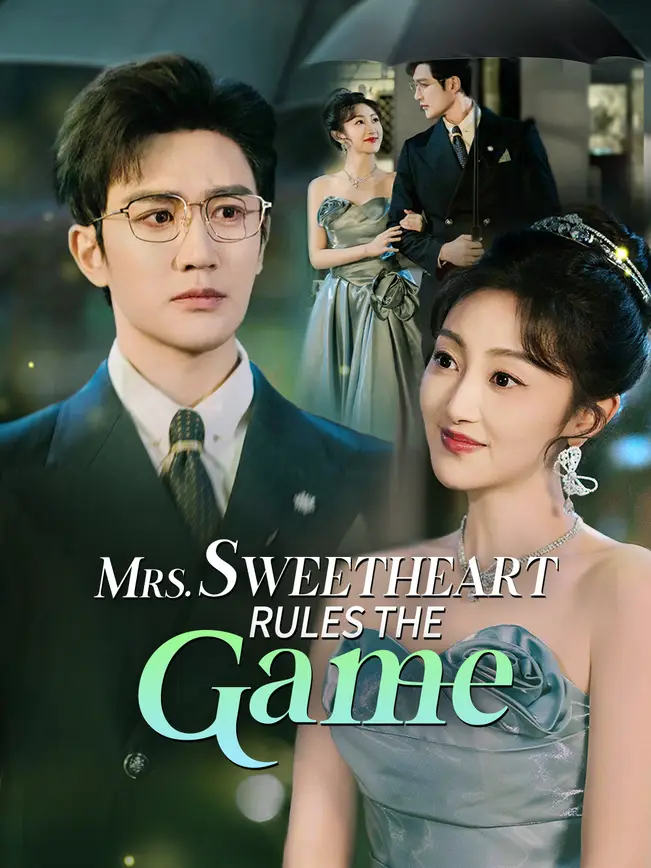
Mrs. Sweetheart Rules the Game Storyline
Mrs. Sweetheart Rules the Game More details
Genres:Flash Marriage/Karma Payback/Sweet Romance
Language:English
Release date:2025-04-22 10:23:17
Runtime:139min
Soft Wife? More Like Boss Babe!
I came for the sweet love, stayed for the power moves. She SLAYS. 💅✨
He’s the Green Flag We Deserve
Finally a male lead who protects, supports, and listens! So refreshing. 🌱💖
Sweet, Spicy, and So Addictive
Misunderstandings? Check. Sizzling chemistry? Double check. Can’t stop watching! 🔥🍬
NetShort’s Hidden Gem 💎
Didn’t expect to love it this much! The contract marriage twist is chef’s kiss. Plus, great app UX. 📲😍
Mrs. Sweetheart Rules the Game: The Silent Observer's Dilemma
The character of the woman in the blue blouse serves as a crucial narrative device in this episode of Mrs. Sweetheart Rules the Game. She is the silent observer, the third party who witnesses the intimate moments between the main couple without being able to participate. Her role is that of the outsider looking in, a position that evokes a sense of empathy and frustration in the audience. We see the story through her eyes, experiencing the pain of exclusion and the curiosity of the unknown. Her presence in the hallway, hiding behind the door, is a visual representation of her emotional state. She is on the periphery of the action, close enough to see but too far to touch. This spatial arrangement mirrors her relationship with the other characters, particularly the man. She is close to him, perhaps emotionally or historically, but currently separated by the presence of the woman in red. The woman in blue's reaction to the scene she witnesses is a study in suppressed emotion. She does not burst into the room or interrupt the couple; instead, she watches in silence, her face a mask of shock and hurt. Her hands clutch the doorframe, her knuckles white with tension. She is holding herself back, fighting the urge to intervene. This restraint suggests a level of maturity or perhaps a fear of the consequences of her actions. She knows that if she reveals herself, she might lose whatever standing she has with the man. So she remains hidden, absorbing the pain of seeing him with another woman. In Mrs. Sweetheart Rules the Game, silence is often a form of communication, and the woman in blue's silence speaks volumes about her feelings and her situation. She is a tragic figure, caught in a love triangle where she seems to be the one losing out. After the couple leaves, the woman in blue's actions reveal her desperation. She rushes to the door, pressing her ear against it, trying to hear what is happening inside. This act of eavesdropping is a violation of privacy, but it is also a desperate attempt to stay connected to the man. She needs to know what they are saying, what they are doing. She needs to understand the nature of their relationship. Her inability to let go of the situation highlights her emotional investment in the man. She is not just a casual observer; she is deeply involved, perhaps in love with him. The door becomes a barrier that she cannot cross, a symbol of the distance between them. In Mrs. Sweetheart Rules the Game, physical barriers often represent emotional ones, and the door in this scene is a powerful metaphor for the separation between the woman in blue and the man she cares for. The woman in blue's attempt to open the door and her subsequent failure to do so is a moment of defeat. She is locked out, both literally and figuratively. She is excluded from the intimate space of the bedroom, a space that represents the closeness and connection that she desires. Her frustration is palpable as she tries the handle again and again, hoping that it will open. But it remains closed, a stubborn reminder of her exclusion. She leans her forehead against the door, her body slumping in defeat. It is a heartbreaking moment, one that elicits sympathy from the audience. We feel her pain, her loneliness, her sense of abandonment. In Mrs. Sweetheart Rules the Game, the emotional journeys of the supporting characters are often just as compelling as those of the leads, and the woman in blue is no exception. Her story is one of unrequited love and silent suffering, a narrative thread that adds depth and complexity to the overall plot. The small green object on the floor, which the camera focuses on briefly, might be significant to the woman in blue's story. It could be something she dropped, a token of her presence in the room. Or it could be something left behind by the couple, a clue to their relationship. Whatever its significance, it serves as a reminder of the physical reality of the scene, of the objects and details that ground the story in a tangible world. The woman in blue might notice this object later, using it as a piece of evidence in her investigation of the couple's relationship. Or it might remain a mystery, a small detail that adds to the atmosphere of the scene. In Mrs. Sweetheart Rules the Game, even the smallest details can have narrative weight, and the green object is a tantalizing hint of things to come. The woman in blue's attention to detail, her observation of the environment, suggests that she is a character who is alert and aware, even in her moment of distress. As the episode continues, the woman in blue's role as the silent observer will likely evolve. She may decide to take action, to confront the man or the woman in red. Or she may continue to watch from the sidelines, gathering information and biding her time. Her dilemma is a common one in romantic dramas: whether to speak up and risk rejection or to remain silent and suffer in silence. The choice she makes will define her character and her relationship with the other players in the game. In Mrs. Sweetheart Rules the Game, the silent observer often becomes the key to unlocking the secrets of the main couple, and the woman in blue is poised to play a pivotal role in the unfolding drama. Her perspective offers a counterpoint to the intense intimacy of the main couple, reminding us that there are always consequences to our actions and that our choices affect those around us.
Mrs. Sweetheart Rules the Game: The Red Dress Deception
The opening scene of this episode from Mrs. Sweetheart Rules the Game immediately establishes a high-stakes emotional atmosphere that feels both intimate and performative. We see the female lead, dressed in a striking red velvet dress with a pristine white collar, engaging in what appears to be a desperate plea or confrontation with the male lead. Her body language is frantic, her hands gripping his suit jacket as if he is her only anchor in a storm. However, the camera angle shifts to reveal a crucial piece of information that recontextualizes the entire interaction: a second woman, dressed in a demure blue striped blouse, is watching from behind a partially open door. This visual storytelling technique is a hallmark of Mrs. Sweetheart Rules the Game, where the audience is often privy to secrets that the characters within the scene are trying to hide from one another. The woman in red is not merely arguing; she is staging a scene. Her expressions shift rapidly from distress to a calculated vulnerability. When she clutches her stomach and leans into the man, it feels less like a spontaneous collapse and more like a rehearsed maneuver designed to elicit a specific protective response. The man, dressed in a sharp brown double-breasted suit, initially appears concerned, his brow furrowed as he tries to assess her condition. But there is a hesitation in his movements, a slight stiffness that suggests he might be aware that something is amiss, or perhaps he is simply overwhelmed by the intensity of her performance. The woman in blue, the silent observer, acts as the audience surrogate in this moment. Her wide eyes and slightly parted lips mirror our own shock and curiosity. She is the third wheel in this romantic triangle, the outsider looking in, and her presence adds a layer of tension that permeates the room. As the scene progresses, the physical intimacy escalates. The woman in red wraps her arms around the man's neck, pulling him closer. She is invading his personal space with an aggression that contradicts her supposed weakness. She touches her forehead, feigning a dizzy spell, a classic trope in romantic dramas that serves to justify physical contact and lower the man's defenses. The man catches her, his arms wrapping around her waist to support her weight. It is in this embrace that the power dynamics of Mrs. Sweetheart Rules the Game become most apparent. While she appears to be the one in distress, she is actually the one controlling the physical proximity and the emotional tempo of the interaction. She is dictating the terms of their engagement, forcing him into the role of the rescuer. The woman in blue continues to watch, her expression shifting from shock to a dawning realization of the manipulation at play. She sees the way the woman in red's eyes flutter closed at convenient moments, the way her body goes limp only when it ensures she will be held. The climax of this sequence occurs when the man lifts the woman in red into his arms. It is a dramatic gesture, a prince carrying his princess, but the context strips it of its fairy tale romance. He carries her out of the room, past the hiding woman in blue, who is now fully exposed in her eavesdropping. The camera lingers on the woman in blue as the couple disappears through the door. She is left alone in the hallway, her isolation palpable. She rushes to the door, pressing her ear against it, trying to hear what is happening on the other side. This action highlights her desperation and her inability to let go of the situation. She is trapped in the role of the observer, unable to intervene, forced to watch the narrative unfold without her. The door becomes a symbolic barrier between the public performance of the couple and the private reality of the observer. In Mrs. Sweetheart Rules the Game, doors and thresholds often represent the boundaries between truth and deception, and here, the door separates the fabricated crisis from the silent witness. The woman in blue's attempt to listen at the door is a poignant moment of vulnerability. She is not just curious; she is invested. Her body language, hunched over and pressing against the wood, suggests a deep emotional connection to the people inside, or perhaps a fear of what their union means for her own place in this world. She tries the handle, finding it locked or simply unwilling to open, reinforcing her exclusion. The scene cuts to a close-up of a small green object on the floor, a detail that might seem insignificant but likely holds narrative weight in the broader context of the series. It could be a clue, a lost item, or a symbol of the fragility of the relationships depicted. The focus on such a small detail amidst the high drama serves to ground the story in a tangible reality, reminding us that even in moments of intense emotion, the physical world continues to exist. Ultimately, this sequence is a masterclass in visual storytelling and character dynamics. The woman in red uses her vulnerability as a weapon, the man is caught between duty and suspicion, and the woman in blue is the tragic figure of the excluded third party. The interplay of these three characters creates a complex web of emotions that drives the narrative forward. The red dress, the brown suit, and the blue blouse are not just costumes; they are visual markers of their roles in this drama. Red for passion and danger, brown for stability and tradition, and blue for sadness and observation. As the man carries the woman in red away, we are left wondering about the true nature of their relationship and the fate of the woman left behind in the hallway. The episode of Mrs. Sweetheart Rules the Game leaves us with more questions than answers, compelling us to keep watching to see how this intricate game of love and deception will play out.
Mrs. Sweetheart Rules the Game: Visual Storytelling and Color Symbolism
The visual language of this episode of Mrs. Sweetheart Rules the Game is rich with symbolism and deliberate choices that enhance the narrative. The most striking visual element is the color palette used for the characters' costumes. The female lead is dressed in a vibrant red velvet dress, a color that immediately draws the eye and signifies passion, danger, and power. Red is an aggressive color, one that demands attention and asserts dominance. By dressing the female lead in red, the show is signaling her role as the active agent in the scene, the one who is driving the action and manipulating the situation. The white collar of her dress adds a touch of innocence and purity, creating a visual contradiction that mirrors her character's duality. She is both the seductress and the innocent, the predator and the prey. This use of color is a sophisticated storytelling technique that adds layers of meaning to the character without the need for dialogue. In contrast, the male lead is dressed in a brown suit, a color that represents stability, earthiness, and tradition. Brown is a grounding color, one that suggests reliability and seriousness. This choice of costume aligns with his role as the object of desire, the stable figure that the female lead is trying to capture. His suit is well-tailored and formal, indicating his status and his adherence to social norms. He is the anchor in the scene, the one who is being pulled in different directions by the emotions of the women around him. The brown of his suit contrasts with the red of the woman's dress, creating a visual tension that reflects the emotional tension between the characters. In Mrs. Sweetheart Rules the Game, costume design is not just about aesthetics; it is a tool for character development and narrative exposition. The colors the characters wear tell us who they are and what they want. The woman in blue is dressed in a light blue striped blouse, a color that signifies sadness, calm, and observation. Blue is a passive color, one that recedes into the background. This choice of costume perfectly suits her role as the silent observer. She is not the center of attention; she is the one watching from the sidelines. The stripes on her blouse add a sense of order and structure, suggesting that she is a character who values logic and reason over emotion. She is the rational counterpoint to the passionate chaos of the woman in red. The contrast between the red and the blue is a classic visual trope, representing the clash between passion and reason, between action and observation. In Mrs. Sweetheart Rules the Game, these visual contrasts are used to highlight the conflicts and dynamics between the characters, creating a visually engaging and thematically rich viewing experience. The setting of the scenes also plays a crucial role in the visual storytelling. The hallway where the initial confrontation takes place is a transitional space, a place of movement and change. It is not a destination in itself but a path to somewhere else. This setting reflects the transient nature of the interaction between the characters. They are in motion, moving from one emotional state to another. The door in the hallway is a significant prop, serving as a barrier and a threshold. It separates the public space of the hallway from the private space of the room beyond. The woman in blue's position behind the door emphasizes her exclusion from the private world of the couple. In Mrs. Sweetheart Rules the Game, spaces are often used to reflect the emotional states of the characters, and the hallway is a space of liminality and uncertainty. The bedroom scene offers a different visual atmosphere. The room is bright and airy, with large windows that let in natural light. The bed is covered in blue sheets, echoing the color of the woman in blue's blouse. This repetition of the color blue creates a visual link between the woman in blue and the space of the bedroom, suggesting that she has a connection to this intimate space, even if she is currently excluded from it. The blue sheets also provide a cool contrast to the red dress of the female lead, making her stand out even more in the frame. The bedroom is a space of intimacy and vulnerability, a place where masks can be dropped and true feelings revealed. The visual composition of the scene, with the characters positioned on and around the bed, emphasizes the intimacy of their interaction. In Mrs. Sweetheart Rules the Game, the setting is an integral part of the storytelling, providing context and atmosphere that enhance the emotional impact of the narrative. The camera work in these scenes is also noteworthy. The use of close-ups on the characters' faces allows the audience to see the subtle shifts in their expressions, the flickers of emotion that reveal their true feelings. The camera often lingers on the woman in red's face, capturing her performative expressions and the moments when her mask slips. The use of over-the-shoulder shots places the audience in the perspective of the characters, making us feel like we are part of the conversation. The camera movement is smooth and fluid, following the characters as they move through the space. This dynamic camera work adds to the sense of urgency and intensity in the scenes. In Mrs. Sweetheart Rules the Game, the visual style is as important as the dialogue in conveying the story, and the careful attention to color, setting, and camera work creates a cohesive and immersive viewing experience.
Mrs. Sweetheart Rules the Game: The Bedroom Power Play
The transition from the hallway to the bedroom marks a significant shift in the tone and intensity of the narrative in Mrs. Sweetheart Rules the Game. The man carries the woman in red into the private sanctuary of the bedroom, a space that implies intimacy and vulnerability. He places her gently on the bed, which is covered in cool blue sheets, a color that contrasts sharply with her fiery red dress. This visual contrast is striking and symbolic, perhaps suggesting a clash between her heated emotions and the calm, or perhaps cold, reality of the situation. Once she is seated on the bed, the dynamic between the two characters begins to evolve. The man stands over her, his posture dominant yet attentive, while she looks up at him, her expression a mix of gratitude and lingering distress. The framing of the shot, with him standing and her sitting, reinforces the power imbalance, yet her gaze challenges this hierarchy. The conversation that follows, though we cannot hear the specific words, is conveyed through intense facial expressions and gestures. The man leans in, his face close to hers, speaking with urgency. His glasses catch the light, adding a layer of intellectual scrutiny to his demeanor. He seems to be questioning her, probing for the truth behind her earlier collapse. The woman in red responds with a mix of defensiveness and charm. She touches her hair, a self-soothing gesture that also serves to draw attention to her features. She smiles at him, a soft, reassuring smile that attempts to diffuse the tension. It is a moment of negotiation, where she is trying to convince him of her sincerity while he is trying to decipher her motives. This back-and-forth is the core of the romantic tension in Mrs. Sweetheart Rules the Game, where every interaction is a battle of wits and wills. As the scene continues, the woman in red reaches out and takes the man's hand. This gesture is significant; it is an attempt to bridge the physical and emotional distance between them. She pulls him slightly towards her, her eyes wide and pleading. She is no longer the passive recipient of his care; she is actively engaging him, trying to draw him into her orbit. The man looks down at their joined hands, his expression softening. There is a moment of hesitation, a flicker of uncertainty in his eyes, before he seems to yield to her pull. He steps closer, his body language relaxing. This shift suggests that despite his earlier suspicions, he is susceptible to her charms. The woman in red knows exactly how to play him, using a combination of vulnerability and affection to lower his guard. In the world of Mrs. Sweetheart Rules the Game, affection is often a strategy, and love is a battlefield. The woman in red then stands up, bringing herself to his level. She is no longer looking up at him; they are face to face. She speaks to him with intensity, her hands gesturing emphatically. She seems to be making a promise or a declaration, something that requires his full attention. The man listens intently, his gaze fixed on her. There is a seriousness in his expression that suggests the stakes of their conversation are high. He is not just listening to her words; he is evaluating her character. The woman in red, for her part, is fully committed to her performance. She is pouring her energy into convincing him, her entire being focused on this single goal. The chemistry between them is palpable, a mix of attraction and conflict that keeps the viewer engaged. The bedroom setting amplifies this intimacy, stripping away the distractions of the outside world and focusing solely on their interaction. Suddenly, the mood shifts again. The woman in red turns away from the man and moves towards the bed. She grabs a pillow and hugs it to her chest, her back to him. This action is a retreat, a withdrawal from the intensity of the confrontation. She is creating a barrier between them, using the pillow as a shield. The man watches her, his expression unreadable. He stands still, allowing her this moment of retreat. It is a test, perhaps, to see how she will react when he does not pursue her immediately. The woman in red peeks out from behind the pillow, her eyes meeting his. There is a playfulness in her gaze, a hint that her retreat is not a surrender but a tactical maneuver. She is inviting him to come closer, to break down her defenses. The man takes a step forward, his hand reaching out. The scene ends on this note of anticipation, leaving the viewer wondering whether he will embrace her or push her away. The use of the bed and the pillow as props is particularly effective in this scene. The bed represents the potential for intimacy, while the pillow represents the barriers that the characters put up to protect themselves. The woman in red's interaction with these objects highlights her internal conflict. She wants to be close to the man, but she is also afraid of being hurt. She uses the pillow to create a safe space for herself, a place where she can observe him without fully exposing herself. The man's reaction to her retreat is equally telling. He does not force her; he waits. This patience suggests that he is willing to play her game, that he is interested in seeing how far she will go. In Mrs. Sweetheart Rules the Game, the chase is often more important than the capture, and the tension lies in the uncertainty of the outcome. The scene is a delicate dance of approach and retreat, of revelation and concealment, that keeps the audience on the edge of their seats.
Mrs. Sweetheart Rules the Game: The Psychology of the Rescue Fantasy
The interaction between the man and the woman in red in this episode of Mrs. Sweetheart Rules the Game taps into a deep-seated psychological archetype: the rescue fantasy. The woman in red presents herself as a damsel in distress, someone who is weak and in need of protection. She clutches her stomach, she feigns dizziness, she collapses into his arms. These are all classic signals of vulnerability that trigger the protective instincts in the male lead. He responds by picking her up and carrying her to safety, fulfilling the role of the hero. This dynamic is a common trope in romantic dramas, one that appeals to the desire to be needed and the desire to be cared for. In Mrs. Sweetheart Rules the Game, this fantasy is played out with a level of self-awareness that adds a layer of complexity to the interaction. The woman in red is not genuinely in distress; she is consciously invoking the rescue fantasy to achieve her goals. The man's willingness to play along with this fantasy suggests that he is also invested in the dynamic. He wants to be the hero, the one who saves the day. He wants to feel strong and capable, the protector of the weak. By carrying the woman in red, he is affirming his own masculinity and his role in the relationship. He is demonstrating his strength and his willingness to take care of her. This mutual participation in the rescue fantasy creates a bond between them, a shared narrative that brings them closer together. In Mrs. Sweetheart Rules the Game, relationships are often built on these shared fantasies and roles, where each partner plays a part that satisfies the other's psychological needs. The woman in red needs to be rescued, and the man needs to be the rescuer. Together, they create a perfect, albeit potentially fragile, equilibrium. However, the presence of the woman in blue complicates this fantasy. She is the witness to the performance, the one who sees the artifice behind the scene. Her presence reminds us that the rescue fantasy is just that: a fantasy. It is a constructed narrative that serves a specific purpose. The woman in blue's reaction to the scene suggests that she sees through the act, that she recognizes the manipulation at play. She is the voice of reason, the one who questions the validity of the woman in red's distress. Her silence is a form of critique, a refusal to participate in the fantasy. In Mrs. Sweetheart Rules the Game, the rescue fantasy is often challenged by the reality of the situation, by the presence of characters who refuse to play their assigned roles. The woman in blue represents this challenge, this disruption of the idealized narrative. The bedroom scene continues to explore the psychology of the rescue fantasy. When the man places the woman in red on the bed, he is completing the rescue. He has brought her to a place of safety, a place where she can rest and recover. But the dynamic does not end there. The woman in red continues to play the role of the vulnerable damsel, looking up at him with wide, grateful eyes. She is reinforcing the fantasy, keeping him in the role of the hero. She reaches out to him, pulling him closer, inviting him to continue the rescue. She is not just passively receiving his care; she is actively encouraging it. In Mrs. Sweetheart Rules the Game, the rescue fantasy is a two-way street, where both parties benefit from the dynamic. The woman gets the attention and protection she desires, and the man gets the validation and purpose he craves. The man's response to her continued vulnerability is a mix of concern and attraction. He is drawn to her weakness, to her need for him. He wants to be the one who makes her feel better, who takes away her pain. This desire is a powerful motivator, one that drives his actions and his decisions. He leans in close, speaking softly, trying to comfort her. He is fully immersed in the role of the rescuer, committed to the fantasy. But there is also a part of him that is aware of the performance, that sees the calculation in her eyes. He is walking a fine line between belief and skepticism, between engagement and detachment. In Mrs. Sweetheart Rules the Game, the characters are often aware of the games they are playing, even as they are caught up in them. They are both the players and the pawns, navigating the complex psychology of love and desire. Ultimately, the rescue fantasy in this episode of Mrs. Sweetheart Rules the Game serves as a lens through which we can examine the dynamics of power and vulnerability in relationships. It reveals the ways in which we use our weaknesses to manipulate others and the ways in which we seek validation through the act of saving. The woman in red and the man are engaged in a delicate dance, where they are both giving and taking, both controlling and being controlled. The woman in blue stands outside this dance, observing the steps and the rhythm, waiting for her chance to join in or to disrupt the pattern. The psychology of the rescue fantasy is a central theme in the series, one that drives the plot and the character development. It is a universal theme that resonates with audiences, tapping into our deepest desires and fears about love and connection.
Mrs. Sweetheart Rules the Game: The Art of Feigned Weakness
One of the most compelling aspects of this episode of Mrs. Sweetheart Rules the Game is the portrayal of the female lead's strategic use of weakness. From the moment she appears in the hallway, clutching her stomach and leaning against the man, she is performing a role. This is not a genuine display of illness or distress; it is a calculated move designed to manipulate the situation to her advantage. The way she times her collapse, ensuring that she is in his arms before she fully loses her balance, reveals a level of planning and foresight. She knows exactly how to trigger his protective instincts, how to make him feel responsible for her well-being. This tactic is a recurring theme in Mrs. Sweetheart Rules the Game, where the female characters often use traditional gender roles to their benefit, subverting expectations by weaponizing their perceived vulnerability. The man's reaction to her feigned weakness is a mix of concern and confusion. He wants to believe that she is genuinely in pain, that she needs his help. His instinct is to protect her, to carry her to safety. But there is a part of him that is skeptical, that notices the inconsistencies in her behavior. He sees the way she looks at him when she thinks he is not paying attention, the way her grip on him tightens when she wants to emphasize a point. He is caught between his desire to care for her and his suspicion that he is being played. This internal conflict adds depth to his character, making him more than just a generic romantic lead. He is a participant in the game, trying to navigate the complexities of her emotions and motives. In Mrs. Sweetheart Rules the Game, the male lead is often the prize to be won, but he is also an active player who must decide whether to trust the woman pursuing him. The presence of the woman in blue adds another layer to this dynamic. She is the witness to the performance, the one who sees the cracks in the facade. Her reaction to the woman in red's display of weakness is one of disbelief and perhaps a little bit of envy. She sees the effectiveness of the tactic, how easily it sways the man. She might wish that she could be so bold, so uninhibited in her pursuit of affection. But she is constrained by her own nature, by her role as the observer. She watches from the sidelines, analyzing the moves of the other players but unable to make a move of her own. Her presence serves as a reminder that there are consequences to these games, that there are people who get hurt in the process. In Mrs. Sweetheart Rules the Game, every action has a reaction, and the collateral damage is often borne by those who are least equipped to handle it. The scene in the bedroom further explores the theme of feigned weakness. When the woman in red is sitting on the bed, she continues to play the role of the fragile damsel. She touches her forehead, she looks up at him with wide, innocent eyes, she speaks in a soft, trembling voice. But there are moments when the mask slips, when we see a glimpse of the steel beneath the velvet. When she grabs his hand and pulls him towards her, there is a strength in her grip that contradicts her earlier display of frailty. She is not weak; she is powerful in her own way. She knows how to use her femininity as a tool, how to manipulate the perceptions of those around her. This duality is what makes her such a fascinating character. She is both the victim and the victor, the prey and the predator. In Mrs. Sweetheart Rules the Game, the lines between strength and weakness are often blurred, and the characters who survive are those who can navigate this ambiguity. The man's response to her continued performance is to engage with her on her own terms. He plays along with her game, pretending to be fooled by her act while secretly analyzing her every move. He leans in close, speaking softly, trying to draw out the truth. He is testing her, seeing how far she will go with the charade. When she stands up and confronts him, he does not back down. He meets her gaze, challenging her to drop the act and speak honestly. This confrontation is the climax of their interaction, the moment where the pretense threatens to crumble. The woman in red holds her ground, maintaining her composure despite the pressure. She knows that if she breaks character, she loses her advantage. So she doubles down on her performance, pouring more emotion into her words, more sincerity into her eyes. It is a high-stakes gamble, but one that she is willing to take. In Mrs. Sweetheart Rules the Game, the biggest risks often yield the biggest rewards, and the woman in red is playing for the highest prize of all: the man's heart. Ultimately, the art of feigned weakness is a survival strategy in the world of Mrs. Sweetheart Rules the Game. It is a way for the female characters to exert control in a situation where they might otherwise be powerless. By appearing vulnerable, they invite the protection and attention of the male characters, using this leverage to achieve their goals. It is a complex and often controversial tactic, but one that is undeniably effective. The woman in red is a master of this art, using her perceived fragility to manipulate the man and the situation to her advantage. Whether her motives are pure or selfish remains to be seen, but her skill in navigating the emotional landscape of the series is undeniable. As the episode progresses, we will see whether her strategy pays off or whether her deception will eventually be exposed, leading to consequences that she cannot control.

Sweet Romance






.jpg~tplv-vod-rs:651:868.webp)
Flash Marriage


.jpg~tplv-vod-rs:651:868.webp)

Karma Payback






 Download