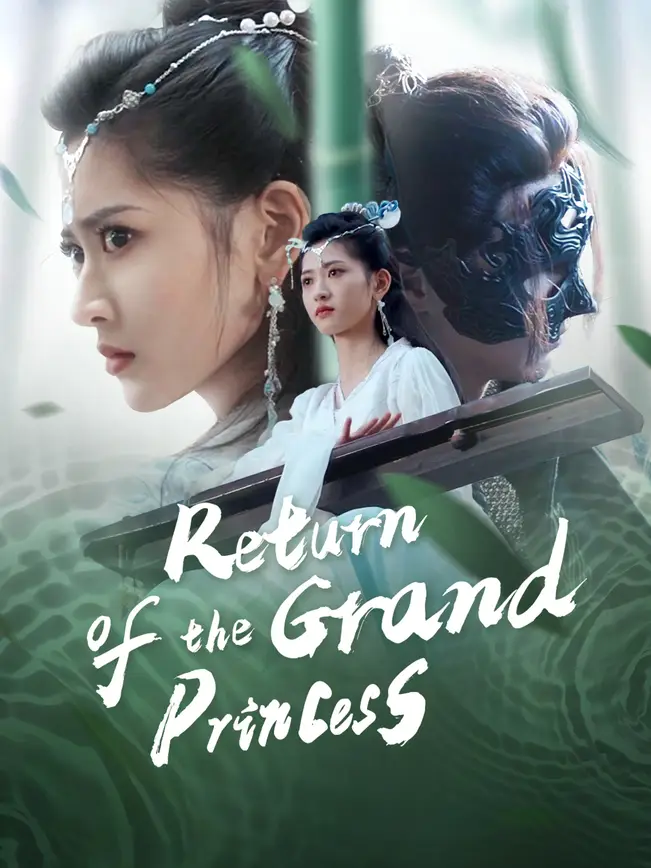
Grace's Return: The Reversal of Fate Storyline
Grace's Return: The Reversal of Fate More details
Genres:Slow-Burn Romance/Mistaken Identity/Karma Payback
Language:English
Release date:2025-02-25 21:26:00
Runtime:110min
The Thrill of Reliving Shark Week
Wow! "Shark Bait: Karma's Bite" takes you on a wild, jaw-dropping ride! Nina's journey of betrayal, revenge, and redemption made me cheer for her all the way. Watching her use her knowledge of the future to outsmart a mega-shark and save the day was exh
Epic Tale of Rebirth and Survival
This short series is such a unique spin on the apocalyptic genre! Nina’s character development is impressive as she goes from victim to hero. The way she turns the tables on her betrayers is so satisfying to watch. The pacing is perfect, keeping the ten
A Tale of Sweet Vengeance with a Bite
"Shark Bait: Karma's Bite" is a thrilling blend of suspense and action, with a dash of humor. I loved how Nina used her second chance to not only save lives but also teach her cheating ex a lesson. The storyline is clever, and the dialogue is witty
A Riveting Dance with Danger and Destiny
If you’re looking for a short series that packs a punch, this is it! The combination of a mega-shark, time loops, and a strong female lead makes for an epic adventure. Nina’s fearless attitude and smart tactics had me hooked from start to finish. Th
Grace's Return: The Reversal of Fate — The Beads That Watch, the Silence That Speaks
If you’ve ever wondered what it feels like to be trapped inside a gilded cage while everyone outside assumes you’re dancing at the banquet, then *Grace's Return: The Reversal of Fate* is your mirror. The film opens not with fanfare, but with silence—the kind that settles after a storm has passed, leaving behind debris no one dares touch. We see the palace gates, massive and unyielding, flanked by soldiers whose armor gleams under the sun, yet whose faces remain unreadable. The text scrolls vertically, like an imperial edict unfurling: ‘Da Liang Year 31’, ‘Xiao Qi ascends the throne’, ‘Changes the era name to Qing’, ‘Shen Suqing enfeoffed as Empress’. These aren’t announcements—they’re verdicts. And the camera doesn’t linger on the crowds or the banners. It lingers on the *space between* the pillars, the shadow beneath the eaves, the way the wind stirs the grass at the edge of the courtyard. That’s where the real story lives. Then we’re inside. Not the throne room, not the audience hall—but a private chamber, draped in layers of silk and strung with thousands of pearl-like beads that hang like frozen rain. This is where power retreats to breathe. Here, Xiao Qi and Shen Suqing sit side by side, their bodies angled toward each other, their hands entwined. At first glance, it’s idyllic: candlelight, soft fabrics, the faint scent of sandalwood. But watch closely. Shen Suqing’s fingers tremble—just slightly—as Xiao Qi speaks. Her smile doesn’t reach her eyes. Her posture is upright, regal, but her shoulders are tense, as if bracing for impact. Xiao Qi, for his part, leans in with the ease of a man who’s spent years learning how to read her silences. He knows when she’s lying. He knows when she’s afraid. And in *Grace's Return: The Reversal of Fate*, that knowledge is both their greatest intimacy and their deepest wound. The kiss that follows isn’t passionate—it’s desperate. A fleeting press of lips, interrupted by Shen Suqing’s sudden gasp as she covers her mouth, her eyes wide with something between shock and guilt. Xiao Qi pulls back, his expression shifting from tenderness to sharp concern. He doesn’t ask what’s wrong. He *waits*. That’s the key. In a world where questions are weapons, silence becomes the only safe language. When she finally speaks—her voice barely audible—he doesn’t interrupt. He listens, his gaze fixed on hers, absorbing every nuance: the hesitation before the second word, the way her throat constricts when she mentions the physician, the slight tilt of her head that signals she’s withholding something vital. This isn’t passive listening. It’s active decoding. And in that moment, we realize: Xiao Qi isn’t just her husband. He’s her confessor, her strategist, her jailer, and her only ally—all rolled into one. Enter the physician. His entrance is understated, yet it changes the atmosphere like a drop of ink in water. He doesn’t announce himself. He simply appears, kneeling, his hands steady as he takes Shen Suqing’s pulse. The camera cuts between his face—calm, professional—and Xiao Qi’s—tense, calculating. Shen Suqing watches the physician’s fingers, her own breath shallow. There’s no dialogue, yet the tension is deafening. What is he feeling? Is her pulse erratic? Weak? Or is it perfectly normal—which would make her earlier distress even more suspicious? The ambiguity is intentional. *Grace's Return: The Reversal of Fate* thrives in the space between diagnosis and deception. The physician’s final nod is ambiguous too. Is it reassurance? Or resignation? When he rises and bows, Xiao Qi’s expression doesn’t relax. It hardens. Because he knows: in the palace, a clean bill of health is often the most dangerous diagnosis of all. What makes this scene unforgettable isn’t the costumes (though Shen Suqing’s crimson robe, embroidered with phoenix motifs in gold thread, is a visual poem of ambition and fragility) or the set design (the beaded curtain alone deserves its own thesis). It’s the way the characters *occupy space*. Shen Suqing never fully relaxes into Xiao Qi’s embrace. She leans, yes—but her spine remains straight, her feet planted, as if ready to spring away at any moment. Xiao Qi holds her, but his arm is positioned not to comfort, but to *contain*. It’s a lover’s hold and a ruler’s restraint, fused into one gesture. And when the camera pulls back, revealing the full chamber—the low table with the wooden medicine box, the potted plant in the corner, the distant glow of lanterns through the lattice screen—we understand: this isn’t a bedroom. It’s a stage. Every object has been placed for effect. Even the candles are arranged to cast shadows that hide as much as they reveal. The final sequence—where they sit together again, smiling, laughing softly, as if the crisis never happened—is the most chilling of all. Shen Suqing’s laughter rings true, yet her eyes remain guarded. Xiao Qi’s smile is warm, but his fingers trace idle patterns on her sleeve, as if mapping escape routes. The beaded curtain sways gently, catching the light, and for a split second, their reflections blur together—two faces, one silhouette. That’s the genius of *Grace's Return: The Reversal of Fate*. It doesn’t show us the coup. It shows us the quiet aftermath, where loyalty is tested not in battle, but in the space between heartbeats. Where love isn’t declared—it’s negotiated, bartered, and sometimes, sacrificed on the altar of survival. The last frame fades, and the words ‘The Entire Drama Ends’ appear. But we don’t believe it. Because in a world where a single bead can witness a treasonous whisper, endings are never really endings. They’re just the pause before the next lie is told, the next secret buried, the next chapter of *Grace's Return: The Reversal of Fate* begins.
Grace's Return: The Reversal of Fate — When Power Meets Vulnerability in the Palace
The opening sequence of *Grace's Return: The Reversal of Fate* doesn’t just set the stage—it *builds* it, brick by imperial brick. We begin with a low-angle shot of a colossal vermilion pillar, its weathered stone base carved with intricate lotus motifs, suggesting both sacred authority and deep-rooted tradition. The camera tilts upward, revealing a vast sky—clear, serene, almost deceptive in its calmness—before cutting to the grand palace complex beyond. This isn’t just architecture; it’s ideology made manifest. The layered roofs, the symmetrical arches, the disciplined rows of soldiers flanking the central avenue—all speak of order, hierarchy, and the weight of history. And then, the text appears: ‘Da Liang Year 31’, followed by ‘Xiao Qi ascends the throne’, ‘Changes the era name to Qing’, and finally, ‘In the same year, Shen Suqing is enfeoffed as Empress’. Each line drops like a gavel, sealing fate. But here’s what the visuals whisper beneath the official pronouncements: the soldiers stand rigid, yes—but their eyes are downcast, their postures subtly tense. There’s no jubilation in the air, only the quiet hum of anticipation laced with dread. The palace isn’t celebrating a coronation; it’s bracing for a shift in tectonic plates. Cut to the interior—a chamber draped in translucent silk and beaded curtains that shimmer like liquid pearls. Here, we meet Xiao Qi and Shen Suqing—not as sovereign and consort, but as two people caught in the fragile aftermath of a seismic event. Xiao Qi, dressed in deep indigo brocade with subtle geometric patterns, sits close to Shen Suqing, who wears crimson embroidered robes lined with white fur, her hair adorned with gold-and-jade headdresses that weigh heavy not just physically, but symbolically. Their intimacy is palpable: fingers intertwined, shoulders touching, breaths nearly synchronized. Yet, this closeness feels less like romance and more like mutual shelter. When Xiao Qi leans in, his lips parting as if to speak something tender, Shen Suqing’s gaze flickers—not with desire, but with calculation. Her eyes dart downward, then sideways, then back to him, each micro-expression a silent negotiation. She knows the stakes. She knows the cost of being loved by a man who now holds absolute power. In *Grace's Return: The Reversal of Fate*, love isn’t the climax—it’s the battlefield. The turning point arrives not with fanfare, but with a cough. A soft, almost imperceptible sound, yet it fractures the stillness like glass. Shen Suqing brings her hand to her throat, her expression shifting from composed grace to sudden alarm. Xiao Qi’s face hardens—not with anger, but with fear. His grip tightens on her wrist, not possessively, but protectively. He scans her face, searching for signs, for truth. This moment reveals everything: their relationship is built on shared secrets, unspoken threats, and the constant awareness that one misstep could unravel everything. The beaded curtain between them becomes a metaphor—beautiful, delicate, yet capable of obscuring vision, distorting reality. When the third figure enters—the court physician, clad in dark blue robes and a formal black cap with vertical slats—he doesn’t bow deeply. He kneels, yes, but his posture is measured, his eyes never quite meeting theirs. He takes Shen Suqing’s pulse, his fingers resting lightly on her wrist, and the silence stretches until it becomes unbearable. Xiao Qi watches, his jaw clenched, his earlier tenderness replaced by the cold vigilance of a ruler who understands that even healing can be weaponized. What follows is a masterclass in nonverbal storytelling. Shen Suqing’s smile returns—but it’s different now. It’s practiced. It’s armor. She turns to Xiao Qi, her voice barely above a whisper, yet carrying the weight of a decree: ‘I’m fine. Truly.’ But her eyes betray her. They’re too bright, too still. Xiao Qi nods, but his thumb strokes the back of her hand in a gesture that says, *I know you’re lying, and I’m choosing to believe you anyway.* That’s the heart of *Grace's Return: The Reversal of Fate*—not the political machinations or the palace intrigue, but the quiet, devastating compromises people make when love and power occupy the same room. The scene ends with them embracing again, this time through the veil of beads, their forms blurred, indistinct—two souls bound together, yet already beginning to dissolve into the roles they must play. The final frame fades to black, and the words appear: ‘The Entire Drama Ends.’ But we know better. In a world where empires rise and fall on whispered rumors, where a single glance can seal a fate, endings are rarely final. They’re just pauses before the next act begins. Let’s talk about Shen Suqing’s costume design, because it’s doing *so much* heavy lifting. The red isn’t just ceremonial—it’s strategic. Red signifies joy, yes, but in imperial context, it also means blood, sacrifice, and the perilous privilege of proximity to the throne. The white fur trim? Not luxury alone. It’s insulation—against cold, against betrayal, against the emotional chill that comes with being elevated beyond reach. Her headdress, with its dangling jade discs and amber accents, sways with every movement, a visual reminder that she is always *on display*, always performing. Even when she’s alone with Xiao Qi, she’s never truly alone. The palace walls have ears. The ceiling beams hold memories. And every bead in that curtain has witnessed a secret. Xiao Qi’s transition from indigo to golden-yellow robes marks his ascension, but the cut remains the same—modest sleeves, high collar—suggesting he hasn’t shed his old self entirely. He’s still the man who held her hand in the garden, even as he now signs edicts that could exile her family. That duality is the engine of *Grace's Return: The Reversal of Fate*. It’s not about whether he loves her—it’s about whether love can survive the machinery of empire. The lighting, too, tells a story. Early scenes are bathed in warm, golden-hour light—soft, forgiving, nostalgic. But as the physician enters, the shadows deepen. Candles flicker in the foreground, casting long, wavering lines across the floor, as if the very light is uncertain. The background blurs, isolating the trio in a bubble of tension. This isn’t accidental cinematography; it’s psychological staging. We’re meant to feel the narrowing of options, the closing of doors. When Shen Suqing touches her throat again, the camera lingers on her neck—not the jewelry, not the fabric, but the vulnerable skin beneath. It’s a deliberate choice: in a world where women are valued for adornment, this moment reclaims the body as site of truth. Her discomfort isn’t theatrical; it’s visceral. And Xiao Qi sees it. He always sees it. That’s why his final smile, when he turns back to her after the physician departs, is tinged with sorrow. He knows what she’s hiding. He knows what he must do. And yet—he pulls her closer. Because in *Grace's Return: The Reversal of Fate*, the most dangerous choice isn’t defiance. It’s surrender. Not to power, but to love—even when love is the first casualty of the crown.
Grace's Return: The Reversal of Fate — The Language of Hands in a World of Words
In a genre saturated with melodramatic declarations and sword-clashing climaxes, Grace's Return: The Reversal of Fate dares to whisper—and in doing so, it speaks volumes. The central sequence between Liu Zhen and Xue Rong is not defined by what they say, but by what their hands do when no one is looking. This is historical romance stripped bare of artifice, where a single touch carries the weight of confession, betrayal, and redemption all at once. To watch this scene is to witness the evolution of intimacy not through dialogue, but through choreography: the way fingers curl, hesitate, press, release—each movement a sentence in a language older than script. Let’s begin with the hands themselves. Liu Zhen’s are large, strong, marked by discipline—yet when they meet Xue Rong’s, they soften. Not weakly, but with intention. In the close-up at 00:08, his thumbs glide along the inner seam of her sleeve, not to adjust, but to *feel*. The embroidery—gold-threaded peonies and swirling clouds—is not just decorative; it’s tactile evidence of her identity, her family’s legacy, her constraints. By tracing it, he’s not admiring craftsmanship; he’s mapping her soul. Xue Rong’s hands, in contrast, remain still at first—folded neatly in her lap, a posture of obedience. But as the scene progresses, they betray her. At 00:46, when he takes her wrist, her fingers twitch, then relax—not in submission, but in reluctant trust. That micro-gesture is more revealing than any soliloquy could be. It says: *I know I shouldn’t let you in. But I’m tired of holding the door shut.* The brilliance of Grace's Return: The Reversal of Fate lies in how it weaponizes restraint. Liu Zhen never grabs. He *invites*. He lifts her chin not with force, but with the gentle pressure of a question. When he cups her jaw at 00:25, his palm fits perfectly—not because of luck, but because he’s memorized her shape in absence. Xue Rong’s reaction is equally nuanced: she doesn’t pull away, but her eyes dart sideways, scanning the room, checking for witnesses. That glance isn’t paranoia—it’s survival instinct. In her world, affection is surveillance. Every caress is a potential indictment. And yet, she stays. She lets him linger. That choice—small, silent, seismic—is the core of the show’s emotional intelligence. Consider the symbolism of the table. Round, low, covered in a woven cloth with fringed edges—its design suggests continuity, inclusivity, equality. Yet Liu Zhen repeatedly breaks that symmetry: standing, leaning, invading her space. Each time, Xue Rong doesn’t retreat. She tilts her head, opens her posture, allows the imbalance. This isn’t passivity; it’s active participation in a dance she’s been trained to avoid. Her jewelry—layered necklaces of jade, coral, and gold—sways with her movements, catching light like scattered stars. When Liu Zhen’s hand brushes her collarbone at 00:27, the pendant swings forward, momentarily obscuring her throat. It’s a visual metaphor: desire veiling vulnerability, beauty shielding truth. The show doesn’t explain it. It trusts the viewer to feel it. Then there’s the interruption—the arrival of the man in white robes. His entrance is framed through a curtain’s edge, deliberately obscured, forcing us to interpret through context rather than exposition. Xue Rong’s hands, which had been resting loosely on the table, now clasp together—fingers interlaced, knuckles whitening. A classic sign of anxiety, yes, but also of control. She’s rehearsing composure. Liu Zhen, meanwhile, doesn’t look at the newcomer immediately. He watches *her*. His gaze lingers on her clasped hands, then flicks upward to her face, reading the shift in her expression like a scroll. That moment—three seconds of silent observation—is where Grace's Return: The Reversal of Fate earns its title. Because ‘return’ isn’t just about Xue Rong’s physical reappearance in Liu Zhen’s life; it’s about the return of honesty, of raw feeling, after years of performance. And ‘reversal of fate’? That’s not destiny changing course—it’s two people choosing to rewrite their roles mid-scene, defying the script written for them by bloodline and duty. What makes this sequence unforgettable is its refusal to romanticize suffering. There’s no tragic music swelling as Liu Zhen touches her. No slow-motion tear rolling down her cheek. Instead, there’s the sound of fabric shifting, the soft click of a teacup being set down, the almost imperceptible sigh Xue Rong releases when his thumb strokes her pulse point. These are the sounds of real intimacy—the ones that happen when no one’s filming, when the masks slip just enough to let the truth peek through. The cinematography supports this: shallow depth of field keeps the background blurred, but never *empty*. We see the shelves, the plants, the hanging lanterns—not as set dressing, but as silent witnesses. They’ve seen this before. They’ll see it again. And yet, each time feels new, because the players have changed. Liu Zhen’s transformation throughout the scene is subtle but profound. He begins with a smirk—confident, perhaps even mocking. By the midpoint, his expression is earnest, his shoulders less rigid. When he kneels slightly to meet her eye level at 00:13, it’s not subservience; it’s alignment. He’s saying, *I will meet you where you are, not where I expect you to be.* Xue Rong responds not with words, but with a tilt of her chin, a half-smile that’s equal parts challenge and invitation. Their chemistry isn’t explosive—it’s magnetic, gravitational, the kind that pulls you in without shouting. You don’t need subtitles to understand that when he raises his hand in a mock oath at 00:49, she rolls her eyes—but her lips quirk upward. That’s the secret language of lovers who’ve fought before and chosen to stay. And then—the final beat. As the white-robed figure approaches, Liu Zhen doesn’t withdraw. He places his hand over hers on the table, fingers spreading to cover hers completely. Not possessive. Protective. A shield. Xue Rong looks down at their joined hands, then up at him—and for the first time, she doesn’t look conflicted. She looks resolved. That’s the climax of Grace's Return: The Reversal of Fate: not a kiss, not a vow, but the quiet certainty of two people deciding, in a room full of ghosts and expectations, that *this*—the touch, the tension, the terrifying hope—is worth the cost. The show doesn’t promise happiness. It promises authenticity. And in a world where every gesture is scrutinized, that’s the most radical act of all.
Grace's Return: The Reversal of Fate — When a Sleeve Becomes a Confession
In the quiet opulence of a silk-draped chamber, where incense coils like unspoken thoughts and candlelight flickers with the rhythm of a hesitant heartbeat, two figures sit across a low round table—Liu Zhen in deep indigo velvet, his hair coiled high with a golden dragon ornament, and Lady Xue Rong, draped in magenta brocade embroidered with phoenix motifs, her headdress crowned with red crescent horns and jade tassels that sway with every subtle shift of her gaze. This is not just a tea session—it’s a battlefield of glances, a slow-motion duel where every gesture carries weight, every silence hums with implication. Grace's Return: The Reversal of Fate opens not with fanfare, but with the delicate tension of a sleeve being adjusted—a moment so small it could be missed, yet so loaded it rewrites the emotional architecture of the scene. The first act of intimacy is not a kiss, nor a declaration, but Liu Zhen’s hands—calloused yet precise—reaching for Xue Rong’s left cuff. His fingers trace the edge of the embroidered hem, pulling it gently downward as if correcting a flaw only he can see. She does not flinch. Instead, her breath catches—not in alarm, but in recognition. That tiny motion signals something deeper than propriety: it’s an assertion of presence, a silent claim that he sees her, truly sees her, even in the folds of fabric she wears like armor. Her sleeve, rich with gold-threaded clouds and cranes, is not merely decoration; it’s a symbol of status, of lineage, of restraint. And by adjusting it, Liu Zhen isn’t fixing her attire—he’s dismantling the barriers she’s built around herself, one thread at a time. What follows is a masterclass in nonverbal storytelling. Liu Zhen rises—not abruptly, but with the controlled grace of someone who knows his power and chooses to wield it softly. He circles the table, his shadow falling over her like a promise. When he lifts her chin with his thumb, the camera lingers on the contact: skin against skin, warm and deliberate. Xue Rong’s eyes widen—not with fear, but with dawning realization. Her lips part slightly, not to speak, but to breathe in the proximity of him, the scent of sandalwood and aged paper clinging to his robes. In that suspended second, the entire room seems to hold its breath. The background—shelves lined with scrolls, a bonsai tree glowing under soft lantern light—fades into insignificance. All that remains is the tilt of her head, the slight tremor in her lashes, and the way Liu Zhen’s expression shifts from playful to fiercely tender, as if he’s just remembered something vital he’d forgotten long ago. This is where Grace's Return: The Reversal of Fate reveals its true genius: it understands that romance in historical drama isn’t about grand gestures alone—it’s about the micro-moments that betray the heart’s true allegiance. When Liu Zhen leans in, his voice barely above a whisper (though no words are audible in the clip), Xue Rong doesn’t look away. She *leans* into his touch, her neck arching just enough to invite more. That’s the turning point—not when he speaks, but when she surrenders her resistance without uttering a syllable. Later, when he takes her hand, his thumb brushing the pulse point on her wrist, the camera zooms in on the faint red mark on his knuckle—a detail most productions would omit. Is it from earlier conflict? A self-inflicted wound? A sign of past desperation? The ambiguity is intentional. It invites the viewer to speculate, to invest, to become complicit in their unfolding story. The dynamic between them is layered with history. Liu Zhen’s expressions oscillate between amusement and anguish—his smile never quite reaches his eyes, suggesting a man who’s learned to mask pain behind charm. Xue Rong, meanwhile, embodies the paradox of the cultivated noblewoman: outwardly composed, inwardly volatile. Her smiles are practiced, her nods measured—but when Liu Zhen touches her, her composure fractures beautifully. In one shot, she blinks rapidly, as if fighting back tears she refuses to shed. In another, she exhales through her nose, a tiny sound of surrender that speaks louder than any monologue. These are not actors performing emotion; they’re vessels channeling it, and the director trusts the audience to read between the lines. The setting reinforces this intimacy. The room is neither too lavish nor too austere—it’s *lived-in*, with mismatched stools, a slightly frayed tablecloth, and a potted plant that leans toward the window as if yearning for light. Even the candle in the foreground, blurred but luminous, acts as a visual motif: warmth, fragility, transience. It mirrors their relationship—bright, flickering, capable of illuminating darkness, yet always at risk of being snuffed out by a sudden draft. When Liu Zhen finally sits again, his posture relaxed but his gaze locked onto hers, the tension doesn’t dissolve—it transforms. It becomes something quieter, deeper, more dangerous. Because now, they both know: there’s no going back. Then comes the interruption—not with a shout or a crash, but with the soft rustle of silk. A third figure enters: a man in ivory-white robes, embroidered with silver vines and a phoenix clasp at his waist. His entrance is unhurried, regal, yet charged with unspoken authority. Xue Rong’s expression shifts instantly—not fear, but calculation. Her smile returns, polished and distant. Liu Zhen’s jaw tightens, just perceptibly. The air changes. The candle flame dips. This is the pivot point of Grace's Return: The Reversal of Fate—the moment when private vulnerability collides with public expectation. Who is this newcomer? A rival? A brother? A political ally turned threat? The show doesn’t tell us outright. It lets the silence speak. And in that silence, we understand everything: love here is not freedom—it’s a risk, a rebellion, a choice made in full awareness of consequence. Liu Zhen and Xue Rong aren’t just falling for each other; they’re choosing each other *despite* the world that watches, judges, and waits to punish them for daring to want more. That’s why this scene lingers long after the screen fades: because it doesn’t offer resolution—it offers resonance. It reminds us that the most powerful love stories aren’t about happy endings, but about the courage to begin, again and again, even when the odds are stitched into the very fabric of your sleeves.
Grace's Return: The Reversal of Fate — The Box Beneath the Table
Let’s talk about the box. Not the ornate throne in the background, not the incense coils curling like smoke signals of old vows—but the black lacquered chest tucked beneath the table, half-hidden by the fringed edge of the blue damask cloth. At 00:43, the camera dips low, almost conspiratorially, to reveal its contents: slender blades, wrapped in green silk, bound with gold-threaded ribbons. Not weapons of war. Not ceremonial daggers. These are *personal* arms—compact, elegant, meant for concealment. And they sit there, silent and ominous, while Ling Zeyu and Grace exchange glances that could melt steel. That box is the ghost in the room. It doesn’t speak, but it screams louder than any dialogue ever could. *Grace's Return: The Reversal of Fate* thrives on such subtext. The series doesn’t need monologues to establish stakes; it uses mise-en-scène like a poet uses meter. Consider the contrast between Ling Zeyu’s attire and Grace’s: his robes are luminous, almost ethereal—ivory with threads of pale gold, suggesting purity, legitimacy, divine right. Hers is rich, saturated, *earthbound*—magenta with silver embroidery, grounded in tradition but edged with rebellion. Her belt is not silk, but woven jade and crimson cord, fastened with a clasp shaped like a coiled serpent. Symbolism? Absolutely. But more importantly: intention. She did not dress to please. She dressed to *be seen*, to remind him—and the audience—that she is not the girl he sent away. She is the woman who survived. Their interaction is a dance of restraint. At 00:17, Ling Zeyu’s hand hovers near hers, then retreats. At 00:28, he finally touches her wrist—not gripping, but cradling, as if holding something fragile yet dangerous. Grace’s reaction is telling: she doesn’t flinch. She watches his fingers, then lifts her eyes to meet his. There is no anger in her gaze. Only assessment. Like a general reviewing troop formations before battle. This is not weakness. It is strategy. And Grace, in *Grace's Return: The Reversal of Fate*, has become a master strategist—not of armies, but of emotions. She knows that the most devastating strikes are the ones delivered with a smile. The third character’s entrance at 00:36 is not a disruption. It is punctuation. His leather-lined sleeves, his clipped stride, the way he bows without lowering his eyes—all signal he is not subordinate. He is *equal*. And his presence forces Ling Zeyu to recalibrate instantly. The intimate bubble shatters, but not irreparably. Instead, it reforms—tighter, more deliberate. Grace steps back half a pace, not in submission, but in repositioning. She lets Ling Zeyu take the front, but her posture remains unyielding. Her chin stays level. Her hands, though clasped before her, are ready. One misstep, and those blades in the box could be in her grip before anyone blinks. What’s fascinating is how the lighting evolves across the sequence. Early frames are bathed in warm, diffused light—candle glow, soft shadows, the illusion of safety. But by 01:14, a shaft of sunlight pierces the lattice window behind them, casting sharp diagonal lines across Grace’s face. Light becomes a divider. It illuminates her profile while leaving Ling Zeyu partially in shadow. Visually, the power dynamic shifts—not because she moves, but because the world *chooses* to spotlight her. And when he leans in at 01:32, that same light catches the edge of her earring, a tiny flash of gold like a warning flare. He kisses her temple. She closes her eyes. But her fingers, visible at the edge of the frame, do not relax. They remain poised. Ready. This is where *Grace's Return: The Reversal of Fate* earns its title. The reversal isn’t in her physical return—it’s in the inversion of expectations. We assume the exiled lover returns broken, seeking forgiveness. But Grace returns *armed*. Not just with blades, but with clarity. She knows why he let her go. She knows what he sacrificed. And she refuses to let him hide behind noble silence anymore. At 00:57, when she smiles—a small, knowing curve of the lips—it’s not flirtation. It’s acknowledgment. *I see you. And I’m not afraid.* The series excels in using silence as narrative fuel. No subtitles needed when Ling Zeyu’s breath hitches at 01:09, or when Grace’s eyelids flutter at 01:40—not from passion, but from the sheer cognitive dissonance of feeling safe in the arms of the man who caused her exile. Their kiss at 01:42 is tender, yes, but it’s also a truce. A temporary ceasefire in a war neither wants to fight, but both know is inevitable. The way his hand slides from her waist to her back, pulling her closer, while hers rests lightly on his shoulder—not clinging, but *measuring*—reveals everything. She is not surrendering. She is gathering intelligence. And let’s not forget the cultural texture. The jade pendant at Grace’s throat—a carved crane in flight—is not mere decoration. In classical symbolism, the crane represents longevity, but also transcendence. She is not just alive. She has *risen*. The red ribbon in her hair? Traditionally worn by brides. Is this a wedding? A funeral for their old selves? Or both? *Grace's Return: The Reversal of Fate* refuses binary answers. It lives in the gray space between love and duty, loyalty and self-preservation. The final shot—Ling Zeyu and Grace standing side by side, hands linked, facing the unseen threat beyond the frame—is not closure. It is declaration. They are no longer two halves of a broken whole. They are a new entity: forged in separation, tempered by silence, armed with memory. The box beneath the table remains closed. For now. But everyone in that room knows: when the time comes, Grace will be the one to open it. And whatever lies inside—blades, letters, a map, a poison vial—will change everything. Again. Because in *Grace's Return: The Reversal of Fate*, the most dangerous weapon is not steel. It is the choice to return, and the courage to demand more than forgiveness.
Grace's Return: The Reversal of Fate — When Silk Meets Steel
In the opulent chambers of a palace draped in crimson silk and golden light, where every candle flickers like a whispered secret, Grace’s return is not merely a homecoming—it is a recalibration of power, emotion, and fate itself. The opening frames of *Grace's Return: The Reversal of Fate* do not announce her arrival with fanfare; instead, they let silence speak first—through the subtle tilt of a head, the hesitation in a breath, the way a sleeve brushes against another’s wrist as if testing the temperature of a long-forgotten flame. This is not a story about grand battles or throne-room coups—at least not yet. It is about the quiet detonation that occurs when two people who once shared everything now stand on opposite sides of a truth neither dares name aloud. The male lead, Ling Zeyu, wears his regality like armor—ivory robes embroidered with phoenix motifs in gold and jade, a crown of gilded filigree perched atop his neatly coiffed hair. His posture is composed, his gaze measured, but his eyes betray him: they linger too long on Grace’s hands, her collar, the way her lips part when she speaks—not with defiance, but with sorrow wrapped in silk. He does not shout. He does not command. He *waits*. And in that waiting lies the tension that fuels *Grace's Return: The Reversal of Fate*. Every gesture he makes—a slight lean forward, a hand resting gently on her forearm—is calibrated to disarm, not dominate. He knows she has changed. He knows she remembers. And he fears what she might choose next. Grace, clad in deep magenta brocade lined with silver-threaded floral patterns, carries herself like a woman who has walked through fire and emerged not scorched, but tempered. Her headdress—featuring twin phoenixes with ruby eyes and a white jade orb at its center—is not just ornamentation; it is symbolism. The phoenix rises from ashes. She has risen. Her jewelry, heavy with dangling tassels of amber and coral, sways with each movement, echoing the internal rhythm of her pulse: steady, deliberate, unbroken. Yet when Ling Zeyu draws near, her breath catches—not in fear, but in recognition. That moment, captured at 00:32, where their foreheads nearly touch and the warm glow of candles blurs the edges of reality, is the emotional core of the entire series. It is not romance as we know it. It is reconciliation laced with regret, intimacy shadowed by consequence. She smiles faintly, but her eyes remain guarded—like a door left ajar, inviting entry but refusing surrender. What makes *Grace's Return: The Reversal of Fate* so compelling is how it weaponizes stillness. There are no sudden cuts, no dramatic music swells during their dialogue. Instead, the camera lingers on micro-expressions: the tightening of Grace’s jaw when Ling Zeyu mentions the northern border, the way his thumb traces the edge of her sleeve at 00:28—not possessive, but pleading. Their conversation, though silent in these frames, is written across their faces. We learn that she was exiled—not for treason, but for refusing to betray her principles. He stayed—not out of loyalty to the throne, but because he believed he could protect her from within the system. Neither was wrong. Both were broken. Then comes the intrusion—the third figure, dressed in dark indigo with a leather cuirass beneath his robe, entering at 00:36. His presence is not accidental. He is not a servant. He is a reminder: the world outside this chamber does not pause for tenderness. The table between them holds only two small bowls—steamed buns and pickled plums—simple fare for a reunion that should have been lavish. But simplicity here is strategic. It strips away pretense. When Ling Zeyu places his hand over hers at 01:06, it is not a claim. It is an apology. And Grace, after a beat, does not pull away. She exhales—softly, almost imperceptibly—and leans into his touch just enough to signal: I am listening. Not forgiving. Not forgetting. But *listening*. The visual language of *Grace's Return: The Reversal of Fate* is meticulous. The red curtains behind them are not just decor—they are thresholds. To step past them is to enter a new phase of the narrative. The ornate screen with its carved tree-of-life motif (visible at 00:35) mirrors their relationship: roots entwined, branches diverged, yet still part of the same organism. Even the rug beneath their feet—a Persian weave with faded blues and ochres—suggests time passed, history layered, beauty worn thin by use. Nothing in this scene is accidental. Every object, every shadow, every shift in lighting serves the central question: Can love survive when duty demands its sacrifice? At 01:31, Ling Zeyu pulls her close—not roughly, but with the certainty of someone who has rehearsed this motion in his dreams. His hand rests low on her waist, fingers splayed as if anchoring himself to her presence. Grace does not resist. Her eyes close. For three full seconds, the world dissolves into golden haze and soft focus. Then, at 01:39, he kisses her—not on the lips, but on the temple, a gesture both reverent and desperate. It is the kiss of a man who knows he may never be allowed this closeness again. And Grace? She does not cry. She does not speak. She simply turns her face toward him, accepting the weight of his grief, his hope, his unresolved guilt. In that moment, *Grace's Return: The Reversal of Fate* transcends melodrama. It becomes mythic. A legend being rewritten, one breath at a time. The final frames—where they stand side by side, hands clasped, gazes locked—do not resolve the tension. They deepen it. Because the real reversal of fate isn’t in her return. It’s in his willingness to let her lead the next chapter. And that, dear viewer, is where the true danger begins. When power shifts not through conquest, but through consent… that is when empires tremble. Grace’s return is not the end of her exile. It is the beginning of a reckoning no one saw coming—including herself.

Mistaken Identity



.jpg~tplv-vod-rs:651:868.webp)
Slow-Burn Romance

Karma Payback






 Download