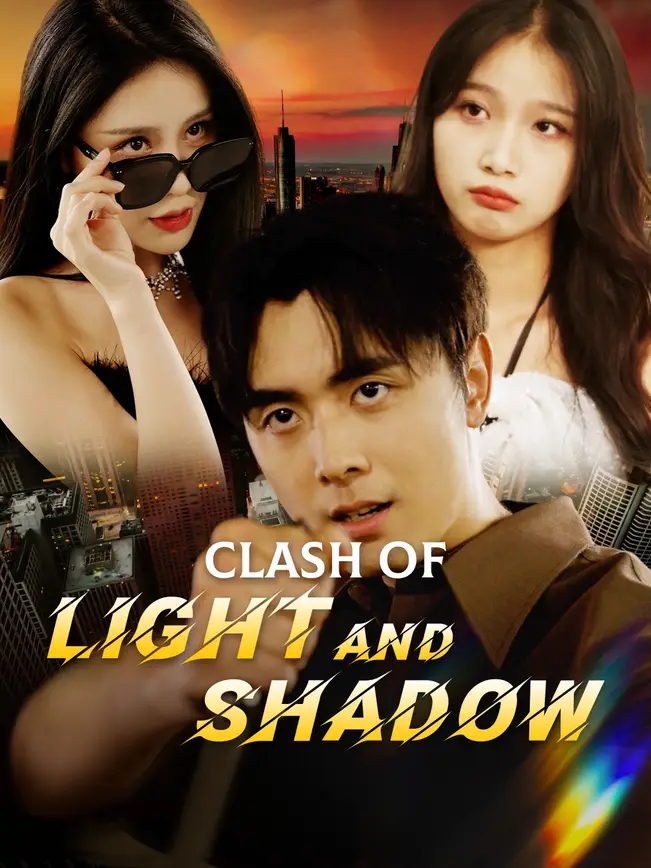
Clash of Light and Shadow Storyline
Clash of Light and Shadow More details
Genres:Underdog Rise/Revenge/Return of the King
Language:English
Release date:2024-12-20 12:00:00
Runtime:100min
Clash of Light and Shadow: When the Water Remembers
There’s a particular kind of dread that settles in your bones when you realize the floor beneath you isn’t solid—it’s liquid memory. That’s the atmosphere in the abandoned substructure where Lin Feng and Kai collide, not as enemies, but as echoes of the same fractured self. The water isn’t just puddles; it’s a character. Murky, reflective, treacherous. It catches the overhead light in distorted shards, turning the concrete pillars into ghostly sentinels. And when Lin Feng lifts his sword—its golden hilt gleaming like a relic from a forgotten temple—you don’t see a warrior preparing to strike. You see a man trying to resurrect a dead god. His hair, long and damp, sticks to his temples. Blood runs from a cut near his eye, but it’s not fresh. It’s dried, cracked, like old paint peeling off a wall. That detail matters. It tells us he’s been here before. He’s bled here before. This isn’t his first reckoning. Kai, on the other hand, is all raw nerve and trembling resolve. His brown shirt clings to his torso, soaked not just with sweat, but with the residue of a fight he didn’t win—and maybe never intended to. He holds his knife like a prayer, not a threat. His stance is defensive, yes, but there’s something else in his posture: resignation. He knows what’s coming. He’s just waiting for the exact moment to stop pretending he can change it. The brilliance of this sequence lies in its restraint. No grand monologues. No slow-motion leaps. Just two men circling each other in a space that feels less like a location and more like a psychological chamber. The camera angles are deliberately disorienting—low shots that make the ceiling loom like judgment, Dutch tilts that suggest the world itself is off-kilter. And then—the light. Not CGI spectacle, but *emotional ignition*. When Lin Feng channels that electric blue energy, it doesn’t feel like superpower. It feels like the moment a dam breaks. The light doesn’t emanate from his hand; it *leaks* from his pores, from the cracks in his resolve. It’s the physical manifestation of a lifetime of suppressed fury, of loyalty twisted into obligation, of love curdled into control. Kai reacts not with awe, but with recognition. His eyes widen—not in fear, but in dawning horror. He *knows* that light. Because he’s felt it inside himself. Clash of Light and Shadow isn’t just a title; it’s the central motif of their relationship. Lin Feng is the shadow—the keeper of secrets, the enforcer of rules, the man who believes strength is measured in silence. Kai is the light—the questioner, the doubter, the one who dares to ask *why* the sword must always be drawn. But here’s the twist the audience might miss on first watch: the light doesn’t belong to Kai. It belongs to the *space between them*. It flares when they touch, when their breaths sync, when Lin Feng’s fingers close around Kai’s throat—not to strangle, but to *feel*. To confirm he’s still real. To confirm Kai is still *his*. That chokehold isn’t violence. It’s intimacy twisted by trauma. It’s the only language they have left. And when Kai, in that split second of desperation, *pushes back*—not with muscle, but with will—the blue light surges *through* him, not from him. He doesn’t generate it. He *conducts* it. Like a wire completing a circuit. That’s the genius of the choreography: the fight isn’t about who’s stronger. It’s about who’s willing to break first. Lin Feng expects resistance. He doesn’t expect surrender *with purpose*. So when he shoves Kai toward the water, it’s not rage. It’s release. A father casting out a son he can no longer protect. A teacher erasing a student who’s become too dangerous to keep. The fall is brutal in its simplicity. No music swells. No dramatic pause. Just the sound of fabric tearing, feet slipping on wet concrete, and then—the impact. Not a crash, but a *suck*, as if the water itself has been waiting for him. The camera follows Kai downward, through the murk, his limbs splayed, his eyes wide open, still seeing the light above even as darkness swallows him. And then—silence. The surface calms. Ripples fade. Lin Feng stands frozen, sword dangling, his breath ragged. The others approach—not to help, but to *witness*. Jie, the man in the leather jacket, places a hand on Lin Feng’s shoulder. Not comforting. Acknowledging. ‘He’ll rise,’ Jie murmurs. ‘Water remembers what the land forgets.’ That line—simple, poetic, devastating—is the thesis of the entire piece. Clash of Light and Shadow isn’t about winning. It’s about what survives the drowning. Kai’s descent isn’t death. It’s transformation. In that submerged moment, stripped of costume, of role, of expectation, he becomes something new. The water doesn’t kill him. It *cleanses*. It washes away the boy who obeyed, the apprentice who feared, the son who hoped for approval. What emerges—if he emerges—will be unrecognizable. And Lin Feng knows it. That’s why he doesn’t look away. That’s why his hand trembles. He didn’t just lose a student. He lost the last version of himself that still believed in redemption. The setting reinforces this theme: unfinished buildings are metaphors for incomplete lives. The exposed rebar? The jagged edges of unresolved grief. The puddles? Tears the world refused to acknowledge. Every footstep splashes, not just water, but consequence. And when Kai’s body disappears beneath the surface, the camera lingers on Lin Feng’s face—not triumphant, not relieved, but hollowed out. He’s won. And he’s utterly defeated. The true horror of Clash of Light and Shadow isn’t the violence. It’s the aftermath. The quiet. The way the survivors stand in the ruins, knowing the real battle hasn’t begun—it’s just changed venues. Kai will return. Not with a sword. Not with a knife. But with the memory of drowning, and the certainty that some truths can only be spoken underwater. The final shot—Lin Feng turning away, his ornate jacket dark with water and blood, the golden hilt of his sword reflecting the dim light like a dying star—that’s the image that lingers. Not victory. Not defeat. But the unbearable weight of having loved someone enough to destroy them. And the terrifying hope that destruction might, just might, be the first step toward rebirth. That’s the heart of this sequence. Not action. Not VFX. But the silent scream of a man realizing he’s been the villain in someone else’s origin story all along. Clash of Light and Shadow doesn’t ask who’s right. It asks: when the water rises, who do you become?
Clash of Light and Shadow: The Sword’s Last Whisper
In the damp, skeletal belly of an unfinished concrete structure—where rebar juts like broken ribs and stagnant water mirrors fractured light—the tension doesn’t just simmer; it *drips*. This isn’t a set. It’s a wound. And from that wound, two men bleed meaning into every frame: Lin Feng, the long-haired enforcer in the ornate silk jacket, and Kai, the younger man with blood smeared across his lip like a cursed signature. Their confrontation isn’t about territory or money—it’s about legacy, betrayal, and the unbearable weight of being seen as weak. Lin Feng holds his sword not as a weapon, but as a relic—a golden-hilted artifact of a bygone code he still believes in, even as the world around him crumbles into mud and silence. His face is streaked with crimson, not from a recent cut, but from something older, deeper: shame, perhaps, or the residue of a truth he can no longer outrun. He grips the hilt with both hands, knuckles white beneath rings and beaded bracelets, his posture rigid, almost ceremonial. He doesn’t lunge. He *waits*. That’s the first clue this isn’t a brawl—it’s a ritual. Kai, meanwhile, clutches a small knife to his side, one hand pressed against his abdomen as if holding himself together. His shirt is soaked—not with rain, but with sweat and something darker. His eyes dart, not with fear, but with calculation. He knows he’s outmatched in form, in tradition, in sheer presence. Yet he stands. And when he finally speaks—his voice hoarse, lips trembling slightly—he doesn’t beg. He *accuses*. The words aren’t audible in the clip, but his mouth shapes them like curses carved into stone: ‘You taught me to strike first… so why did you let me fall?’ That line, imagined but inevitable, hangs in the air like smoke. Clash of Light and Shadow isn’t just a title here—it’s the visual grammar of the scene. When Lin Feng raises his blade, a sudden flare of electric blue light erupts from his palm, not from the sword, but from *within* him. It’s supernatural, yes—but more importantly, it’s psychological. The light doesn’t illuminate the space; it *exposes* it. It reveals the cracks in Lin Feng’s composure, the tremor in Kai’s wrist, the way the puddles on the floor ripple not from movement, but from the sheer force of unspoken history. The camera lingers on their faces in tight close-ups, catching the micro-expressions that tell the real story: Lin Feng’s jaw tightens, his gaze flickering toward the group of onlookers—three men in black, silent as statues, one in a leather jacket, another in a traditional Mandarin tunic—watching not with judgment, but with weary recognition. They’ve seen this before. They know how it ends. And yet, they don’t intervene. Because this isn’t about them. It’s about Lin Feng and Kai, two halves of a shattered mirror, trying to reassemble themselves in the reflection of each other’s pain. The fight begins not with a clash of steel, but with a shove—Kai lunges, desperate, clumsy, and Lin Feng sidesteps with the grace of someone who’s danced this dance too many times. Then comes the choke. Not a brutal garrote, but a slow, deliberate grip—Lin Feng’s fingers curling around Kai’s throat like he’s holding a sacred object he’s about to destroy. Kai’s eyes roll back, his mouth opens in a silent scream, and for a heartbeat, the blue light flares again—not from Lin Feng’s hand this time, but from *Kai’s* chest, as if the boy has inherited the power he was never meant to wield. That’s the twist no one saw coming: the student didn’t just learn the moves. He absorbed the curse. The final act isn’t a kill. It’s a push. Lin Feng, stunned, releases Kai—and with a surge of that same impossible energy, he shoves him backward, not toward safety, but toward the edge of the concrete platform overlooking the murky water below. Kai stumbles, arms flailing, and falls—not with a splash of drama, but with the quiet surrender of a man who finally understands he was never fighting for victory. He was fighting for permission to stop. The water swallows him whole, bubbles rising like broken promises. Lin Feng stands at the edge, breathing hard, his sword now slack in his hand. He looks down, not with triumph, but with grief. The others approach slowly. The man in the leather jacket—let’s call him Jie—steps forward, his voice low, measured. ‘He’ll come back,’ he says. ‘They always do.’ Lin Feng doesn’t answer. He just watches the ripples fade. Clash of Light and Shadow isn’t about good versus evil. It’s about the moment the light *chooses* to cast a shadow—and how the shadow, once born, refuses to be unmade. Kai’s descent into the water isn’t an end. It’s a baptism. And when he resurfaces—if he does—he won’t be the same boy who fell. He’ll be something else. Something dangerous. Something *alive*. That’s the real horror, and the real hope, of this sequence: the realization that trauma doesn’t break people. It *transforms* them. And sometimes, the most violent act of love is letting go. The setting—this half-built ruin—mirrors their internal states perfectly. Nothing is finished. Nothing is stable. Every pillar could crack. Every floor could give way. And yet, they stand. They fight. They bleed. Because in the absence of foundation, identity becomes the only thing worth defending. Lin Feng’s ornate jacket, soaked and clinging, is a metaphor for outdated ideals—beautiful, intricate, but ultimately impractical in a world that rewards ruthlessness over ritual. Kai’s plain brown shirt, stained and torn, represents raw potential—unrefined, vulnerable, but capable of absorbing and redirecting power in ways the old guard never anticipated. The blue light? It’s not magic. It’s consequence. It’s the visible manifestation of emotional detonation—the moment suppressed rage, guilt, and longing finally breach the surface. And when it does, it doesn’t just blind. It *reveals*. The scene ends not with silence, but with the echo of Kai’s submerged gasp, the drip of water from Lin Feng’s sleeve, and the quiet certainty that this isn’t over. It’s merely intermission. Clash of Light and Shadow continues—not in grand battles, but in the spaces between breaths, in the hesitation before a strike, in the way a man looks at his own hands after he’s done what he swore he never would. That’s where the real story lives. Not in the sword. Not in the knife. But in the silence after the fall.
Clash of Light and Shadow: When the Sword Speaks Louder Than Words
Let’s talk about the water. Not the puddles, not the reflections—but the *sound* of it. That low, sucking gurgle as Li Wei drags his boot through the sludge near the overturned armchair, the way each step sends concentric ripples toward the base of the concrete pillar. In Clash of Light and Shadow, water isn’t just set dressing; it’s punctuation. It marks time. It absorbs impact. It hides footprints—and intentions. From the opening shot, where Li Wei’s face is half-lit by a high window, his expression unreadable behind strands of wet hair, we’re not watching a duel. We’re witnessing a confession staged in slow motion, with blades as exclamation points. His jacket—richly embroidered, velvet-lined, absurdly out of place in this industrial grave—isn’t costume. It’s armor of another kind: the armor of identity. He wears it like a challenge. *See me. Remember me. Fear me.* And yet, when Chen Tao lunges, not with rage but with precision, Li Wei doesn’t flinch. He *tilts*. A micro-shift of the hips, a flick of the wrist, and the knife grazes his sleeve instead of his ribs. That’s not luck. That’s intimacy. Only someone who’s sparred with you a hundred times knows exactly where your shoulder dips when you commit to a strike. Chen Tao’s entrance is deliberately anti-climactic. No music swell. No dramatic zoom. Just him stepping into frame, shirt damp at the collar, eyes locked on Li Wei like he’s solving an equation. His movements are economical—no wasted energy, no flourish. He fights like a man who’s done this before, and hated every second of it. The contrast between them is the spine of the entire sequence: Li Wei, all texture and symbolism, his sword a relic of a code no one follows anymore; Chen Tao, stripped down to function, his switchblade a tool, not a talisman. Yet when they lock arms in that brutal close-quarters grapple—Li Wei’s gold ring scraping against Chen Tao’s knuckles, the scent of rust and wet concrete thick in the air—their proximity tells a story no dialogue ever could. Their breath syncs. For three full seconds, they’re not adversaries. They’re two halves of a broken whole, pressed together in the ruins of what they built together. The camera holds tight on their faces: Li Wei’s brow furrowed not in anger, but in grief; Chen Tao’s lips parted, not to speak, but to remember the last time they laughed in a room that wasn’t falling apart. Then—the cut. A whip pan to the orange barrel rolling slightly, disturbed by their momentum. And in that split second, we see her: a figure in the background, barely visible behind a support beam, watching. Not interfering. Not cheering. Just *witnessing*. She doesn’t move. Doesn’t react. But her presence changes everything. Suddenly, this isn’t just about Li Wei and Chen Tao. It’s about accountability. About who sees what happens in the dark. Clash of Light and Shadow thrives in these peripheral truths—the things the main characters ignore because they’re too busy reenacting their trauma. The blood on Li Wei’s cheek? It’s not from Chen Tao’s blade. It’s from the earlier scuffle with the chair—when he slammed his face against the armrest trying to regain balance. He’s been bleeding this whole time and hasn’t noticed. Or hasn’t cared. That’s the tragedy: he’s so consumed by the performance of vengeance that he’s forgotten he’s still *hurt*. The climax isn’t the sword clash. It’s the aftermath. When Chen Tao staggers back, clutching his side, his shirt torn open to reveal a faded scar running parallel to his ribs—identical to the one Li Wei bears, hidden beneath his jacket—we finally understand. They were injured *together*. Same night. Same mistake. Same betrayal. The sword, when Li Wei raises it one last time, doesn’t gleam with menace. It glints with sorrow. His hand trembles—not from weakness, but from the effort of holding back. And Chen Tao, bleeding, breathless, meets his gaze and *nods*. Not surrender. Acknowledgment. The unspoken contract is broken, yes—but something older, deeper, is being renegotiated in real time. The light shifts again, this time from the west, casting long shadows that stretch across the floor like fingers reaching for reconciliation. Li Wei lowers the blade. Not slowly. Not dramatically. Just… decisively. As if he’s放下 a burden he’s carried too long. The sword hits the water with a soft *plunk*, and the ripple spreads outward, distorting their reflections until neither man can clearly see himself anymore. That’s the genius of Clash of Light and Shadow: it refuses catharsis. There’s no hug. No tearful reunion. Just two men standing in the wreckage, breathing, listening to the drip of water from the ceiling, realizing that some wars don’t end with victory—they end with exhaustion, and the quiet courage to walk away without finishing what was started. What lingers isn’t the violence, but the silence after. The way Chen Tao wipes his mouth with the back of his hand, then stares at the blood as if it’s a signature he’s been asked to sign. The way Li Wei adjusts his cuff, revealing a tattoo beneath—three Chinese characters, partially obscured by muscle, that translate to *‘We Were Once’*. The production design is masterful in its restraint: no props feel accidental. The blue drum isn’t just color contrast; it’s a visual echo of the sky they haven’t seen in weeks. The leather chair, half-sunk in muck, symbolizes comfort turned hazardous—just like their past. Every frame is layered with subtext, demanding the viewer lean in, not to catch plot points, but to catch *meaning*. This isn’t a fight scene from a short film. It’s a chapter in a larger mythology, where loyalty is measured in scars, and redemption isn’t earned—it’s *offered*, quietly, in the space between breaths. Clash of Light and Shadow doesn’t ask us to pick a side. It asks us to sit in the mud with them, and wonder: if you had to choose between justice and mercy, which would you let drown first? The answer, as Li Wei proves by walking away, might be neither. Maybe the only true victory is refusing to swing the sword at all—and trusting that the other person will do the same. In a genre drowning in spectacle, this sequence is a whisper. And sometimes, whispers cut deeper than screams.
Clash of Light and Shadow: The Sword’s Last Laugh
In the damp, skeletal remains of an unfinished concrete structure—where daylight bleeds through broken windows like reluctant confession—the tension between Li Wei and Chen Tao doesn’t just simmer; it *shatters*. This isn’t a fight scene. It’s a psychological autopsy performed with steel and sweat. From the first frame, Li Wei stands hunched over, his ornate silk jacket—patterned with dragons and fractured calligraphy—already soaked at the hem, clinging to his thighs like a second skin. His hair, long and unruly, frames a face that shifts between contempt and exhaustion, as if he’s been waiting for this moment longer than the building has been abandoned. He grips a ceremonial sword—not the kind meant for war, but for ritual, for legacy. Its golden hilt gleams even in the gloom, a cruel irony against the grime of the floor. When he swings it overhead, the motion is theatrical, almost mocking, yet there’s no hesitation in his wrist. That’s the first clue: this isn’t desperation. It’s design. Chen Tao enters not with a roar, but with a stumble—his brown shirt untucked, one sleeve rolled up to reveal a tattooed forearm, his eyes wide not with fear, but with recognition. He knows Li Wei. Not just as an enemy, but as a mirror. Their choreography isn’t random brawling; it’s a dialectic in motion. Every parry, every sidestep around the rusted orange barrel, every collision near the leather recliner half-submerged in murky water—it all echoes a history neither speaks aloud. The camera lingers on their hands: Li Wei’s adorned with rings and a beaded bracelet, Chen Tao’s bare except for a silver pendant shaped like a broken feather. One weapon is tradition; the other, a switchblade, sharp and utilitarian. Clash of Light and Shadow isn’t just about morality—it’s about *aesthetics of survival*. Li Wei fights like he’s reciting poetry; Chen Tao fights like he’s correcting a typo. The turning point arrives not with a blow, but with a pause. After Li Wei disarms Chen Tao—slamming the blade into the concrete with a sound like a bone snapping—Chen Tao doesn’t retreat. He coughs, blood trickling from the corner of his mouth, and smiles. A real one. Not defiant. Not bitter. Just… relieved. And in that instant, the lighting shifts: a shaft of afternoon sun cuts diagonally across the frame, illuminating dust motes dancing above the puddles, catching the red streak on Li Wei’s cheek—not fresh, but dried, like old ink. That’s when we realize: the blood isn’t from today. It’s from yesterday. Or last week. Or maybe three years ago, when they stood side by side under a different roof, holding different weapons, facing a different enemy. The fight wasn’t about who wins. It was about who remembers correctly. What makes Clash of Light and Shadow so unnerving is how little it explains. No voiceover. No flashback inserts. Just bodies moving through space, weighted by silence. When Li Wei finally lowers the sword, his breath ragged, his fingers trembling—not from fatigue, but from the weight of what he almost did—we see the hesitation in his eyes. He could end it. He *should* end it. But instead, he steps back, lets the blade clatter onto the wet floor, and turns toward the exit. Chen Tao doesn’t follow. He stays, kneeling beside the barrel, wiping blood from his lip with the back of his hand, then staring at the smear as if reading a prophecy. The final shot lingers on the sword, half-submerged in a shallow pool, its reflection warped by ripples—a distorted image of power, now inert. That’s the genius of the sequence: violence isn’t resolved here. It’s *recontextualized*. The real battle wasn’t in the swinging arms or the splintering wood. It was in the seconds between strikes, where memory and regret wrestled louder than any grunt or gasp. Li Wei walks away not victorious, but unburdened. Chen Tao remains—not defeated, but finally heard. In a world where every conflict demands a winner, Clash of Light and Shadow dares to suggest that sometimes, the most radical act is to stop swinging. And in that stillness, the light finds its way in—not as salvation, but as witness. The audience leaves not with answers, but with questions that cling like moisture to the skin: Who were they before the blood? What oath did they break? And why does the sword still hum, even underwater? This isn’t action cinema. It’s emotional archaeology. Every splash of water, every creak of the chair, every bead of sweat rolling down Li Wei’s temple—it’s all evidence. Evidence of time spent together. Of promises made in quieter rooms. Of a friendship that didn’t end with words, but with the slow erosion of trust, brick by crumbling brick. The setting isn’t incidental; it’s allegorical. An unfinished building mirrors their relationship: all framework, no roof. No shelter. Just exposed beams and the threat of collapse. When Chen Tao stumbles past the blue drum, his foot slipping in the muck, it’s not clumsiness—it’s surrender disguised as accident. He lets himself fall because he’s tired of standing guard over a ruin. Meanwhile, Li Wei’s posture changes subtly after the first exchange: shoulders less rigid, jaw less clenched. He’s not enjoying this. He’s enduring it. Like a man performing a duty he no longer believes in. The gold chain around his neck catches the light once—just once—during a slow-motion dodge, and for a heartbeat, it looks less like ornamentation and more like a shackle. Clash of Light and Shadow understands that the most devastating wounds aren’t the ones that bleed. They’re the ones that scar silently, beneath layers of bravado and brocade. And when the camera circles them during the final standoff—Li Wei gripping the sword with both hands, Chen Tao raising his empty palms—the silence is louder than any score. Because we’ve seen enough. We know what comes next. Not death. Not reconciliation. Something far more fragile: understanding. And in that fragile space, the true clash occurs—not of steel, but of selves, finally meeting in the middle of the wreckage, breathing the same dusty air, remembering who they used to be before the world demanded they become enemies.
Clash of Light and Shadow: When the Sword Speaks Louder Than Words
Let’s talk about the water. Not the puddle—though yes, that murky, reflective pool is crucial—but the *sound* of it. The soft slap of boots stepping into shallow filth, the gurgle as a body hits the surface, the way droplets cling to Li Wei’s sleeve after he lifts his sword, trembling just slightly, as if the metal itself is resisting his grip. This isn’t background noise. It’s the soundtrack to a collapse. In *The Last Debt*, every element is chosen not for spectacle, but for *texture*. The concrete pillars aren’t just structural—they’re prison bars cast in gray. The exposed beams overhead form a cage of angles, framing each character like specimens under glass. And in the center of it all, the armchair: worn, cracked leather, one armrest split open to reveal foam stuffing like exposed bone. It’s ridiculous. It’s tragic. It’s perfect. Li Wei doesn’t sit like a king. He reclines like a man who’s forgotten how to stand straight. His posture is arrogance, yes—but also exhaustion. The floral silk jacket is too loud for the setting, a deliberate provocation: *I am not of this place, yet I command it*. His sunglasses aren’t just fashion; they’re armor. When he removes them later—not fully, just sliding them up his nose to peer over the rim—the shift is seismic. His eyes, dark and narrow, lose their cool detachment. They become *hungry*. Not for power. For understanding. For absolution. He sees Chen Tao not as a challenger, but as a mirror. And mirrors, in this world, are dangerous things. Chen Tao’s entrance is understated, almost anti-climactic. No music swells. No slow-mo stride. He walks in, shoulders relaxed, gaze steady, and the camera follows him at ankle level, emphasizing how small he seems against the cavernous space. Yet his presence *compresses* the air. The three men behind him don’t move in sync. They breathe differently. One taps his foot. Another adjusts his collar. The third stares at the ceiling, as if calculating escape routes. Chen Tao doesn’t glance at them. He doesn’t need to. Their loyalty isn’t in their stance—it’s in their silence. When Li Wei finally rises, Chen Tao doesn’t flinch. He doesn’t raise his hands. He simply *waits*. And in that waiting, he wins the first round. Because Li Wei, for all his bluster, has to speak first. He has to justify himself. And justification is weakness. The dialogue—if we trust the subtitles—is sparse, almost poetic in its restraint. Li Wei says: “You brought nothing but dust and doubt.” Chen Tao replies, voice low, calm: “Dust settles. Doubt… lasts.” That’s it. Two lines. But they hang in the air like smoke. The fight that follows isn’t choreographed for YouTube virality. It’s messy. Real. Chen Tao takes a kick to the ribs and stumbles, coughing, but uses the momentum to spin and drive his elbow into the attacker’s throat. One of Li Wei’s men grabs his wrist—Chen Tao twists, not to break free, but to *guide* the arm inward, using the opponent’s own force to slam his head into a concrete pillar. There’s no flourish. No showmanship. Just efficiency. Survival. And when he finally disarms the last standing enforcer, he doesn’t kick him. He places a hand on his shoulder, leans in, and murmurs something we can’t hear. The man’s eyes widen. Not in fear. In *recognition*. Like he’s just been told a secret he’s spent years denying. Clash of Light and Shadow shines brightest in the quiet moments *between* violence. When Chen Tao stands over the fallen, his breathing ragged, he doesn’t look triumphant. He looks… disappointed. As if he expected more resistance. As if he hoped Li Wei would fight harder. Because deep down, he knows: if Li Wei had truly been the monster he pretends to be, this wouldn’t hurt so much. The real battle wasn’t in the fists or the blades. It was in the silence after the last man fell. That’s when Li Wei steps forward, sword held not like a weapon, but like a relic. He raises it—not to strike, but to *show*. The camera zooms in on the blade: intricate silver etchings, a dragon coiling around a crescent moon, and near the hilt, a single character: 忠 (zhōng)—loyalty. Chen Tao’s eyes narrow. He knows that symbol. It’s the same one burned into the handle of the dagger he now holds, the one he pulled from his boot during the fray. The connection clicks. Not coincidence. Inheritance. The climax isn’t a duel. It’s a confession. Li Wei doesn’t attack. He *offers*. He extends the sword, hilt first, toward Chen Tao. “Take it,” he says, voice stripped bare. “It was meant for you.” Chen Tao doesn’t reach for it. He looks at Li Wei’s face—the sweat, the faint scar above his eyebrow, the way his left hand trembles when he’s lying—and understands. Li Wei isn’t the villain. He’s the caretaker. The man who stayed behind to guard a promise no one else remembered. The chair wasn’t his throne. It was his penance. Clash of Light and Shadow ends not with a bang, but with a ripple. Chen Tao turns away. He walks toward the exit, but pauses at the threshold, glancing back once. Li Wei is still standing there, sword in hand, water lapping at his shoes. He doesn’t follow. He doesn’t call out. He simply lifts the sword, not in threat, but in salute—a gesture older than language. And as Chen Tao disappears into the gray light beyond the archway, the camera lingers on the chair. Empty now. Waiting. The puddle reflects the ceiling, the beams, the fading daylight. And for a second, if you watch closely, you can see two figures in the reflection: one standing tall, one kneeling. Not enemies. Not allies. Just two men carrying the same weight, in different directions. This is why *The Last Debt* lingers. It doesn’t resolve. It *resonates*. It asks: What do we owe the past? How much of our identity is borrowed from ghosts? And when the chair is empty, who gets to sit next? Li Wei thought he knew. Chen Tao proved him wrong—not by taking the seat, but by refusing it. In a world built on shadows, sometimes the bravest act is to walk into the light… and leave the darkness exactly where it belongs.

Underdog Rise


.jpg~tplv-vod-rs:651:868.webp)


Return of the King

Revenge
.jpg~tplv-vod-rs:651:868.webp)


 Download