



Breaking Free


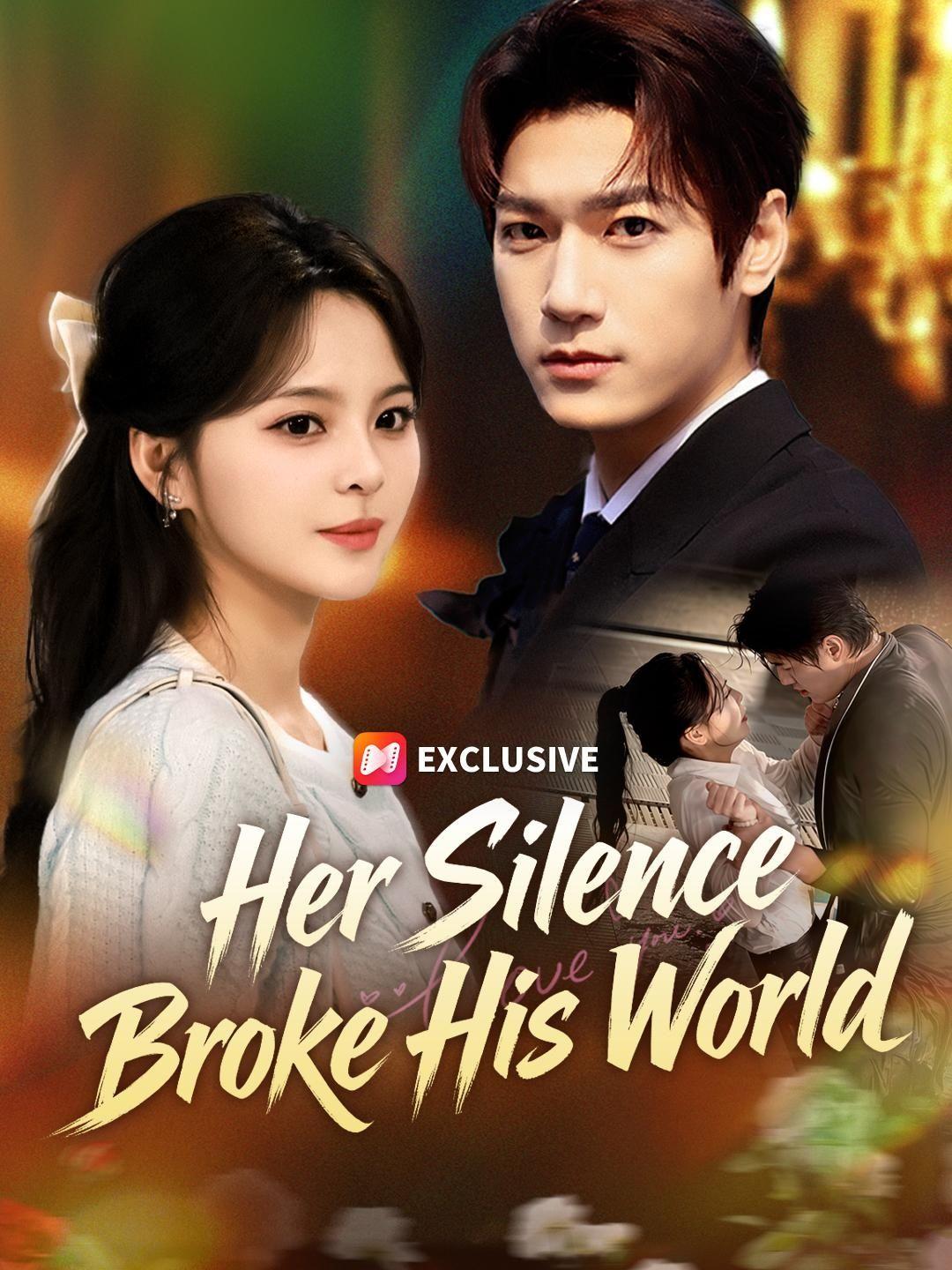

Written By Stars: When the Lease Isn’t the Only Thing Being Canceled
There’s a specific kind of dread that settles in your chest when you realize the person you’ve spent years building a future with has already moved into the next chapter—without sending you the address. That’s the exact frequency Michael vibrates at when Wendy says, *‘I’m already married.’* Not ‘I’m leaving.’ Not ‘I don’t love you anymore.’ Just: *married*. As if it were a fact as immutable as gravity. Written By Stars doesn’t sensationalize this moment. It *lingers* in it. The camera holds on Michael’s face—not for drama, but for documentation. His pupils contract. His breath catches. His lips part, but no sound comes out. And in that silence, we hear everything: the years of missed anniversaries, the texts unanswered because the laptop was open, the way he’d pat her head like a pet when she cried about ‘feeling invisible.’ He thought he was managing risk. He was just practicing emotional bankruptcy. Let’s rewind to the beginning, because context is everything. Michael isn’t evil. He’s *optimized*. In the opening frames, he’s on the phone, delivering cold calculus: *‘With the company’s current situation, without the Brown family’s support, we can’t last until the New Year.’* Every word is precise, efficient, devoid of warmth. He’s not speaking to a human—he’s speaking to a variable. And Wendy? To him, she’s the variable labeled *‘Wendy – Strategic Asset (High Emotional Leverage).’* He doesn’t see her as a woman who once stayed up all night nursing him through food poisoning, or who memorized his coffee order down to the spoonful of honey. He sees her as the key to unlocking capital, influence, stability. So when Daniel—his confidant, his mirror—asks, *‘Aren’t you really going to coax her?’*, Michael’s reply is chilling in its banality: *‘Let her make a fuss if she wants. I’ve agreed to marry her. What else does she want?’* That line isn’t arrogance. It’s ignorance. He genuinely believes consent is implied in the engagement ring, and love is guaranteed by the prenup. Meanwhile, Wendy is dismantling their life with surgical precision. She doesn’t scream. She doesn’t throw things. She folds a gray sweater, places it in the suitcase, then pauses—her fingers brushing the fabric like she’s saying goodbye to a ghost. The camera cuts to her hands tearing a photograph in half: Michael laughing, arm around her shoulder, both wearing matching scarves. She doesn’t look at the pieces. She drops them into the suitcase like evidence. That’s when the subtitle appears: *‘Since childhood, she’s been chasing after me.’* Not *‘loving me.’* Not *‘choosing me.’* *Chasing.* The verb matters. It implies pursuit, exhaustion, imbalance. And Michael? He hears it—and for the first time, he *looks* at her. Not as a problem to solve, but as a person who’s been running toward him while he stood still, adjusting his tie. The turning point isn’t the suitcase. It’s the door. Wendy reaches for the handle, ready to walk out—when she stops. *‘Wait.’* She turns back, not to beg, not to explain, but to retrieve something: a small, silver locket she’d worn every day for seven years. She opens it. Inside, two photos: one of her parents, smiling on their wedding day; the other, a tiny Polaroid of Michael, taken the day they met, when he was still soft around the edges. She doesn’t give it to him. She doesn’t throw it away. She slips it into her coat pocket—*her* gesture of closure. And that’s when Michael finally breaks. He doesn’t shout. He doesn’t grab her wrist. He just whispers, *‘You’re really moving out?’* And her answer—*‘Yes. Because I’m already married.’*—isn’t cruel. It’s *final*. She’s not lying. She’s stating reality. The marriage might be legal, symbolic, or even metaphorical—but to her, it’s real. And that’s what destroys him: the realization that her loyalty has shifted, not because of someone else, but because *she chose herself*. What makes Written By Stars so devastating is how it subverts the ‘wronged lover’ trope. Michael isn’t the victim here. He’s the architect of his own obsolescence. When Wendy asks, *‘Do you think, in my life, I can only marry you?’*, and he replies, *‘Yes, I do think so’*, it’s not romantic. It’s suffocating. He’s not expressing devotion—he’s asserting ownership. And Wendy’s response? She doesn’t argue. She just walks away, pulling the suitcase behind her like a coffin on wheels. The camera follows her down the hallway, past the framed art, past the vase that held their first bouquet, past the spot where he proposed—now empty, save for a single dried rose petal on the floor. She doesn’t look back. Because some exits aren’t dramatic. They’re quiet. Deliberate. Unapologetic. Then—the final sequence. Back in the office, the new boss (let’s call him Julian, though the show never names him) takes a call. *‘Hello, honey?’* His voice is warm, unhurried. Cut to Wendy, now in a different office, same phrase: *‘Hi, love.’* They’re not together in the frame. They’re connected by sound, by rhythm, by the absence of tension. Julian doesn’t check his watch while she speaks. He listens. Really listens. And when she laughs—a light, unguarded sound Michael hasn’t heard in years—he smiles like he’s been gifted sunlight. Written By Stars doesn’t show us their wedding. It doesn’t need to. The proof is in the way Wendy’s shoulders relax when she hangs up, in how she touches the locket in her pocket, in the fact that she’s no longer packing. She’s *building*. The last shot is Michael, alone in the apartment. He walks to the side table, picks up the face-down photo frame, turns it over. He stares at their younger selves—smiling, hopeful, unaware. Then he does something unexpected: he doesn’t put it back. He carries it to the balcony, sets it on the railing, and walks away. The wind lifts the corner of the photo. It flutters, then falls—not to the ground, but into the open suitcase Wendy left behind. A final, silent offering. Or maybe just debris. Written By Stars leaves it ambiguous. Because grief isn’t tidy. Love isn’t linear. And sometimes, the most powerful act of surrender isn’t fighting for someone who’s already gone—it’s letting the suitcase roll out the door, and learning to live in the silence that follows. Michael thought the lease cancellation was the crisis. He didn’t realize the real eviction notice came years earlier, signed in tears he refused to witness. Written By Stars doesn’t give us heroes or villains. It gives us humans—flawed, fragile, capable of both profound cruelty and quiet redemption. And in the end, the only thing more heartbreaking than losing love is realizing you never truly knew how to hold it.
Written By Stars: The Suit That Couldn’t Hide the Cracks
Let’s talk about Michael—not the polished, three-piece-gray-suit version we see in the boardroom, but the man who flinches when his phone buzzes with a WeChat post from ‘Bu Wan’—a name that translates to ‘Step by Step,’ yet feels like a countdown to collapse. Written By Stars doesn’t just drop visual cues; it layers them like sedimentary rock: each frame reveals another stratum of emotional erosion. At first glance, Michael is the archetype of corporate control—laptop open, posture rigid, voice clipped over the phone as he delivers ultimatums to Wendy: *‘If you don’t appease Wendy, don’t bother coming home.’* But watch his hands. When he hangs up, they don’t rest. They grip the edge of the desk like he’s bracing for impact. His colleague, seated across in a brown double-breasted suit (let’s call him Daniel, since the subtitles never do), watches with the quiet amusement of someone who’s seen this script before. He doesn’t intervene. He *leans back*, fingers steepled, eyes half-lidded—because in this world, emotional detonations are just background noise to quarterly reports. Then comes the phone screen. A single image: Michael and Wendy, arms wrapped around each other under falling snow, captioned in Chinese: *‘Wishing you both everlasting love and early blessings of a child.’* The irony isn’t lost on us—or on Michael. He stares at it like it’s radioactive. His jaw tightens. He stands abruptly, knocking over a folder, and walks out—not toward the door, but toward the balcony railing, where the city sprawls below like a grid of unfulfilled promises. That’s when the real performance begins. Not in words, but in micro-expressions: the way his thumb swipes left on the screen, not to delete, but to *scroll past* the memory, as if time itself could be fast-forwarded. Written By Stars knows that trauma isn’t always loud; sometimes it’s the silence between two people who used to finish each other’s sentences. Cut to Wendy. She’s not crying. She’s *packing*. Not with urgency, but with ritualistic precision—folding a pink sweater, smoothing it into the suitcase like she’s burying evidence. Her white trench coat flows behind her like a shroud. She pauses, looks at a framed photo on the side table—Michael, younger, grinning beside her, both holding a tiny stuffed bear. She doesn’t smash it. She doesn’t cry. She simply lifts the frame, turns it face-down, and places it gently atop the clothes. That’s the moment the audience realizes: this isn’t a breakup. It’s an autopsy. And she’s the coroner. When Michael finally arrives at the apartment, he doesn’t knock. He *waits*. He stands in the hallway, hands in pockets, watching her through the peephole’s fisheye distortion—his own face warped, fragmented, just like their relationship. She opens the door. No greeting. Just eye contact that holds the weight of years. And then—the line that cracks everything: *‘I’m already married.’* Not shouted. Not whispered. Stated, like reading a weather forecast. Michael’s reaction? He doesn’t rage. He *stumbles* backward, as if physically struck. His mouth opens, closes, opens again—no sound emerges. Because what do you say when the person you’ve been negotiating with, coercing, *managing* like a hostile takeover… has already filed the paperwork? The genius of Written By Stars lies in how it weaponizes domestic space. The apartment isn’t neutral—it’s a museum of failed intimacy. The scattered photo fragments on the floor? Not random. They’re the remnants of a collage she started months ago, titled *‘Us, Before the Silence.’* The modern art on the wall—a floral print with oversized blue eyes—stares down at them like a silent judge. Even the trash can near the dining table holds meaning: inside, a crumpled tissue, a broken hairpin, and a single receipt from a pregnancy test kit dated three weeks prior. Wendy never mentions it. Michael never sees it. But we do. And that’s the horror: the truth isn’t hidden. It’s just *ignored*, until it becomes undeniable. Their confrontation isn’t about infidelity or betrayal in the traditional sense. It’s about *consent*. Wendy didn’t leave because Michael was cruel—she left because he treated her like a variable in a financial model. *‘I’ve agreed to marry her. What else does she want?’* he asks Daniel, as if love were a negotiation term sheet. And Daniel, ever the pragmatist, replies: *‘Let her make a fuss if she wants.’* That line alone should be studied in business schools—not as strategy, but as pathology. Written By Stars forces us to ask: when did Michael stop seeing Wendy as a person, and start seeing her as a *leverage point*? The answer is in the way he handles her suitcase later—not grabbing it, not stopping her, but *reaching for the handle* as if to assist, only to freeze when she jerks it away. His hand hovers in midair, trembling slightly. That’s the moment he understands: he’s not losing a partner. He’s losing the illusion that he ever had one. And then—the final twist. Back in the office, a new scene: a different man, dressed in black pinstripes, sits at a long conference table. Employees bow their heads over documents. He’s calm. Authoritative. Then his phone rings. He glances at the screen—*‘Honey?’*—and answers with a smile so soft, so genuine, it feels alien after Michael’s performance. Cut to Wendy, now in a crisp white blouse, standing beside him, also on the phone, mirroring his tone. They’re not in the same room. They’re on separate calls. Yet their smiles sync perfectly. The camera lingers on their hands—hers resting on a file labeled *‘Brown Family Trust’*, his tapping rhythmically on the table, a habit Wendy once loved. Written By Stars doesn’t tell us who this man is. It doesn’t need to. The implication is louder than any dialogue: Wendy didn’t just leave Michael. She rebuilt her life *with intention*. And the most devastating part? Michael still thinks he’s the protagonist. He doesn’t realize he’s become the footnote in someone else’s happy ending. That’s the true tragedy—not that love failed, but that one person learned to speak its language, while the other kept trying to translate it into spreadsheets. Written By Stars reminds us: some relationships don’t end with a bang. They end with a suitcase rolling across hardwood floors, and the quiet click of a door closing—not behind the person leaving, but behind the one who finally stops waiting.
Wendy’s Last Frame Before the Door Closes
She tears photos, packs a suitcase, says ‘I’m already married’—not as a lie, but as armor. Her white coat flutters like a surrender flag. Michael’s ‘Who else can you marry but me?’ is tragic, not romantic. Written By Stars shows us: sometimes the real breakup happens after the wedding vows are signed. 📸
The Suit That Couldn't Hide the Cracks
Michael’s gray suit looks sharp, but his eyes betray exhaustion—business pressure, family ultimatums, and Wendy’s silent rebellion. The office feels cold; the home, chaotic. When he sees her packing, it’s not anger—it’s panic. Written By Stars nails how love decays in silence, not shouting. 💔