



Heartbreak and a Sudden Proposal


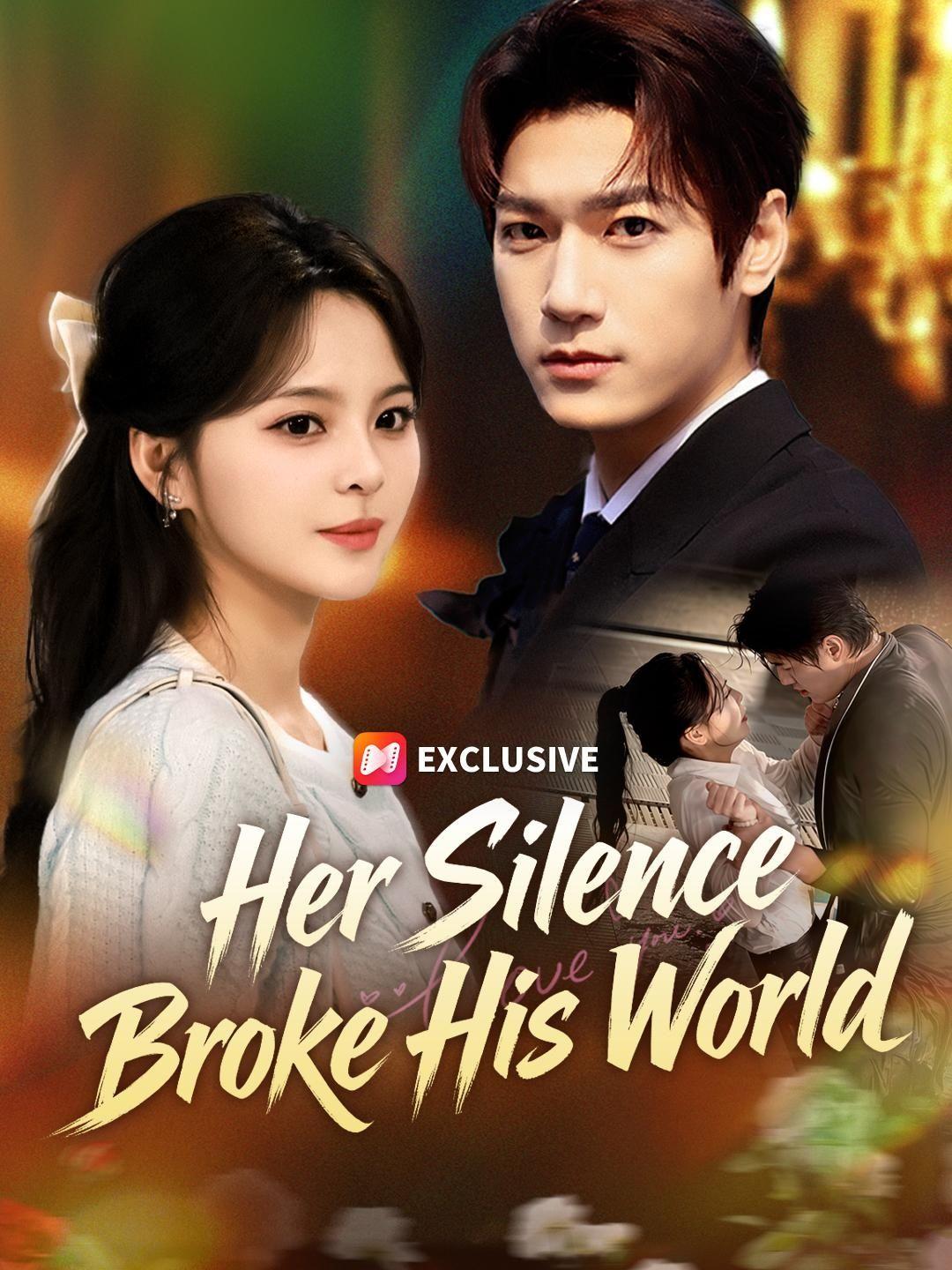
Written By Stars: When the Childhood Sweetheart Becomes the Ghost You Can’t Exorcise
Let’s talk about the quiet devastation of being the ‘always there’ person. Not the chosen one. Not the favorite. Just the constant. The background music to someone else’s main character arc. That’s Wendy. And Michael? He’s the kind of man who believes kindness is a finite resource—so he doles it out sparingly, like coins in a beggar’s cup, never realizing the recipient has been living on those crumbs for a decade. Written By Stars doesn’t shout its themes; it whispers them through cigarette smoke and half-empty bottles, through the way Wendy’s coat slips off her shoulder when she turns away, through the way Michael’s cufflinks catch the light like tiny, accusing eyes. The setting is crucial: a riverside at night, rocks slick with dew, the city skyline pulsing behind them like a heartbeat they no longer share. This isn’t a romantic rendezvous. It’s a reckoning. Wendy sits with her legs folded, the green bottle resting on her knee like a third party in the conversation. Her white dress—elegant, almost bridal—is stained at the hem with dirt and something darker. Is it beer? Or tears? The film refuses to clarify. Ambiguity is its weapon. When Michael finally sits beside her, he doesn’t touch her. He doesn’t offer comfort. He just *exists* in her space, and that alone feels like trespassing. His suit is immaculate, his posture rigid—every inch the man who’s spent his life curating appearances. Meanwhile, Wendy’s hair is escaping its pins, her makeup smudged just enough to suggest she’s been crying, but not enough to ruin the aesthetic. She’s still performing, even in collapse. Written By Stars understands that trauma doesn’t always look like screaming. Sometimes it looks like sipping beer in silence while your childhood sweetheart stares at the horizon, refusing to meet your gaze. Their dialogue is a masterclass in subtext. When she says, ‘You hate me so much, seeing me so embarrassed, you must be happy,’ she’s not accusing him of active malice. She’s naming the void where empathy should be. And his response—‘Hate? Where did you get that idea?’—isn’t innocence. It’s willful ignorance. He *doesn’t* hate her. That would require engagement. What he feels is worse: indifference, laced with mild irritation at her refusal to fade quietly into the past. The real gut-punch comes when she reveals the bullying. Not as a plea for sympathy, but as a statement of fact: ‘Michael and the others hated you, so they bullied you. I kept silent.’ Notice she says *you*, not *me*. She distances herself from the victimhood, as if to say: this wasn’t about me. It was about *him*. His reputation. His comfort. Her silence wasn’t cowardice—it was calculus. She calculated the cost of speaking and decided her survival was worth more than his accountability. Then there’s the phone call. The moment her mother’s name flashes on screen—‘Mom’ in clean, digital font—the entire tone shifts. This isn’t just about Michael anymore. It’s about the generational script Wendy has been handed: be gracious, be forgiving, be the bigger person—even when the other person hasn’t asked for forgiveness. Her mother’s words—‘Michael is looking for you everywhere’—are delivered with the weight of expectation. In their world, love is proven through pursuit, not presence. And Wendy’s reply—‘Let him be. I don’t care about him’—is the first lie she tells that *she* believes. Because moments later, she’s shouting into the void, ‘Who wants to marry you?’ It’s not rhetorical. It’s desperate. She’s trying to convince herself that she’s free, even as her hands shake around the phone she’s using to draft a wedding blessing for the man who broke her. The typing scene is where Written By Stars transcends melodrama and enters mythic territory. Her fingers move across the screen, composing a message that reads like a funeral rite: ‘Wish you two everlasting love and early blessings of a child.’ The Chinese characters scroll by, elegant and final, while the English subtitle renders them in clinical clarity. She’s not wishing them well. She’s burying her own hope. And the beer bottle? She holds it like a talisman—green, cold, familiar. It’s the only thing that’s been consistent. Not Michael. Not her dreams. Just this bottle, this night, this ache. The film lingers on her face as she reads her own words back, and for a split second, her lips twitch—not a smile, but the ghost of one. She’s proud of her restraint. That’s the tragedy: she’s become so skilled at self-erasure that she mistakes it for strength. When Michael finally speaks the truth—not ‘I love you,’ but ‘Changing a habit is hard, but you can try to develop a new one’—it’s not romance. It’s surrender. He’s admitting he’s incapable of being the man she needed, but perhaps, just perhaps, he’s willing to become someone else. And Wendy? She doesn’t cry. She doesn’t rage. She looks at him, really looks, for the first time in years—and sees not the boy who saved her from a dog bite, not the teen who shared his umbrella in the rain, but a man who’s finally standing still long enough to be seen. That’s when she asks, ‘Will you marry me?’ Not as a request. As a challenge. As an invitation to co-author a new ending. The final shot—them sitting side by side, backs to the camera, the river flowing endlessly before them—isn’t closure. It’s possibility. Written By Stars refuses to tell us what happens next. Does she go home? Does he follow? Do they kiss? Do they part forever? It doesn’t matter. What matters is that Wendy has reclaimed her voice. She spoke her truth. She sent the message. She held the bottle and didn’t drink it empty. She looked at Michael and saw him clearly, without rose-tinted nostalgia or venomous resentment. And in that clarity, she found something rarer than love: agency. The childhood sweetheart may have become the ghost she couldn’t exorcise—but tonight, she learned how to live beside him without letting him haunt her. Written By Stars doesn’t give us a happy ending. It gives us something better: a beginning that’s earned, not inherited. And that, dear viewer, is the most radical love story of all.
Written By Stars: The Night She Drank Away a Decade of Silence
There’s something hauntingly poetic about watching Wendy sit on that riverbank, her white dress pooling like spilled milk around her knees, the green Carlsberg bottle clutched in one hand like a relic she can’t yet discard. The city lights blur behind her—bokeh orbs of blue and teal, distant and indifferent—as if the world has already moved on while she remains suspended in the aftermath of a truth too long buried. This isn’t just a breakup scene; it’s an autopsy of a decade-long emotional habit, performed under the cold glow of streetlamps and the weight of unspoken history. Written By Stars captures this with surgical precision: every tilt of her head, every hesitation before speaking, every tear that doesn’t quite fall—it all speaks louder than dialogue ever could. Wendy’s opening act—drinking straight from the bottle, eyes closed, lips parted in surrender—isn’t drunkenness. It’s release. She’s not numbing pain; she’s finally allowing herself to feel it, after years of swallowing it whole. Her hair, half-pinned back with delicate strands framing her face, mirrors her internal state: controlled but fraying at the edges. The heart-shaped earrings? A cruel irony. They shimmer faintly in the low light, as if mocking the idea of love as something simple, symmetrical, or fair. When the man—Michael, though he never says his name aloud until much later—approaches, his posture is rigid, arms crossed, tie slightly askew. He doesn’t sit beside her immediately. He *waits*. That pause is everything. It tells us he knows he’s unwelcome, yet he’s come anyway—not out of obligation, but because some ghosts refuse to stay buried. Their exchange begins with accusation, not comfort. ‘Did you come to laugh at me?’ she asks, voice raw but steady. Not broken. That’s key. Wendy isn’t collapsing; she’s confronting. And Michael’s response—‘Hate?’—isn’t denial. It’s confusion. He genuinely doesn’t understand why she’d assume malice where he feels only exhaustion. Their dynamic isn’t built on hatred; it’s built on asymmetry. She loved him for over ten years. He… tolerated her presence, perhaps even appreciated it, but never reciprocated with the same intensity. Written By Stars doesn’t villainize him, nor does it sanctify her. Instead, it forces us to sit in the uncomfortable middle: the space where love exists without symmetry, where loyalty persists without reward, where silence becomes its own kind of violence. The revelation—that Michael and others bullied her, and she stayed silent—lands like a stone dropped into still water. But here’s what the film does so brilliantly: it doesn’t frame her silence as weakness. It frames it as strategy. Survival. She kept quiet not because she was afraid, but because she understood the cost of speaking up in a world that rewards conformity over truth. And when she finally says, ‘After all, when we were kids, I even saved you,’ the camera lingers on Michael’s face—not in gratitude, but in dawning horror. He remembers. Of course he does. But memory, unlike remorse, doesn’t demand action. That’s the tragedy: he *knows*, and yet he still chose the path of least resistance. Written By Stars makes us complicit in that realization. We’ve all known someone like Michael—charming, intelligent, emotionally inert, wrapped in the armor of propriety. He wears a vest and tie like a uniform of respectability, but beneath it lies a man who mistakes passivity for peace. Then comes the phone call. The screen flashes ‘Mom’ in Chinese characters, but the subtitle clarifies: (Mom). The bilingual detail is subtle but vital—it roots Wendy in a specific cultural context where filial duty and emotional suppression often walk hand in hand. Her mother’s voice, though unheard, carries the weight of expectation: ‘Michael is looking for you everywhere.’ Not ‘Are you okay?’ Not ‘Where are you?’ But ‘He’s searching.’ The implication is clear: her worth is still measured by his attention. And Wendy’s reply—‘Let him be. I don’t care about him’—is delivered with such brittle conviction that we know, instantly, she’s lying to herself. Because seconds later, she stands, sways slightly, and shouts into the night: ‘Who wants to marry you?’ It’s not anger. It’s grief dressed as defiance. She’s not rejecting marriage; she’s rejecting the idea that her future must orbit around *his* choices. What follows is the most devastating sequence: Wendy typing a wedding blessing on her phone—‘Wish you two a long and happy life, and many children’—while holding the beer bottle like a chalice. The text is in Chinese, but the English subtitle translates it faithfully, and the irony is suffocating. She’s composing a public performance of grace while privately drowning. The phrase ‘everlasting love and early blessings of a child’ appears as a parenthetical note—a meta-commentary on how society demands performative benevolence from the wounded. Written By Stars doesn’t let us look away. We see her fingers tremble. We see her swallow hard. We see the way her knuckles whiten around the bottle. This isn’t melodrama; it’s realism rendered in slow motion. And then—the pivot. Michael doesn’t argue. He doesn’t defend himself. He simply says, ‘It’s easy to hate someone, but changing a habit is really hard.’ Not ‘I’m sorry.’ Not ‘I love you.’ Just that. A diagnosis, not an apology. And Wendy, exhausted, looks at him—and for the first time, she doesn’t flinch. She considers it. Because he’s right. Loving him *was* her habit. Not because he deserved it, but because she had built her identity around the hope that one day, he would see her. That one day, the scales would tip. And now, standing on the edge of that realization, she has to decide: does she break the habit… or replace it? The final question—‘Will you marry me?’—isn’t romantic. It’s existential. It’s not a proposal; it’s a test. A dare. She asks it not expecting yes, but needing to hear the word hang in the air between them, unattached to obligation, untethered from the past. And when they lean in, faces inches apart, breath mingling in the cool night air, the camera holds. No kiss follows. No resolution. Just two people, suspended in the possibility of something new—not because the old is fixed, but because they’ve finally stopped pretending it ever was. Written By Stars leaves us there, in that breathless limbo, where healing begins not with forgiveness, but with the courage to rewrite the script. Wendy doesn’t need to be saved. She needs to be seen. And for the first time, Michael is finally looking.