



Uninvited Guest


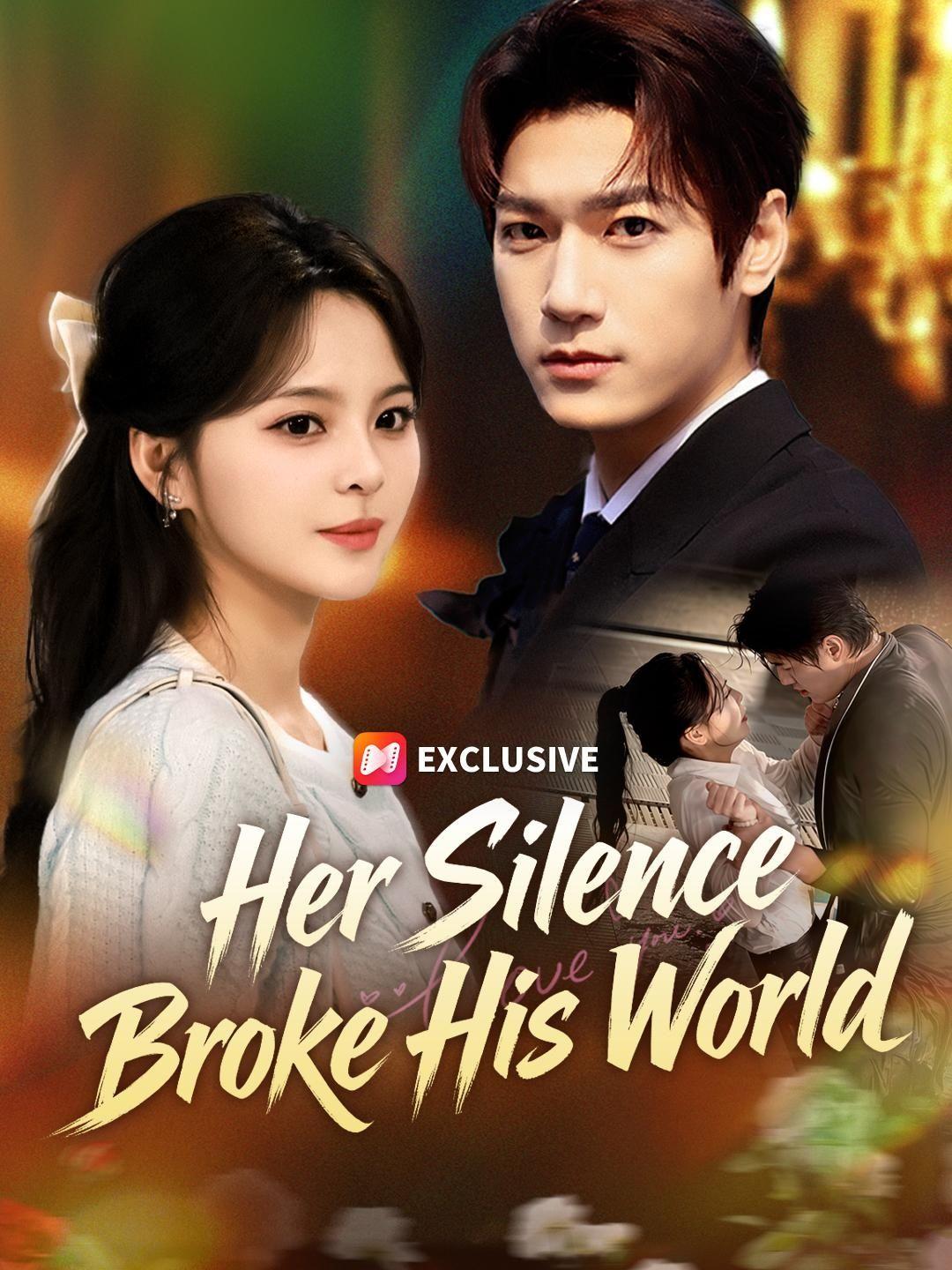
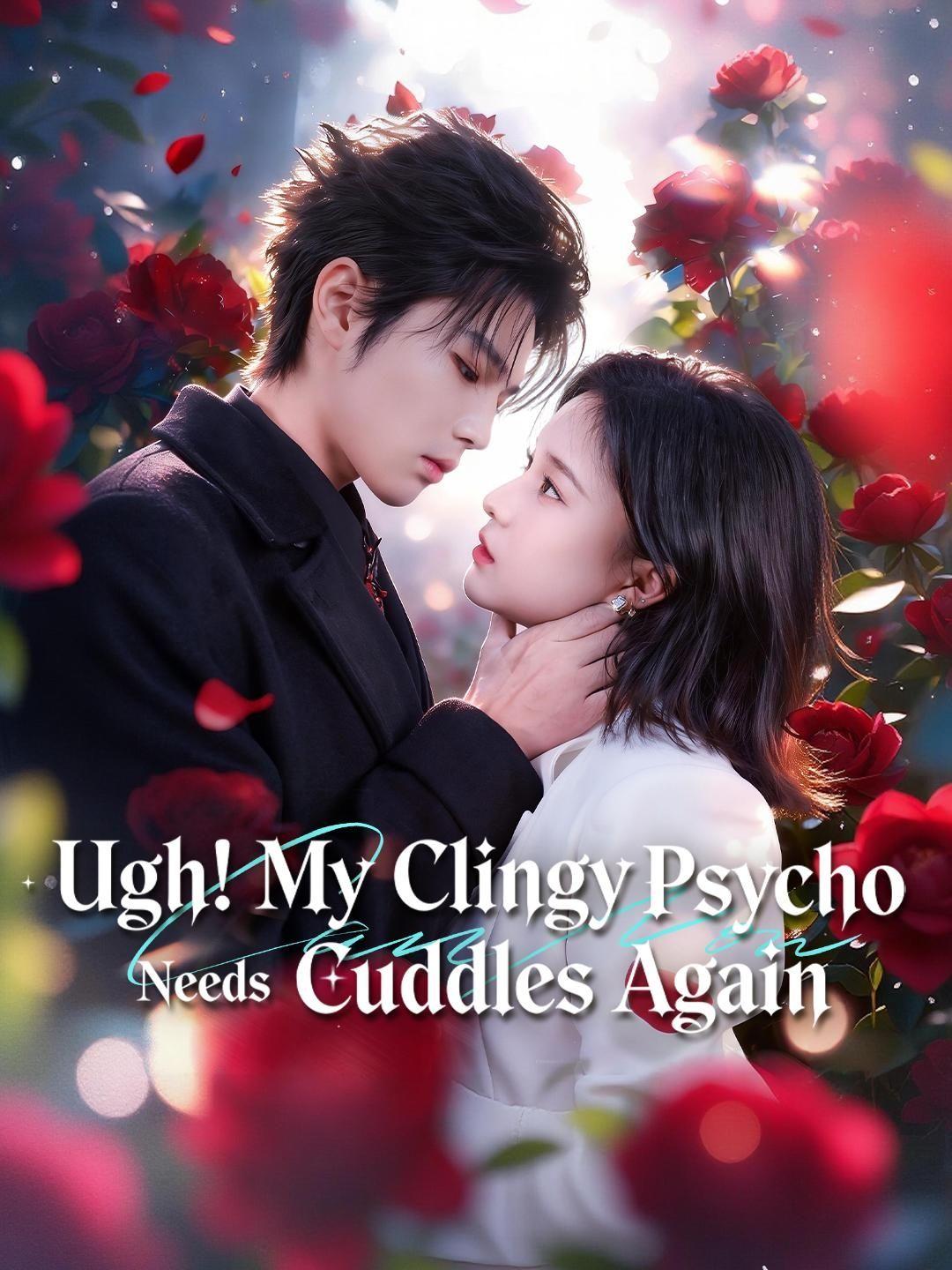
Written By Stars: When Cucumbers Crash the Romance
There’s a specific kind of cinematic magic that happens when a scene starts with a kiss so intense it feels like the air itself has gone static—and ends with a woman asking, “Who are you?” while wearing sliced cucumbers on her face. That’s not just editing. That’s alchemy. What we’re witnessing in this excerpt—likely from a short-form series produced by Written By Stars—isn’t merely romantic tension; it’s a carefully constructed collision of genres, tones, and emotional registers, all designed to keep the audience off-balance in the most delightful way possible. Let’s unpack it, layer by layer, because every detail here serves a purpose—even the polka-dot bow in Wendy’s hair, which somehow manages to look both girlish and defiant, like she’s ready to fight for her right to be kissed on a marble countertop. The opening sequence is pure sensory immersion. The lighting is low, cool, almost clinical—yet the closeness of the shots warms everything up. We’re not just seeing Wendy and the man; we’re *feeling* the heat between them. His hand on her neck isn’t just a gesture; it’s a claim, a question, a plea—all at once. Her response is equally complex: she leans in, yes, but her fingers grip his sleeve just a little too tightly, as if she’s bracing for impact. That’s the brilliance of the performance. Neither character is monolithic. He’s not just the brooding alpha; he hesitates, pulls back slightly, searches her eyes before committing to the next kiss. She’s not just the blushing ingenue; she initiates the second kiss, her lips parting first, her tongue brushing his in a move that’s equal parts invitation and challenge. This isn’t scripted romance—it’s lived-in intimacy, the kind that suggests history, friction, and unresolved business. And the setting? A modern, minimalist interior with marble surfaces and muted tones—suggesting wealth, control, order. Which makes the eventual chaos all the more satisfying. Because what’s the point of a perfectly curated space if no one’s allowed to mess it up? Then—enter Whitney. Not with fanfare. Not with anger. Just… *presence*. She’s seated, cross-legged, cucumber slices arranged with the precision of a Michelin-starred chef, eyes closed, breathing deeply. The contrast is so stark it’s almost surreal. One woman is suspended in the gravity of desire; the other is floating in the zero-gravity of self-care. And yet, when she opens her eyes and says, “Hi!”, it’s not a disruption—it’s a revelation. Suddenly, the entire scene shifts from melodrama to farce, and somehow, it works. Why? Because Whitney isn’t playing the villain. She’s playing the *truth-teller*. In a world where people perform their relationships for Instagram and TikTok, Whitney shows up with cucumbers and zero pretense. She doesn’t need to know the backstory. She doesn’t need to judge. She just needs to exist in the room, and in doing so, she forces everyone else to recalibrate their reality. The dialogue that follows is deceptively simple, but loaded with subtext. “Who are you?” isn’t just a question—it’s a boundary being drawn. “Why are you in my house?” isn’t accusatory; it’s bewildered, like she’s trying to reconcile the man in front of her with the version of events she imagined. And when Wendy confirms, “I’m Wendy’s best friend,” followed by Whitney’s deadpan “Whitney,” the humor lands because it’s *earned*. We’ve seen enough of Wendy’s expressions—her flustered smile, her darting eyes, the way she subtly tries to shield the man with her body—to know she’s scrambling to contain the situation. But Whitney? She’s already moved on. She’s washing her hands, adjusting her overalls, preparing for the next phase of her evening, which may or may not involve more cucumbers. That’s the kind of character who doesn’t need a backstory to command the scene. She *is* the backstory. What’s especially clever is how the cinematography supports this tonal pivot. The early shots are tight, claustrophobic, almost voyeuristic—like we’re hiding behind a curtain, peeking in on something we shouldn’t see. But once Whitney enters, the camera pulls back, widens, and even tilts slightly, as if it’s laughing along with us. The depth of field sharpens, revealing details we missed before: the half-empty glass of whiskey on the counter, the throw pillow with a geometric pattern that matches nothing else in the room, the faint reflection of the man’s face in the polished surface of the table. These aren’t accidents. They’re clues. The whiskey suggests he’s been waiting. The mismatched pillow hints at a home that’s still being assembled—like the relationship itself. And the reflection? That’s the man seeing himself through Wendy’s eyes, and realizing he might not like what he sees. Written By Stars has a signature style: they don’t shy away from melodrama, but they refuse to let it dominate. Instead, they puncture it with absurdity, grounding the heightened emotions in tangible, relatable details. The fact that Wendy is wearing white sneakers while perched on a marble counter isn’t just fashion—it’s rebellion. She’s not dressed for seduction; she’s dressed for comfort, for spontaneity, for the kind of life where you can kiss someone unexpectedly and still have time to grab a snack afterward. And the man? His suit is immaculate, but his hair is slightly tousled, his tie slightly crooked—signs that even the most controlled person can be undone by a single moment of connection. The final beat—the man sitting down, exhaling, looking at Wendy with a mixture of awe and exhaustion—is where the emotional weight settles. He’s not angry. He’s not embarrassed. He’s *changed*. And Wendy, for her part, doesn’t apologize. She smiles, small and knowing, as if to say, “Yeah, that happened. Deal with it.” That’s the power of this scene: it doesn’t resolve the tension between them. It *deepens* it. Because now, there’s a third party in the equation—not as a rival, but as a witness. And in storytelling, a witness changes everything. They turn private moments into shared history. They force characters to confront not just how they feel, but how they want to be seen. So yes, this is a romance. But it’s also a comedy. A psychological study. A visual poem about the fragility of intimacy in a world that’s always watching. And at its heart? A reminder that sometimes, the most disruptive force in a love story isn’t a rival or a secret—it’s a best friend with cucumbers on her face, walking in at exactly the wrong (right) time. Written By Stars understands that real emotion doesn’t live in grand gestures; it lives in the split-second pauses, the awkward silences, the way someone adjusts their sleeve when they’re nervous. That’s why this scene lingers. Not because it’s perfect—but because it’s *true*. And in a landscape of overly polished content, truth is the rarest, most intoxicating thing of all. Written By Stars doesn’t just tell stories—they create moments that feel like memories you didn’t know you’d make.
Written By Stars: The Kiss That Broke the Fourth Wall
Let’s talk about that kiss—no, not just *a* kiss. The kind of kiss that lingers in your chest long after the screen fades to black. In this tightly edited sequence from what appears to be a modern romantic drama—possibly titled *The Midnight Confession* or something similarly atmospheric—the chemistry between Wendy and her mysterious counterpart isn’t just built; it’s *orchestrated*, like a slow-burn symphony where every touch, every breath, every hesitation is calibrated for maximum emotional resonance. From the very first frame, we’re thrust into an intimate haze—soft focus, cool-toned lighting, a faint glow behind them suggesting either moonlight filtering through sheer curtains or the ambient glow of a city skyline at 2 a.m. The man, dressed in a sleek black suit with a subtle pinstripe texture and a silver tie clip (a detail that whispers ‘power’ without shouting), leans in with deliberate control. His fingers cradle Wendy’s jaw—not possessively, but reverently, as if she were a porcelain figurine he’s afraid might shatter under too much pressure. And yet, when their lips finally meet, it’s not gentle. It’s urgent. It’s hungry. It’s the kind of kiss that makes you forget you’re watching a performance and start wondering if they actually rehearsed this for three days straight—or if it was all improvised in one take, fueled by real tension and unspoken history. Wendy, for her part, doesn’t just receive the kiss—she *answers* it. Her hands, initially resting lightly on his shoulders, gradually tighten, pulling him closer until her knuckles whiten against the fabric of his jacket. Her white blouse, slightly rumpled at the collar, contrasts sharply with his dark attire—a visual metaphor for innocence meeting experience, light confronting shadow. The camera lingers on micro-expressions: the way her eyelids flutter shut just before contact, the slight tremor in her lower lip as he deepens the kiss, the way her ear—adorned with a delicate heart-shaped earring—catches the light like a tiny beacon. This isn’t just physical attraction; it’s narrative propulsion. Every movement tells us something: she trusts him enough to let go, but not enough to fully surrender. There’s resistance in her posture, even as her body arches toward him. That duality is everything. Then comes the shift—the moment the fantasy cracks. As they pull apart, breathless and flushed, Wendy’s eyes widen—not with fear, but with *recognition*. Not of him, necessarily, but of the situation. She glances over his shoulder, and the camera follows her gaze to reveal… Whitney. Yes, *Whitney*, Wendy’s so-called best friend, sitting cross-legged on the sofa, cucumber slices strategically placed over her eyes like some kind of spa-day oracle who’s just walked into a scene she wasn’t invited to. The contrast is absurd, hilarious, and deeply human. One woman is drowning in desire; the other is calmly meditating with a bowl of sliced cucumbers beside her. When Whitney finally removes the slices and says, “Hi!” with the cheerful obliviousness of someone who just walked into a yoga class thinking it was a book club, the tonal whiplash is masterful. It’s not just comedy—it’s a narrative reset button. The intensity of the kiss is instantly deflated, replaced by awkwardness, confusion, and the kind of social panic only experienced when your private moment becomes public property. What’s fascinating is how the director uses space and framing to underscore the emotional dissonance. In the kissing scenes, the background is blurred, dreamlike—walls dissolve into gradients of blue and gray, emphasizing the couple’s isolation. But once Whitney enters the frame, the environment snaps into focus: marble countertops, liquor bottles lined up like silent witnesses, a framed abstract painting that suddenly feels like it’s judging everyone involved. The camera pulls back, revealing the full absurdity of the tableau: Wendy perched on the counter like a startled bird, the man hovering beside her like a guilty conspirator, and Whitney—still in denim overalls and a ruffled blouse—radiating the serene confidence of someone who has absolutely no idea she’s holding the detonator to this emotional bomb. Written By Stars knows how to weaponize juxtaposition. The intimacy of the kiss isn’t undermined by Whitney’s entrance; it’s *enhanced* by it. Because now we’re not just watching two people fall for each other—we’re watching them try to explain why they were doing it *here*, *now*, with *her* in the room. And let’s not overlook the dialogue—or rather, the *lack* of it. For most of the sequence, there are no words. Just sighs, gasps, the rustle of fabric, the soft thud of a hand landing on a thigh. Then, when reality crashes in, the lines are sparse but devastating: “Who are you?” “Why are you in my house?” “I’m Wendy’s best friend.” Each line lands like a stone dropped into still water, sending ripples through the entire dynamic. The man’s confusion is palpable—he’s not angry, not defensive, just genuinely bewildered, as if he’s been caught mid-dream and can’t quite remember how he got here. Wendy, meanwhile, oscillates between mortification and amusement, her smile flickering like a faulty neon sign. She knows this is ridiculous. She also knows she’d do it again. That’s the genius of the scene: it doesn’t resolve the tension—it *recontextualizes* it. The kiss wasn’t just about lust or love; it was about escape, vulnerability, the desperate need to feel something real in a world that’s increasingly curated and performative. And then Whitney walks in with cucumbers on her face, and suddenly, everything feels both more trivial and more profound. Written By Stars excels at these layered moments—where romance collides with absurdity, where passion meets pratfall, and where the most emotionally charged scenes are often interrupted by the most mundane intrusions. This isn’t just a love story; it’s a commentary on how impossible it is to have a private moment in the age of shared living spaces, group chats, and best friends who show up unannounced with skincare routines. The fact that Whitney introduces herself with such casual authority—“Whitney. Wendy’s close friend”—while still wearing cucumber slices like a badge of honor, tells us everything we need to know about her character. She’s not jealous. She’s not threatened. She’s just *there*, a living embodiment of the phrase “I didn’t ask for this, but I’m staying.” And in that, she becomes the unexpected moral center of the scene. While Wendy and the man are lost in their own world, Whitney represents the outside—the real world, where relationships aren’t just about sparks and stolen kisses, but about boundaries, consent, and the quiet understanding that sometimes, the most loving thing you can do is walk in with cucumbers and say, “Hi.” The final shot—Wendy smiling, slightly dazed, as the man looks away, processing the chaos—is perfect. No resolution. No grand declaration. Just two people, caught in the aftermath of something beautiful and messy, with a third person quietly holding the space for them to figure it out. That’s the kind of storytelling that sticks with you. Not because it’s flawless, but because it’s *human*. Written By Stars doesn’t give us fairy tales. They give us moments—raw, funny, tender, and utterly unforgettable.