



The White Family's Challenge


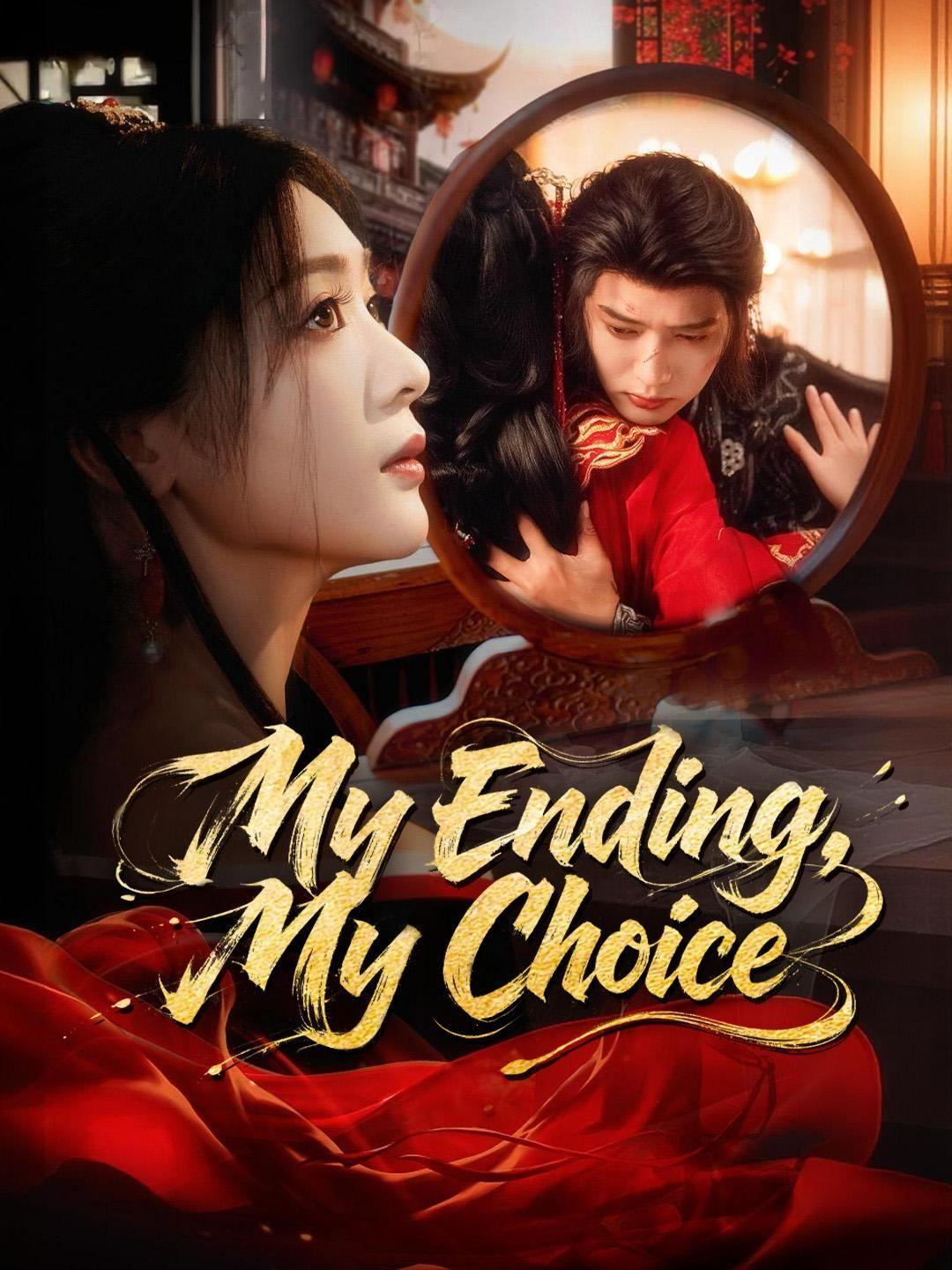
The Avenging Angel Rises: When Grace Becomes a Weapon
There’s a scene in *The Avenging Angel Rises*—just twenty-three seconds long, no dialogue, no music—that haunts me more than any sword fight or death cry. Ling Xiao, standing barefoot on cold stone, lifts her right hand. Not to strike. Not to gesture. Just to *pause*. Her fingers hover mid-air, palm outward, as if holding back time itself. Behind her, the bald man in the striped robe gasps, his face contorted not in pain, but in disbelief—as if he’s just realized the woman before him isn’t human, but a force of nature disguised in linen. That moment encapsulates everything *The Avenging Angel Rises* does right: it weaponizes restraint. It turns stillness into threat, elegance into terror. This isn’t kung fu cinema. It’s psychological theater dressed in Song Dynasty silhouettes. Let’s talk about clothing, because in this world, fabric speaks louder than words. Ling Xiao’s outfit—a cropped, asymmetrical jacket fastened with wooden toggles, layered over a sheer under-tunic cinched with pearl buttons—isn’t just aesthetic. It’s tactical. The cut allows full rotation of the shoulders; the looseness hides the tension in her core. Every time she shifts her weight, the fabric whispers, and the audience leans in. Contrast that with the bald man’s robe: bold indigo stripes, rigid collar, sleeves cut short to expose forearms—designed for visibility, not mobility. He wants to be seen suffering. She wants to be seen *choosing* when to act. And when she finally does act—spinning, deflecting, disarming—the motion is so fluid it feels less like combat and more like calligraphy: each movement a stroke, each parry a character written in air. The supporting cast elevates this further. Take Master Chen, the elder in white, whose jade pendant isn’t just ornamentation—it’s a narrative device. Early on, it gleams clean, untouched. By the third act, it’s smudged with crimson, and his robe bears faint stains near the hem. He never draws a weapon. He never raises his voice. Yet his presence dominates every scene he enters, like a shadow that grows longer as the sun sets. His relationship with Ling Xiao is the emotional spine of *The Avenging Angel Rises*. In one quiet exchange, she approaches him, bowing slightly—not fully, not disrespectfully, but with the precision of a diplomat negotiating peace. He studies her, then lifts his chin, and for the first time, we see his eyes glisten. Not with tears. With memory. He remembers her as a child, perhaps, practicing forms in the same courtyard, her small hands gripping a wooden sword twice her size. Now she stands taller than him, her gaze level, her silence heavier than any oath. Then there’s Wei Tao—the younger man in the black-and-green jacket, embroidered with a coiled serpent. He’s the wildcard. Where Ling Xiao is ice, he is flame. Where Master Chen is wisdom, Wei Tao is impulse. His entrance is abrupt: he strides into frame, book in hand, but his eyes scan the ground like a predator tracking prey. When the fighting erupts, he doesn’t join immediately. He watches. Calculates. Then, in a blur, he intercepts a strike meant for Ling Xiao—not to protect her, but to *steal* the momentum. His move is flashy, almost arrogant, and for a second, you think he’ll overshadow her. But she doesn’t react. She doesn’t thank him. She simply pivots, using his redirected force to unbalance another attacker. That’s the genius of *The Avenging Angel Rises*: no one steals the spotlight because the spotlight belongs to the silence between actions. Wei Tao learns this the hard way when, later, he tries to speak out of turn—and Ling Xiao cuts him off with a glance so sharp it could draw blood. He shuts his mouth. Nods. Understands. The courtyard itself is a character. Wide, open, deceptively peaceful—until you notice the cracks in the flagstones, the rust on the iron gate hinges, the way the wind carries dust in slow spirals, like ghosts circling a grave. This isn’t a stage for glory. It’s a confession booth built for penance. Every fallen fighter leaves a mark: a dropped sword, a torn sleeve, a smear of blood that won’t wash out. And Ling Xiao walks through it all like a priestess conducting last rites. Even when she kneels—yes, *she* kneels, briefly, beside the injured swordsman in black—her posture remains regal. Her hands hover above his wound, not to heal, but to assess. To decide. Is he worth saving? Or is his suffering part of the balance? What makes *The Avenging Angel Rises* unforgettable isn’t the action—it’s the aftermath. The way the survivors don’t cheer. They don’t applaud. They stand frozen, some with hands over mouths, others with eyes fixed on the horizon, as if waiting for the next wave. The two young men in white tees? They’re still mimicking poses, but now their movements are slower, heavier, infused with doubt. They thought this was a story about heroes. They’re learning it’s about inheritors. About what happens when the angel doesn’t fall—but ascends, silently, irrevocably, into the role of judge. In the final shot, Ling Xiao walks toward the camera, backlit by a pale sky. Her ribbon flutters. Her expression is unreadable. And then—just as the frame fades—she blinks. Once. Slowly. And in that blink, we see it: not triumph. Not sorrow. Resolve. *The Avenging Angel Rises* isn’t about vengeance completed. It’s about vengeance *assumed*. The burden accepted. The mask worn not for deception, but for survival. Because in this world, grace isn’t kindness. It’s the calm before the storm you choose to unleash. And Ling Xiao? She’s not waiting for the storm. She *is* the storm—wrapped in silk, speaking in silence, rising not with a roar, but with the quiet certainty of a blade sliding home.
The Avenging Angel Rises: A Silent Storm in White Silk
In the opening frames of *The Avenging Angel Rises*, we are thrust not into chaos, but into stillness—a kind of tension so thick it hums like a plucked guqin string held too long. The central figure, Ling Xiao, stands poised in cream-colored silk, her hair coiled high with a white ribbon that flutters just enough to suggest motion even when she does not move. Her eyes—dark, unblinking, and unnervingly calm—scan the courtyard as if measuring every breath taken by those around her. Behind her, blurred but unmistakable, stand two men: one young, in a plain white tee, hands clasped like a student awaiting reprimand; the other older, in a white robe embroidered with ink-wash pines, his jade pendant hanging low like a silent verdict. And then there’s him—the bald man in the indigo-and-white striped robe, kneeling, head tilted back, mouth agape in what can only be described as theatrical agony. His expression is not pain, not fear—it’s surrender. A performance of submission. Yet Ling Xiao doesn’t flinch. She doesn’t smirk. She simply watches, lips parted slightly, as if tasting the air before deciding whether to speak—or strike. This is where *The Avenging Angel Rises* distinguishes itself from the usual wuxia fare: its violence isn’t announced with clashing swords or flying robes. It begins with silence, with posture, with the weight of a glance. When Ling Xiao finally moves, it’s not toward the kneeling man, but past him—her steps measured, deliberate, each footfall echoing off the stone pavement like a metronome counting down to inevitability. The camera lingers on her waist, where a sheer panel reveals a silver-buckled corset beneath her outer layer—a subtle nod to both tradition and rebellion. She is not dressed for battle; she is dressed for judgment. Cut to a wide shot of the courtyard: traditional Sichuan-style architecture, tiled roofs sloping like folded hands, a sign reading ‘Visitor Center’ in faded gold characters—an ironic detail, as this is no tourist stop. Here, the choreography unfolds not as spectacle, but as consequence. Two men in teal jackets rush forward—not to attack her, but to restrain someone else, a man in black who stumbles backward, sword slipping from his grip. He falls hard, knees hitting stone, and blood blooms at his temple. Ling Xiao doesn’t look at him. She looks at the older man in white—Master Chen, whose jade pendant now bears a faint smear of red, likely from the injured man’s sleeve. His arms are crossed, but his fingers twitch. He knows what’s coming. He’s seen it before. Or perhaps he’s the one who taught her how to make a man bleed without lifting a finger. The real brilliance of *The Avenging Angel Rises* lies in its refusal to explain. We never hear why the bald man kneels. We don’t learn what transgression earned the black-robed swordsman his fall. But we feel it—in the way Ling Xiao’s hair whips sideways as she turns, in the way Master Chen exhales through his nose like a man releasing steam from a pressure valve, in the way the two young men in white tees suddenly raise their fists, not in aggression, but in mimicry, as if rehearsing a role they’re not yet ready to play. Their gestures are clumsy, exaggerated—like children imitating elders they barely understand. That’s the tragedy simmering beneath the surface: this isn’t just about revenge. It’s about legacy. About who gets to inherit the mantle of justice—and who gets crushed beneath it. Later, in a close-up that lingers just a beat too long, Ling Xiao’s expression shifts. Not anger. Not triumph. Something quieter: recognition. She sees something in Master Chen’s eyes—not guilt, not pride, but resignation. He nods, almost imperceptibly, and she returns it. That’s the moment *The Avenging Angel Rises* transcends genre. It becomes less about martial prowess and more about the unbearable lightness of moral authority. Who decides when mercy ends and vengeance begins? Who wears the white robe and still carries blood on their sleeves? Ling Xiao walks away, her back straight, her ribbon catching the wind, and behind her, the courtyard dissolves into murmurs. One man spits blood onto the stones. Another bows deeply, though no one asked him to. And Master Chen—still holding his wounded arm, still wearing that jade—whispers a single phrase, too soft for the camera to catch, but loud enough for us to imagine: ‘She’s become what I feared she would.’ The final sequence is pure visual poetry. Ling Xiao stands alone at the edge of the frame, facing away, while in the background, the teal-jacketed men drag the fallen swordsman toward a side gate. The camera circles her slowly, revealing the faint stain on her left sleeve—dust? sweat? or something darker? We don’t know. And we’re not meant to. *The Avenging Angel Rises* doesn’t offer closure. It offers aftermath. It asks us to sit with the silence after the scream, to wonder what happens when the angel stops rising—and starts ruling. Because power, as this series quietly insists, isn’t seized in a single strike. It’s inherited in a glance, passed down like a cursed heirloom, worn like silk that hides the scars beneath. Ling Xiao doesn’t need to shout. She doesn’t need to swing a blade. She simply exists—and the world bends around her like reeds in a storm. That’s not heroism. That’s horror. And that’s why *The Avenging Angel Rises* will haunt you long after the credits fade.