



The Hidden Motive Behind Spark



Written By Stars: When the Genius Forgets He’s Human
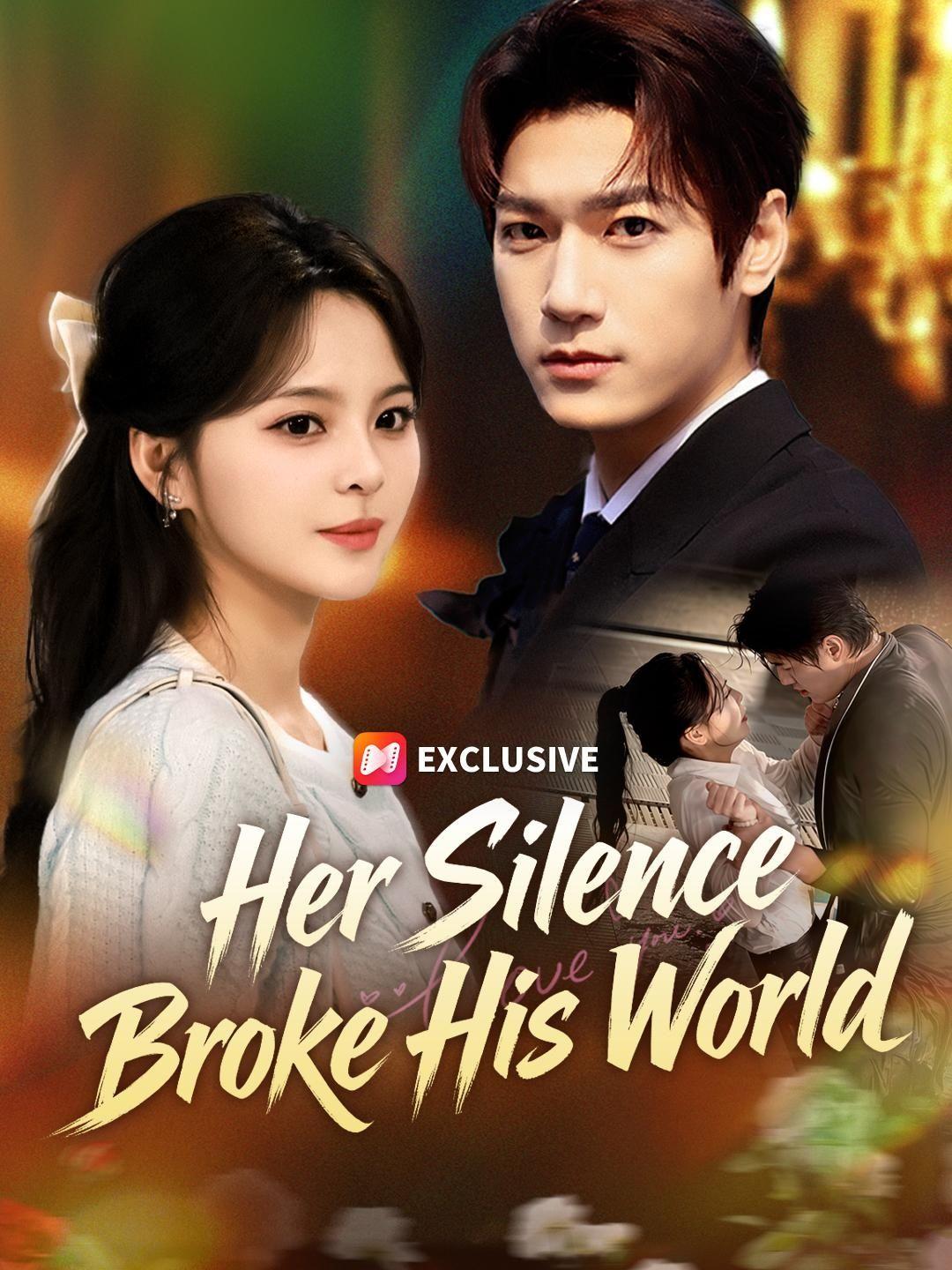
Let’s talk about the quiet violence of competence. Not the kind that leaves bruises, but the kind that erodes identity—one well-intentioned decision at a time. In this nocturnal riverside confrontation, Michael isn’t being accused of infidelity or fraud. He’s being confronted with something far more intimate: the realization that his brilliance has become a cage, not just for himself, but for the woman who once believed in his stories more than he did. The setting is deliberate: the railing, the water, the distant lights—all symbols of separation, of things just out of reach. She wears white—not purity, but surrender. A dress chosen for a moment she thought would be celebratory, not revelatory. And Michael, in his sky-blue suit (a color that suggests calm, clarity, even innocence), stands like a man who’s solved every equation except the one involving his own heart. Written By Stars frames their dialogue not as argument, but as excavation. Each line peels back another layer of the myth they’ve constructed together: the self-made prodigy, the supportive wife, the fairytale rise from tuition-and-a-plane-ticket obscurity. The narrative structure is key here. The film doesn’t start with the crisis—it starts with the origin. We see young Michael, earnest, slightly awkward, holding books like talismans. His dream isn’t vague ambition; it’s specific, tender: ‘After I go to college, I want to write many novels. Best if I can join Spark Literature City.’ Notice how he doesn’t say ‘I will.’ He says ‘best if I can.’ That hesitation is everything. It reveals insecurity masked as humility—a trait that will later evolve into strategic patience, then cold pragmatism. His high school girlfriend (let’s call her Lina, since the script never names her, but her presence is too vivid to remain anonymous) doesn’t dismiss him. She leans in, eyes alight, and says, ‘Get real, okay!’—not as mockery, but as challenge. She believes in him *because* he dares to dream small, tangible dreams. That moment is the foundation. And when Michael, years later, acquires Spark—not as part of Moonlight’s core tech vision, but as a ‘divergent asset,’ as the subtitle delicately puts it—he isn’t defying logic. He’s honoring a promise he never spoke aloud. Written By Stars knows the power of subtext: the way Lina’s fingers tremble when she says, ‘Turns out he had been planning this all along.’ She’s not angry at the deception. She’s shattered by the scale of his foresight. He didn’t just remember her dream—he archived it, indexed it, waited for the right moment to deploy it like a corporate maneuver. And in doing so, he turned love into logistics. What’s fascinating is how the film refuses to villainize Michael. His smile—‘like a fool,’ as the subtitle cruelly notes—isn’t arrogance. It’s exhaustion. The weight of carrying everyone else’s hopes while burying his own. He tells her, ‘He said he could finally give you some confidence.’ Who is ‘he’? Himself? Or the version of himself he created to survive the Harris family’s indifference? The Harris family gave him ‘nothing except tuition and a plane ticket’—a phrase that sounds generous until you realize it’s the bare minimum required to offload responsibility. Mrs. Harris wouldn’t let him ‘make a name for himself’ if he stayed. So he left. And in leaving, he learned the only language that mattered in that world: leverage. He used all his free time to plan Moonlight, not because he loved startups, but because he needed proof he wasn’t disposable. And when Moonlight succeeded, he didn’t celebrate. He acquired Spark. Because in his mind, that was the finale—the moment he could finally say, ‘I kept my word.’ Except Lina didn’t know there *was* a word. She thought they were building a life. He thought he was repaying a debt. Written By Stars excels at showing how trauma reshapes generosity: what looks like selflessness is often delayed revenge against past neglect. Michael didn’t acquire Spark for her. He acquired it to prove to himself that he was no longer the boy who needed permission to exist. The tragedy isn’t that he lied. It’s that he believed his lie was love. And Lina? She stands there, tears glistening, not because she’s been deceived, but because she finally sees the architecture of his devotion—and it’s built on foundations she never consented to. The last shot lingers on her face, not as a victim, but as a witness. She’s not losing a husband. She’s losing the story she told herself about him. And in that loss, she finds something sharper: the truth that some geniuses don’t fail because they’re flawed—they fail because they’re too good at surviving, and not good enough at being human. Written By Stars doesn’t offer resolution. It offers reckoning. And sometimes, that’s the only ending worth having.
Written By Stars: The Quiet Betrayal of Michael’s Dream
There’s something deeply unsettling about watching a man smile like a fool while his world collapses—especially when that man is Michael, the quiet genius behind Moonlight, the startup that defied odds and became a beacon for young entrepreneurs in the city’s tech corridor. In this night-lit riverside scene, with the neon glow of the bridge pulsing like a heartbeat in the background, Michael stands beside his wife—her white dress luminous against the dark, her hands clasped tightly, knuckles pale, as if holding back tears she hasn’t yet allowed to fall. She’s not just listening; she’s dissecting every syllable, every pause, every flicker in his eyes. And what she uncovers isn’t just ambition—it’s calculation. Written By Stars captures this moment with surgical precision: the way Michael’s hands stay buried in his pockets, not out of casualness, but as a shield against vulnerability; the way he glances away when mentioning Spark Literature City, as though the name itself carries weight he’d rather not bear. This isn’t a love story gone wrong—it’s a myth being dismantled, brick by emotional brick. The flashback sequence—soft-focus, slightly overexposed, like a memory filtered through nostalgia—is where the real tragedy unfolds. Young Michael, in his school uniform, standing beside a stone pillar, book tucked under his arm, eyes fixed on something beyond the frame. He’s not dreaming of IPOs or boardroom power plays. He’s dreaming of writing novels. Of joining Spark Literature City—not because it’s a strategic acquisition target, but because it’s *his* fantasy, whispered into the night air during late study sessions with his high school sweetheart, who beams at him with unguarded admiration. ‘This is my favorite novel website,’ she says, her voice warm, hopeful. ‘There are many great writers there. If I could follow them and learn more, maybe my novels could also become popular nationwide.’ Her words aren’t idle—they’re seeds. And Michael, ever the listener, absorbs them like rain into dry soil. But here’s the twist no one sees coming: he doesn’t just remember. He *acts*. Not impulsively. Not emotionally. Strategically. Years later, when Moonlight has stabilized, when he’s earned enough credibility to make bold moves, he acquires Spark—not as a passion project, but as a chess piece. And he lets her join, not out of generosity, but because he knows exactly how much that opportunity means to her. Written By Stars doesn’t sensationalize this; it lingers on the silence between them—the space where trust used to live. When she finally whispers, ‘I always thought he acquired Spark just by coincidence,’ the camera holds on her face, catching the slow dawning of realization: this wasn’t luck. It was love, weaponized into opportunity. And she was never the beneficiary—she was the catalyst. What makes this scene so devastating is how ordinary it feels. No shouting. No dramatic gestures. Just two people standing on a promenade, the city breathing behind them, and the truth unfolding like a scroll no one asked to unroll. Michael’s confession—‘It was because I married him that he let me join Spark’—is delivered not with pride, but with quiet resignation. He’s not gloating; he’s confessing. And in that moment, the audience realizes: he didn’t lose his CEO position because he made a mistake. He nearly lost it because he chose *her*. Because he prioritized her dream over shareholder expectations. Because he believed—naively, beautifully—that love could coexist with corporate strategy. The board saw it as mismanagement. He saw it as redemption. Written By Stars understands that the most painful betrayals aren’t the ones shouted from rooftops—they’re the ones whispered over coffee, disguised as support, wrapped in the language of sacrifice. And the woman in the white dress? She’s not just crying for herself. She’s crying for the boy who wanted to write novels, the man who built an empire to give her a chance, and the lie they both agreed to believe: that some dreams can be shared without being consumed. The final shot—her tear catching the light, refracting the city’s glow like a broken prism—says everything. This isn’t a breakup scene. It’s an autopsy of a marriage built on asymmetrical hope. And Michael? He smiles like a fool because he finally has what he wanted—and he hates himself for it.