



The Unspoken Tension


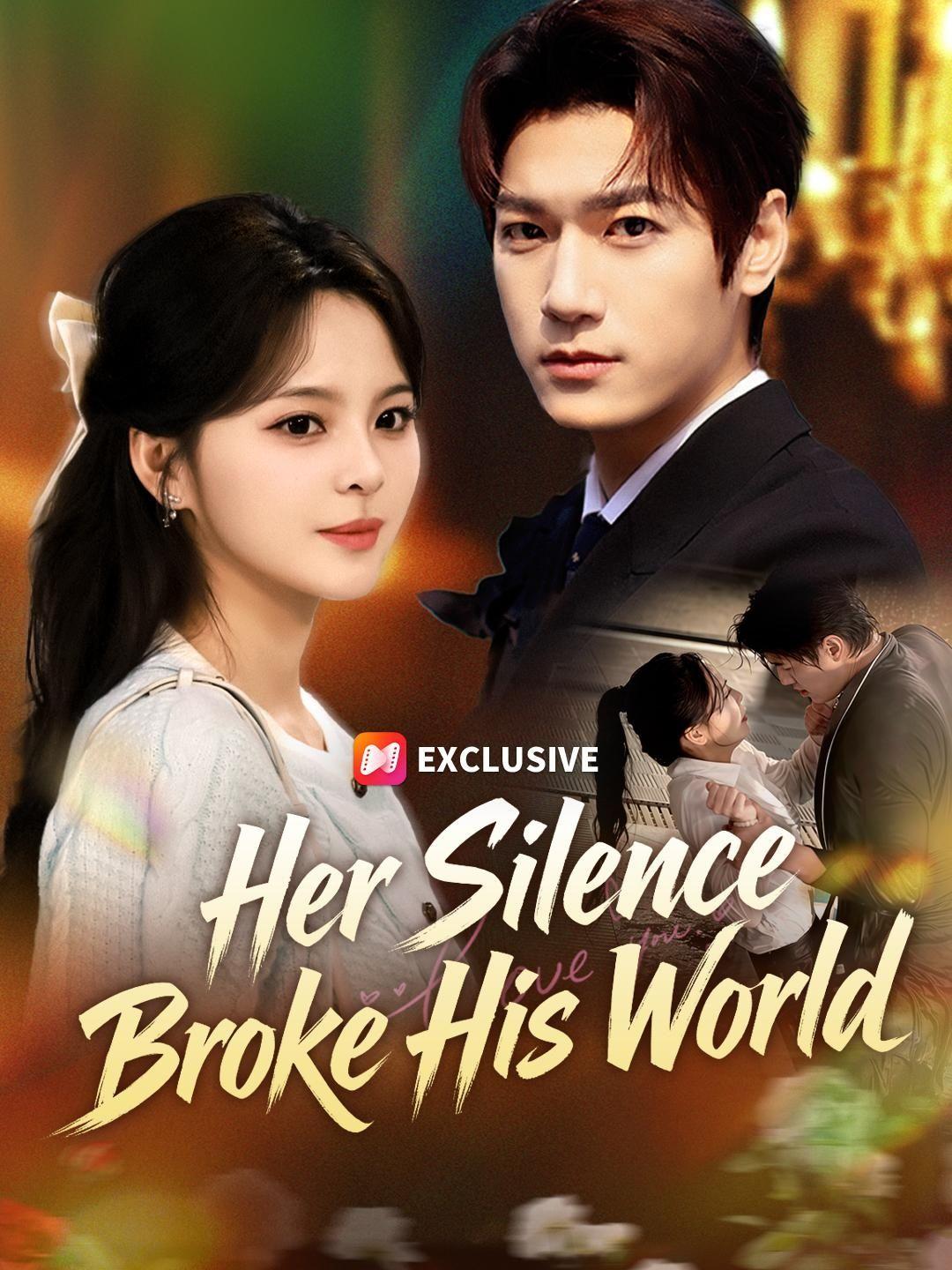
Written By Stars: When the Ankle Breaks, the Walls Do Too
Let’s talk about the bathroom. Not the tiles—though yes, those geometric black-and-white patterns are *chef’s kiss*, a visual metaphor for the fractured symmetry of Steven and Wendy’s relationship—but the *candles*. Dozens of them. On shelves. On the counter. On the floor. Flickering like nervous heartbeats. This isn’t ambiance. This is desperation. Steven, shirt still crisp, sleeves rolled just so, sits slumped against the wall, one hand gripping his ankle, the other clutching his phone like it’s the last lifeline to sanity. He’s just finished a call where he asked, ‘Don’t you usually know how to cheer up your girlfriend?’—a question so loaded it could sink a ship. His friend’s reply? ‘Girlfriends are girlfriends, wife is wife.’ And Steven, ever the literalist, pushes back: ‘Don’t you have a girlfriend you can marry as your wife?’ The absurdity is crushing. He’s not confused about semantics. He’s drowning in the gap between *dating* and *belonging*, between ‘she tolerates me’ and ‘she chooses me’. And then—the twist no one saw coming: he fakes an injury. Not maliciously. Not manipulatively. But with the quiet despair of a man who’s run out of scripts. ‘I hurt my ankle,’ he says, voice tight, eyes avoiding hers. And Wendy? She doesn’t roll her eyes. She doesn’t sigh. She *moves*. Fast. Purposeful. Like gravity has shifted and she’s the only one who feels it. She rushes in, gasps ‘Oh dear!’, and immediately kneels—not to inspect, but to *connect*. Her hands hover, then land gently on his calf, her touch both diagnostic and devotional. ‘This must have hurt your bones,’ she murmurs, and the line lands like a hammer. Because she’s not talking about anatomy. She’s naming the emotional fracture he’s been hiding: the ache of feeling unseen, the bruise of trying too hard and still falling short. In Written By Stars, physical pain is never just physical. It’s the body screaming what the mouth refuses to say. And Steven? He lets her touch him. He lets her lead. He doesn’t correct her when she insists on taking him to the hospital—he just watches her, his expression shifting from practiced stoicism to something raw, exposed, *hungry*. The shower turns on. Not because he needs washing. Because they need *merging*. Water rains down, turning the room into a cathedral of steam and candlelight, and suddenly, the power dynamic flips. Wendy, usually the composed one, the one who holds herself together with pearl-trimmed collars and measured syllables, is now soaked, her hair clinging to her neck, her dress translucent, her breath uneven. Steven, the controlled architect of his own image, is barefoot, disheveled, his shirt darkened by water, his eyes wide with something that looks dangerously close to hope. They stand face-to-face, water streaming down their temples, noses almost touching, and for the first time in the entire sequence, there’s no dialogue. No ‘I’m sorry’. No ‘Why didn’t you eat?’. Just proximity. Just the electric hum of two people realizing: *We’re still here. We’re still trying.* The camera circles them, capturing the droplets on Wendy’s lashes, the way Steven’s thumb brushes her jawline—not to claim, but to confirm: *You’re real. I’m real. This is happening.* And then—the kiss. Not passionate. Not urgent. But *inevitable*. A slow press of lips, wet and warm, tasting of salt and steam and the faintest hint of the noodles they both ate despite their protests. It’s not sex. It’s surrender. It’s the moment Wendy stops being the woman who says ‘I don’t like noodles’ and becomes the woman who says, silently, *I like you enough to pretend I do*. Written By Stars excels at these micro-revelations: the way Steven’s belt buckle glints under candlelight as he leans into her, the way Wendy’s ring catches the flame when she cups his face, the way his wet hair sticks to his forehead like a crown of humility. These aren’t details. They’re evidence. Evidence that love isn’t found in grand declarations, but in the willingness to sit on a cold tile floor, to let someone see you broken, to whisper ‘Ouch’ and mean *I’m scared*. The brilliance of this scene lies in its refusal to resolve. There’s no ‘and they lived happily ever after’. There’s just water, and light, and two people learning that sometimes, the most radical act of intimacy is admitting you don’t know how to fix it—so you just show up, barefoot, and let the other person decide whether to heal you or hold you while you bleed. Steven’s earlier phone call—‘Maybe act cute, or play pitiful’—isn’t advice he follows. It’s irony he lives through. Because he doesn’t *act* pitiful. He *is* pitiful. And Wendy doesn’t fix him. She *witnesses* him. And in that witnessing, she finds her own permission to stop being strong. The final shot—Wendy’s tear, suspended mid-fall, catching the candle’s glow like a tiny, trembling star—is the thesis of Written By Stars: love isn’t about perfection. It’s about showing up, even when your ankle’s fake, even when your noodles are rejected, even when you’re not sure if you’re boyfriend or husband or just the guy who keeps trying. Steven and Wendy aren’t a couple. They’re a work in progress. And god, how we root for them. Because in a world of curated perfection, there’s something revolutionary about two people who eat noodles they hate, fake injuries to get attention, and cry under shower spray—not because they’re weak, but because they’re finally, blessedly, *human*. Written By Stars doesn’t give us fairy tales. It gives us truth: messy, awkward, tear-streaked, and utterly worth it. And as the candles gutter out, one by one, we’re left with the quiet certainty that whatever comes next—banquets, arguments, more noodles—they’ll face it together. Not because they’re flawless. But because they’re willing to be flawed, side by side. That’s not romance. That’s revolution. And Written By Stars? It’s the manifesto.
Written By Stars: The Noodle Lie That Started It All
There’s something quietly devastating about a man in a black suit standing beside a marble island, hands clasped like he’s preparing for confession—not dinner. Steven, impeccably dressed, moves with the precision of someone who’s spent years mastering control, yet his eyes betray him: they flicker, hesitate, linger too long on the bowl of noodles he just made. He says, ‘I made an extra bowl of noodles.’ A simple sentence. But in the world of Written By Stars, where silence speaks louder than dialogue and every gesture is calibrated for emotional detonation, that line isn’t an offer—it’s a plea wrapped in domesticity. Wendy enters not with fanfare but with the weight of exhaustion, her white dress luminous against the cool blue-gray tones of the kitchen, as if she’s stepped out of a dream she didn’t ask to be in. She doesn’t smile. She doesn’t thank him. She pours water—deliberately, almost ritualistically—into glasses arranged on a wooden tray, her fingers adorned with a pearl ring that catches the light like a tiny, stubborn hope. When she asks, ‘Do you want some?’ it’s not hospitality. It’s a test. And when he says, ‘No, thanks,’ the air thickens. Because we know—*we always know*—that Wendy doesn’t like noodles. Not really. She says it plainly, almost defiantly: ‘I don’t like noodles.’ Yet seconds later, she lifts the chopsticks, lifts the bowl, and eats. Not because she changed her mind. Because Steven made them. Because he *tried*. And in their universe, effort is currency, and love is measured in how far you’re willing to bend your own preferences to meet someone else’s need—even if that need is just to feel seen. The camera lingers on her face as she slurps, eyes half-closed, lips glistening—not with joy, but with resignation, with tenderness, with the quiet surrender of someone who’s been fighting loneliness longer than she’s been fighting him. Steven watches, silent, his expression unreadable until he finally picks up his own bowl and does the same. They eat side by side, not speaking, the only sound the soft clink of ceramic and the whisper of steam rising between them. It’s not romantic. It’s *real*. And that’s what makes Written By Stars so dangerous: it doesn’t sell fantasy. It sells the ache of proximity—the way two people can sit inches apart and still feel galaxies away, until one small act—like eating noodles you hate—becomes the bridge. Later, when Wendy sits alone on the edge of the bed, her shoulders slumped, her voice barely audible as she mutters ‘Ouch!’—it’s not just physical pain. It’s the accumulation of unspoken things: the banquet she barely touched, the way Steven noticed, the way he *always* notices, even when he pretends not to. And then—the bathroom. Candles everywhere. Soft light. Steven sitting on the tiled floor, barefoot, holding his ankle like it’s the only thing keeping him grounded. ‘I hurt my ankle,’ he says, voice strained. And Wendy? She doesn’t call an ambulance. She doesn’t scold. She kneels. She touches his leg. She says, ‘This must have hurt your bones.’ As if his pain is sacred. As if his vulnerability is the only language she truly understands. The shower turns on—not for cleaning, but for closeness. Water cascades over them, blurring lines, dissolving defenses. Their faces inches apart, breath mingling, tears mixing with droplets on their cheeks. No kiss. Not yet. Just the unbearable intimacy of shared wetness, of candlelight reflecting in pupils dilated not from lust, but from recognition: *I see you. I’m still here.* In Written By Stars, love isn’t declared in grand gestures. It’s whispered in the space between ‘I don’t like noodles’ and ‘I’ll try some,’ in the way Steven calls his friend asking, ‘How do you cheer up your girlfriend?’—not because he doesn’t know, but because he’s terrified he’s doing it wrong. His friend suggests bags. ‘Wendy doesn’t like those,’ he replies, deadpan. Then, after a beat: ‘Then I don’t know.’ That line—so small, so hollow—is the heart of the entire arc. Because Steven isn’t clueless. He’s *afraid*. Afraid that his love isn’t enough, that his efforts are clumsy, that Wendy’s quiet endurance isn’t affection—it’s pity. And yet, when she finds him on the bathroom floor, she doesn’t fix him. She *joins* him. She lets the water soak her dress. She presses her forehead to his. She doesn’t say ‘It’s okay.’ She says nothing. And in that silence, everything is said. Written By Stars doesn’t believe in perfect couples. It believes in imperfect people who keep choosing each other, even when the noodles are cold, even when the ankle is bruised, even when the words won’t come. The final shot—Wendy’s tear sliding down her cheek, caught mid-air by the shower spray, refracting candlelight like a diamond—isn’t sadness. It’s release. It’s the moment she stops performing resilience and finally allows herself to *feel* the weight of being loved by someone who tries, even when he fails. That’s the genius of this scene: it’s not about noodles. It’s about the courage it takes to say, ‘I made an extra bowl,’ knowing full well the other person might refuse—and loving them anyway. Written By Stars reminds us that romance isn’t fireworks. It’s the slow burn of shared silence, the quiet heroism of showing up with soup you know they won’t eat, and still hoping—*still hoping*—that maybe, just maybe, they’ll take one bite. Because love, in its truest form, isn’t about compatibility. It’s about persistence. And Steven? He’s persistent. Painfully, beautifully, relentlessly so. Wendy may not like noodles. But she loves the man who made them. And that, in the end, is the only recipe that matters.