



Impulsive Decisions


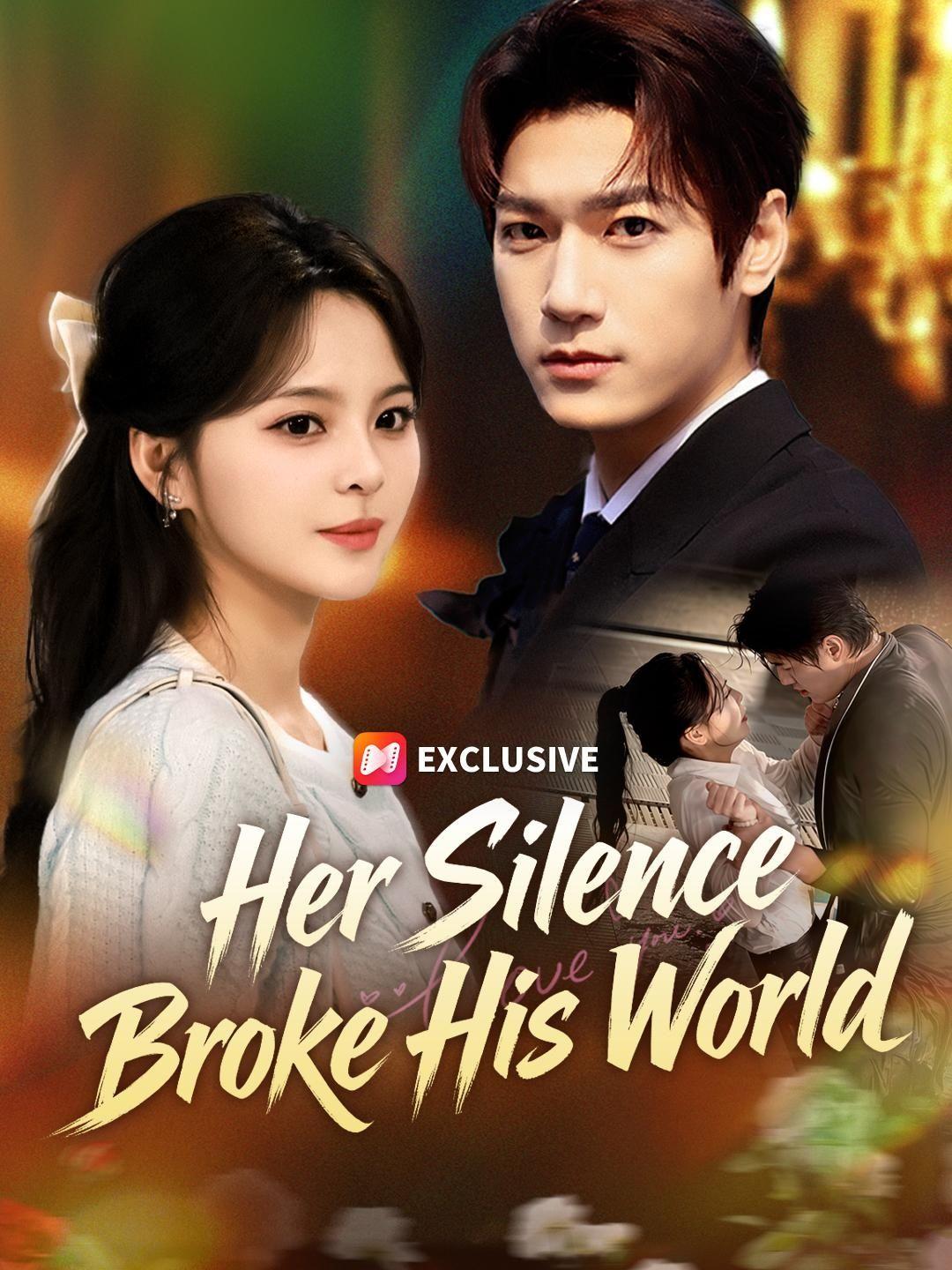

Written By Stars: When ‘Honey’ Becomes a Weapon
There’s a moment in Written By Stars—just after Mr. Harris hangs up the phone, smiles faintly at his laptop screen, and says, “Honey”—that the entire tone of the scene shifts. Not because of what he says, but because of *how* he says it. That single word, uttered in a boardroom full of colleagues who suddenly remember they have urgent emails to send, becomes the detonator for everything that follows. It’s not affection. It’s performance. And the tragedy isn’t that he’s lying—it’s that he believes his own script. Let’s start with the setup: Mr. Harris, impeccably dressed, sitting like a king on his throne of leather and mahogany. His phone call is staged with cinematic precision—each line delivered with the cadence of a man rehearsing a confession he hopes will never be heard. “I’ve packed my things.” Pause. Glance at the clock. “It’s still two hours before getting off work.” He’s not informing Wendy; he’s negotiating with her through the airwaves, using time as leverage. Meanwhile, the camera cuts to Wendy, standing in a softly lit interior space—possibly their apartment, possibly a café—her expression shifting from concern to quiet defiance. She wears pearls, yes, but also a coat that flares slightly at the hips, as if ready to walk away at any moment. Her earrings, heart-shaped and delicate, contrast sharply with the steel in her voice when she says, “I can come now.” That’s not eagerness. That’s challenge. She’s calling his bluff, and she knows he’ll fold—or explode. The brilliance of Written By Stars lies in its refusal to villainize either party outright. When Mr. Harris walks out of the meeting and declares, “To take my wife home,” the audience is meant to feel conflicted. Is he noble? Desperate? Manipulative? The answer is all three. His suit is immaculate, his posture upright, but his hands tremble slightly as he reaches for the door handle. That detail matters. It tells us he’s not in control—he’s clinging to the illusion of control. And when he finds Wendy with her suitcase already packed, the confrontation isn’t about infidelity; it’s about *agency*. He accuses her of lying, of staging a scene with a stranger, but the real crime he can’t articulate is this: she’s no longer waiting for his permission to live. Watch how Wendy responds. She doesn’t raise her voice. She doesn’t cry until the very end. Instead, she weaponizes calm. “No point in talking.” “How did I not see before that you’re so stubborn?” These aren’t accusations—they’re diagnoses. She’s not fighting him; she’s dissecting the relationship they’ve built, layer by painful layer. And when he grabs her wrist, his knuckles white, she doesn’t flinch. She looks him in the eye and asks, “Do you know his background?” Not “Who is he?” but *what does he represent?* To her, the man she met today isn’t the threat—it’s the mirror. He forces her to confront the fact that she’s been living in a marriage where love is conditional on compliance, where honesty is punished, and where “honey” is used less as a term of endearment and more as a silencing tactic. The physical escalation is choreographed like a dance—one partner leading, the other resisting, both knowing the steps by heart. When Mr. Harris pulls her close, muttering, “I’ve already given you an out,” it’s not generosity. It’s exhaustion. He’s tired of playing the role of the wronged husband, tired of performing grief for an audience that isn’t there. Wendy, for her part, doesn’t resist the embrace—not because she forgives him, but because she understands the ritual. Some wounds need to be held before they can heal. And yet, even in that embrace, her fingers remain stiff, her back rigid. She’s present, but not surrendered. Then—the door opens. And Mr. Harris freezes. The lighting shifts subtly: cooler, harsher, as if the outside world has intruded on their private hell. The man in the doorway says only two words: “Let her go.” No name. No explanation. Just command. And in that instant, everything changes. Wendy’s eyes widen—not with fear, but with recognition. She knows who’s there. And Mr. Harris? His face goes blank. Not angry. Not surprised. *Defeated.* Because for the first time, he’s not the center of the story. He’s just another man, standing in a room full of ghosts. What makes Written By Stars so compelling is how it treats dialogue as architecture. Every line builds the walls of the prison these two have constructed together. “Even if I get cheated in love, it’s none of your business” isn’t a rejection—it’s liberation. She’s not saying she doesn’t care about him; she’s saying she cares more about her integrity. And when she threatens to call the police, it’s not a bluff. It’s a boundary. In a world where men like Mr. Harris are taught that possession equals love, Wendy’s refusal to be possessed is revolutionary. The cinematography reinforces this theme. Notice how the boardroom is shot in wide angles, emphasizing distance and hierarchy, while the apartment scenes are claustrophobic, all tight close-ups and shallow depth of field. The camera lingers on objects: the half-empty coffee cup Mr. Harris abandons, the suitcase wheels catching on the rug, the pearl necklace that gleams even as tears fall. These aren’t props—they’re witnesses. And the music? Absent during the argument, swelling only when Wendy turns away, as if the score is waiting for her to make the first move toward freedom. Written By Stars doesn’t offer redemption arcs or tidy endings. It offers something rarer: honesty. Mr. Harris isn’t evil. He’s afraid—afraid of being irrelevant, of being replaced, of loving someone who sees him clearly and chooses to leave anyway. Wendy isn’t perfect. She’s human: flawed, furious, fiercely loyal to herself. And the man at the door? He’s not the hero. He’s the catalyst. The story isn’t about who she picks—it’s about her right to choose at all. In the final frames, as Mr. Harris stares at the doorway, the camera pushes in on his face, capturing the exact moment his certainty shatters. His mouth opens, but no sound comes out. That silence is louder than any scream. Because sometimes, the most devastating thing isn’t being betrayed. It’s realizing you were the one holding the knife all along. This is why Written By Stars resonates: it doesn’t ask us to pick sides. It asks us to remember our own moments of miscommunication, our own failed attempts to say what we mean. We’ve all been Mr. Harris, clinging to a narrative that no longer fits. We’ve all been Wendy, packing a suitcase in silence, wondering if love should ever require this much proof. The genius of the series is that it treats romance not as a fairy tale, but as a negotiation—one where the stakes are high, the terms are unclear, and the only guarantee is that someone will walk away changed. And as the screen fades, we’re left with one lingering image: Wendy’s hand, still holding the suitcase handle, fingers curled not in desperation, but in decision. She hasn’t left yet. But she’s ready. And that, perhaps, is the most powerful ending of all. Written By Stars doesn’t tell us what happens next. It trusts us to imagine it—and in doing so, it makes us complicit in her liberation. Because in the end, the most radical act isn’t walking out. It’s deciding, finally, that your peace is worth more than his comfort. And that, dear viewer, is why we keep coming back. Not for the drama. For the hope that someday, we’ll be brave enough to say, quietly, firmly: “It’s none of your business.” Written By Stars proves that the most intimate battles aren’t fought in bedrooms or boardrooms—they’re waged in the space between “I love you” and “I need to go.” And sometimes, the bravest thing you can do is hang up the phone, close the laptop, and walk toward the door—knowing that whoever’s waiting on the other side, you’ll face them as yourself.
Written By Stars: The Phone Call That Shattered the Boardroom
There’s a particular kind of tension that only exists in modern romantic dramas—where love, power, and miscommunication collide in a single room, under fluorescent lights, with a laptop still open and coffee gone cold. This scene from Written By Stars doesn’t just depict a breakup; it stages a psychological unraveling, one that begins with a seemingly innocent phone call and ends with a man gripping his wife’s wrist like he’s trying to hold onto reality itself. Let’s unpack what really happened—and why every frame feels like a slow-motion car crash you can’t look away from. The sequence opens with Mr. Harris seated at the head of a polished mahogany conference table, dressed in a black pinstripe suit that screams authority but also isolation. His posture is rigid, his fingers tapping rhythmically on the desk—not out of impatience, but as if he’s counting seconds until he can escape. He holds a white iPhone to his ear, voice soft, almost tender: “Hello, honey?” The contrast between his professional demeanor and this intimate address is jarring. In the foreground, blurred heads of colleagues suggest he’s not alone—but he might as well be. The camera lingers on his face as he says, “I’ve packed my things,” and then, with a glance toward his laptop screen, “When will you come pick me up?” It’s not a question—it’s a plea disguised as logistics. He’s not asking for transportation; he’s testing whether she’ll show up at all. Cut to Wendy, standing somewhere quieter—perhaps a hallway or a lounge—wearing an off-white trench coat that looks both elegant and defensive, like armor made of silk. Her pearl necklace glints under soft lighting, and her heart-shaped earrings catch the light each time she tilts her head. She listens, eyes wide, lips parted—not shocked, exactly, but *waiting*. When she replies, “But, if you miss me, I can come now,” there’s no hesitation in her voice, only resolve. That line isn’t surrender; it’s strategy. She knows he’s baiting her, and she’s choosing to bite—not because she’s weak, but because she believes in the possibility of repair. Meanwhile, back in the boardroom, two junior staff members exchange glances, one whispering something while the other covers his mouth in disbelief. Their reactions aren’t just comic relief—they’re the audience surrogate, reminding us how absurd it is that a CEO would take a personal call mid-meeting, let alone one that sounds like a lovers’ quarrel. Then comes the twist: Mr. Harris stands, closes his laptop with finality, and announces, “That’s all for today.” The room exhales collectively. As he walks out, someone calls after him—“Mr. Harris, where are you going?” And his reply, delivered without turning, is devastating in its simplicity: “To take my wife home.” Not “to talk,” not “to reconcile”—just *home*. That word carries weight. It implies ownership, duty, intimacy, and maybe even guilt. The camera follows him down the corridor, past glass-walled offices where people pause mid-conversation, sensing the shift in atmosphere. This isn’t just a departure; it’s a rupture in the corporate façade. Which brings us to the real heart of the scene: the confrontation at home. Wendy is already there, suitcase in hand, expression unreadable. She asks, “Now, do you believe it?”—a question loaded with years of unspoken resentment. Mr. Harris, now in a charcoal three-piece suit (note the subtle costume shift: from boardroom predator to domestic accuser), snaps back: “Wendy, to spite me, you’re even telling such lies, and found someone to act with you?” His finger points, his jaw tight, his body language screaming betrayal. But here’s the thing: he never actually saw her with anyone. He *assumed*. And that assumption is the true villain of this piece. Wendy’s response is quiet, devastating: “No point in talking.” She doesn’t yell. She doesn’t cry—not yet. She simply states the truth: he’s stubborn, he refuses to see her as anything but a reflection of his own fears. When he grabs her arm, she doesn’t pull away immediately. She lets him hold her, watches his face, and then says, “Even if what you say is true, but you’re with someone you just met.” That line lands like a hammer. She’s not denying infidelity—she’s questioning his right to judge her when he himself has spent the day pretending to be someone else entirely. The irony is thick: he accuses her of deception while wearing a mask of professionalism so convincing, even his colleagues didn’t notice he was emotionally absent. What follows is a masterclass in physical storytelling. Mr. Harris tightens his grip, his voice dropping to a growl: “Do you know what he wants from you?” Wendy’s eyes flicker—not with fear, but with pity. “If he’s a fraud, losing money is minor, but if he cheats… Even if I get cheated in love, it’s none of your business.” That last phrase is the emotional climax. She’s not defending herself; she’s reclaiming autonomy. In that moment, she stops being his wife and becomes Wendy—the woman who chooses her own pain, her own truth, her own timeline. Then comes the escalation. He yells, “I’ve already given you an out!” as if divorce were a favor he’s graciously offering. She retorts, “Let go,” and when he doesn’t, she threatens, “I will call the police.” It’s not empty bravado—it’s the last line she’s willing to draw. And yet, when he finally pulls her into a crushing embrace, sobbing into her hair, she doesn’t push him away. She *holds him*. That’s the genius of Written By Stars: it refuses easy binaries. He’s not a monster. She’s not a saint. They’re two people who love each other too much to lie, but too little to trust. The final beat—the door opening, Mr. Harris stepping in, voice low and dangerous: “Let her go.” The camera cuts between his face, frozen in shock, and Wendy’s tear-streaked profile, caught between two men, two versions of truth. We don’t learn who’s at the door. We don’t need to. The ambiguity is the point. Because in real life, the most painful conflicts rarely end with resolution—they end with silence, with breath held, with the unbearable weight of what *might* have been. This scene works because it understands that modern relationships aren’t broken by grand betrayals, but by tiny fractures: a missed call, a misread tone, a suitcase left by the door. Mr. Harris didn’t lose Wendy because she fell for someone else—he lost her because he stopped listening. And Wendy? She didn’t walk out because she stopped loving him. She walked out because she finally realized love shouldn’t feel like begging for permission to exist. Written By Stars doesn’t give us answers. It gives us questions—and that’s why we keep watching, long after the screen fades to black. Every gesture, every pause, every whispered “honey” is a thread in a tapestry of longing, regret, and the terrifying beauty of choosing yourself—even when it means breaking the person who once defined you. The boardroom may have cleared, but the real meeting is just beginning. And this time, no one gets to speak over her. Written By Stars reminds us that the most violent arguments often happen in silence—in the space between words, in the way a hand tightens on a wrist, in the split second before a door opens and everything changes. It’s not about who’s right. It’s about who’s willing to stay wrong, together. And sometimes, that’s the bravest choice of all.