




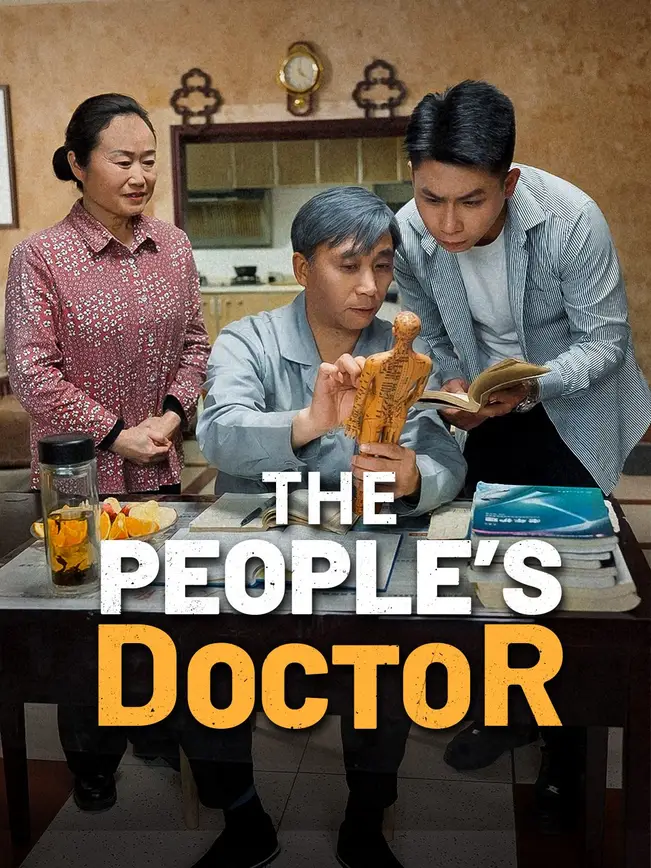
The People’s Doctor Storyline
The People’s Doctor More details
Genres:Underdog Rise/Return of the King/Men Coming-of-Age
Language:English
Release date:2024-12-10 17:00:00
Runtime:82min
A Heartfelt Tale of Redemption and Resilience
The People's Doctor is a masterclass in storytelling, weaving a tale of redemption that tugs at your heartstrings. Aaron's journey from a celebrated physician to a humble street sweeper and back to a hero is nothing short of inspiring. The chara
Medical Drama with Real Depth and Emotion
This series is more than just a medical drama; it's a profound exploration of human resilience and the power of humility. Aaron Lyle's character is beautifully crafted, showing how true genius doesn't need accolades to shine. The plot twists are
A Riveting Journey of the Unsung Hero of Medicine
Finally, a series that gives voice to the unsung heroes of medicine. Aaron Lyle's story is one of sacrifice, humility, and ultimate triumph. The People’s Doctor captures the essence of what it means to be truly dedicated to one's craft wit
Emotional Rollercoaster with a Touch of Brilliance
The People’s Doctor is an emotional rollercoaster that keeps you hooked till the end. Aaron's fall from grace and his eventual redemption is portrayed with such raw emotion that you can't help but feel every moment. The series highligh
The People’s Doctor: When Meridians Meet Money
There’s a moment in *The People’s Doctor*—just after the second handshake, when Guo Wenfeng’s grip tightens ever so slightly—that the entire room seems to inhale. Not dramatically. Not cinematically. Just… collectively. As if the air itself has recognized the shift. Lin Zhihao doesn’t pull away. He doesn’t stiffen. He simply exhales, slow and controlled, like a man releasing pressure from a valve he’s held shut for decades. That’s the genius of the series: it doesn’t rely on explosions or shouting matches. It builds tension in the space between breaths. In the way a teacup is lifted. In the hesitation before a sentence is completed. Let’s talk about the table. Not the food—though the plating is exquisite, each dish a miniature landscape of color and texture—but the *arrangement*. The abalone sits dead center, its shell polished to a dull sheen, a symbol of longevity and wealth. To its left: stir-fried shrimp, bright orange and crisp, representing vitality. To its right: a mound of black fungus and shredded carrots, earthy and grounding. The placement isn’t accidental. It’s feng shui as diplomacy. Every guest knows this. Guo Wenfeng certainly does. He doesn’t touch the abalone. He reaches instead for the shrimp—quick, decisive, almost dismissive. A man who takes what he wants, without ceremony. Lin Zhihao watches, his expression unreadable, but his fingers twitch once against the armrest of his chair. A reflex. A memory. Perhaps of a time when he, too, reached without asking. Madame Su, meanwhile, moves like a current—fluid, inevitable. She refills Guo’s water glass before he’s finished his first sip. She adjusts the napkin beside Lin’s plate, her fingers brushing the linen with the reverence of a priestess tending an altar. Her qipao rustles softly, a sound that cuts through the low murmur of conversation like a needle through silk. She speaks rarely, but when she does, her voice is honeyed, precise, each word chosen like a herb from a dried bundle. ‘The old masters said,’ she begins, and everyone stops. Even Chen Yifan, who had been scanning the room like a security detail, turns his head just a degree. Because Madame Su doesn’t quote textbooks. She quotes *people*. People who are no longer here. People whose names are etched into the banners hanging in the study later—banners that read ‘Cured the Incurable,’ ‘Saved Three Generations,’ ‘Hands That Never Tremble.’ And then there’s Xiao Mei. Oh, Xiao Mei. She’s the ghost in the machine of this elite gathering. Dressed in that pale blue dress—practical, clean, almost clinical—she stands near the service door, her posture straight, her gaze fixed on Lin Zhihao’s profile. She’s not taking notes. She’s *mapping*. Mapping the angles of his jaw when he’s skeptical, the way his eyebrows lift when he’s surprised, the minute dip of his shoulders when Guo mentions the ‘new investment fund.’ She’s learning the language of power not from lectures, but from observation. And *The People’s Doctor* gives us her perspective in fleeting cuts: a close-up of her earpiece (yes, she’s wearing one—subtle, silver, barely visible), a glance at her smartwatch vibrating silently on her wrist, a blink that lasts half a second too long when Lin finally speaks his first full sentence to Guo: ‘I’ve treated patients who walked in with nothing but hope. I’ve never treated one who walked in with a term sheet.’ That line lands like a stone in a pond. Guo Wenfeng doesn’t flinch. He smiles wider, nods slowly, as if acknowledging a clever joke. But his eyes—those sharp, intelligent eyes—narrow just a fraction. He knows he’s been named. Not accused. *Named*. And in this world, naming is the first step toward accountability. Chen Yifan shifts his weight, glancing at his superior, waiting for the cue. The younger man in the striped shirt—Li Jun—steps forward then, not aggressively, but with the quiet confidence of someone who’s been trained to intervene before the fracture becomes irreversible. He offers Guo a small ceramic cup of aged pu’er, poured from a thermos he carries like a shield. ‘For digestion,’ he says, his voice calm, neutral. Guo accepts, sips, and for the first time, his smile softens—genuinely. Not because of the tea, but because Li Jun didn’t ask permission. He acted. And in this hierarchy, action without deference is the rarest currency of all. The transition to the study is seamless, almost dreamlike. One moment, the banquet hall glows with artificial warmth; the next, the study is bathed in natural light, filtered through rain-streaked windows, the scent of old paper and camphor wood thick in the air. Lin Zhihao is no longer the host. He’s the scholar. The guardian. He sits at his desk, surrounded by stacks of books—some bound in faded blue cloth, others in leather cracked with age. A wooden anatomical model stands upright beside him, its surface worn smooth by decades of handling. Li Jun stands beside him now, not as an apprentice, but as a collaborator. He holds an open volume—‘Classical Acupuncture Theory, Vol. III’—and points to a passage, his finger tracing characters that look like constellations. Madame Su enters with the fruit tray, but this time, she doesn’t place it silently. She sets it down with a soft click, then leans in, her voice low: ‘He asked about the Xuehai point today. Said it was ‘overrated.’’ Lin Zhihao doesn’t look up. He flips a page, his thumb pressing hard on the corner. ‘Did he now?’ he murmurs. And then, for the first time, he smiles—not the polite smile of the banquet, but a real one, crinkling the corners of his eyes, revealing a dimple on his left cheek. It’s a smile of recognition. Of challenge. Because Xuehai—the Sea of Blood—isn’t just a point. It’s a philosophy. A belief that healing begins not in the organ, but in the vessel. And Guo Wenfeng, for all his polish, doesn’t understand that. Yet. *The People’s Doctor* excels at these layered contrasts: the banquet vs. the study, the public persona vs. the private ritual, the modern suit vs. the ancient text. It doesn’t vilify progress—it questions its soul. When Li Jun asks Lin why he still uses the wooden model instead of the digital hologram the clinic installed last month, Lin doesn’t answer immediately. He picks up the model, turns it in his hands, and says, ‘A hologram can show you the path. But only wood remembers the touch.’ That line—simple, poetic, devastating—is the thesis of the entire series. Medicine, in *The People’s Doctor*, is not a science to be optimized. It’s a craft to be inherited. A lineage to be honored. Even when the inheritors don’t believe in it anymore. The final sequence shows the three of them—Lin, Li Jun, and Madame Su—standing side by side at the window, looking out at the rain. No words. Just presence. The anatomical model sits on the desk behind them, catching the light. The fruit tray remains untouched. And somewhere, in another room, Guo Wenfeng is signing documents, his pen moving fast, sure, relentless. The two worlds coexist. They always have. The question *The People’s Doctor* leaves us with isn’t who will win. It’s whether the medicine can survive the men who wield it. Because in the end, the meridians don’t care about boardrooms. They only respond to hands that remember how to listen.
The People’s Doctor: A Banquet of Power and Silence
In the opening sequence of *The People’s Doctor*, the camera lingers on a round dining table laden with vibrant, meticulously arranged dishes—crispy golden shrimp, braised sea cucumbers, steamed fish crowned with chili and scallion, and a centerpiece of what appears to be a whole abalone in rich brown sauce. The setting is opulent yet restrained: warm ambient lighting, sheer curtains filtering daylight, and a vertical string of soft globe bulbs casting halos behind the figures. At the head of the table sits Lin Zhihao, a man in his late fifties with salt-and-pepper hair combed neatly back, wearing a dark striped polo that suggests quiet authority rather than flamboyance. His posture is upright but not rigid; his eyes, however, betray a subtle tension—as if he’s waiting for something to crack open. Then enters Madame Su, draped in a traditional qipao of deep bronze silk, embroidered with mountain-and-dragon motifs, her double-strand pearl necklace gleaming like a ceremonial artifact. Her smile is wide, practiced, almost theatrical—but her fingers press lightly against the edge of the table, knuckles whitening just enough to hint at strain. She doesn’t sit. She *presents*. This isn’t hospitality; it’s performance. And the audience? Not guests, but observers—men in tailored suits who enter like emissaries from another world. Chief among them is Guo Wenfeng, broad-shouldered, goateed, wearing a pinstripe double-breasted suit with a paisley tie and a navy pocket square folded with geometric precision. His entrance is unhurried, deliberate. He doesn’t greet Lin Zhihao with a bow or a nod—he offers a handshake, firm, prolonged, almost ritualistic. Their fingers lock, and for three full seconds, neither man blinks. Behind Guo stands Chen Yifan, younger, sharper-eyed, in a navy pinstripe suit with a dotted tie—his expression neutral, but his gaze flicks between Lin and Guo like a metronome measuring pressure. What follows is not dialogue, but choreography. Lin Zhihao speaks first—not loudly, but with a cadence that carries across the room. His voice is low, gravelly, the kind that has spent decades reading medical charts aloud in exam rooms. He says something about ‘the old ways still holding weight,’ and Guo chuckles, a sound that starts in the chest and ends with a tilt of the head. It’s not laughter of amusement—it’s the laugh of someone who knows he’s already won the first round. Meanwhile, Madame Su watches, her smile never faltering, but her eyes narrow slightly when Guo gestures toward the seat beside Lin. That seat remains empty. A silent placeholder. A question mark served on porcelain. Cut to the younger woman in the pale blue dress—Xiao Mei, the clinic’s new administrative assistant—standing near the doorway, hands clasped, posture rigid. Her outfit is modern, functional, with gold buttons and a black belt cinching the waist. She looks like she belongs in a tech startup, not this gilded cage of tradition. When Lin glances her way, she flinches—not visibly, but her breath catches, her lips part just a fraction. She’s not afraid of him. She’s afraid of what he might say next. And then there’s the third woman—the older one in the patchwork blouse, standing by the window, arms folded, watching everything with the weary patience of someone who’s seen this dance before. She doesn’t speak. She doesn’t need to. Her silence is louder than any toast. The real tension isn’t in the food or the decor—it’s in the *gaps*. The pauses between handshakes. The way Lin Zhihao’s left hand rests on his thigh, thumb rubbing the fabric of his pants as if erasing something invisible. The way Guo Wenfeng keeps his right hand in his pocket after the shake, only withdrawing it to adjust his cufflink—a tiny, arrogant flourish. These are men who communicate in micro-gestures, in the angle of a wrist, the depth of a bow. And *The People’s Doctor* understands this language intimately. It doesn’t explain the power dynamics; it *embodies* them. Every plate is a metaphor. Every wine glass, a potential weapon or offering. Later, the scene shifts—not to a hospital, not to an operating theater, but to a modest study lined with wooden shelves, red banners hanging like sacred scrolls, inscribed with phrases like ‘Medical Ethics Supreme’ and ‘Miraculous Hands, Healing Hearts.’ Here, Lin Zhihao is no longer the host at the banquet—he’s the teacher, the keeper of knowledge. He sits at a worn desk, writing in a notebook, a glass jar of chrysanthemum tea beside him. The young man from earlier—Li Jun, the restless apprentice—stands beside him, flipping through an old textbook, brow furrowed. He’s not here to impress. He’s here to *understand*. And when Madame Su enters with a tray of sliced fruit—orange, apple, pear—she doesn’t set it down silently. She places it gently, then leans in, whispering something that makes Lin pause mid-sentence. Her voice is soft, but her words land like stones in still water. The anatomical model—a wooden figure marked with meridian lines—becomes the focal point. Lin picks it up, turns it slowly, pointing to the Lung channel, then the Spleen. Li Jun leans closer, tracing the same path with his finger, eyes alight with sudden clarity. This is where *The People’s Doctor* reveals its true heart: not in the grand banquets or the political posturing, but in these quiet moments of transmission. Knowledge passed hand-to-hand, like a relic. The older woman in the patchwork blouse watches from the doorway, a faint smile touching her lips—not approval, not disapproval, but recognition. She remembers being that young man. She remembers the weight of the model in her own hands, years ago, when the world still felt like a puzzle she could solve. What makes *The People’s Doctor* so compelling is how it refuses to simplify. Lin Zhihao isn’t a hero. He’s a man caught between legacy and irrelevance, between duty and doubt. Guo Wenfeng isn’t a villain—he’s a product of a system that rewards polish over principle. And Xiao Mei? She’s the future, standing in the doorway, waiting to be invited in—or pushed out. The show doesn’t tell you who to root for. It asks you to watch how the light falls on their faces when no one’s looking. How Lin’s hand trembles just once when he lifts the anatomical model. How Guo’s smile never quite reaches his eyes, even when he’s laughing. The final shot of the sequence is from behind—a low-angle view of the three figures at the study table: Lin seated, Li Jun leaning over his shoulder, Madame Su standing beside them, her hand resting lightly on the table’s edge. Outside the window, rain streaks the glass, blurring the greenery beyond. Inside, the air is still. The books are stacked. The model stands sentinel. And somewhere, far away, the banquet table remains set, untouched, waiting for the next act. *The People’s Doctor* doesn’t rush its revelations. It lets the silence breathe. It trusts the audience to read between the lines—because in this world, the most dangerous truths are never spoken aloud. They’re served cold, on white porcelain, alongside the sea cucumber.
The People’s Doctor: When Silence Speaks Louder Than the Check
There’s a particular kind of silence that doesn’t mean emptiness—it means accumulation. Like dust settling in corners no one cleans, or water pooling behind a cracked dam. In the opening minutes of this sequence from The People’s Doctor, that silence isn’t just present; it’s *textured*. You can feel it in the way Li Wei’s fingers coil around his wrist, in the way Zhang Mei’s lips press together until they lose color, in the way Chen Hao stands just outside the frame of comfort, as if the air itself resists his presence. This isn’t domestic tension. It’s geological. Layers of unsaid things have compressed over years, forming fault lines ready to split open at the slightest pressure. The setting is telling: a modest apartment, walls stained with time, a wall clock frozen at 3:17—a detail so precise it feels intentional. Is that when the last real conversation happened? When the older son left? When the diagnosis came? We don’t know. But the clock doesn’t tick forward. Neither does this family. Until the card appears. Li Wei doesn’t produce it with fanfare. He doesn’t slam it on the table or wave it like a weapon. He pulls it out slowly, as if extracting a splinter from his own flesh. The blue card—generic, unassuming—is the antithesis of drama. Yet its mere existence detonates the room. Why? Because in Chinese familial culture, money isn’t just currency. It’s testimony. It’s apology. It’s legacy. And this card, bearing a name that shouldn’t be there—Wang Lihua—unlocks a vault of buried history. Zhang Mei’s reaction is masterful: she doesn’t cry. Doesn’t shout. She simply *stops breathing* for two full seconds. Her eyes narrow, not in anger, but in recalibration. She’s reassembling the narrative of her marriage, piece by painful piece, and realizing she’s been living in a version edited by omission. Chen Hao’s response is even more revealing. He doesn’t reject the card. He doesn’t demand answers. He takes it, turns it over, studies the magnetic strip like it might whisper secrets. His silence isn’t passive—it’s active listening. He’s not just hearing his father’s words; he’s hearing the subtext, the decades of guilt, the quiet sacrifices disguised as indifference. The watch on his wrist—a luxury item he likely earned through late nights and skipped meals—suddenly feels ironic. Here he is, financially independent, standing before a man who’s been quietly funding ghosts while pretending to be broke. What makes The People’s Doctor so devastatingly human is how it refuses melodrama. There’s no shouting match. No door slamming. Just three people, trapped in the gravity of their own choices, trying to speak a language they’ve forgotten how to use. Li Wei’s voice wavers not because he’s lying, but because he’s terrified of being believed. Zhang Mei’s stillness isn’t resignation—it’s strategic patience. She knows that if she breaks now, the truth will shatter like cheap glass. Chen Hao? He’s the bridge. The only one young enough to still believe repair is possible, old enough to know it won’t be easy. The transition to the restaurant private room is not a reset—it’s a continuation. The same card, now placed deliberately on the table like an exhibit in a courtroom, becomes the centerpiece of a new negotiation. The opulence of the setting—crystal glasses, embroidered napkins, a chandelier that casts soft halos on their faces—contrasts violently with the rawness of their earlier confrontation. Yet the emotional stakes are higher. Here, there are witnesses. Lin Xiaoyu, the lawyer, isn’t just legal counsel; she’s a mirror. Her calm demeanor forces them to confront the fact that this isn’t just about money. It’s about accountability. About whether a family can survive when its foundation was built on withheld truths. Notice how Zhang Mei’s posture changes. In the apartment, she was defensive—arms crossed, shoulders hunched. In the restaurant, she sits upright, hands resting calmly in her lap. The qipao isn’t costume; it’s declaration. She’s not playing the wronged wife anymore. She’s claiming her seat at the table—literally and figuratively. And when Chen Hao finally speaks—not to accuse, but to ask, “Why didn’t you tell me?”—it’s not a challenge. It’s an invitation. An opening. The brilliance of The People’s Doctor lies in its refusal to offer easy catharsis. The card isn’t returned. It isn’t destroyed. It’s held. Examined. Discussed. And in that holding, something fragile begins to form: trust, maybe. Or at least the possibility of it. Li Wei’s smile in the final shot—tentative, exhausted, real—isn’t happiness. It’s relief. The weight hasn’t lifted. But for the first time in years, he’s not carrying it alone. This is what makes the series resonate beyond its plotlines. It understands that in many Asian households, love is expressed through sacrifice, secrecy, and silence—and that breaking that cycle requires more courage than any battlefield ever demanded. Chen Hao doesn’t need to forgive immediately. He just needs to stay in the room. Zhang Mei doesn’t need to forget. She just needs to believe her husband is finally speaking in full sentences. And Li Wei? He doesn’t need absolution. He needs to be seen—not as the man who hid the card, but as the man who finally handed it over. The blue card, in the end, is less about finance and more about fidelity—to truth, to memory, to the idea that a family, no matter how fractured, can still choose to gather around the same table. Even if the food is cold by the time they start eating. Even if the first bite tastes like salt. The People’s Doctor doesn’t promise healing. It promises honesty. And in a world where silence is often mistaken for peace, that’s the most radical treatment of all. The card remains on the table as the scene fades—not as a solution, but as a question mark. A comma, not a period. And sometimes, in the life of a broken family, that’s enough to begin again.
The People’s Doctor: The Blue Card That Changed Everything
In a cramped, sun-bleached living room where the wallpaper peels like old skin and the air hums with unspoken tension, three people orbit each other like planets caught in a gravitational crisis. The older man—Li Wei, a retired factory worker whose hands still bear the calluses of decades spent on assembly lines—sits hunched on a wooden bench, his gray work jacket slightly too large, as if it’s trying to swallow him whole. His fingers twist around his left wrist, not in pain, but in ritual: a nervous tic he’s performed since his son left home ten years ago. Across from him, his wife Zhang Mei wears a red floral blouse that once signaled warmth but now reads like a warning flag—its pattern too busy, too loud for the silence between them. Her eyes flicker between Li Wei and their younger son, Chen Hao, who stands rigid in the doorway like a soldier awaiting orders. Chen Hao is dressed in a striped shirt over a plain white tee, the kind of outfit that says ‘I tried’ without saying much at all. His watch—a silver chronograph, expensive, incongruous—catches the light every time he shifts his weight. He doesn’t sit. He *holds* space. The scene breathes in slow motion. No music. Just the creak of floorboards, the distant clatter of a neighbor’s pot, the low thrum of a refrigerator that’s seen better days. Li Wei speaks first—not loudly, but with the quiet insistence of someone used to being ignored. His voice cracks on the third word. Zhang Mei exhales through her nose, a sound that’s half sigh, half surrender. Chen Hao blinks once, twice, then looks down at his own hands, as if checking whether they still belong to him. This isn’t an argument. It’s a reckoning. A family that has been holding its breath for years finally feels the pressure building behind its ribs. Then—the card. Li Wei reaches into his inner pocket, not with flourish, but with the solemnity of a priest drawing a relic from a shrine. A blue plastic rectangle, no bigger than a matchbox, gleams under the fluorescent bulb. It’s a bank card. Not just any card: the one Zhang Mei found tucked inside his worn-out wallet last Tuesday, hidden beneath a faded photo of Chen Hao at age eight, grinning with missing front teeth. She didn’t say anything then. She just folded the photo back, smoothed the edges, and slipped the card into her apron pocket. Now, she watches Li Wei’s fingers tremble as he extends it toward Chen Hao. The gesture is not generous. It’s desperate. A plea wrapped in plastic. Chen Hao doesn’t take it immediately. He studies the card as if it might bite. His expression doesn’t shift—not anger, not curiosity, just a deep, unsettling neutrality. Then, slowly, he lifts his hand. The transfer is almost ceremonial: Li Wei’s knuckles white, Chen Hao’s palm open, waiting. When their fingers brush, Zhang Mei flinches. Not because of the contact, but because for the first time in years, she sees her husband *hope*. And hope, in this house, is more dangerous than silence. The card passes. Chen Hao turns it over. The numbers are generic, the bank logo unremarkable. But the name printed beneath? It’s not Li Wei’s. It’s *his* mother’s maiden name—Wang Lihua—long erased from official records after her remarriage. Li Wei never told anyone he kept the account open. Never told Chen Hao he’d been sending money—small amounts, irregularly—to a woman who hadn’t spoken to him in fifteen years. A sister, maybe. A daughter? The truth hangs in the air like smoke, thick and acrid. Zhang Mei rises. Not angrily. Not dramatically. She walks to the kitchen counter, picks up a teapot, and pours herself a cup of water. Her hands don’t shake. That’s what frightens Li Wei most. When she returns, she doesn’t look at the card. She looks at Chen Hao’s face. And in that moment, something shifts—not in the room, but in the architecture of their grief. Chen Hao finally speaks. Three words. Soft. Precise. “Why didn’t you tell me?” Li Wei doesn’t answer right away. He stares at the card in Chen Hao’s hand, then at the empty space beside him on the bench—the spot where his older son used to sit before he vanished into the city, chasing dreams that never materialized. The silence stretches until Zhang Mei sets her cup down. *Clack.* The sound echoes. She says nothing. But her posture changes. Shoulders square. Chin up. The floral blouse suddenly looks less like camouflage and more like armor. This is where The People’s Doctor reveals its genius: it doesn’t need hospitals or stethoscopes to diagnose trauma. It uses a blue card, a peeling wall, and the way a man holds his wrist when he’s afraid of what he might say next. The real surgery happens offscreen—in the pauses, in the glances, in the way Chen Hao folds the card carefully into his shirt pocket, not as proof, but as evidence he’s willing to carry. Later, the scene cuts—not to a resolution, but to a new setting: a restaurant private room, sleek and modern, all warm lighting and red accent walls. The same trio sits at a round table laden with dishes—crispy-skinned chicken, braised sea cucumber, golden scallops arranged like jewels. Chen Hao wears the same striped shirt, but now it’s paired with black trousers and polished shoes. Li Wei sports a navy polo, clean and pressed. Zhang Mei? She’s in a silk qipao, dark brown with gold embroidery, pearls draped like a second necklace. She looks like someone who’s reclaimed her dignity, not borrowed it. And there, in the center of the table, lies the blue card—placed deliberately beside a wine glass, as if it’s part of the menu. Chen Hao picks it up again. Not to examine. To present. He holds it out—not to Li Wei this time, but to a woman seated across the table, elegant, composed, wearing a light-blue dress with a white collar. Her name is Lin Xiaoyu, a lawyer who specializes in family restitution cases. She doesn’t touch the card. She smiles. A small, knowing thing. “You’ve done the hardest part,” she says. “Now let’s talk about what comes next.” The camera lingers on Li Wei’s face. His eyes glisten—not with tears, but with the dawning realization that confession isn’t the end. It’s the first incision. The People’s Doctor doesn’t heal with medicine. It heals with honesty, even when the truth tastes like rust and regret. And in that restaurant, surrounded by food meant to celebrate, the real feast begins: the slow, painful, necessary act of rebuilding a family one fractured sentence at a time. Chen Hao finally looks at his father—not with judgment, but with something quieter, deeper: recognition. Li Wei nods, just once. The card stays on the table. Not hidden. Not surrendered. Simply *there*, like a wound that’s finally been cleaned. The meal hasn’t started yet. But the healing has. And that, in the world of The People’s Doctor, is the only prescription that matters.
The People’s Doctor: The Wristband That Told More Than Words
There’s a detail in The People’s Doctor that haunts long after the screen fades: the wristband. Not a hospital ID, not a fitness tracker—but a simple, beige cloth strip, wrapped tightly around Dr. Gu Jianhua’s left forearm, appearing first in the clinic chaos, then reappearing in the quiet intimacy of Aaron Lyle’s home. It’s never explained outright. No character names it. Yet it becomes the show’s most potent symbol—a silent ledger of guilt, fatigue, and fragile redemption. To understand The People’s Doctor, you must follow that wristband. It’s the thread connecting the public spectacle of corruption to the private ache of regret. The clinic scene opens with controlled chaos: doctors in white coats, patients in colorful sweaters, a long table draped in blue fabric like a sacrificial altar. Dr. Gu Jianhua stands at the head, calm, almost detached—until the money starts changing hands. Then his posture shifts. His hands, usually steady for pulse checks, now flutter nervously near his pockets. And there it is: the wristband, peeking from beneath his sleeve, slightly frayed at the edge. He touches it once, unconsciously, as if grounding himself. That tiny gesture tells us everything. This isn’t his first time navigating moral quicksand. He’s developed rituals—physical anchors—to keep from drowning. The wristband isn’t medical. It’s psychological armor. Later, when the black-suited inspectors arrive, he tugs his sleeve down harder, hiding it. A reflex. A shame. The audience realizes: this band has witnessed every compromise, every whispered deal, every moment he chose expediency over integrity. It’s not a badge of honor. It’s a confession stitched in cloth. Meanwhile, the elderly couple—the beanie-wearing man and his wife—react with theatrical gratitude, but their eyes tell another story. When she reaches across the table to shake Dr. Gu Jianhua’s hand, her fingers brush the wristband. She pauses. A flicker of recognition. Not of the object itself, but of what it represents: a man stretched too thin, holding himself together with thread and willpower. Her expression softens—not with pity, but with sorrow. She understands. Because in their world, survival often means bending rules just enough to stay upright. Their cash isn’t bribery; it’s tribute to a fellow traveler on the ragged edge of decency. The People’s Doctor doesn’t villainize them. It humanizes their desperation. And in doing so, it forces us to ask: if we were in their shoes, would we also reach for the nearest lifeline—even if it’s tied to a flawed man’s wrist? The turning point arrives not with sirens or arrests, but with silence. After the inspectors leave—having confiscated documents, not people—Dr. Gu Jianhua remains in the empty room. The camera circles him slowly. He removes his coat. Then, with deliberate slowness, he unwraps the wristband. The skin beneath is pale, unmarked. No injury. No scar. Just the ghost of pressure. He holds the strip in his palm, staring at it as if seeing it for the first time. This is the heart of The People’s Doctor: the realization that the weight we carry isn’t always visible. The band wasn’t holding his arm together. It was holding *him* together. And now, without it, he feels terrifyingly exposed. Cut to Aaron Lyle’s home. The same wristband, now reapplied—not by Dr. Gu Jianhua, but by the woman in the floral blouse. Her hands move with reverence, as if tending to a sacred object. She doesn’t speak. She doesn’t need to. Her touch says: I see what you’ve carried. I won’t judge you for it. But I won’t let you wear it alone anymore. Here, the wristband transforms. It’s no longer a secret burden; it’s a shared responsibility. When Aaron Lyle enters, he doesn’t flinch at the band. He nods, almost imperceptibly, as if acknowledging a language only they understand. His presence isn’t accusatory. It’s affirming. He’s not there to expose Dr. Gu Jianhua—he’s there to remind him that healing isn’t just for patients. It’s for healers too. What elevates The People’s Doctor beyond typical medical drama is its refusal to offer easy resolutions. There’s no last-minute exoneration, no dramatic courtroom speech. Instead, the show lingers in the aftermath: the awkward silences, the half-finished sentences, the way Dr. Gu Jianhua practices smiling in a hallway mirror, testing whether authenticity can be rehearsed. His colleagues avoid him, not out of malice, but out of uncertainty—how do you treat a friend who’s also compromised the oath you both swore? The show dares to suggest that trust, once fractured, doesn’t shatter cleanly. It splinters, leaving jagged edges that catch on every future interaction. And yet… hope persists. Not in grand gestures, but in small ones: a nurse slipping him a fresh coat, a patient leaving a basket of apples at the clinic door, Aaron Lyle sitting beside him on the sofa, not speaking, just *being* present. The final shot of the episode returns to the wristband—now folded neatly on a dresser beside a framed photo of Dr. Gu Jianhua in his younger days, stethoscope around his neck, eyes bright with idealism. The contrast is devastating. Time hasn’t just aged him; it’s rewritten his relationship with his own purpose. The People’s Doctor isn’t about curing disease. It’s about diagnosing the soul’s fatigue—and asking whether compassion can survive when the system designed to nurture it instead grinds it down. The wristband, in the end, becomes a question mark. Will he wrap it again tomorrow? Or will he finally let go, trusting that healing doesn’t require perfection—only the courage to show up, bandaged or not? That’s the real diagnosis. And the prognosis? Uncertain. Human. Real.
The People’s Doctor: When the Clinic Turns Into a Battlefield
In a modest, sunlit clinic room adorned with posters about low-cost blood pressure management and traditional health diagrams, what begins as a routine community outreach session quickly spirals into a high-stakes human drama—where money, authority, and moral ambiguity collide. The central figure, Dr. Gu Jianhua, stands out not just for his white coat and institutional badge, but for the subtle tension in his eyes: he is a man caught between duty and disillusionment. His expressions shift from weary neutrality to sudden alarm, then to desperate urgency—each micro-expression a silent confession of how deeply he’s entangled in something far beyond medical ethics. Around him, a group of elderly patients—especially the cheerful, beanie-wearing elder and his plaid-clad wife—initially appear grateful, even joyful, clapping and gesturing animatedly as if celebrating a miracle cure. But their enthusiasm feels performative, almost rehearsed, especially when they begin handing over wads of cash to men in gray coats and navy jackets. This isn’t charity. It’s transactional theater. The camera lingers on hands: wrinkled fingers passing green banknotes, lab-coated sleeves brushing against suit cuffs, a nurse’s gloved hand hovering near a metal case. Every gesture speaks louder than dialogue. When the man in the gray overcoat—let’s call him Mr. Lin—leans forward with wide-eyed intensity, his mouth open mid-sentence, it’s clear he’s not pleading; he’s negotiating. And Dr. Gu Jianhua? He doesn’t refuse. He hesitates. He glances at his colleagues—some nodding silently, others looking away—as if seeking absolution in collective silence. That moment, frozen in frame, is where The People’s Doctor reveals its true spine: not the heroism of healing, but the quiet corrosion of compromise. The room itself becomes a stage: the long blue table, once a symbol of consultation, now functions as a bargaining counter; the potted plant at its center, ironically vibrant, serves as the only innocent witness. Then, the entrance of the black-suited delegation changes everything. Three men stride in like enforcers from a corporate thriller—no smiles, no pleasantries, just crisp suits and unreadable faces. Their leader, identified only by his stern posture and the way he adjusts his lapel before producing a small black booklet labeled ‘Work Certificate’ (Jiangcheng Drug Safety Bureau), instantly reorients the power dynamic. The camera zooms in on that booklet—not as proof of legitimacy, but as a weapon disguised as bureaucracy. Dr. Gu Jianhua’s face shifts again: first surprise, then dawning recognition, then fear masked as forced calm. He tries to speak, to explain, but his voice cracks—not from age, but from the weight of being exposed. Meanwhile, the elderly couple’s joy evaporates. The woman’s smile stiffens; her hands, previously so expressive, now clutch her husband’s arm like a lifeline. She knows. They all know. This isn’t an inspection. It’s a reckoning. What makes The People’s Doctor so unnerving is how ordinary it feels. There are no explosions, no chases, no villains with mustaches. Just fluorescent lights, folding chairs, and the sound of paper money rustling like dry leaves. Yet the emotional stakes are sky-high. Consider the scene where Dr. Gu Jianhua, now stripped of his coat’s authority, stands surrounded—not by patients, but by accusers. His colleagues don’t defend him. They watch. One even subtly steps back, distancing himself from the fallout. That’s the real tragedy: not the fraud, but the silence that enables it. The show doesn’t moralize; it observes. It lets you sit with the discomfort of knowing that good intentions can rot from the inside out when convenience whispers louder than conscience. Later, the narrative pivots sharply—to Aaron Lyle’s home, a cramped apartment with peeling wallpaper and a wall clock frozen at 10:10. Here, the tone softens, but the tension deepens. Dr. Gu Jianhua, now in a faded gray work uniform, sits beside a woman in a floral blouse—his wife, perhaps, or a longtime friend—who tends to his wrist with gentle, practiced motions. Her face is etched with worry, not anger. She doesn’t ask questions. She just wraps his arm, her fingers tracing old scars, old habits. This is where The People’s Doctor earns its title: not because he’s a saint, but because he’s still *trying*. Even broken, he shows up. Even ashamed, he listens. Even when the world outside demands punishment, this quiet domestic space offers something rarer: accountability without condemnation. Then Aaron Lyle enters—not as a savior, but as a mirror. Dressed in a striped shirt and white tee, he looks younger, rawer, less certain. He doesn’t confront. He just stands in the doorway, watching. And in that silence, the truth settles: the fraud wasn’t just about money. It was about hope. The elderly couple didn’t pay for pills—they paid for the illusion that someone still cared enough to lie convincingly. Dr. Gu Jianhua didn’t take the cash because he was greedy; he took it because he’d already lost faith in systems that reward honesty with red tape. The People’s Doctor isn’t a story about right and wrong. It’s about how easily the line blurs when desperation wears a kind face. And when Aaron Lyle finally speaks—his voice low, his eyes fixed on Dr. Gu Jianhua’s bandaged wrist—the words aren’t accusations. They’re an invitation: ‘You don’t have to carry this alone.’ That’s the moment the show transcends melodrama. It becomes human. Because in the end, the most radical act in a broken system isn’t defiance—it’s admitting you need help. And sometimes, the person who walks through your door with nothing but a worn-out shirt and a tired gaze is the only one who can remind you why you became a doctor in the first place.

Men Coming-of-Age


Underdog Rise


.jpg~tplv-vod-rs:651:868.webp)


Return of the King

 Download

Ep Review