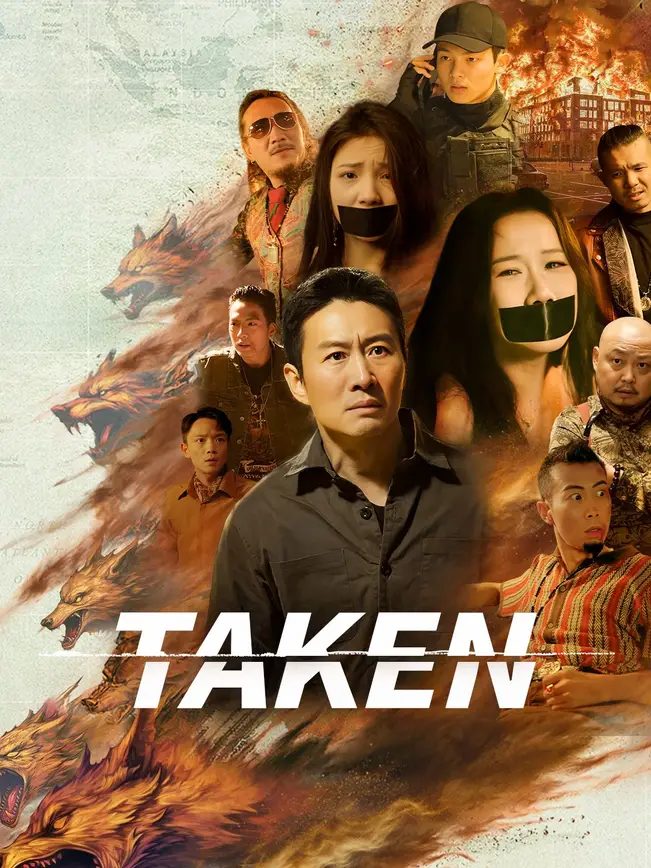
Taken Storyline
Taken More details
Genres:Revenge/Karma Payback/Return of the King
Language:English
Release date:2025-01-25 10:30:00
Runtime:93min
Taken: When Eggs Speak Louder Than Words
There’s a particular kind of dread that settles in your chest when you realize a gift isn’t a gift at all—it’s a ledger. In *Taken*, that dread begins with a wicker basket. Not ornate, not branded, just plain, worn, lined with cloth, holding a dozen pale brown eggs—some speckled, some smooth, all identical in their quiet ordinariness. The woman who carries it—let’s call her Aunt Mei, though the film never names her—holds it like a sacred text. Her knuckles whiten around the handles. Her black jacket, embroidered with silver thread in floral patterns reminiscent of old Suzhou silk, gleams under the lobby’s recessed lighting, but her eyes are tired, her smile stretched too thin at the edges. She walks toward Zhang Lin, the hotel manager, with the solemnity of someone approaching an altar. And in that moment, the entire emotional architecture of the scene hinges not on dialogue, but on the weight of those eggs. Zhang Lin—Alex Hughes, in a performance that balances restraint with volcanic undercurrents—doesn’t flinch. He stands straight, hands clasped behind his back, his double-breasted pinstripe suit crisp, his tie knotted with military precision. He’s the embodiment of corporate composure. Yet his eyes betray him: they narrow, just slightly, when he sees the basket. Not disgust. Not disdain. Recognition. He knows what those eggs mean. In rural China, eggs given during New Year aren’t just food—they’re currency of memory, of debt, of unspoken promises. To accept them is to admit you remember. To refuse them is to erase the past. And Zhang Lin has spent years building a life where the past is a locked file cabinet, labeled ‘Do Not Open’. Their exchange is a dance of evasion. Aunt Mei offers the red gift bag first—bright, festive, commercial. Zhang Lin accepts it with a nod, placing it on the counter without opening it. A safe transaction. Then she lifts the basket. Silence stretches. The camera pushes in on Zhang Lin’s face: his Adam’s apple moves. He exhales, slowly. ‘Aunt Mei,’ he says, voice low, respectful but edged with steel. ‘You didn’t have to bring these.’ She laughs—a brittle, high-pitched sound—and says, ‘Of course I did. Your father loved them boiled with ginger.’ That’s the knife twist. Not ‘your father’, but *your* father. As if Zhang Lin still belongs to that man, to that village, to that life he fled. His expression doesn’t change, but his posture shifts: shoulders square, chin up. He’s not just defending his position—he’s defending his identity. ‘I’m not that boy anymore,’ he replies, not unkindly, but with finality. The words hang in the air like smoke. Then the younger woman enters—Xiao Yu, though again, the film leaves her unnamed, making her more universal, more haunting. She wears white, soft, textured, like snowfall on bare branches. Her red scarf is thick, knitted by hand, the kind that smells of wool and winter kitchens. She stops short when she sees Aunt Mei’s face—flushed, tearful, trembling. Xiao Yu doesn’t speak. She doesn’t need to. Her presence is a question mark. Is she daughter? Niece? Lover? The ambiguity is deliberate. Zhang Lin glances at her, and for the first time, his control slips: a flicker of panic, quickly masked. Because Xiao Yu isn’t just a bystander—she’s the future he’s trying to build, clean and modern and free of ancestral baggage. And Aunt Mei, with her eggs and her memories, is the ghost at the banquet. What follows is a masterstroke of visual storytelling. As Aunt Mei pleads—her voice rising, not in anger, but in desperation—Zhang Lin doesn’t raise his voice. He leans in. Closes the distance. Places a hand on her arm. Not roughly. Gently. Too gently. And in that touch, we see the tragedy: he *does* care. He remembers her feeding him those eggs when he was sick, when the village had nothing else. But caring and belonging are not the same thing. His kindness is a cage. When he says, ‘Let me help you find a better place to stay,’ it sounds like generosity. But the way he says it—soft, placating, final—reveals the truth: he’s ejecting her from his world, politely. Aunt Mei’s face crumples. Not because she’s rejected, but because she’s understood. She sees the lie in his eyes: *I wish I could be the son you remember. But I can’t.* The scene shifts to the lounge, where Zhang Lin sits with Xiao Yu, ostensibly to ‘talk’. A wineglass sits between them, half-empty, reflecting the muted glow of the ceiling lights. He smiles, tells a joke—something about a chef who confused soy sauce with vinegar. Xiao Yu forces a laugh, but her fingers grip her knees. She’s not listening. She’s watching his hands. Watching how he picks up the glass, swirls the liquid, sets it down with precise control. She knows this man. She’s seen him negotiate million-dollar contracts, charm investors, defuse crises with a raised eyebrow. But she’s never seen him afraid—until now. Because when Li Wei and his wife enter—Li Wei in his practical olive jacket, his wife in a pearl-embellished tweed suit, serene, untouchable—Zhang Lin’s smile doesn’t waver. But his pupils dilate. His breath hitches. He doesn’t stand. He *leans* forward, as if bracing for impact. And Xiao Yu sees it. She sees the fracture. The confrontation isn’t loud. It’s intimate. Li Wei approaches, not aggressively, but with the quiet certainty of a man who’s already decided the outcome. He says one sentence—‘She told me everything’—and Zhang Lin goes still. Not shocked. Resigned. The wineglass slips from his fingers. It doesn’t shatter. It rolls, slowly, across the table, stopping at Xiao Yu’s foot. She doesn’t move it. She just stares at it, as if it’s a ticking bomb. Then Li Wei grabs Zhang Lin’s collar. Not to strike him. To *look* at him. To force eye contact. And in that suspended second, we understand: this isn’t about infidelity or betrayal. It’s about accountability. Li Wei isn’t angry because Zhang Lin slept with Xiao Yu. He’s angry because Zhang Lin let Aunt Mei believe he still cared—while building a life that has no room for her. The fall is slow-motion poetry. Zhang Lin stumbles back, hits the edge of the sofa, and goes down—not dramatically, but with the weary grace of a man who’s been carrying too much for too long. His tie is askew. His hair disheveled. For the first time, he looks human. Xiao Yu rises, steps toward him, then stops. Her hand hovers in the air, unsure whether to offer help or walk away. Aunt Mei appears in the doorway, basket still in hand, tears streaming, but her expression isn’t sorrowful. It’s resolved. She nods at Zhang Lin, once, and turns away. That nod is the true ending. She’s not forgiving him. She’s releasing him. From the debt. From the memory. From the role he was never meant to play. *Taken* excels not in grand gestures, but in the unbearable weight of small ones: the way Zhang Lin’s thumb rubs the rim of the wineglass, the way Xiao Yu’s scarf slips off her shoulder and she doesn’t fix it, the way Li Wei’s wife watches the scene unfold with the calm of someone who’s seen this story before—and knows how it ends. The eggs remain unopened. The red bag sits untouched on the reception desk. And the lantern outside, emblazoned with ‘福’, sways in the wind, its light flickering, as if even luck is hesitant to bless this tangled web of love, duty, and self-preservation. In the end, the most devastating line isn’t spoken. It’s in the silence after Zhang Lin whispers, ‘I’m sorry,’ and Xiao Yu answers, not with words, but by walking to the window—and looking out, not at the street, but at the sky, as if searching for a version of the world where eggs don’t carry the weight of history, and men don’t have to choose between who they were and who they’ve become. *Taken* doesn’t give us answers. It gives us the ache of the question—and that, dear viewer, is where real cinema lives.
Taken: The Red Scarf and the Unspoken Debt
In a world where hospitality is measured not in stars but in silent gestures, *Taken* delivers a masterclass in emotional subtext through its opening sequence—set inside a modern yet warmly lit hotel lobby adorned with red paper fans spelling out ‘2025’ and ‘Happy New Year’ in golden characters. The scene opens with Zhang Lin, the hotel manager played by Alex Hughes, standing rigidly behind the reception desk, his pinstripe suit immaculate, his posture disciplined, his expression unreadable—until the woman arrives. She enters carrying two bags: one woven, rustic, filled with eggs (a detail that lingers like a quiet accusation), the other bright red, glossy, bearing a gold seal that reads ‘Blessing’. Her black jacket is embellished with sequined embroidery, traditional in cut but modern in shimmer—a costume that speaks of effort, of pride, of trying too hard to belong. Her smile is wide, almost desperate; her eyes dart between Zhang Lin and the floor, as if rehearsing lines she’s never spoken aloud. This is not a guest checking in. This is a supplicant arriving at a threshold she’s been told she doesn’t deserve to cross. Zhang Lin’s reaction is the first crack in the veneer. He bows slightly—not the deep, ceremonial bow reserved for VIPs, but a truncated gesture, polite yet distant. His lips part, but no sound emerges. Then, as she extends the red bag, he hesitates. Not because he refuses the gift, but because he knows what it represents: obligation. In Chinese culture, especially during Lunar New Year, giving eggs signifies fertility, longevity, and gratitude—but also implies indebtedness. To accept is to acknowledge a debt that cannot be repaid in kind. His fingers brush the bag’s handle, then withdraw. He glances at the eggs again, and for a split second, his jaw tightens. That moment—barely half a second—is where the entire moral architecture of the scene collapses inward. He isn’t rejecting her; he’s rejecting the narrative she’s trying to impose: that he owes her something. Or worse—that she believes he does. Then comes the second woman: young, pale, wrapped in a white sweater and a thick red scarf—the color of blood, of warning, of celebration turned ominous. Her entrance is soft, almost apologetic, but her gaze is sharp, assessing. She doesn’t speak immediately. She watches. And in that watching, we see the real tension: this isn’t just about Zhang Lin and the older woman. It’s about legacy, about who gets to inherit dignity, about whether kindness can survive when it’s weaponized as guilt. The older woman’s voice rises—not loud, but strained, like a string pulled too tight. She says something about ‘the village’, about ‘your father’s promise’, and Zhang Lin’s face flickers: a micro-expression of recognition, then regret, then resolve. He crosses his arms—not defensively, but as if bracing himself against a tide. When he finally speaks, his tone is calm, almost gentle, but his words are surgical: ‘That was before I became manager.’ A line that severs past from present, loyalty from duty, family from institution. The turning point arrives not with shouting, but with touch. Zhang Lin places his hand on the older woman’s shoulder—not possessively, but with the weight of someone who has carried her burden longer than she realizes. She flinches, then melts. Her tears come not from sadness, but from relief: the release of a pressure she’s held for years. And in that moment, the young woman in the red scarf steps forward—not to intervene, but to witness. Her expression shifts from confusion to dawning understanding. She sees not a cold bureaucrat, but a man trapped between two worlds: the rural ethics of reciprocity and the urban logic of professional boundaries. Her scarf, once a symbol of warmth, now feels like a banner—declaring her allegiance, or perhaps her fear of being left behind. Later, in the lounge, the atmosphere curdles. Zhang Lin sits across from the younger woman, now seated near a window where rain streaks the glass like tears. A wineglass sits between them—half-full, amber liquid catching the low light. He lifts it, smiles, and says something charming, perhaps even flirtatious. But his eyes don’t match his mouth. They’re calculating. She looks down, fingers twisting the hem of her sweater. When he reaches out—not to hold her hand, but to adjust her scarf, pulling it tighter around her neck—it’s intimate, invasive, ambiguous. Is he comforting her? Claiming her? Silencing her? The camera lingers on her throat, the red wool pressing into her skin. She doesn’t pull away. That’s the horror: consent isn’t refusal. It’s paralysis. Then the man in the olive jacket appears—Li Wei, the quiet husband, the grounded counterpoint. He walks in with his wife, dressed in a tweed suit studded with pearls, elegant, composed, radiating the kind of wealth that doesn’t need to announce itself. They move through the dining area like ghosts of stability, unaware—or unwilling to see—the storm brewing behind them. Zhang Lin sees them. His smile freezes. The wineglass trembles in his hand. And in that instant, we understand: this isn’t just about eggs or scarves or debts. It’s about performance. Everyone here is playing a role—Zhang Lin the impeccable manager, the older woman the devoted matriarch, the young woman the innocent pawn, Li Wei the dutiful spouse. But roles wear thin when the script changes without warning. The climax is not a fight, but a collapse. Li Wei approaches the table. Zhang Lin stands—too quickly. There’s a beat. A breath. Then Li Wei grabs him, not violently, but with the controlled fury of a man who’s waited too long to speak. Zhang Lin stumbles back, knocking over a bottle. Glass shatters. The young woman gasps. The older woman cries out—not in fear, but in grief, as if the breaking glass is the sound of her hope finally snapping. Zhang Lin falls to one knee, not in submission, but in exhaustion. His mask is gone. What remains is raw, unguarded: shame, yes, but also sorrow—for what he’s become, for what he’s lost, for the fact that he still cares enough to hurt. *Taken* doesn’t resolve this. It lingers in the aftermath: the blurred silhouette of Zhang Lin helping the young woman up, his hand lingering on her elbow; the older woman clutching her basket of eggs like a relic; Li Wei staring at his wife, who won’t meet his eyes. The final shot is of a red lantern hanging above the entrance, the character ‘福’ (fortune/blessing) glowing softly. But the light is dimming. The wind outside rattles the windows. And somewhere, offscreen, a phone buzzes—another call, another demand, another debt waiting to be named. The brilliance of *Taken* lies not in its plot, but in its silence: the things unsaid, the touches that mean too much, the gifts that poison the giver as much as the receiver. Zhang Lin isn’t a villain. He’s a man who learned too well how to wear the uniform—and forgot how to take it off. The red scarf? It’s still there. Wrapped tight. Waiting.
Taken: When the Floor Becomes a Stage
Let’s talk about the floor. Not the marble—though yes, it’s glossy, reflective, cold underfoot—but the *way* people interact with it. In Taken, the floor isn’t just surface. It’s punctuation. It’s confession. It’s where dignity goes to die, or sometimes, to be reborn. Watch closely: Brother Feng doesn’t stumble. He *slides*. His knees hit first, then his palms, then his cheek presses against the stone as if seeking truth in its chill. His fall isn’t accidental. It’s choreographed despair. And the others? They don’t rush to help. They freeze. Guo Wei halts mid-step, one foot suspended, as if the ground itself has issued a warning. Madame Chen’s hand flies to her chest—not in shock, but in recognition. She’s seen this before. Maybe not this exact man, but this exact motion: the surrender of pride, the theatrical collapse of a man who’s run out of scripts. Lin Xiaoyu doesn’t look down. She stares straight ahead, her chin lifted, but her fingers dig into her own forearms hard enough to leave marks. She’s bracing—for him, for herself, for the inevitable fallout. This is where Taken reveals its true texture: it’s not a drama about money or betrayal, though those are the props. It’s a study in *proximity*. How close can people stand before the air between them becomes toxic? Guo Wei and Madame Chen are three feet apart, yet they might as well be on different continents. Their body language speaks in negative space: the angle of his shoulder turned away, the slight tilt of her head toward Xiaoyu, the way her left hand rests lightly on Xiaoyu’s elbow—anchoring, claiming, protecting. Meanwhile, Brother Feng, now risen, stands too close to Guo Wei. Not threatening. *Invading*. He doesn’t touch him, but his shadow falls across Guo Wei’s shoes. He’s forcing proximity. Forcing acknowledgment. And Guo Wei? He doesn’t step back. He doesn’t step forward. He just stands there, breathing, as if the act of remaining vertical is the hardest thing he’s done all day. The red scarf—Xiaoyu’s signature piece—does more than contrast with her white sweater. It *bleeds* into the scene. When she hugs her mother, the scarf drapes over Madame Chen’s shoulder like a banner of unresolved grief. When Brother Feng gestures wildly, his hand nearly grazes it, and Xiaoyu instinctively pulls back, as if the scarf is a live wire. Later, when Madame Chen smooths it down, her fingers trace the knit pattern with reverence, as if memorizing the stitches like prayer beads. That scarf is a timeline. Knit in winter 2020, when Xiaoyu moved back home after the clinic closed. Worn every Sunday since, even when the weather warmed. It’s not fashion. It’s testimony. And then there’s the dialogue—or rather, the *lack* of it. Taken thrives in the gaps. When Brother Feng says, ‘You knew,’ his voice doesn’t rise. It drops. Like a stone into deep water. Guo Wei doesn’t deny it. He just blinks. Once. Slowly. That blink carries more weight than a soliloquy. Madame Chen’s lips press into a thin line. Not anger. Disappointment. The kind that curdles over time, turning sweet memories sour. Xiaoyu finally speaks—not to answer, but to interrupt: ‘Stop.’ Two syllables. Shattered glass. And in that silence, we hear everything: the hum of the HVAC, the distant clink of dishes from the kitchen, the frantic pulse in Xiaoyu’s throat. Taken understands that the loudest moments are often the quietest. The gasp that never escapes. The tear that refuses to fall. The sentence that dies on the tongue before it’s formed. What’s fascinating is how the setting mirrors the emotional architecture. The restaurant is modern, minimalist—clean lines, neutral tones, no clutter. Except for the red papers. They’re the only chaos. The only color. They cling to the window like stubborn hopes. And when Brother Feng, in a fit of frustrated eloquence, knocks over a small vase near the entrance, the sound is absurdly loud. Water spills. A single orchid flops onto the floor. No one moves to clean it. It lies there, wilting in its own puddle, as the argument continues overhead. That’s Taken’s visual metaphor in action: beauty damaged, ignored, left to decay while the humans above it debate who’s responsible. The power dynamics shift constantly, silently. At first, Madame Chen holds the room—her posture, her silence, her expensive suit all radiating authority. But as Brother Feng gains momentum, her control frays. Her earrings sway with each sharp intake of breath. Her grip on Xiaoyu’s arm shifts from protective to possessive. And Guo Wei—oh, Guo Wei—is the fulcrum. He says little, but every micro-expression is a pivot point. When Brother Feng mentions ‘the warehouse’, Guo Wei’s Adam’s apple bobs. When Xiaoyu whispers ‘Why didn’t you tell me?’, his eyelids flicker shut for a full second. He’s not hiding. He’s *processing*. The weight of years pressing down. Taken doesn’t let him off easy. Nor does it vilify him. It simply shows him: a man who chose silence over truth, and now must live in the echo chamber of that choice. The climax isn’t a shout. It’s a sigh. Brother Feng, exhausted, runs a hand over his face. The dirt smudge on his cheekbone is now a streak. He looks at Guo Wei and says, softly, ‘I’m not here to take anything from you. I’m here to give you back what you threw away.’ Pause. Guo Wei doesn’t react. But Xiaoyu does. She steps forward—just one step—and the red scarf swings with her movement, catching the light like a flare. She doesn’t speak. She just holds out her hand. Not to Guo Wei. To Brother Feng. An offering. A truce. A plea. And in that moment, the floor stops being a stage for collapse. It becomes a threshold. The kind you cross only once. Taken leaves us there. On the edge. With the orchid still lying in its puddle. With the red papers still clinging to the glass. With four people, one scarf, and a silence so thick you could carve it into shapes. That’s the brilliance of the show: it doesn’t need resolution. It needs resonance. And resonance, like grief, like love, like a well-knit scarf, doesn’t fade. It just waits. For the right moment to unravel—or to hold.
Taken: The Scarf That Split a Family
In the quiet elegance of a high-end restaurant—wooden tables, cane-backed chairs, soft daylight filtering through floor-to-ceiling windows—the air thickens not with aroma, but with unspoken history. Red paper cutouts flutter on the glass like forgotten prayers: ‘Fa’ (prosperity), ‘Cai’ (wealth), ‘Xingfu’ (happiness)—all arranged in a loose, hopeful grid. Yet none of them seem to hold. What unfolds isn’t a celebration. It’s an unraveling. Taken doesn’t begin with a bang; it begins with a hug—tight, desperate, almost suffocating. Lin Xiaoyu, wrapped in a white sweater frayed at the cuffs and a crimson scarf that looks less like an accessory and more like a wound, clings to her mother, Madame Chen, whose tailored tweed suit is studded with pearls and restraint. Their embrace lasts too long. Too tight. A silent scream stitched into fabric. Behind them, Guo Wei—wearing a muted olive jacket, sleeves slightly rumpled, eyes fixed on the floor—moves like a man walking through smoke. He doesn’t look at them. He doesn’t need to. His body language says everything: guilt, exhaustion, resignation. He’s already left the room before he’s even stepped away. Then—impact. Not physical, not yet. But emotional. A man in a pinstripe suit, face smudged with dirt and something darker—blood? makeup?—slides across the polished marble floor. His fall is theatrical, yes, but his expression isn’t. It’s raw. He lifts his head, mouth open mid-sentence, eyes wide—not pleading, but *accusing*. This is Brother Feng, the wildcard, the one who never learned how to whisper. He doesn’t belong here. Not in this space of curated calm. His presence is a crack in the veneer. And when he rises, brushing off his lapels with exaggerated care, he doesn’t apologize. He points. Not at Guo Wei. Not at Madame Chen. At the *space* between them. As if the real enemy isn’t any person, but the silence they’ve built together. Lin Xiaoyu’s tears don’t fall fast. They gather first—slow, heavy beads at the edge of her lashes—before tracing paths down her cheeks like rivers finding fault lines. She doesn’t sob. She *holds*. Her hands clutch her own waist, as if trying to keep herself from dissolving. Madame Chen’s grip on her arm tightens, not comfortingly, but possessively. Her earrings—pearls, of course—catch the light with every subtle shift of her head. She watches Brother Feng with the cool appraisal of someone observing a malfunctioning appliance. Her lips part once. Just enough to say, ‘You shouldn’t be here.’ No volume. No tremor. Just finality. And yet—her knuckles are white where she grips Xiaoyu’s sleeve. The control is slipping. Just a fraction. Enough for us to see it. Guo Wei finally turns. Not toward Brother Feng. Not toward Xiaoyu. Toward the window. Toward the red papers. He exhales—a sound like dry leaves skittering across stone. His jaw sets. His shoulders square. He’s not preparing to fight. He’s preparing to endure. That’s the tragedy of Taken: no one wants to win. They just want to stop hurting. But pain, once embedded, has its own gravity. Brother Feng keeps talking. His voice rises, then dips, then spikes again—like a faulty radio signal. He gestures wildly, fingers splayed, then clenches them into fists. He mentions names. Dates. A loan. A promise broken in 2018. Xiaoyu flinches at the year. Madame Chen’s breath hitches—just once—but she doesn’t blink. Her gaze stays locked on Guo Wei’s back, as if willing him to turn, to speak, to *do something*. Anything but stand there like a monument to regret. The camera lingers on details: the Hermès bag resting on the chair beside Xiaoyu—unopened, untouched. The half-full wineglass on the table, condensation pooling at its base. The floral arrangement, slightly wilted at the edges. These aren’t set dressing. They’re evidence. Proof that life went on while this fracture widened. Taken understands that trauma doesn’t announce itself with sirens. It settles in like dust on unused furniture. It lives in the way Xiaoyu avoids eye contact with Guo Wei, even as she leans into her mother’s side. It lives in the way Madame Chen’s posture remains immaculate, even as her voice wavers on the word ‘truth’. She says it like it’s a foreign currency she’s never been able to exchange. Brother Feng’s monologue crescendos—not with rage, but with sorrow. He drops his hand. Lets it hang limp at his side. ‘You think I came here to shame you?’ he asks, voice suddenly quiet. ‘I came because she asked me to.’ He glances at Xiaoyu. She doesn’t look up. ‘She said… if anyone could make you remember who you used to be, it was me.’ A beat. The room holds its breath. Guo Wei’s shoulders twitch. Just once. Then he turns. Slowly. His eyes meet Xiaoyu’s. Not with anger. Not with apology. With recognition. The kind that cuts deeper than blame. Because now she sees it too: he hasn’t forgotten. He’s just been waiting for her to ask. The scarf—red, thick, knitted with uneven tension—becomes the silent protagonist. When Xiaoyu pulls it tighter around her neck, it’s not for warmth. It’s armor. When Madame Chen reaches out to adjust it, her fingers linger too long on the knot, as if trying to reweave what’s already come undone. And when Brother Feng, in a moment of unexpected tenderness, brushes a stray thread from Xiaoyu’s shoulder, she doesn’t pull away. She just closes her eyes. That’s the heart of Taken: the unbearable intimacy of being seen, even when you’re breaking. The film doesn’t resolve. It *suspends*. The final shot isn’t of reconciliation or rupture. It’s of four people standing in a circle of unspoken words, the red papers still glowing behind them like embers in a dying fire. We don’t know what happens next. But we know this: the scarf will stay on. The silence will stretch. And someone—maybe Xiaoyu, maybe Guo Wei, maybe even Brother Feng—will finally speak the sentence that changes everything. Or nothing. That’s the genius of Taken. It doesn’t give answers. It gives weight. The weight of a hug that lasts too long. The weight of a glance that says more than years of silence. The weight of a family holding its breath, waiting to see if the next exhale will be relief—or collapse.
Taken: When the Target Isn’t the Bullseye
Let’s talk about the archery target sitting on that wobbly folding table—not because it’s central to the plot, but because it’s the perfect metaphor for what’s really happening in Taken. The concentric rings—yellow, red, blue, black—are clean, precise, objective. A bullseye is a bullseye. You hit it or you don’t. Simple. Except in this world, nothing is that simple. The target is there, yes, but no one is aiming at it. Not yet. Instead, the real tension lies in the space *around* it: the way people position themselves, the angles they choose to stand at, the glances they exchange while pretending not to look. That’s where the story lives. That’s where Taken reveals its depth. The woman in the cream cape—let’s call her Ms. Jiang—enters the frame like a figure from a painting: composed, deliberate, unhurried. Her cape isn’t just clothing; it’s a statement of presence. The gold buttons aren’t decorative; they’re punctuation marks in a sentence only she knows how to read. She moves with the confidence of someone who’s used to being listened to, but not necessarily understood. When she stops beside Lin Xiao, the camera doesn’t cut to a close-up of their faces right away. It lingers on their torsos, their posture, the way Lin Xiao’s shoulders tense ever so slightly, as if bracing for impact. That’s the first clue: this isn’t a reunion. It’s a reckoning. Lin Xiao’s tracksuit is functional, unremarkable—except for the way it fits her. Too loose in the shoulders, as if borrowed or handed down. Her hair is pulled back in a ponytail, practical, no fuss. But her eyes? They’re restless. They flicker between Ms. Jiang, the target, the older man with the clipboard, and Mei Ling—who stands slightly apart, arms folded, expression unreadable. Mei Ling is the wildcard here. She doesn’t react outwardly, but her stillness is louder than anyone’s speech. When Ms. Jiang speaks—her voice low, measured, almost melodic—Mei Ling’s jaw tightens. Just once. A micro-expression, gone in a blink. But it’s enough. It tells us she knows more than she’s letting on. What’s fascinating is how the film uses sound—or rather, the *absence* of it. There’s no swelling score, no dramatic sting when emotions peak. Just ambient noise: distant chatter, the creak of the table legs, the rustle of fabric as Ms. Jiang shifts her weight. The silence between lines is where the real dialogue happens. When Lin Xiao says, “I thought you wouldn’t come,” her voice doesn’t waver, but her knuckles whiten where she grips the hem of her jacket. Ms. Jiang doesn’t reply immediately. She looks down at the target, then back at Lin Xiao, and for a beat, her expression softens—not into forgiveness, but into something more complex: understanding, maybe. Regret, possibly. The kind of emotion that doesn’t fit neatly into categories. The setting matters deeply. This isn’t a manicured sports field. It’s a place that’s seen better days: the grass is patchy, the fence is bent in one spot, the building behind them has a window boarded up with plywood. It feels like a liminal space—neither fully school, nor fully outside world. Perfect for a conversation that exists in the gray zone between past and present, guilt and grace. The white canopy in the background isn’t for shade; it’s a visual echo of the target’s rings—circles within circles, layers of meaning, none of them fully contained. And then there’s the red flag. Held by the older man—Mr. Chen, perhaps?—it’s not ceremonial. It’s functional. A signal. A marker. When he raises it slightly, the group tenses. Not because they’re afraid of what he’ll do, but because they know what it means: the moment of decision is here. Yet no one moves. Not Lin Xiao. Not Ms. Jiang. Not even Mei Ling, who finally uncrosses her arms and takes half a step forward—then stops. That hesitation is everything. It’s the difference between action and consequence, between impulse and choice. Taken doesn’t rush the emotional payoff. It lets the weight settle. When Ms. Jiang finally speaks—her words quiet but carrying the weight of years—she doesn’t accuse. She asks: “Why did you keep it from me?” Not “Why did you do it?” Not “How could you?” But *why did you keep it from me?* That shift—from blame to betrayal—is devastating. Lin Xiao’s breath catches. Her eyes glisten, but she doesn’t cry. Not yet. She swallows, nods once, and says, “Because I thought you’d hate me.” And in that moment, the target on the table might as well be invisible. The real bullseye was never the yellow center. It was the space between two women who love each other in ways they don’t know how to name. The cinematography supports this beautifully. Wide shots establish the group dynamic, but the close-ups are where the soul lives. The camera often frames Ms. Jiang and Lin Xiao in profile, their faces aligned but not touching, as if they’re mirrors reflecting different versions of the same truth. When Mei Ling finally speaks—her voice calm, steady, cutting through the tension—she doesn’t address either of them directly. She looks at the target. “You don’t have to hit the center to prove you’re trying,” she says. And just like that, the entire scene pivots. It’s not about perfection. It’s about intention. About showing up, even when you’re afraid of what you’ll find. What makes Taken so compelling is its refusal to simplify. Ms. Jiang isn’t a villain. Lin Xiao isn’t a victim. Mei Ling isn’t a sidekick. They’re three women navigating a web of history, expectation, and unspoken loyalty. The cape, the tracksuit, the clipboard—they’re all costumes, yes, but they’re also shields, identifiers, languages. And the field? It’s not just a location. It’s a stage where identity is performed, tested, and sometimes, rewritten. In the final moments of the sequence, the group begins to drift apart, but the energy doesn’t dissipate. It transforms. Lin Xiao walks toward the fence, pausing to look back—not at Ms. Jiang, but at the target. She doesn’t touch it. She just stares, as if seeing it for the first time. Ms. Jiang watches her, then turns to Mei Ling, and for the first time, she smiles—not the polite, controlled smile from earlier, but something warmer, more human. A crack in the armor. A sign that maybe, just maybe, repair is possible. Taken understands that the most profound conflicts aren’t resolved with grand gestures. They’re resolved with a shared silence, a held breath, a hand that almost reaches out. The archery target remains on the table, untouched. No arrows have been fired. But something has been hit. Something deep. And that’s the power of this film: it doesn’t need spectacle to leave you breathless. It just needs three women, a field, and the courage to say what’s been left unsaid. The title—Taken—is brilliant in its ambiguity. Taken what? A moment? A secret? A chance? A life? The film never spells it out. It lets you decide. And that’s the mark of great storytelling: not giving answers, but asking questions that linger long after the screen fades to black. When you walk away from Taken, you don’t remember the plot points. You remember the weight of a glance, the texture of a cape, the silence between two women who finally stopped pretending they weren’t waiting for each other.

Return of the King




Karma Payback
.jpg~tplv-vod-rs:651:868.webp)
.jpg~tplv-vod-rs:651:868.webp)

Revenge

 Download