




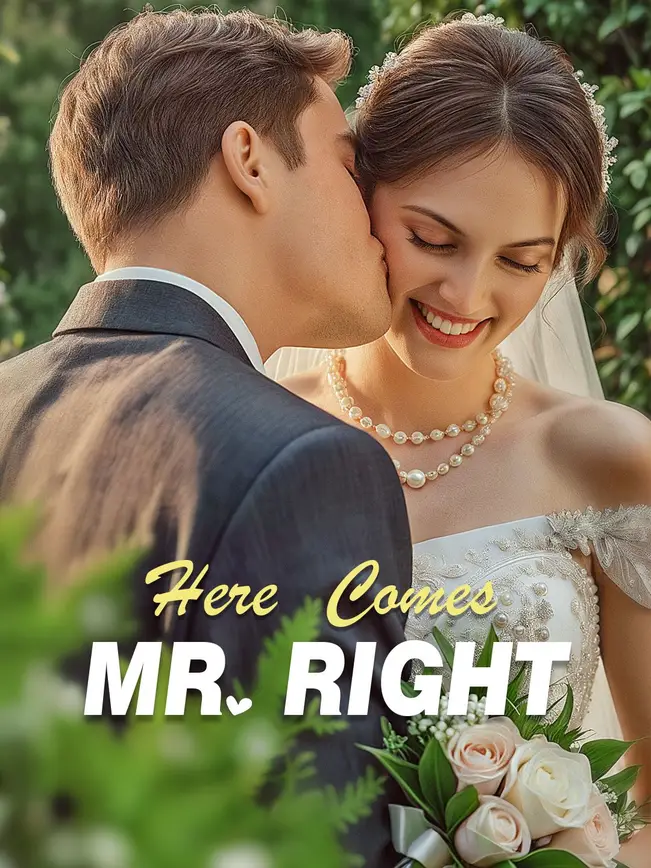
Here comes Mr.Right Storyline
Here comes Mr.Right More details
Genres:Multiple Identities/Wish-Fulfillment/Sweet Romance
Language:English
Release date:2025-02-07 07:00:00
Runtime:95min
CEO romance done right
Grayson isn’t your typical cold CEO. He’s sweet, smart, and the plot’s got depth!
Perfect NetShort pick
Short, dramatic, and addictive! Plus, the app runs smooth—great experience. 💖
Unexpectedly heartwarming
Thought it’d be cliché, but it’s surprisingly touching. The chemistry? 🔥🔥
Totally binge-worthy!
Loved the wild twist! Grayson is such a charming mystery 💼✨ Can't stop watching!
Here comes Mr.Right: When a Necklace Holds More Than Gold
There’s a particular kind of intimacy that only exists in the half-light of dawn, when the world hasn’t yet demanded performance, and two people are still wrapped in the raw honesty of sleep. In this pivotal sequence from *Here comes Mr.Right*, Elena and Julian aren’t just sharing a bed—they’re sharing the fragile architecture of a relationship teetering on the edge of rupture and renewal. What begins as a sleepy misunderstanding—Elena waking to Julian’s startled whisper, ‘What did you say?’—unfolds into a masterclass in emotional layering. The dialogue is sparse, but each line carries seismic weight. ‘We have a baby.’ Simple words. Yet delivered in that hushed, almost disbelieving tone, they land like a dropped stone in still water. Julian’s reaction is telling: he doesn’t leap up, doesn’t shout, doesn’t reach for his phone. He freezes. His fingers twitch toward her mouth—not to silence her, but to contain the shock, to protect her from the echo of her own voice. He’s been awake the whole time, he confesses later, listening to her breathe, watching her dream, holding the news like a live wire in his chest. That’s the first revelation: his silence wasn’t neglect. It was devotion disguised as stillness. Elena, however, interprets it as abandonment. Her outburst—‘You scared the shit out of me’—isn’t just about the surprise; it’s the sound of a woman who’s spent nights lying awake, imagining worst-case scenarios, only to find her partner already living in them without her. She feels excluded from her own reality. And so she fights—not with logic, but with accusation. ‘Why didn’t you say anything?’ ‘You tricked me again!’ The phrase ‘tricked me’ is key. It reveals a pattern: this isn’t the first time Julian has used humor or evasion to soften hard truths. He’s built a reputation—perhaps unintentionally—as the charming deflector, the man who disarms with a smirk rather than confronts with sincerity. And Elena, exhausted by hormonal surges and existential dread, has reached her limit. She’s not angry at the baby. She’s angry at the *performance* of calm. She wants him to meet her fear with equal gravity, not with a wink. That’s why her next line cuts so deep: ‘I just keep worrying that you’re too young for me.’ It’s not about age—it’s about emotional maturity, about whether he’ll stay when the whimsy fades and the diapers pile up. She’s afraid he’ll resent her for tethering him to responsibility. And Julian? He doesn’t argue. He doesn’t reassure with empty platitudes. He lets the silence stretch, then offers the most human response possible: ‘Hormones have their advantages.’ It’s cheeky, yes—but also deeply empathetic. He’s naming the elephant in the room without shaming her for it. He’s saying: I see your body betraying your mind, and I’m not running. That’s when the real turning point arrives—not with words, but with action. He reaches under the covers. Not for his phone. Not for a glass of water. For a small, red velvet box. The camera lingers on Elena’s hands as she takes it—nails painted deep burgundy, a silver ring catching the light, fingers trembling slightly. She opens it. Inside: a delicate gold chain, pendant shaped like a tiny, open door. Symbolism, subtle but potent. A doorway. A new beginning. A threshold crossed. And when she asks, ‘You bought it back for me?’ Julian’s reply—‘Well, actually the store belonged to me anyway’—isn’t arrogance. It’s surrender. He’s admitting he kept it, not because he wanted to control the narrative, but because he couldn’t bear to let go of what it represented: her joy, her hope, the version of her that believed in second chances. In *Here comes Mr.Right*, objects aren’t props—they’re emotional anchors. That necklace isn’t jewelry; it’s a covenant. It says: I remember who you were before the crisis. I choose to honor that version of you, even as we become something new. Elena’s ‘Thank you’ isn’t polite—it’s surrender. She’s releasing the need to be right, to be heard first, to control the narrative. She’s accepting his love on his terms: quiet, consistent, rooted in action more than articulation. And when she leans down, forehead to forehead, and asks, ‘So can we start over?’—it’s not a plea. It’s an invitation. To rebuild. To relearn each other. To let the baby be the catalyst, not the crisis. Here comes Mr.Right—not with fireworks, but with a red box and the courage to say, ‘I was awake the whole time.’ Because real love isn’t found in grand declarations. It’s found in the willingness to lie beside someone in the dark, holding their fear like a sacred thing, until the light returns. And sometimes, all it takes is one small gift, placed gently in the space between two hearts, to remind them they’re still building the same home. Here comes Mr.Right, and he’s bringing the keys.
Here comes Mr.Right: The Pillow Talk That Rewrote Their Love Script
Let’s talk about that quiet, electric tension in the bedroom—the kind where a single sentence can detonate an entire relationship or rebuild it from the ashes. In this intimate scene from the short drama *Here comes Mr.Right*, we’re not just watching two people lie in bed; we’re witnessing the delicate recalibration of trust, vulnerability, and emotional asymmetry between Elena and Julian. The setting is deceptively serene: a plush brown leather headboard, soft grey paisley duvet, warm ambient lighting—everything suggests comfort, safety, domesticity. Yet beneath that surface, a storm is brewing, one sparked by a whispered confession: ‘We have a baby.’ Not a joyful announcement, but a jolt. Julian’s eyes snap open, his breath catches, his hand instinctively moves to cover Elena’s mouth—not out of cruelty, but panic. He’s been awake the whole time, he admits later, listening, processing, holding his breath while she slept. That detail alone tells us everything: he’s been carrying the weight alone, choosing silence over disruption. And Elena? She wakes to his stillness, misreads it as indifference, and lashes out with raw, wounded fury: ‘You scared the shit out of me.’ Her tone isn’t playful—it’s trembling, defensive, laced with the exhaustion of hormonal volatility and the fear that she’s being dismissed. This isn’t just a lovers’ quarrel; it’s a microcosm of how modern relationships navigate unexpected life turns when communication falters. Elena’s frustration isn’t really about the baby—it’s about feeling unseen in her anxiety, about Julian’s perceived emotional withdrawal. When she accuses him of pretending, of playing along because of ‘your…’—she trails off, unable to say ‘age,’ but the implication hangs thick in the air. She’s confessing her deepest insecurity: that she’s too old, too serious, too emotionally demanding for him. And here’s where *Here comes Mr.Right* delivers its genius twist: Julian doesn’t defend himself with logic. He doesn’t say, ‘I was processing.’ Instead, he leans into the absurdity, the intimacy, the shared absurdity of their situation—and drops the line: ‘Hormones have their advantages.’ It’s not dismissive; it’s tender, knowing, almost conspiratorial. He’s acknowledging her biology without reducing her to it. He’s meeting her fear with humor, not condescension. And then—oh, then—the gift. Not a grand gesture, but something small, red, velvet, pulled from under the duvet like a secret. A necklace. Not a ring. Not a proposal. A *reparation*. A symbol that says, ‘I see you. I remember what mattered to you before the chaos.’ When Elena asks, ‘You bought it back for me?’ and Julian replies, ‘Well, actually the store belonged to me anyway,’ it’s not arrogance—it’s reassurance. He’s reclaiming agency, not to dominate, but to soothe. He’s saying: this wasn’t lost. It was always yours. And in that moment, the power dynamic shifts. Elena’s anger dissolves into gratitude, then into something softer—relief, maybe even awe. She doesn’t say ‘I love you.’ She says ‘Thank you.’ Which, in this context, is far more profound. Because gratitude implies recognition: she sees now that his silence wasn’t indifference, but reverence. He held his tongue because he didn’t want to shatter her fragile peace. Here comes Mr.Right—not as a knight in shining armor, but as a man who learns to speak in pauses, in gestures, in the quiet language of presence. The brilliance of this scene lies in its refusal to moralize. Neither character is ‘right’ or ‘wrong.’ Elena’s emotional volatility is valid; Julian’s silent vigilance is equally valid. What makes *Here comes Mr.Right* compelling is how it frames conflict not as a problem to be solved, but as a bridge to be crossed—together. The camera work reinforces this: tight close-ups on hands clasped, on eyelashes fluttering with unshed tears, on lips forming words they’re afraid to voice. We feel the weight of every hesitation, every touch, every withheld breath. And when Elena finally whispers, ‘So can we start over?’ it’s not a reset—it’s a renegotiation. A vow to try again, with clearer eyes and softer edges. This is how love survives the unexpected: not by avoiding the storm, but by learning to dance in the rain, barefoot, laughing through the lightning. Here comes Mr.Right, not with fanfare, but with a red box and a truth spoken softly in the dark. And sometimes, that’s all it takes.
Here comes Mr.Right: When the Guest Holds the Trigger
There’s a specific kind of horror that doesn’t come from jump scares or gore—it comes from the slow realization that the person you trusted most has been lying to you in plain sight. This scene from *The Crimson Pact* delivers that horror with surgical precision. We open on the older man—let’s call him Victor, though he’s never named—sitting like a judge in a velvet armchair, cane upright beside him like a scepter. His posture is relaxed. His voice is low. But his eyes? They’re scanning the room like a hawk tracking prey. He says, ‘Still not here.’ Not impatient. Not angry. Just… disappointed. As if Julia’s absence confirms a theory he’s held for years. And then he drops the knife: ‘I guess you’re not that important to him, after all.’ It’s not cruelty. It’s *confirmation*. He’s not trying to break her. He’s trying to prove a point—to Grayson, to Fiona, maybe even to himself—that Julia is disposable. And the worst part? Julia hears it. She’s tied to a wooden chair, rope biting into her wrists, her dress slipping slightly off one shoulder, her pearl earrings catching the light like tiny moons orbiting a dying planet. She doesn’t beg. She doesn’t cry. She just watches the door. Waiting. Hoping. Knowing, deep down, that hope is the last luxury she can afford. Then Grayson enters. Not running. Not shouting. Just walking in like he owns the air in the room. His leather jacket is slightly rumpled, his hair perfect, his expression unreadable. He looks at Julia—really looks—and for a split second, something flickers. Regret? Guilt? Or just the memory of what she used to mean? Before he can speak, Fiona appears in the doorway, draped in cream fur, her blonde bob sharp as a blade, her nails painted the same crimson as the blood that will soon stain the floor. She doesn’t hesitate. She walks straight to the couch, sits, crosses her legs, and says, ‘I’ve brought him, as promised.’ Not ‘I found him.’ Not ‘I convinced him.’ *Brought him.* Like he’s cargo. Like he’s hers. And Grayson doesn’t correct her. He just stands there, arms loose at his sides, letting her claim him. That’s when the real game begins. Here comes Mr.Right—but he’s not who we think. Grayson isn’t the hero. He’s the pivot. The fulcrum. Every word he says is calibrated. When he asks, ‘What’s the meaning of all this?’ it’s not confusion. It’s challenge. He’s forcing Victor to justify his own theater. And Victor rises to it: ‘All you have to do is return what you took, and I guarantee no harm will come to her.’ Smooth. Polished. A lie wrapped in a promise. Because we all know—harm isn’t just physical. Harm is watching the man you love negotiate your safety like it’s a line item in a contract. Julia’s face says it all: she’s not afraid of the gun behind her. She’s afraid of the silence in front of her. The silence where Grayson should be speaking up. Should be stepping in. Should be *choosing*. And then—Fiona shifts. She leans forward, voice dropping to a whisper only Grayson can hear: ‘I’ll help you take the power and you help me get the man.’ It’s not seduction. It’s symbiosis. She’s offering him what Victor can’t: agency. Autonomy. A future not dictated by bloodlines or old grudges. And Grayson? He doesn’t say yes. He doesn’t say no. He just looks at her—and for the first time, his mask slips. There’s hunger there. Not lust. *Purpose.* He sees in Fiona what he couldn’t see in Julia: a partner who doesn’t need saving. A co-conspirator. A queen waiting for her king to stop hesitating. The turning point isn’t the gun. It’s the ring. The camera lingers on Grayson’s hand as he grips Fiona’s wrist—his thumb brushing the diamond on her finger. ‘That’s the ring I was going to give him,’ Julia says, voice barely audible. Not ‘give you.’ *Him.* Grayson. The man who vanished after their breakup. The man who never explained why he stopped answering her calls. The man who knew she was coming here—and said nothing. And Grayson’s response? ‘He knew I went to meet him.’ Cold. Final. He’s not defending himself. He’s stating facts. As if Julia’s pain is irrelevant to the larger equation. And that’s when Fiona smiles. Not cruelly. Not triumphantly. Just… knowingly. Because she understands the game better than anyone. She knows Grayson doesn’t love Julia anymore. He *pities* her. And pity is the death knell of desire. Here comes Mr.Right—but he’s already made his choice. When Grayson kneels beside Fiona, pulls her close, and says, ‘You are the right person for me. So you don’t have to make a deal with him. To be with me,’ it’s not romance. It’s capitulation. He’s surrendering to the inevitable. To the power structure Fiona represents. To the future where emotion is a liability, not a strength. And Julia? She watches. Her eyes glisten, but she doesn’t look away. She *sees*. She sees the way Grayson’s hand rests on Fiona’s knee. The way Fiona’s fingers curl around his forearm. The way Victor nods, satisfied, as if this was the outcome he predicted all along. Then—Fiona stands. Slowly. Deliberately. She reaches into her purse. Not for a phone. Not for lipstick. For a gun. Black. Compact. Deadly. She raises it. Not at Victor. Not at Grayson. At *Julia*. And Grayson doesn’t move. Doesn’t speak. Just watches. And when Fiona says, ‘So, if you want to kill her, be my guest,’ Grayson replies, ‘Then doesn’t matter if she dies.’ That line isn’t spoken with malice. It’s spoken with exhaustion. With finality. He’s not threatening Julia. He’s releasing her. Letting go of the last thread tying him to the man he used to be. The gunshot doesn’t come from Fiona. It comes from the man behind Julia—the silent enforcer in the white shirt and black tie. He fires. Grayson falls. Julia screams his name—not ‘no,’ not ‘stop,’ but *‘Grayson!’*—like it’s the only prayer she knows. She throws herself over him, hands pressing into the wound, blood soaking her dress, her tears mixing with the crimson on his shirt. And in that moment, we realize: the tragedy isn’t that Grayson chose Fiona. It’s that Julia still believed he’d choose *her*. That love could override calculation. That honesty could survive deception. Here comes Mr.Right—but he never arrives. He’s already dead. And the woman in the fur coat? She’s still standing. Still holding the gun. Still smiling, just slightly, as if she’s already drafting the next chapter. Because in *The Crimson Pact*, the most dangerous weapon isn’t the gun. It’s the belief that someone will come for you—when all along, they were waiting for you to fall.
Here comes Mr.Right: The Ring That Never Made It to Grayson
Let’s talk about the kind of tension that doesn’t need explosions—just a cane, a gun tucked into a belt, and three people who’ve been circling each other like predators in a glass-walled cage. This isn’t just drama; it’s psychological warfare dressed in silk and leather. From the very first frame, we’re dropped into a room where light filters through white shutters like judgment—soft, but unrelenting. The older man, impeccably dressed in navy wool and a striped tie, sits with his hands wrapped around a silver-topped cane. He’s not holding it for support. He’s holding it like a conductor holds a baton—waiting for the orchestra to begin. His words are measured, almost polite: ‘Still not here.’ Then, ‘I guess you’re not that important to him, after all.’ That line isn’t casual. It’s a scalpel. He knows exactly which nerve he’s slicing. And he’s doing it while looking directly at Julia—the woman tied to a chair, wearing a sheer black dress with floral embroidery, her wrists bound with coarse rope, her expression caught between defiance and dread. She’s not screaming. She’s watching. Watching Grayson enter. Watching Fiona stride in like she owns the silence. Watching the world tilt on its axis. Here comes Mr.Right—not as a savior, but as a reckoning. Grayson walks in wearing a dark leather jacket over a white tee, hair perfectly styled, eyes sharp enough to cut glass. He doesn’t rush. He doesn’t shout. He scans the room like a man who’s rehearsed this moment in his head a thousand times. When Julia cries out—‘Grayson don’t! They have a gun!’—it’s not fear alone in her voice. It’s betrayal. It’s pleading. It’s the sound of someone who still believes he might choose her over everything else. But Grayson doesn’t flinch. He turns to the older man—the one who claims to be his father—and says, ‘You’re my father, but you know nothing about me.’ That line lands like a punch to the gut because it’s true. Blood doesn’t equal understanding. Legacy doesn’t equal love. And power? Power is what they’re all negotiating over, like poker chips on a table no one’s supposed to see. Fiona, meanwhile, is the wildcard nobody expected. She enters in a cream faux-fur coat and a green mini-skirt, clutching a tiny chain-link purse like it’s a shield. She doesn’t sit down immediately. She *assesses*. She takes in Julia’s bound wrists, Grayson’s clenched jaw, the older man’s calm control—and then she sits. Not beside Grayson. Not across from him. *Next* to him. And when she says, ‘I’ll help you take the power and you help me get the man,’ it’s not a plea. It’s a proposal. A merger. A coup d’état disguised as a coffee date. She’s not here to rescue anyone. She’s here to rewrite the rules. And Grayson? He listens. He doesn’t reject her. He doesn’t embrace her. He *considers*. That’s the most dangerous thing of all—when someone stops reacting and starts calculating. The emotional core of this scene isn’t the gun. It’s the ring. The close-up shot of Grayson’s hand gripping Fiona’s wrist—his fingers brushing against the diamond band on her finger—is the quiet detonation. ‘That’s the ring I was going to give him,’ Julia whispers. Not ‘give *you*.’ *Him.* Grayson. The man who walked away. The man who never answered her texts. The man who knew she was coming to meet his father—and said nothing. And yet, when Grayson finally speaks to her, it’s not with anger. It’s with something worse: resignation. ‘As long as they think I don’t care, you’re safe.’ That’s not love. That’s strategy. That’s survival. He’s using her pain as camouflage. And Julia? She doesn’t collapse. She *listens*. She processes. She realizes—this isn’t about winning him back. It’s about surviving long enough to decide whether she even wants to. Here comes Mr.Right—but he’s already late. The real twist isn’t that Fiona has a gun. It’s that she *gives* it to Grayson. Not to kill the older man. Not to free Julia. But to force Grayson’s hand. To make him choose. And when he does—when he kneels beside Fiona, pulls her close, and says, ‘You are the right person for me. So you don’t have to make a deal with him. To be with me’—it’s not romance. It’s surrender. He’s choosing alliance over blood. Strategy over sentiment. And Julia? She watches. Her face is a map of everything she’s lost. And then—Fiona stands. Raises the gun. Points it—not at the older man, but at *Julia*. ‘Then doesn’t matter if she dies,’ Grayson says, coldly. And in that moment, the audience gasps. Because we thought we knew who the villain was. We thought the older man was the monster. But monsters wear suits. Monsters whisper promises. Monsters let you believe you’re safe—until the trigger is pulled. The final shot isn’t of blood or bullets. It’s of Julia collapsing onto Grayson’s chest as he lies on the floor, blood blooming across his shirt. Her hands press against the wound, nails painted red like warning signs. She’s crying, but not for him. She’s crying because she finally understands: love wasn’t the prize. It was the bait. Here comes Mr.Right—except he never arrived. He was always already gone. And the woman in the fur coat? She’s still standing. Still holding the gun. Still smiling, just slightly, as if she’s already planning the next move. This isn’t the end of *The Crimson Pact*—it’s the beginning of the war within the war. And the most terrifying part? No one’s innocent. Not Julia, who waited too long. Not Grayson, who chose too late. Not Fiona, who played the game too well. In a world where loyalty is currency and emotion is leverage, the only thing more dangerous than a gun is the silence before it fires. And that silence? It’s deafening.
Here comes Mr.Right: When the Drip Holds More Than Blood
Let’s talk about the IV drip. Not the medical device—though it’s rendered with surgical precision—but the *symbol*. In the first frame, it’s just plastic and fluid. By the end of the sequence, it’s a lifeline, a secret-keeper, a silent witness to a love story rewritten in crisis. The way the doctor handles it—adjusting the flow, checking the bag, his fingers moving with practiced calm—says more about his character than any monologue could. He’s not flustered. He’s *in control*. Yet when the woman sits up, her eyes wide with disorientation, his composure cracks—just slightly. A flicker of concern in his gaze. Because he knows what he’s about to say will shatter her equilibrium all over again. Here comes Mr.Right, not as a deus ex machina, but as the quiet architect of stability in a collapsing world. His role isn’t to fix everything—he can’t resurrect time or undo trauma—but to hold space for truth. And truth, in this case, arrives in two parts: first, ‘You’re safe.’ Second, ‘You’re pregnant.’ The juxtaposition is masterful. Safety is conditional. Pregnancy is irreversible. One is a promise; the other, a responsibility. The woman—let’s call her *Elena*, though the video never names her—is fascinating in her contradictions. She wakes confused, yes, but not helpless. Her questions are precise: ‘Where am I?’ ‘Where’s Grayson?’ ‘Is he okay?’ No hysteria. Just urgency. She’s processing trauma like a strategist, not a victim. And when she learns she’s pregnant, her reaction isn’t maternal instinct kicking in—it’s existential recalibration. She looks down at her abdomen, not with wonder, but with *suspicion*. As if her body betrayed her. As if this new life is both gift and accusation. The doctor’s reassurance—‘The baby’s fine’—does little to soothe her. Because she’s not worried about the baby. She’s worried about *herself*. About whether she’s strong enough. Worthy enough. Alive enough. That’s the unspoken thread: pregnancy after near-death isn’t just physically risky—it’s psychologically vertiginous. You survive, but your sense of self is still in freefall. Then we shift to Grayson’s room—a stark contrast in texture and tone. Where Elena’s space is soft, neutral, almost monastic, Grayson’s is rich, tactile, *lived-in*. The tufted leather headboard, the paisley duvet, the ceramic lamp with its swirling black motifs—they scream old money, curated taste, emotional armor. He’s sleeping, but his stillness feels like suppression. Not rest. *Containment*. And when Elena enters, she doesn’t announce herself. She observes. She *apologizes*—to a sleeping man—for her hesitation, for her fear, for the moments she held back love like it was currency she couldn’t afford to spend. ‘I am a coward when it comes to love.’ That line isn’t self-pity. It’s self-diagnosis. She’s naming her flaw so she can begin to dismantle it. And the specificity—‘outside the restaurant’—is crucial. It grounds the regret in a real moment, a missed opportunity that now echoes like thunder. We don’t see the restaurant. We don’t need to. The weight of that unsaid ‘yes’ hangs in the air between them, heavier than the duvet covering his chest. Her decision to lie beside him—to press her ear to his heart, to whisper the news against his shoulder—isn’t impulsive. It’s deliberate. She’s testing reality. Is he really here? Is the baby real? Is *she* real? When he finally stirs, his first words aren’t ‘I love you’ or ‘Thank God.’ They’re ‘What did you say?’ Followed by, ‘You scared the shit out of me!’ That’s the moment the facade breaks. Not because he’s angry—but because he’s *relieved*. The profanity isn’t disrespect; it’s release. It’s the sound of a man who just realized he has a second chance. And Elena’s smile—tear-streaked, exhausted, radiant—is the payoff. She didn’t need him to say ‘I love you.’ She needed him to *react*. To feel. To be startled back into life alongside her. Here comes Mr.Right again—not as a plot device, but as a thematic anchor. He represents the thin line between medical intervention and emotional salvation. He administers fluids, yes. But more importantly, he administers *context*. He gives Elena the map she needs to navigate her new reality. Without him, she’d be lost in the fog of trauma. With him, she finds her footing—even as her body carries a miracle she didn’t plan for. The final image—her hand resting on his chest, his fingers covering hers, the IV line still visible in the foreground—is poetry. The drip continues. Life flows. Love persists. And in a world where certainty is a luxury, the most radical act is choosing to stay awake, to speak, to touch, to say, even when your voice shakes: ‘We have a baby.’ That’s not just a line. It’s a vow. And Here comes Mr.Right reminds us: sometimes, the right person doesn’t arrive with answers. They arrive with presence. With patience. With the quiet courage to say, ‘You’re safe,’ even when the world feels anything but.
Here comes Mr.Right: The IV Drip and the Unspoken Truth
The opening shot—hands, pale and trembling, adjusting a cannula on a wrist draped in white linen—is not just clinical; it’s cinematic confession. The camera lingers on the translucent tubing, the slow drip of crimson fluid into the vein, as if time itself is being transfused. This isn’t a hospital room. It’s a bedroom, soft-lit, with textured pillows and a muted palette that whispers luxury, not sterility. And yet, here we are: a woman waking from unconsciousness, her eyes fluttering open like moth wings caught in sudden light, her first words not ‘What happened?’ but ‘Where am I?’—a question that carries more weight than any diagnosis. Here comes Mr.Right, not in a cape or with fanfare, but in teal scrubs beneath a crisp white coat, his blond hair slightly disheveled, his expression calibrated between reassurance and restraint. He doesn’t rush. He *waits*. That pause—between her confusion and his answer—is where the real story begins. When he tells her she’s at the Weston family residence, the name lands like a stone dropped into still water. Weston. Not a clinic. Not a trauma center. A *residence*. The implication is immediate: this isn’t standard protocol. This is privilege, yes—but also secrecy. She’s not just a patient; she’s a guest, a protected entity, someone whose condition must be contained, managed, *hidden*. Her next question—‘Where’s Grayson?’—isn’t casual. It’s urgent, raw, tethered to identity. Grayson isn’t just a name; he’s the axis around which her world spins. And when the doctor replies, ‘Grayson is through the worst of it, he’s stable,’ the relief in her eyes is palpable—but so is the suspicion. Why does she need to be told? Why isn’t she *with* him? The subtext thickens: something catastrophic occurred, and she was removed—not for medical reasons alone, but for *protection*. The IV bag hanging beside the bed isn’t just delivering blood; it’s delivering narrative tension, each drop a beat in the countdown to revelation. Then comes the twist no one sees coming: ‘You’re about a month pregnant.’ The silence that follows is louder than any scream. Her face—once clouded with fear—now fractures into disbelief, then dawning awe, then terror. Pregnancy after trauma? After whatever happened to Grayson? The doctor’s tone shifts subtly: gentler, almost paternal, but with an edge of warning—‘You need to look after yourself.’ Not ‘We’ll monitor you.’ Not ‘Let’s run tests.’ *Look after yourself.* As if her body is now a battlefield where two lives depend on her choices. And here’s where the genius of the scene unfolds: she doesn’t ask *how* she got pregnant. She doesn’t demand timelines or paternity tests. She simply stares at her own hands—still taped, still connected—and whispers, ‘I’m pregnant?’ It’s not denial. It’s integration. She’s absorbing the fact that her body has been rewriting its story without her consent, while her mind was elsewhere, perhaps unconscious, perhaps shattered. Cut to Grayson—lying in another bed, silk pajamas, a leather headboard, a lamp with ornate black-and-white patterns. He’s asleep, but not peacefully. His brow is furrowed, his fingers twitching against the duvet. The camera circles him like a predator circling prey—no, not predator. *Lover*. Because when she enters, dressed in champagne silk, her hair half-up, her posture both fragile and fierce, the air changes. She doesn’t speak at first. She watches him breathe. She touches the blanket. She murmurs, ‘Gray… I don’t know if you can hear me.’ And then—the confession: ‘I am a coward when it comes to love.’ Not ‘I was afraid.’ Not ‘I hesitated.’ *Coward*. A word heavy with shame, self-awareness, and brutal honesty. She’s not blaming him. She’s indicting herself. And the reason? ‘If I hadn’t been so hesitant with you outside the restaurant… Maybe it wouldn’t be like this.’ Here comes Mr.Right again—not as a savior, but as a mirror. He reflects back her regret, her guilt, her desperate need to believe that love, if acted upon sooner, could have altered fate. The irony is devastating: she’s carrying new life while mourning what might have been lost. When she finally lies beside him, pressing her cheek to his chest, whispering ‘Gray, we have a baby,’ the moment is sacred. Not because it’s joyful—but because it’s *real*. The tears in her eyes aren’t just for joy; they’re for grief, for hope, for the terrifying vulnerability of loving someone enough to build a future—even when the present is still bleeding. And then—*he wakes up*. Not gently. Not with a sigh. With a jolt. ‘What did you say?’ His voice is hoarse, raw, laced with panic. And when she repeats it—‘We have a baby?’—his reaction isn’t euphoria. It’s shock. Relief. Then rage: ‘You scared the shit out of me!’ Not anger at her. Anger at the universe. At the near-miss. At the fragility of everything they thought they had. That line—‘You scared the shit out of me!’—is the emotional climax. It’s not poetic. It’s human. It’s the sound of a man who just realized he almost lost *both* of them. Here comes Mr.Right, not as a flawless hero, but as a flawed, frightened, fiercely devoted man who loves harder than he speaks. The final shot—her hand on his chest, his fingers entwined with hers, the IV line still snaking across the sheets—tells us everything: they’re not out of the woods. But they’re together. And in a world where blood drips slowly and hearts race unpredictably, that might be the only medicine they need.

Wish-Fulfillment




Sweet Romance




.jpg~tplv-vod-rs:651:868.webp)
Multiple Identities



 Download

Ep Review