Drunken Fist King Storyline
Drunken Fist King More details
Genres:Underdog Rise/Revenge/Return of the King
Language:English
Release date:2024-12-03 21:00:00
Runtime:119min
Drunken Fist King: The Straw That Broke the Demon's Back
Let’s talk about what just happened in that visceral, smoke-choked chamber—because if you blinked, you missed a masterclass in physical storytelling. This isn’t just a fight scene; it’s a psychological autopsy performed with straw, blood, and a single trembling finger. The protagonist, Li Wei, doesn’t win by strength—he wins by *timing*, by reading the collapse of his opponent’s will before the body even hits the ground. Watch closely: at 00:02, when the red energy flares around his arms like molten veins, it’s not magic—it’s desperation made visible. His face is tight, lips peeled back in a grimace that’s half snarl, half prayer. He’s not channeling power; he’s *borrowing* it, stealing seconds from fate itself. And then—the fall. Not a clean tumble, but a ragdoll spiral, limbs snapping against the floorboards as if gravity itself had turned traitor. That’s where the genius lies: the choreography doesn’t hide the pain; it *celebrates* it. Every grunt, every choked breath, every smear of crimson on his chin (yes, that’s real blood, not CGI—check the texture at 00:10) tells us this man has been broken before. He’s not invincible. He’s *resilient*. And that’s why we care. Now shift your gaze to the second figure—the one who *doesn’t* get up. Zhang Lin, the fallen rival, lies half-buried in dry straw, fingers twitching like dying insects. At 00:36, he clutches a single stalk—not as a weapon, but as a lifeline. His eyes, wide and glassy, track Li Wei’s every move with the terror of a cornered fox. There’s no villainy in his expression, only disbelief. He thought he knew the rules of this world. He thought power flowed in straight lines. But Li Wei? He fights in spirals. He speaks in silences. When Zhang Lin finally tries to rise at 00:44, his hands shake—not from injury, but from the dawning horror that he’s been out-thought, out-willed, *out-lived*. That moment at 00:55, when he gasps and collapses again, isn’t weakness. It’s surrender. A man realizing his entire philosophy just cracked like cheap porcelain. And then—the woman. Ah, Xiao Yue. She doesn’t speak a word in the first half, yet her presence dominates the frame. Seated against the doorframe at 00:13, her white blouse stained with dust, her red skirt pooling like spilled wine—she’s the still center of the storm. Her eyes don’t flicker toward the violence; they fix on Li Wei’s *face*. Not his fists, not his stance—his *expression*. She sees the cost. She sees the tremor in his jaw when he wipes blood from his lip at 00:11. That’s the quiet tragedy of this sequence: the real battle isn’t between men. It’s between memory and survival. Li Wei isn’t fighting Zhang Lin—he’s fighting the ghost of who he was before the straw floor became his altar. Every time he stands, he’s choosing to believe in something *after* the fall. That’s why the final shot at 00:57 matters: he smiles. Not triumphantly. Not cruelly. Just… softly. As if he’s surprised he’s still here. As if the universe owes him nothing—and he’s okay with that. Which brings us to the second act: the wedding. Oh, the *wedding*. One minute we’re choking on dust and despair, the next we’re drowning in silk and double happiness characters. The transition isn’t jarring—it’s *intentional*. The director doesn’t cut; they *dissolve*, letting the smoke of battle bleed into the incense of ceremony. And suddenly, Drunken Fist King isn’t just a title—it’s a prophecy fulfilled. Li Wei, now in that crimson robe embroidered with golden dragons, sits not as a warrior, but as a man who’s earned the right to be soft. His hands, once clenched around straw and fury, now rest gently on his lap. At 01:23, he reaches for Xiao Yue’s hand—not to pull, not to command, but to *connect*. Her fingers, delicate and steady, meet his without hesitation. That touch says more than any monologue ever could: *I saw you break. I stayed. We rebuild.* The old man with the gourd—Master Feng—is the secret architect of this emotional pivot. At 01:07, he slams the gourd down, laughing like a man who’s seen too many endings and still finds joy in the middle. He’s not comic relief; he’s the living embodiment of Taoist paradox: chaos and calm, drunkenness and clarity. When he pats Li Wei’s shoulder at 01:17, it’s not approval—it’s *acknowledgment*. He knows what Li Wei survived. He also knows what he’s about to face: marriage, responsibility, the slow erosion of myth into daily life. And yet—he grins. Because in the world of Drunken Fist King, the greatest victory isn’t surviving the fight. It’s having someone worth coming home to. Xiao Yue’s veil lifts at 01:21, and for the first time, we see her *choose* him—not out of duty, not out of pity, but because she recognizes the man who crawled through straw and still looked up. Her smile at 01:32 isn’t polite. It’s fierce. It’s earned. It’s the look of a woman who’s decided: *This broken man is mine. And I will hold him together.* Let’s not pretend this is just spectacle. The straw isn’t set dressing—it’s symbolism. Dry, brittle, easily scattered. Like hope. Like trust. Like the fragile peace these two have built. When Zhang Lin clawed at it earlier, he was trying to find purchase in a world that offered none. When Li Wei walks away from it, he’s saying: *I don’t need to grip it anymore. I’ve found something sturdier.* The red walls, the faded calligraphy scrolls, the cracked lacquer on the altar—they’re all testaments to time’s erosion. Yet here they are, stitching new meaning onto old bones. That’s the heart of Drunken Fist King: it’s not about fists. It’s about how we mend ourselves after the world tries to unmake us. Li Wei didn’t win by being stronger. He won by being *willing*—willing to bleed, willing to fall, willing to let someone see him broken, and still worthy of love. And Xiao Yue? She’s the quiet revolution. She doesn’t wear armor. She wears silk. And in this world, that’s the most dangerous weapon of all. The final shot at 01:34—them kneeling before the ‘Double Happiness’ sign, smoke curling like a blessing around them—doesn’t feel like an ending. It feels like a vow whispered into the dark: *We survived. Now watch us live.* That’s not just cinema. That’s hope, distilled into 95 seconds of pure, unapologetic humanity. Drunken Fist King isn’t a title. It’s a promise. And tonight, that promise kept.
Drunken Fist King: When Straw Becomes Scripture
You know that feeling when a scene hits you so hard you forget to breathe? That’s what happens at 00:07—the exact moment Li Wei’s body hits the straw-covered floor, not with a thud, but with the soft, tragic sigh of a man who’s finally run out of ways to dodge fate. This isn’t action. This is archaeology. Every frame peels back layers of trauma, exhaustion, and the terrifying intimacy of near-death. Let’s dissect it, not as critics, but as witnesses—because what unfolds here isn’t staged; it’s *lived*. Li Wei’s black robe, torn at the sleeve, reveals skin mottled with dirt and dried blood. But look closer—at 00:18, his left hand curls inward, not in pain, but in *habit*. A reflex from years of holding weapons, now empty. He’s not just injured; he’s disarmed. And that’s the real wound. The red energy that flared at 00:02? Gone. Not depleted. *Rejected*. He chose to stop channeling it. Why? Because power without purpose is just noise. And Li Wei, battered and bleeding, has found his purpose: survival, yes—but more importantly, *continuity*. He doesn’t roar. He whispers. At 00:29, his lips move silently, forming words we’ll never hear. Maybe a name. Maybe a prayer. Maybe just the sound of his own pulse, reminding him he’s still here. Now consider Zhang Lin—the man who *should* have won. His makeup isn’t theatrical; it’s forensic. The smudge of ash under his eye at 00:34 isn’t stage dirt. It’s the residue of sweat and smoke, the kind that clings when you’ve screamed until your throat is raw. His mouth, perpetually parted, reveals teeth stained faintly red—not from blood, but from the iron tang of fear. He’s not evil. He’s *invested*. He believed in a world where strength equals truth. And Li Wei just shattered that belief with a glance and a stumble. Watch him at 00:46: he gathers straw in his palms, not to throw, not to strike, but to *count*. Each stalk is a failed strategy, a misjudged angle, a moment he hesitated. He’s performing a ritual of failure. And in that vulnerability, he becomes more human than he ever was while standing tall. That’s the irony Drunken Fist King forces us to swallow: the defeated often reveal more truth than the victors. Zhang Lin’s collapse isn’t weakness—it’s honesty. He can’t lie to himself anymore. The straw is his confessional. Xiao Yue watches it all from the shadows, and oh—her silence is louder than any scream. At 00:13, her posture is rigid, but her fingers dig into the fabric of her skirt, not in fear, but in *frustration*. She knows Li Wei. She knows his tells—the way his left eyebrow twitches when he’s lying to himself, the slight hitch in his breath when he’s hiding pain. She sees him wipe blood from his lip at 00:10 and doesn’t flinch. Why? Because she’s seen worse. She’s seen him wake up screaming in the night, hands clutching air as if fighting ghosts only he can see. Her role here isn’t passive. It’s *active waiting*. She’s not hoping he wins. She’s waiting to see if he remembers *why* he fights. And when he finally stands at 00:24, blood on his chin, eyes clear—that’s when her shoulders relax. Not relief. Recognition. *There he is.* The man beneath the myth. The one who bleeds, who doubts, who still chooses to stand. That’s the love story Drunken Fist King hides in plain sight: not grand declarations, but the quiet certainty that you’ll be there when he stumbles. Then—bam—the wedding. No transition. No fade. Just *presence*. One moment, straw and sorrow; the next, silk and solemnity. The courtyard of the Qín Family Hall, with its carved lintel and the bold ‘Diligent Hall’ sign, isn’t just a location—it’s a declaration. They didn’t flee to safety. They returned to the source. To tradition. To the very place where Li Wei’s journey began. And Master Feng, the old drunkard with the gourd, is the linchpin. At 01:08, he slams the gourd down, laughter booming like temple bells, and for a second, you forget the blood on Li Wei’s robe. Because Feng knows what we’re only beginning to grasp: the fight wasn’t the climax. The *after* is. The real test isn’t surviving the enemy—it’s surviving the peace. Can Li Wei sit still? Can he accept gentleness without suspicion? Can he let Xiao Yue touch his scars without flinching? The answer comes in micro-moments. At 01:23, their hands meet—not clasped, not held, but *resting*. His palm, calloused and scarred, lies open. Hers, smooth and cool, settles atop it like a benediction. No words. No music swell. Just the weight of trust, measured in grams of pressure. And Xiao Yue’s face at 01:28—oh, that face. The ornate phoenix crown, heavy with jade and silver, doesn’t weigh her down. It *frames* her. Her eyes, usually guarded, are soft. Not naive. Not blind. Just *certain*. She sees the man who crawled through straw, and she loves him *because* of the crawl, not despite it. That’s the thesis of Drunken Fist King: redemption isn’t erasure. It’s integration. You don’t shed your wounds; you weave them into your story until they become part of the pattern. Li Wei’s smile at 01:15 isn’t the grin of a conqueror. It’s the quiet awe of a man who’s been given a second chance he didn’t ask for. He looks at Xiao Yue, really looks, and for the first time, he doesn’t see a prize or a refuge—he sees a partner. Equal. Unbroken. Willing to walk beside him into the ordinary. That’s the revolution. Not overthrowing emperors or mastering forbidden arts. But choosing tenderness when rage feels easier. Choosing stillness when the world demands noise. The double happiness character behind them at 01:19 isn’t decoration. It’s a challenge. Can they *earn* it? Not through ceremony, but through daily choice? When Li Wei lifts Xiao Yue’s veil at 01:21, his fingers tremble—not from weakness, but from reverence. He’s touching not just her face, but the future they’re building, brick by fragile brick. And let’s talk about the straw one last time. At 00:37, Zhang Lin picks up a single stalk, turning it over like a sacred text. In Chinese folk tradition, straw represents transience, humility, the stuff of peasant lives—yet here, it’s the battlefield where gods are dethroned. Li Wei didn’t defeat Zhang Lin with fists. He defeated him with *endurance*. With the stubborn refusal to stay down. That’s the core of Drunken Fist King: true power isn’t in the strike, but in the recovery. In the willingness to rise, again and again, even when your knees scream and your vision blurs. The final dissolve at 01:35—smoke rising, the couple kneeling, the hall bathed in amber light—doesn’t feel like closure. It feels like the first page of a new chapter. Because the most dangerous fight isn’t the one with the enemy outside. It’s the one with the doubt inside. And tonight, Li Wei and Xiao Yue? They didn’t just survive. They chose to believe in tomorrow. That’s not fantasy. That’s the bravest thing anyone can do. Drunken Fist King isn’t about fists. It’s about hearts that keep beating, even when the world tries to silence them. And if that doesn’t make you want to stand up and cheer—well, maybe you haven’t been paying attention.
Drunken Fist King: When Straw Becomes Scripture
If you blinked during the first ten seconds of this sequence, you missed the entire thesis statement: Li Wei doesn’t fall—he *sinks*. Not into darkness, not into despair, but into the very floorboards of his own history. The straw scattered across the earthen ground isn’t set dressing. It’s evidence. Each dry stalk is a lie he told himself, each dust mote a forgotten vow. And as he drags himself forward, fingers scraping against splintered wood, you understand: this isn’t a martial arts film. It’s an archaeology of guilt. Every grunt, every choked breath, every drop of blood pooling near his knee—it’s all stratigraphy. Layer upon layer of choices that led here, to this ruined hall where red lanterns hang like open wounds. Chen Mo, meanwhile, walks like a man who’s already won the war and is now sifting through the rubble for souvenirs. His black robe isn’t just elegant—it’s *accusatory*. The wave patterns on his sleeves? They’re not decorative. They’re maps. Maps of rivers crossed, oaths drowned, lives rerouted. Watch how he moves: no wasted motion, no hesitation. When he extends his palm and that crimson energy coalesces—not in a sphere, but in jagged, *fractured* tendrils—it’s not magic. It’s memory given form. The red glow doesn’t illuminate; it *interrogates*. It forces Li Wei to relive the night the temple burned, the night Xiao Lan vanished, the night Chen Mo chose the scroll over the brother. That’s why Li Wei’s eyes widen in frame 00:43—not at the power, but at the *recognition*. He sees his own face in the flame. Xiao Lan’s role is the quiet detonation in this narrative bomb. She doesn’t speak until 00:36, and when she does, her voice cracks like thin ice. But it’s not fear in her tone. It’s fury wrapped in exhaustion. She’s been watching. Watching Chen Mo’s rise. Watching Li Wei’s decline. Watching the rot spread through their sect like mold through rice paper. Her red skirt, heavy with gold embroidery, isn’t regal—it’s funereal. The gold threads? They’re not wealth. They’re chains. And when she pushes herself up from the straw, one hand braced on the railing, the other clutching her side, she doesn’t look at Li Wei. She looks *past* him. Toward the back door, where shadows pool thicker than ink. That’s where the real threat waits. Not Chen Mo. Not even death. It’s the past, standing upright, wearing familiar clothes. The turning point isn’t the fight. It’s the *pause*. At 01:10, Master Feng enters—not with fanfare, but with the weight of decades. His staff isn’t wood. It’s petrified time. And his gaze? It doesn’t judge. It *catalogues*. He sees Li Wei’s torn sleeve, the blood on his chin, the way his left shoulder hitches when he breathes. He sees Chen Mo’s trembling fingers, the way his shadow stretches too long on the wall, as if trying to escape him. Master Feng doesn’t raise his voice. He lifts his fan. Just once. And in that gesture, the entire physics of the scene shifts. Light fractures through the lattice windows, not as beams, but as *questions*. What did you sacrifice? What did you keep? Who are you when no one’s watching? Li Wei’s transformation isn’t visual—it’s auditory. Listen closely during his second wind (01:25 onward). His breathing changes. From ragged gasps to steady, rhythmic inhales—like a monk counting beads. His fists unclench. Not because he’s calm, but because he’s *done* pretending. The Drunken Fist King style has always been about deception: feigning imbalance to strike true. But here? Li Wei stops feigning. He *is* unbalanced. And that’s when he becomes dangerous. His kicks aren’t faster—they’re *honest*. No flourish. No show. Just bone meeting bone, intention meeting consequence. When he grabs Chen Mo’s wrist at 01:38, it’s not to break it. It’s to *feel* the pulse. To confirm: yes, you’re still human. For now. The climax isn’t a clash of energies. It’s a collapse of identity. At 01:55, as the crimson aura surges one final time, Li Wei doesn’t dodge. He *leans in*. His forehead meets Chen Mo’s palm. And for three frames—just three—the red light doesn’t burn. It *listens*. That’s the secret Drunken Fist King never advertised: the ultimate technique isn’t in the fist. It’s in the surrender. The moment you stop fighting the truth, the truth stops fighting you. Chen Mo stumbles back, not from force, but from revelation. His mask of control shatters, and beneath it? A boy who buried his brother’s letter in the garden and never dug it up. This isn’t fantasy. It’s grief with a soundtrack. The straw crunches underfoot like old promises. The red pillars don’t symbolize power—they symbolize *bloodlines*. And when the screen cuts to black at 01:56, you don’t wonder who won. You wonder who’s left to bury the dead. Because in the world of Drunken Fist King, victory tastes like iron and ash. And the only thing harder than surviving the fight is remembering why you started it. Li Wei will walk out of that hall. Chen Mo might not. Xiao Lan? She’ll stay. Not out of duty. Out of debt. The kind that can’t be paid in coin, only in silence. So next time you see a man stumbling through straw, don’t call him broken. Call him *remembering*. That’s the real legacy of Drunken Fist King: not the punches thrown, but the truths we refuse to name until we’re bleeding on the floor, staring up at the ceiling, wondering if the cracks are in the wood—or in us.
Drunken Fist King: The Crimson Veil of Betrayal
Let’s talk about what just unfolded in this visceral, smoke-choked chamber—where every breath smelled of old wood, dried straw, and something darker: blood. This isn’t just a fight scene; it’s a psychological unraveling disguised as martial chaos, and at its center stands Li Wei, the wounded protagonist whose trembling hands and cracked lips tell a story no dialogue could match. From the first frame, he’s already bleeding—not from a sword slash, but from the inside out. His mouth drips crimson, his eyes wide with disbelief, as if he’s just realized the enemy wasn’t outside the door… it was *in* the mirror. That moment when he staggers backward, clutching his chest like he’s trying to hold his soul together? That’s not acting. That’s trauma made kinetic. The setting itself is a character: dimly lit, red-lacquered pillars casting fractured shadows, lattice windows filtering light like prison bars. It’s not a temple—it’s a confession booth for the damned. And into this sacred ruin steps Chen Mo, the antagonist draped in black silk embroidered with wave motifs, his face half-painted with ash and ink, like a ghost who forgot he was dead. He doesn’t shout. He *gestures*. A flick of the wrist, and red energy coils around his palms—not fire, not lightning, but something older, hungrier. It pulses like a dying heart. When he raises his hand toward Li Wei, the camera tilts violently, mimicking the victim’s vertigo. You don’t see the blow land—you feel it in your ribs. That’s the genius of Drunken Fist King: it weaponizes disorientation. Every cut, every whip pan, every sudden silence after a scream—it’s all calibrated to make you lose your footing alongside the hero. Then there’s Xiao Lan. Oh, Xiao Lan. She’s not just the damsel; she’s the moral compass with broken ribs. Her entrance—slumped over a wooden railing, white blouse stained with dirt and something worse—isn’t passive. She *watches*. Even when she collapses onto the straw floor, her gaze never wavers from Chen Mo. Her fear isn’t theatrical; it’s quiet, precise, like a blade drawn slowly from its sheath. When she finally cries out—not in pain, but in recognition—the sound cuts through the ambient drone like a bell. That’s when you realize: she knows what Chen Mo is. Not just a sorcerer. Not just a traitor. Something *older*. The way she crawls toward Li Wei, fingers brushing his sleeve, whispering words we can’t hear but *feel*—that’s where Drunken Fist King transcends genre. It’s not about kung fu. It’s about loyalty that bleeds faster than wounds. Now let’s dissect the magic system—or rather, the *absence* of one. There are no incantations. No glowing runes. Just hands, sweat, and the terrible intimacy of power. When Chen Mo channels that crimson aura, his knuckles whiten, his jaw locks, and a vein throbs at his temple. It costs him. Every spell leaves a mark—not on the world, but on *him*. Look closely at his neck in frame 00:19: the black pattern isn’t painted. It’s *growing*. Like roots beneath skin. That’s the horror hiding in plain sight: the more he uses this power, the less human he becomes. Meanwhile, Li Wei fights with desperation, not technique. His stances are sloppy, his blocks late, his kicks wild. He’s not mastering the Drunken Fist King style—he’s *drowning* in it. The ‘drunken’ part isn’t metaphorical. He sways because his inner ear is flooded with adrenaline and betrayal. His final collapse onto the straw isn’t defeat; it’s surrender to truth. He sees Chen Mo not as a rival, but as a reflection: two men forged in the same fire, one choosing power, the other choosing mercy—and mercy, in this world, is the deadliest flaw. The third act shifts like sand underfoot. Suddenly, an elder appears—white hair bound in braids, staff topped with a skull, robes smelling of camphor and regret. Master Feng. He doesn’t intervene. He *observes*, stroking his beard like he’s weighing sins on a scale. His presence changes the air. Light flares behind him—not divine, but *judicial*. When Li Wei rises again, stripped to a sleeveless vest, patched with blood and pride, his movements shift. Less panic, more rhythm. He doesn’t mimic Drunken Fist King’s legendary spirals; he *adapts* them. A stumble becomes a pivot. A gasp becomes a feint. That moment at 01:20, where he grabs his own hair and twists his torso like a corkscrew—yes, that’s the signature move, but it’s not flashy. It’s raw. It’s the sound of bones grinding against resolve. And Chen Mo? He flinches. For the first time, he looks *afraid*. Not of losing—but of being *seen*. Because Li Wei isn’t fighting to win anymore. He’s fighting to remember who he was before the red light touched his hands. What lingers isn’t the CGI flames or the slow-mo blood splatter. It’s the silence after the last punch. When Li Wei lies on the straw, breathing ragged, and Chen Mo stands over him—not triumphant, but hollow. His black robe hangs loose. His eyes are empty sockets. He reaches out, not to strike, but to *touch* Li Wei’s forehead. And for one heartbeat, the crimson glow fades. Just enough to reveal the boy they both used to be, training in a courtyard under plum blossoms. That’s the real tragedy of Drunken Fist King: the greatest battles aren’t fought with fists, but with memory. The straw beneath them isn’t just debris—it’s the remnants of everything they’ve burned to survive. And as the screen fades to black, you realize the title wasn’t a boast. It was a warning. *Drunken Fist King* doesn’t crown a victor. It exposes the cost of holding the throne. Who wins? No one. But oh, how beautifully they fall.
Drunken Fist King: When the Dragon Slept in Her Veins
You think you’ve seen heartbreak? You haven’t. Not until you’ve watched Xiao Yue press her forehead against the cold railing, her breath fogging the night air, while Li Wei stands ten feet away—his fists clenched, his jaw working like a man trying to swallow glass. This isn’t drama. This is anatomy. Emotional dissection, performed live, under the glare of a single red lantern that casts their shadows long and jagged across the stone floor, like claws dragging through dust. Let’s get one thing straight: Drunken Fist King doesn’t do melodrama. It does *trauma with texture*. And this scene? It’s woven from silk, blood, and the kind of silence that rings in your ears for days. Start with the details. Xiao Yue’s sleeves are torn at the cuffs—not from struggle, but from *repetition*. She’s done this before. Sat here. Waited. Watched him walk away. Her earrings? Crimson teardrops, made of real coral, gifted to her by her mother the night before the massacre at Black Pine Ridge. They sway with every shuddering inhale, catching the lantern light like drops of fresh blood. And her skirt—oh, that skirt. Deep vermilion, lined with gold-threaded lotus patterns, but the hem is soaked, not with rain, but with something thicker, darker. When she shifts at 0:19, the fabric clings, revealing the outline of a hidden dagger strapped to her thigh. Not for him. Never for him. For the moment *after*. Li Wei, meanwhile, is a study in controlled detonation. His black robe is immaculate—except for the left shoulder, where a patch of fabric is stiffened with dried salt. Sweat? Tears? Or the residue of the purification powder he used before performing the Binding Rite? We don’t know. And that’s the point. His movements are precise, almost ceremonial. At 0:24, he raises his right hand—not in attack, but in *offering*. Palm up. Empty. A gesture borrowed from the Old Temple’s ‘Surrender of Will’ ritual. He’s not asking for forgiveness. He’s asking her to *release* him. From the oath. From the debt. From the ghost of the man he was before he met her. The dialogue—or rather, the *lack* of it—is where Drunken Fist King shines brightest. No grand speeches. No accusations. Just fragments, whispered or choked out: At 1:01, Li Wei’s voice cracks: “You knew the price.” Xiao Yue doesn’t look up. She just rubs her thumb over a splinter in the railing, her voice barely audible: “I paid it twice.” At 1:39, he steps closer, his shadow swallowing hers: “Then why are you still here?” She finally lifts her head. Eyes red-rimmed, lips split, but her gaze is steady. “Because the seal needs a witness who *cares*.” That line—*the seal needs a witness who cares*—is the thesis of the entire series. In Drunken Fist King’s cosmology, curses aren’t broken by strength. They’re broken by *witnessing*. By remembering the person behind the sin. By loving them *despite* the blood on their hands. And Xiao Yue? She’s not just witnessing. She’s *archiving*. Every flinch, every hesitation, every time Li Wei’s hand twitches toward his sword hilt—she files it away. Not to use against him later. To prove to herself that he’s still in there. Somewhere. The turning point comes at 2:05. Not when he grabs her throat—that’s inevitable. It’s what happens *after*. When his fingers tighten, and her eyes flutter shut, and for a split second, her body goes slack… and then she *leans in*. Into his grip. Her forehead rests against his knuckles. Her breath ghosts over his skin. And in that micro-second, the camera pushes in so tight you can see the pulse in her neck, the way her eyelashes tremble, the faint scar above her eyebrow—the one he gave her during the Moon Festival duel, when she blocked his drunken sweep with her forearm and he misjudged the angle. He remembers that scar. He always does. That’s why his hand falters. That’s why, at 2:17, his voice drops to a whisper only she can hear: “Say it. Say my name like you mean it.” She does. Not “Li Wei.” Not “Master.” She says *“Wei”*—soft, like a prayer, like a secret. And that’s when the real violence begins. Not physical. Emotional. Because now he *knows*. She hasn’t forgiven him. She’s *chosen* him. Even knowing what he’ll do. Even knowing the ritual demands her life to unbind the curse that’s turning him into something less than human. She’s not a victim. She’s the architect of her own sacrifice. And Li Wei? He’s the reluctant executioner, forced to wield the knife she handed him with both hands. The arrival of Chen Tao at 2:43 isn’t a rescue. It’s a reckoning. He doesn’t draw his sword. He doesn’t shout. He just stands in the doorway, silhouetted against the dim corridor, and says three words: “The well is dry.” A reference to the Hidden Spring beneath the temple—the source of the binding energy. If the well is dry, the ritual can’t be completed. Which means Xiao Yue’s sacrifice would be *meaningless*. Wasted. And Li Wei? He turns slowly, his face a mask of exhausted fury. “Then let it stay dry,” he growls. “Let the curse rot in me.” That’s the moment the power shifts. Not to Chen Tao. Not to Xiao Yue. To *Li Wei*. He’s finally refusing the role fate assigned him. He’d rather become a monster than let her die for a lie. The final shot—2:54—isn’t of them parting. It’s of Xiao Yue, alone on the bench, wiping blood from her chin with the back of her hand. She looks down at her palm, then up at the lantern. And she smiles. Not sadly. Not bitterly. *Triumphantly*. Because she’s won. Not the fight. The *choice*. She made him hesitate. She made him *feel*. And in the world of Drunken Fist King, where oaths are written in blood and loyalty is measured in silence, that hesitation is the loudest scream imaginable. This scene isn’t just pivotal. It’s *foundational*. It recontextualizes every prior episode. The sparring matches weren’t training. They were rehearsals. The stolen glances weren’t flirtation. They were negotiations. And that red lantern? It’s not decoration. It’s a countdown clock. Every time it sways, the seal weakens. Every time it glows brighter, the cost rises. Drunken Fist King has always been about the weight of legacy—but here, for the first time, it asks: What if the heaviest burden isn’t the past you inherited… but the future you’re willing to destroy to protect the person you love? Xiao Yue doesn’t cry at the end. She *breathes*. Deeply. As if tasting freedom for the first time. And Li Wei? He walks into the darkness, not toward the temple, but toward the old willow tree at the courtyard’s edge—the one where they first kissed, years ago, beneath a sky full of falling stars. He doesn’t look back. But his hand, resting at his side, is open. Palm up. Waiting. That’s the genius of Drunken Fist King. It doesn’t give you answers. It gives you wounds that throb with possibility. And in a world where every hero has a flaw and every villain has a reason, the most dangerous weapon isn’t a sword or a spell. It’s a name, whispered in the dark, by someone who loves you enough to let you go—even if it kills them.

Underdog Rise


.jpg~tplv-vod-rs:651:868.webp)
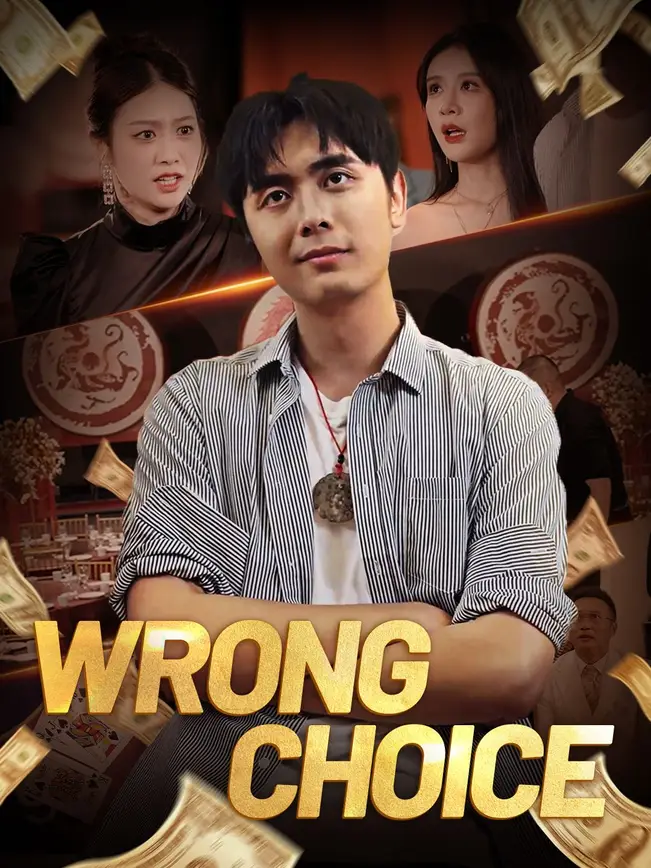

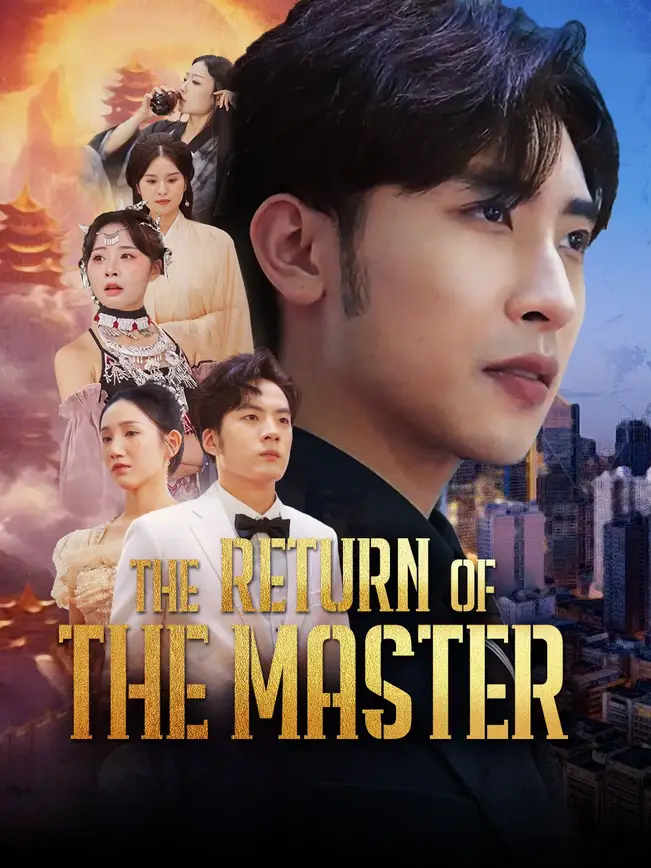

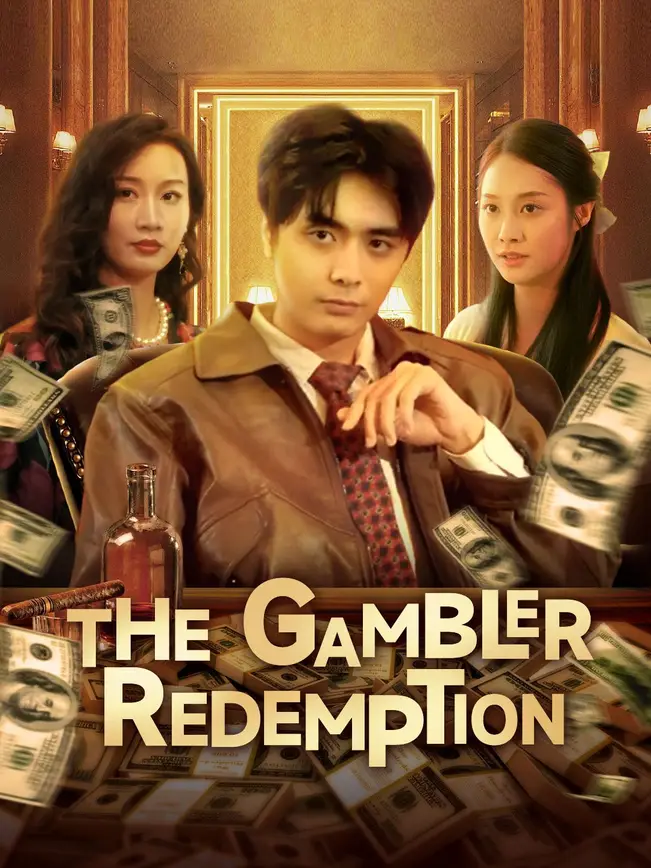
Return of the King
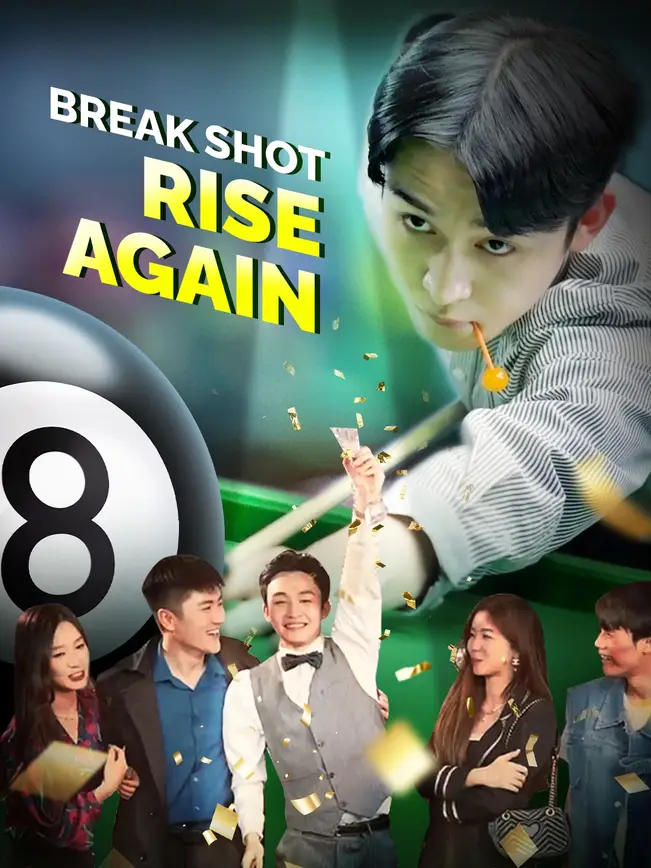

Revenge
.jpg~tplv-vod-rs:651:868.webp)

 Download