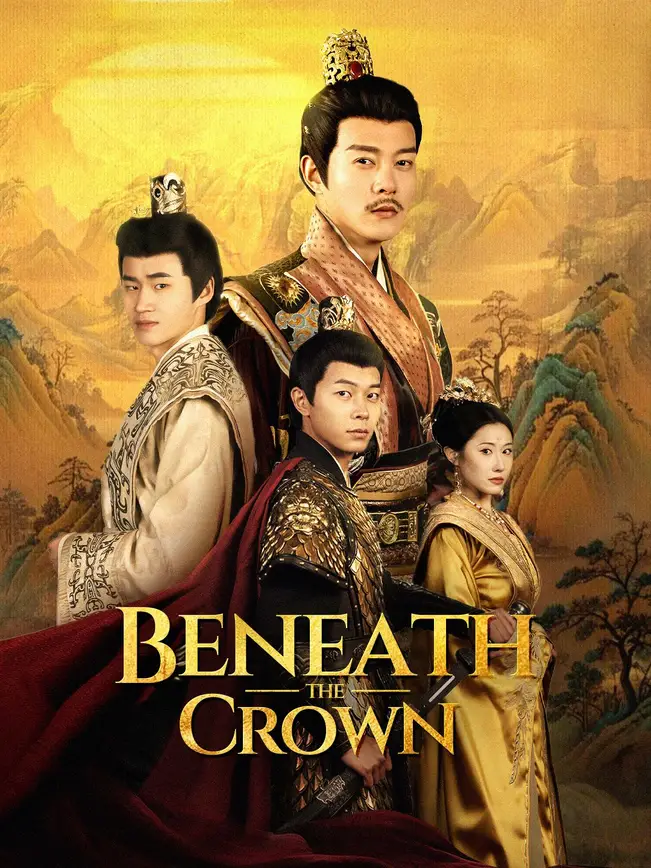
Beneath the Crown Storyline
Beneath the Crown More details
Genres:Underdog Rise/Revenge/Karma Payback
Language:English
Release date:2025-04-11 01:54:06
Runtime:95min
More Than a Crown – A Fight for Power
This show nails political intrigue and family secrets. The ending left me on the edge of my seat! Definitely recommend for fans of royal drama.
Intrigue and Betrayal, Perfect Combo
A well-crafted historical drama! The characters' motivations are intriguing. The game for the crown is a deadly one. A must-watch!
Unpredictable Drama!
Absolutely loved this! The tension between the prince and the emperor builds perfectly. Can’t wait to see how the truth shakes everything up.
A Royal Tale with a Twist
"Beneath the Crown" had me hooked from start to finish. The plot’s mix of family loyalty and betrayal is intense. A royal drama with unexpected layers.
Beneath the Crown: When Silence Screams Louder Than Swords
There's a moment in Beneath the Crown where nothing happens — and yet, everything changes. The man in gray robes is on his knees, head bowed, body shaking slightly. Around him, the world moves in slow motion: guards shift their weight, officials adjust their hats, wind rustles through distant trees. But all eyes are on him. Not because he's done something wrong — but because he's stopped fighting. That surrender is more powerful than any battle cry. It's the kind of silence that echoes louder than steel clashing against steel. And Beneath the Crown uses that silence brilliantly, letting the audience sit in the discomfort, the uncertainty, the sheer emotional gravity of a man who has nothing left to lose. Contrast that with the man in green — flailing, shouting, clutching his sword like it's a lifeline. His movements are frantic, almost comical in their desperation. He's trying to assert dominance, but everyone sees through it. Even the soldiers behind him look uneasy, exchanging glances that say, "This isn't working." The sword he holds isn't a weapon — it's a prop. A symbol of authority he's losing grip on. When he points it at the young man in white, it's not a threat — it's a plea. "Don't take this from me," his eyes beg. But the young man doesn't flinch. Doesn't blink. Just stares back, calm as still water. That contrast — chaos versus composure — is the heartbeat of Beneath the Crown. The young man in white doesn't need to speak to command attention. His presence alone disrupts the status quo. When he walks toward the kneeling man, the crowd parts without being told. When he extends a hand, the man in gray hesitates — not out of fear, but out of disbelief. "Why me?" that pause asks. "Why now?" The answer isn't spoken — it's shown in the way the young man helps him up, steadies him, treats him like an equal rather than a subordinate. In a world obsessed with rank and ritual, that act of kindness is revolutionary. Beneath the Crown understands that true leadership isn't about titles — it's about trust. Later, in the bedroom scene, the tone shifts again. Gone is the tension of the courtyard, replaced by something softer, more intimate. The man in gray is lying down, wrapped in blankets, looking exhausted but peaceful. The young man in white sits beside him, holding a teacup. No words are exchanged at first — just the sound of breathing, the rustle of fabric, the occasional clink of porcelain. Then, slowly, conversation begins. Not about politics. Not about power. About memories. About regrets. About what comes next. It's a rare moment of vulnerability in a series filled with intrigue and deception. And it works because Beneath the Crown earns it. We've seen these characters at their worst — now we get to see them at their most human. What's fascinating is how the show uses objects to convey emotion. The teacup, for example. It's not just a vessel for liquid — it's a bridge between two worlds. When the young man offers it, he's saying, "I care." When the man in gray accepts it, he's saying, "I trust you." Simple actions, profound implications. Even the bedding matters — the patterned blanket, the embroidered pillow, the wooden frame of the bed. Everything feels lived-in, authentic, like these characters have histories beyond what we've seen. Beneath the Crown doesn't rely on exposition to build its world — it lets details do the talking. By the end of this sequence, you realize something important: this isn't just a story about overthrowing tyrants or reclaiming thrones. It's about healing. About finding strength in weakness. About choosing compassion over conquest. The young man in white could have executed the man in green. Could have imprisoned the kneeling man. Instead, he chose mercy. Chose partnership. Chose future over vengeance. And that choice — quiet, understated, deeply human — is what makes Beneath the Crown resonate. It's not about who wins the game. It's about who changes the rules.

Underdog Rise


.jpg~tplv-vod-rs:651:868.webp)


Karma Payback
.jpg~tplv-vod-rs:651:868.webp)


Revenge


 Download