




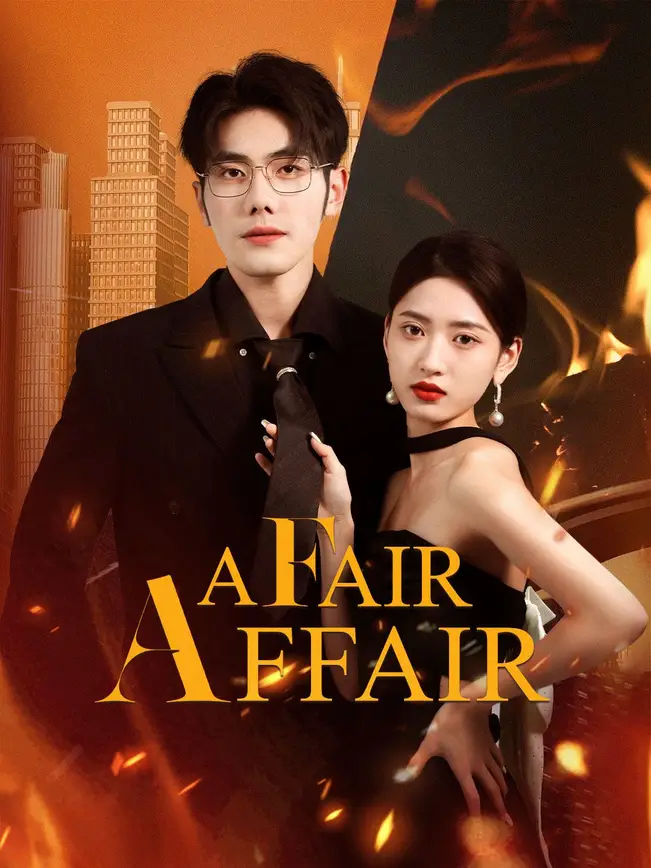
A Fair Affair Storyline
A Fair Affair More details
Genres:Contract Lovers/Multiple Identities/One Night Stand
Language:English
Release date:2024-12-20 12:00:00
Runtime:129min
A Fair Affair: When the Voice Recorder Became the Third Bride
Let’s talk about the object that stole the show in A Fair Affair—not the diamond necklace, not the ivory gown, but a slim black voice recorder, held aloft like a priest’s chalice before communion. Its presence transforms a wedding rehearsal into a courtroom, and Zhou Yichen from groom-to-be into prosecutor, judge, and executioner—all in one smooth motion. The genius of this sequence lies not in what the device records, but in what it *represents*: the death of ambiguity. In a world saturated with performative romance—Instagram reels, curated vows, TikTok proposals—the voice recorder is the antidote to illusion. It says, plainly: *Here is proof. Here is truth. No more guessing.* And yet, the most haunting detail? It’s never played. We never hear the recording. The power isn’t in the sound—it’s in the *threat* of it. That’s where A Fair Affair reveals its psychological depth: trauma isn’t always loud. Sometimes, it’s the silence after the button is pressed. Li Xinyue’s red dress is a masterstroke of costume design. Velvet, rich and heavy, suggests luxury—but also weight. The off-shoulder ruffles, pinned with tiny pearls, mimic wings, as if she arrived ready to fly, only to have her feathers clipped mid-ascent. Her jewelry—layered necklaces, teardrop earrings—doesn’t complement her; it *constrains* her. Every piece glints under the venue’s soft lights, turning her into a living trophy, displayed for admiration until the moment she’s deemed obsolete. Watch her hands at 00:01: clasped tightly over her abdomen, fingers interlaced like she’s holding herself together. By 00:22, they’ve loosened, trembling slightly. At 00:43, they’re gripping the floral-dressed woman’s arm—not for support, but to stop herself from collapsing inward. Her body language tells the story her voice cannot: she’s been gutted, and she’s trying to stand upright while her organs rearrange themselves. Lin Meiyu, the bride, operates in a different emotional frequency. Where Li Xinyue reacts, Lin Meiyu *observes*. Her white gown is ethereal, yes—but the sheer sleeves and beaded bodice feel less like bridal armor and more like ceremonial chains. Her hair is pulled back with military precision, her makeup flawless, her posture rigid. At 00:50, she watches Li Xinyue’s fall with the detachment of a scientist observing a controlled experiment. There’s no malice in her eyes—only resignation, as if she’s seen this script play out before. When Zhou Yichen approaches her at 01:14, his smile warm, her lips part—not in joy, but in the faintest sigh of relief. She doesn’t love him. She *accepts* him. And in that acceptance lies the tragedy: she’s chosen stability over truth, peace over passion, because the alternative—chaos, exposure, the kind of public unraveling Li Xinyue is enduring—is too costly. Her tears at 01:52 aren’t for love. They’re for the life she’s agreed to live, knowing full well it’s built on sand. The guests are the chorus of this modern Greek tragedy. At 00:37, the man in the navy suit and striped tie stands stiffly, his phone half-raised, his expression unreadable—professional detachment masking discomfort. The woman beside him, in the floral dress, clutches her phone like a rosary, her knuckles white. She’s not documenting history; she’s collecting evidence for later gossip. And then there’s Wang Dashi—the bald man with the wooden prayer beads—who walks into the frame at 01:44 like a monk entering a battlefield. He doesn’t speak loudly. He doesn’t demand attention. He simply *kneels*, placing himself at Li Xinyue’s level, and offers his hand. His intervention isn’t heroic; it’s human. In a room full of performers, he’s the only one who remembers how to be present. His quiet words at 01:47—though unheard—are the only genuine dialogue in the entire sequence. He doesn’t say *It’ll be okay*. He says, *You’re still here. That matters.* What elevates A Fair Affair beyond typical melodrama is its refusal to moralize. Zhou Yichen isn’t a cartoon villain. He’s a man who made a choice—and he owns it. His calm at 00:25, holding the recorder like a conductor’s baton, isn’t arrogance. It’s clarity. He knows the cost of his actions, and he’s willing to pay it—because the alternative, staying silent, would’ve cost him more. Lin Meiyu isn’t naive; she’s strategic. She sees the recording, understands its implications, and chooses to proceed anyway. Why? Because in her world, reputation is currency, and a scandal—even a quiet one—is bankruptcy. Li Xinyue, meanwhile, is the casualty of honesty in a system designed for deception. Her fall isn’t weakness; it’s the physical manifestation of cognitive dissonance shattering. She believed the narrative. She dressed for it. She arrived ready to play her part. And then the script changed—without her consent. The final shots linger on contradictions. At 01:38, Zhou Yichen hugs Lin Meiyu, his hand resting gently on her shoulder, the voice recorder still clutched in his other palm—a grotesque juxtaposition of tenderness and treachery. At 01:55, Lin Meiyu closes her eyes, smiling through tears, as if savoring the last moments of a dream she knows is ending. And at 01:40, Li Xinyue, still on the floor, lifts her chin. Not defiantly. Not angrily. Just… *clearly*. Her gaze cuts through the fog of spectacle, meeting the camera with the quiet intensity of someone who has just remembered her name. A Fair Affair doesn’t ask who’s right or wrong. It asks: When the performance ends, who’s left standing—and what do they carry with them? The answer isn’t in the vows. It’s in the silence after the applause fades, in the way Li Xinyue adjusts her pearl necklace with shaking fingers, and walks—slowly, deliberately—toward the exit, her red dress trailing behind her like a flag of surrender turned into a banner of survival. That’s the real ending. Not the ring. Not the kiss. The walk away. And that, friends, is why A Fair Affair will haunt you long after the credits roll.
A Fair Affair: The Red Dress That Shattered the Altar
In the meticulously staged elegance of a high-end wedding venue—white floral arches, mirrored columns, and soft ambient lighting—the tension in A Fair Affair doesn’t come from thunder or rain, but from a single red dress, a trembling hand, and a voice recorder held like a weapon. The protagonist, Li Xinyue, stands center stage in that crimson velvet gown, its off-shoulder ruffles adorned with pearls and crystals, a visual metaphor for opulence masking vulnerability. Her expression shifts across frames like a silent film reel: wide-eyed disbelief at 00:01, lips parted mid-sentence as if caught between accusation and plea; by 00:18, her eyes narrow—not with anger, but with dawning horror, as though she’s just heard the final note of a melody she’d been humming all day, only to realize it was never meant for her. This is not a love story gone wrong. It’s a performance unraveling in real time. The man in the tuxedo—Zhou Yichen—is the architect of this quiet detonation. His posture is relaxed, almost theatrical: one hand in his pocket, the other holding a sleek black voice recorder branded ‘Newman’. At 00:11, he lifts it slowly, deliberately, like a magician revealing the hidden card. He doesn’t shout. He doesn’t gesture wildly. He simply *presents* the device, and the room holds its breath. The camera lingers on his face—not smug, not cruel, but eerily composed, as if he’s already edited the footage in his mind. When he speaks (though we hear no audio), his mouth moves with precision, each syllable calibrated to land like a dropped stone in still water. His glasses catch the light, refracting the scene into fragmented truths. He knows what’s coming. And he’s prepared to watch it happen. What makes A Fair Affair so devastating is how ordinary the betrayal feels. There’s no villainous monologue, no dramatic music swell. Just guests shifting uncomfortably, phones raised—not to record the ceremony, but to capture the collapse. At 00:37, a woman in a floral dress grips her phone like a shield; another, older, in a Chanel brooch-adorned dress, snaps photos with both hands, her expression a mix of shock and grim satisfaction. They’re not mourners. They’re witnesses to a social autopsy. The bride, Lin Meiyu, stands frozen in her ivory gown, hair in a tight bun, jewels glittering like ice. Her silence is louder than any scream. She doesn’t confront him. She doesn’t cry. She watches Li Xinyue fall—and in that watching, something inside her calcifies. By 01:24, when Zhou Yichen finally turns to her, his smile softens, and she responds with a fragile, practiced grace, as if rehearsing forgiveness before the wound has even scabbed over. That moment—01:33, their foreheads touching, her tears glistening under the chandeliers—isn’t reconciliation. It’s surrender dressed as intimacy. Li Xinyue’s fall at 00:45 isn’t accidental. It’s symbolic. She stumbles backward, arms flailing, the red fabric pooling around her like spilled wine. The camera tilts down, capturing her sprawled on the polished floor, hair loose, makeup slightly smudged—not ruined, but *exposed*. In that position, she becomes the audience’s proxy: the one who believed the script, who showed up in full costume, only to find the director had rewritten the ending without telling her. Her eyes, wide and wet at 00:48, lock onto the camera—not the lens, but *us*, the viewers, the strangers who’ve been invited to this private implosion. She mouths words we can’t hear, but we know them: *Why? How could you? Was I ever real to you?* Her pain isn’t melodramatic; it’s chillingly quiet, the kind that echoes in empty rooms long after the party ends. Then enters the bald man in the gray shirt and wooden beads—Wang Dashi, the unexpected deus ex machina. At 01:45, he kneels beside Li Xinyue, not with pity, but with quiet authority. His hands are steady as he helps her up, his voice low, his gaze steady. He doesn’t offer platitudes. He offers presence. In a world where everyone is performing—Zhou Yichen the stoic groom, Lin Meiyu the serene bride, the guests the polite spectators—Wang Dashi is the only one who refuses the role. His intervention isn’t about saving her dignity; it’s about restoring her agency. When he helps her rise, she doesn’t look grateful. She looks *awake*. That shift—from victim to witness—is the true climax of A Fair Affair. The ring exchange at 01:31 feels hollow in retrospect, a ritual performed while the foundation crumbles beneath it. The applause at 01:36 rings false, a collective gaslighting disguised as celebration. What lingers isn’t the scandal, but the silence afterward. At 01:40, Li Xinyue sits on the floor, not sobbing, but breathing—deep, deliberate breaths—as if relearning how to occupy her own body. Her red dress, once a statement of confidence, now reads as a banner of defiance: *I was here. I saw. I will not vanish.* Zhou Yichen’s final glance toward her at 01:15 isn’t guilt. It’s calculation. He’s already moved on, emotionally and narratively. But Li Xinyue? She’s just beginning. A Fair Affair doesn’t end with a kiss or a breakup. It ends with a woman rising, unaided, from the floor, her pearls still gleaming, her spine straightening inch by inch. The real drama wasn’t the revelation—it was what happened after everyone stopped filming. And that, dear viewer, is where the story truly begins.
A Fair Affair: When Pearls Hide Poisonous Truths
The first ten seconds of A Fair Affair are a masterstroke of visual irony. Lin Xiao, radiant in ivory lace and pearls, stares up at Chen Wei with eyes that shimmer with vulnerability—yet her grip on his forearm suggests she’s holding on for dear life, not out of devotion, but out of necessity. The pearls around her neck aren’t just jewelry; they’re armor, strung tight like a cage around her throat. Her hair is pinned in a severe bun, a symbol of discipline, of control—but a few rebellious strands escape near her temple, whispering of the chaos she’s barely containing. Chen Wei, in his immaculate black suit, leans in so close their breath mingles, yet his eyes remain distant, calculating. He’s not kissing her. He’s assessing her. This isn’t intimacy; it’s surveillance disguised as affection. Then the door opens—and the world tilts. Li Yan enters like a storm given form. Her red gown isn’t merely striking; it’s *accusatory*. The satin bows at her shoulders resemble tied hands, or perhaps broken vows. Her necklace—layered diamonds and pearls—mirrors Lin Xiao’s, but where Lin Xiao’s is modest, Li Yan’s is opulent, aggressive, a declaration: *I am not invisible*. Her earrings, teardrop-shaped and glittering, catch the light like shards of glass. And her expression? Not anger. Not jealousy. Something far more unsettling: *clarity*. She sees everything. She always has. When she places her hand on Master Guo’s back at 0:08, it’s not affection—it’s anchoring. She needs him steady, because what comes next will shake the foundations of their carefully constructed lives. Master Guo, bald-headed and draped in earth-toned linen, is the moral fulcrum of A Fair Affair. His wooden prayer beads—amber, turquoise, bone—are not religious affectations; they’re talismans of memory. Each bead represents a choice, a lie, a secret he’s carried too long. His initial reaction to Li Yan’s arrival is pure instinct: he flinches, just slightly, as if struck. His eyes widen, not in surprise, but in *recognition*—he knows why she’s here. And when he speaks (though we hear no words), his mouth forms shapes that suggest apology, explanation, maybe even confession. His eyebrows lift at 0:17, then furrow at 0:24—his internal debate is visible on his face. He wants to protect someone. But who? Lin Xiao? Chen Wei? Or himself? The genius of A Fair Affair lies in how it weaponizes stillness. No grand speeches. No dramatic exits. Just two women and two men, standing in a hallway that feels increasingly like a courtroom. Li Yan’s hand remains on her abdomen throughout much of the exchange—not clutching, not hiding, but *presenting*. It’s a silent indictment. And Master Guo responds not with denial, but with micro-expressions: a slow exhale at 0:38, a blink held too long at 0:47, a slight tilt of the head at 1:13 that says, *I see you. I’ve always seen you.* Meanwhile, Lin Xiao reappears at 0:25, now tucked under Chen Wei’s arm like a prized possession. But her smile is brittle, her fingers twisting the fabric of her sleeve. She’s performing calm, but her pulse is visible at her neck—a frantic little bird trapped beneath silk. Chen Wei’s hand rests on her waist, but his thumb rubs a slow, rhythmic circle—not soothing, but *reassuring himself*. He’s reminding her—and himself—that she’s his. Yet the moment Li Yan locks eyes with him from across the room at 1:05, his posture stiffens. His grip tightens. For the first time, he looks afraid. Not of exposure, but of *loss*. Of losing the narrative he’s built. What elevates A Fair Affair beyond typical melodrama is its refusal to villainize. Li Yan isn’t evil; she’s exhausted. Her red dress isn’t a weapon—it’s a flag raised after years of silence. When she whispers something to Master Guo at 1:21, her voice is low, but her eyes burn with a quiet fury that’s more terrifying than any scream. He recoils—not physically, but emotionally. His face collapses inward, as if a dam has finally broken. At 1:25, he looks upward, not to the ceiling, but *past* it—to some unseen judge, some higher power he’s been bargaining with for years. His lips move silently, forming words like *forgive*, *sorry*, *too late*. The setting reinforces the theme of fractured elegance. White tablecloths, crystal glasses, soft lighting—all suggest celebration. Yet no one is celebrating. The chairs are empty. The food is untouched. The only movement is emotional: Lin Xiao’s trembling hands, Li Yan’s deliberate steps, Master Guo’s restless shifting, Chen Wei’s frozen stance. Even the door behind them—rich mahogany, ornate brass handle—feels like a portal to a different reality, one where truths can’t be polished away with champagne and smiles. A Fair Affair understands that the most devastating revelations aren’t shouted—they’re whispered in the space between breaths. When Li Yan finally smiles at 1:06, it’s not victory she’s feeling. It’s relief. The burden of secrecy has lifted, and now the real work begins: reckoning. Master Guo’s final expression at 1:19—half-resigned, half-determined—tells us he’s chosen a side. Not Lin Xiao’s. Not Chen Wei’s. *Hers.* Because in this world, loyalty isn’t inherited; it’s earned through silence kept, truths buried, and hands placed gently on swollen bellies. The pearls in A Fair Affair are the ultimate metaphor. They appear beautiful, pure, timeless—yet they’re formed from irritation, from grit lodged deep within an oyster’s flesh. Lin Xiao wears hers like a badge of endurance. Li Yan wears hers like a crown of consequence. And Master Guo? He carries his truth like a string of beads—each one a memory he can’t unthread, each one leading inevitably to this moment, in this hallway, where love, lies, and legacy collide without a single word needing to be spoken aloud. The real tragedy isn’t that they’re caught. It’s that they all knew this day was coming—and still chose to walk into the room anyway.
A Fair Affair: The Red Dress and the Whispered Secret
In the tightly framed corridors of a modern banquet hall—where polished wood doors meet muted gray walls—the tension in A Fair Affair doesn’t just simmer; it pulses like a second heartbeat. The opening shot lingers on Lin Xiao, her dark hair coiled high, eyes wide with something between fear and fascination, as she stands inches from Chen Wei’s face. His glasses catch the light, his posture rigid, yet his hand rests possessively on her waist—a gesture that reads less like affection and more like containment. She wears a pearl-embellished choker, delicate but suffocating, mirroring the emotional restraint she’s forced to perform. Her lips part slightly—not in invitation, but in hesitation—as if she’s rehearsing a line she knows will change everything. This isn’t romance; it’s negotiation dressed in couture. The camera pulls back, revealing their full figures: Lin Xiao in a shimmering ivory mini-dress, sheer sleeves fluttering like trapped moths, while Chen Wei looms in a black tuxedo, bowtie perfectly knotted, expression unreadable. They’re pressed against the wall beside a heavy mahogany door—its brass handle gleaming like a warning. When he turns her gently toward the entrance, the movement feels choreographed, almost ritualistic. There’s no laughter, no casual touch—only the soft rustle of fabric and the faint echo of footsteps from elsewhere in the venue. Then, silence. The door swings open—not by them, but by someone else entirely. Enter Li Yan, draped in a crimson velvet gown that clings like liquid fire, its off-the-shoulder bodice adorned with pearls and satin bows that seem to mock Lin Xiao’s innocence. Her hair cascades in glossy waves, earrings catching the ambient glow like fallen stars. But it’s not her beauty that arrests the frame—it’s her timing. She steps into the hallway just as Chen Wei releases Lin Xiao, and for a split second, all three are suspended in a triangle of unspoken history. Li Yan’s hand lands lightly on the shoulder of the bald man beside her—Master Guo, a figure whose presence radiates quiet authority, his wooden prayer beads clicking softly against his chest like a metronome counting down to revelation. He wears a charcoal linen jacket over a black tee, an aesthetic of studied neutrality, yet his eyes dart between Li Yan and the retreating couple with the precision of a man who’s seen this script before. What follows is not dialogue, but *subtext*—a masterclass in nonverbal storytelling. Li Yan’s gaze locks onto Master Guo, her lips forming a question without sound. Her fingers drift to her abdomen, not in pain, but in contemplation—perhaps even accusation. Meanwhile, Master Guo’s expressions shift like weather fronts: confusion, concern, dawning realization, then something darker—resignation? Complicity? His mouth opens, closes, opens again, each time releasing syllables that never reach the audience’s ears, yet we feel their weight. In A Fair Affair, silence isn’t empty; it’s loaded. Every blink, every tilt of the head, every slight tightening of the jaw speaks louder than exposition ever could. Lin Xiao reappears briefly, now clinging to Chen Wei’s arm, her earlier defiance replaced by fragility. She touches her own neck, fingers tracing the curve of her choker—was it a gift? A collar? A reminder? Chen Wei watches her, not with tenderness, but with calculation. His eyes flick toward the hallway where Li Yan and Master Guo stand, and for the first time, we see doubt flicker across his face. He’s not in control here. Not anymore. The power has shifted—not with fanfare, but with the quiet certainty of a woman in red who knows exactly what she holds in her hands. Li Yan’s transformation is the heart of A Fair Affair’s brilliance. At first glance, she’s the classic ‘other woman’—glamorous, assertive, dangerous. But the close-ups betray deeper layers. When Master Guo leans in to whisper something near her ear at 1:21, her pupils dilate, her breath hitches—not in shock, but in recognition. She already knew. Or suspected. Or *planned*. Her smile at 1:06 isn’t triumphant; it’s weary, almost sad. She’s not here to destroy Lin Xiao. She’s here to settle accounts. And Master Guo? He’s not just a bystander. His bead necklace—each wooden sphere worn smooth by years of handling—suggests a man who meditates on consequences. When he gestures with his thumb at 1:15, it’s not dismissive; it’s directional. He’s pointing toward a truth no one wants to name. The setting itself becomes a character. White-clothed tables sit in the foreground, blurred but present—symbols of the celebration they’re all supposed to be attending. Yet none of them are seated. None are eating. They’re standing in the liminal space *between* the party and the reckoning. The lighting is cool, clinical, stripping away warmth and forcing raw emotion to the surface. Even the floor reflects their movements faintly, as if the room itself is bearing witness. In A Fair Affair, the environment doesn’t backdrop the drama—it *participates* in it. What makes this sequence unforgettable is how it refuses catharsis. No shouting match erupts. No slap is delivered. Instead, Li Yan simply places her palm flat against her stomach again at 0:26, and Master Guo’s face crumples—not in grief, but in guilt. That single gesture implies a pregnancy, yes, but more importantly, it implies *timing*. Was it conceived before or after? With whom? And why does Master Guo look like a man who’s just been handed a sentence he didn’t expect? Chen Wei’s brief reappearance at 0:25—now wearing a bowtie, his expression stern—adds another layer. He’s not surprised to see Li Yan. He’s *waiting* for her. His proximity to Lin Xiao feels performative now, a shield against the inevitable. When Lin Xiao covers her mouth with her hand, it’s not modesty—it’s suppression. She’s swallowing words she desperately wants to scream. The camera lingers on her trembling fingers, the way her nails—pale, manicured, perfect—contrast with the storm behind her eyes. A Fair Affair thrives in these micro-moments. The way Li Yan’s red sleeve catches the light as she turns. The way Master Guo’s throat moves when he swallows hard at 0:48. The subtle shift in Lin Xiao’s posture from leaning *into* Chen Wei to standing *beside* him, shoulders squared, chin lifted—not defiant, but resolved. These aren’t actors playing roles; they’re vessels for human contradiction. Love and betrayal. Loyalty and self-preservation. Desire and duty. By the final frames, the dynamic has irrevocably changed. Li Yan no longer seeks validation from Master Guo—she *commands* his attention. His earlier confusion has hardened into resolve. He nods once, sharply, at 1:19, and something passes between them: an agreement, a pact, a surrender. Lin Xiao is no longer the center of the frame. She’s become the ghost haunting the edges of their new reality. And Chen Wei? He’s vanished again—offscreen, perhaps, but his absence speaks volumes. In A Fair Affair, the most powerful characters aren’t the ones who speak loudest. They’re the ones who know when to stay silent, when to touch a shoulder, when to place a hand on a belly, and when to let the truth hang in the air like smoke—waiting for someone brave enough to breathe it in.
A Fair Affair: When the Tea Turns Bitter
Let’s talk about the tea. Not the kind served in porcelain cups at high-society gatherings, but the kind that carries history in its steam—the kind that reveals more in a single sip than a decade of conversation ever could. In *A Fair Affair*, the wedding scene is immaculate, almost too perfect: white flowers, arched alcoves, reflective floors that double the illusion of purity. Lin Xiao stands there like a porcelain doll—elegant, composed, her hair coiled in a tight bun, her jewelry dazzling under the chandeliers. Chen Wei, beside her, exudes control: tailored suit, bowtie perfectly symmetrical, glasses catching the light like shields. But look closer. Watch how his thumb rubs the edge of his cufflink when the officiant asks, ‘Do you take this woman…?’ It’s not nervousness. It’s calculation. He’s waiting. For what? The answer arrives not in words, but in the living room later—where the real ceremony begins. Here, the decor shifts: warm wood, curated shelves, a bonsai tree breathing quietly in the corner. Lin Xiao and Chen Wei sit side by side, but their proximity feels staged. Madam Zhang, draped in dragon-patterned silk, watches them like a judge reviewing evidence. When the tea arrives, Lin Xiao accepts hers with grace—until she tastes it. Her reaction is visceral: a sharp intake of breath, a blink that lasts too long, her fingers tightening around the cup. She doesn’t spit it out. She *contains* it. That’s the first clue. This isn’t surprise. It’s recognition. Chen Wei, meanwhile, hasn’t touched his cup. He watches her, not with concern, but with something colder—anticipation. Madam Zhang rises, moves with deliberate slowness, takes the cup from Lin Xiao’s hands, and examines it. She sniffs, then dips her finger, tastes, and freezes. Her face—usually composed, regal—crumples into something raw: betrayal, grief, fury. She looks at Chen Wei, and for a split second, the mask slips. He doesn’t deny it. He *nods*. That’s when Lin Xiao stands. Not angrily. Not dramatically. She simply rises, places a hand over her heart—as if steadying herself—and walks away. Her gait is steady, but her shoulders tremble. Chen Wei follows, not to stop her, but to *reclaim* her. He catches her mid-stride, lifts her without warning, and spins her into his arms. The camera circles them—her legs wrapped around his waist, her fingers buried in his hair, his grin wide, teeth flashing, eyes alight with triumph. But here’s the twist: Lin Xiao isn’t resisting. She’s *leaning* into him, her laughter bright, her body pliant—yet her eyes, when they meet the lens for half a second, are hollow. She’s playing her part. Just as he is. *A Fair Affair* thrives on this duality: the public performance versus the private reckoning. The wedding was a contract signed in front of witnesses. The tea was the clause no one read aloud. Madam Zhang’s jade pendant—a symbol of longevity and protection—now feels ironic. She wore it to bless the union, but it couldn’t shield her from the truth: the tea was laced with something ancestral, something tied to old debts, perhaps a failed betrothal, a broken oath, a secret Lin Xiao only learned *after* saying ‘I do.’ Chen Wei knew. He always knew. His laughter during the lift isn’t joy—it’s relief. Relief that she’s still playing along. That the charade holds. Because in their world, love isn’t the foundation. Survival is. And survival demands sacrifice—of truth, of autonomy, of self. Later, when Lin Xiao reappears alone, walking down a corridor lined with mirrors, her reflection fractures into dozens of versions of herself: the bride, the daughter-in-law, the heiress, the prisoner. She touches her collar, the cream bow now slightly askew, and whispers something we can’t hear. But we know what it is. A vow—not to him, but to herself. *A Fair Affair* isn’t a love story. It’s a hostage negotiation disguised as romance. Every smile hides a threat. Every touch conceals a transaction. And the tea? It’s still on the table. Untouched by Chen Wei. Waiting. Because the next sip might be his. Or hers. Or both. The brilliance of *A Fair Affair* lies not in its grand gestures, but in its silences—the pause before the laugh, the hesitation before the hug, the way Lin Xiao’s necklace catches the light just as Chen Wei’s hand slides lower on her back. Those are the moments that tell the real story. The one no officiant would dare recite. The one Madam Zhang already knew. The one we’re only beginning to understand.
A Fair Affair: The Vow That Never Was
The opening sequence of *A Fair Affair* is deceptively serene—a pristine white chapel, arches lined with cascading hydrangeas, a glossy floor reflecting every gesture like a mirror of intention. At its center stand three figures: Lin Xiao, radiant in a feather-trimmed ivory mini-dress and towering platform heels; Chen Wei, impeccably dressed in a black tuxedo with velvet lapels and gold-rimmed spectacles; and the officiant, a compact man in a navy suit, microphone in hand, his expression shifting between solemnity and subtle amusement. The camera lingers on their hands—Lin Xiao’s slender fingers, manicured and trembling slightly, reaching toward Chen Wei’s palm. He takes her hand, not with urgency, but with practiced calm. Yet something feels off. His grip is firm, yes—but not tender. His eyes, behind those elegant frames, don’t quite meet hers when she glances up. There’s a hesitation in his posture, a fractional delay before he lifts her hand to his lips. It’s not the kiss of devotion; it’s the kiss of obligation. The officiant speaks, his voice warm but measured, guiding them through vows that sound rehearsed, almost theatrical. Lin Xiao’s smile never wavers, but her pupils dilate just once—when Chen Wei says ‘I do’—a flicker of uncertainty masked by glittering diamond necklaces layered like armor around her throat. She blinks slowly, deliberately, as if sealing something inside. Then comes the embrace: Chen Wei pulls her close, his cheek resting against her temple, his arms encircling her waist with precision. But watch his left hand—it doesn’t rest on her back. It hovers near her ribs, fingers slightly curled, as though bracing for impact. Lin Xiao closes her eyes, exhales, and presses her face into his shoulder. Her smile softens into something quieter, more private. Is it relief? Resignation? Or the first quiet crack in the facade? The officiant steps back, smiling broadly, but his gaze lingers on Chen Wei’s wristwatch—a luxury piece, polished, expensive, yet worn with the faintest scuff along the clasp. A detail no one else notices. And then—the cut. Not to applause or celebration, but to a different room entirely: modern, minimalist, all marble and muted wood. Chen Wei sits beside Lin Xiao on a white sofa, now dressed in a black shirt and dotted white tie, his demeanor relaxed, even playful. Lin Xiao wears a sleek black dress with a cream bow at the collar, her hair down, softer, less ceremonial. An older woman—Madam Zhang, presumably family—sits opposite, wearing a turquoise silk blouse embroidered with golden dragons, a jade pendant resting against her sternum like a talisman. She watches them with the quiet intensity of someone who has seen too many weddings end in silence. A servant enters, offering tea. Lin Xiao accepts her cup, brings it to her lips—and flinches. Not from heat. From taste. Her brow furrows. She lowers the cup, eyes darting to Chen Wei, who hasn’t touched his own. Madam Zhang leans forward, her expression unreadable, then rises abruptly, retrieves the cup, and sniffs it. Her face tightens. She dips a finger into the liquid, tastes it, and recoils as if burned. Chen Wei stands, his posture stiffening—not out of concern, but recognition. He knows what’s in that tea. Lin Xiao rises too, clutching her chest, her breath shallow. She stumbles back, then turns and walks away, not in anger, but in dawning horror. Chen Wei follows, catching her wrist before she reaches the hallway. He doesn’t speak. Instead, he lifts her effortlessly—her legs wrapping around his waist, her arms locking behind his neck—and spins her once, twice, laughing, his voice rich with forced levity. ‘You’re still mine,’ he murmurs, his lips brushing her ear. She laughs too, but her eyes are wet. Her fingers dig into his shoulders—not in passion, but in plea. This isn’t romance. It’s performance. *A Fair Affair* isn’t about love—it’s about inheritance, legacy, and the quiet violence of expectation. Every gesture, every glance, every sip of tea carries weight. Lin Xiao isn’t just a bride; she’s a pawn in a game she didn’t sign up for. Chen Wei isn’t cold—he’s trapped. And Madam Zhang? She’s the keeper of the ledger, the one who remembers every debt, every promise broken behind closed doors. The final shot lingers on Lin Xiao’s face as Chen Wei sets her down: her smile returns, perfect, luminous, but her knuckles are white where she grips his arm. The camera zooms in on her ring finger—no engagement ring. Only a delicate silver band, unadorned. *A Fair Affair* doesn’t begin at the altar. It begins long before, in the silence between sips of poisoned tea and the weight of a mother’s stare. What happens next isn’t fate. It’s choice. And choices, in this world, always come with interest.
A Fair Affair: When the Guest List Holds the Real Script
There’s a particular kind of horror reserved for events where everyone knows the truth except the person at the center of it. In *A Fair Affair*, that person is Lin Xiao—standing in a gown that cost more than most cars, surrounded by people whose smiles don’t reach their eyes. The film opens not with fanfare, but with intimacy: a close-up of Lin Xiao’s face, her makeup flawless, her expression brittle. She’s listening—not to vows, but to hesitation. Chen Yi, in his impeccably tailored tux, speaks softly, his words blurred by the camera’s focus on her reaction. Her eyebrows lift, just slightly. Her lips press together. She’s not hearing promises. She’s hearing qualifiers. And in that split second, we realize: this isn’t a love story. It’s a hostage negotiation disguised as a celebration. Enter Master Guo—the bald man with the wooden beads, the only character who moves with the ease of someone who’s seen this play before. He doesn’t interrupt. He *facilitates*. When he places the small black device into Chen Yi’s palm, it’s not a threat. It’s an invitation. An off-ramp. A chance to abort. Chen Yi’s fingers close around it, and for a beat, the world holds its breath. Lin Xiao doesn’t look away. She watches his hands. She knows what that object represents. She’s been waiting for it. Not hoping for it—*waiting*. Because deep down, she suspects the wedding isn’t about her. It’s about legacy. About contracts signed before she was born. About a family name that matters more than her heartbeat. The transition to the ceremony hall is masterful: the camera pulls back, revealing the absurd grandeur of the space—white marble, floral tunnels, guests arranged like chess pieces. And there, standing slightly apart, is Jiang Wei. Crimson. Unapologetic. Her gown isn’t just red—it’s *rebellion* in satin and velvet. She doesn’t fidget. She doesn’t glance at her phone. She stands like a queen who forgot she was invited as a guest. Her jewelry matches Lin Xiao’s in design, but not in spirit: where Lin Xiao’s diamonds whisper elegance, Jiang Wei’s scream authority. And when she finally speaks—her voice smooth, unhurried, dripping with irony—she doesn’t address Chen Yi directly. She addresses the *room*. “Funny,” she says, “how some people spend years building a future… only to realize they were just decorating someone else’s past.” The line hangs in the air, heavy with implication. No one corrects her. No one defends Lin Xiao. Because they all know she’s right. What’s fascinating about *A Fair Affair* is how it weaponizes stillness. Most dramas rely on shouting, slamming doors, tears. Here, the tension lives in the pauses—the way Chen Yi’s jaw tightens when Jiang Wei mentions the ‘pre-nup clause,’ the way Lin Xiao’s knuckles whiten as she grips her own arms, the way Master Guo nods slowly, as if confirming a theory he’s held for years. Even the host, mid-speech, stumbles over his words when Jiang Wei steps forward. His script—polished, rehearsed, safe—suddenly feels naive. Outdated. Like a map drawn before the earthquake. And then, the turning point: Jiang Wei doesn’t confront. She *invites*. She turns to Lin Xiao, not with pity, but with respect. “You don’t have to wear this dress,” she says, voice low, almost tender. “You don’t have to say yes. You don’t even have to stay.” The room goes silent—not out of shock, but recognition. For the first time, Lin Xiao blinks. Not in confusion. In possibility. Her gaze flickers to Chen Yi, searching for confirmation, for resistance, for *anything*. But he says nothing. He just stares at the black device in his hand, as if it’s the only thing keeping him grounded. In that moment, *A Fair Affair* delivers its quietest, loudest truth: the most powerful act in a rigged system isn’t rebellion. It’s refusal. Refusing the role. Refusing the script. Refusing to be the beautiful, silent centerpiece of someone else’s narrative. The final sequence is breathtaking in its restraint. Lin Xiao doesn’t run. She doesn’t scream. She simply unclasps her choker—slowly, deliberately—and lets it fall to the floor with a soft, metallic clink. The sound echoes louder than any speech. Guests gasp. Chen Yi flinches. Jiang Wei smiles—not triumphantly, but gratefully. As Lin Xiao turns and walks away, her gown trailing behind her like a discarded skin, the camera follows not her back, but the faces she leaves behind. Master Guo bows his head, just once. The host lowers his microphone. And Chen Yi? He finally looks up. Not at the door she exited through. But at the device in his hand. He opens it. Inside, not a remote. Not a recording. Just a single sheet of paper. Two words: *Let go.* *A Fair Affair* isn’t about who gets married. It’s about who gets to choose. And in a world where love is often negotiated like real estate, the most radical act is walking away—gown and all—before the vows are spoken. The film doesn’t give us a happy ending. It gives us something rarer: a hopeful one. Because hope, in this context, isn’t finding the right person. It’s realizing you were never the wrong one. You were just waiting for someone to see you—not as a bride, but as a woman who deserves to decide her own fate. And when Jiang Wei later appears in the final frame, alone on the terrace, watching the city lights blink awake, she doesn’t look victorious. She looks relieved. Because in *A Fair Affair*, the real victory isn’t winning the man. It’s ensuring no one else has to lose themselves to keep the peace. The guests may leave confused. The families may gossip for months. But Lin Xiao? She’s already gone. And that, dear viewer, is the most satisfying exit in modern romance cinema.
A Fair Affair: The White Dress That Never Walked Down the Aisle
Let’s talk about the kind of wedding that doesn’t happen—but somehow feels more real than most that do. In *A Fair Affair*, the tension isn’t built with explosions or betrayals, but with a single glance, a trembling hand, and the unbearable weight of a dress that sparkles too brightly for comfort. The opening frames introduce us to Lin Xiao, her hair coiled in a tight, elegant bun, her strapless ivory gown shimmering under soft ambient light—every bead catching the camera like a tiny accusation. She wears not just jewelry, but armor: a layered diamond choker that hugs her throat like a vow she’s not sure she wants to keep. Her eyes, wide and unblinking, lock onto Chen Yi, who stands opposite her in a tuxedo so sharp it could cut through silence. He’s wearing gold-rimmed glasses, the kind that suggest intelligence, restraint, maybe even guilt. His mouth moves—though we don’t hear his words—but his expression shifts from polite concern to something quieter, heavier. It’s not love he’s projecting. It’s calculation. Or regret. Or both. Then enters Master Guo—a bald man in a gray corduroy shirt, beads draped over his chest like relics of a life he’s trying to leave behind. He hands Chen Yi a small black object. A phone? A remote? A detonator disguised as etiquette? The way Chen Yi takes it, fingers curling around it like he’s holding a live wire, tells us everything. This isn’t just pre-wedding jitters. This is a pivot point. A moment where one decision will fracture the entire evening—and possibly every relationship in the room. Lin Xiao watches, her posture rigid, her hands clasped low in front of her, as if bracing for impact. When she lifts her gaze upward, lips parting slightly, it’s not awe she’s feeling. It’s dread dressed as hope. Cut to the ceremony hall: white arches, cascading hydrangeas, a floor so polished it reflects the guests like ghosts hovering above their own lives. A host in a navy suit holds a microphone, smiling too wide, speaking too fast—his energy mismatched with the stillness of the crowd. Among them stands Jiang Wei, in a crimson velvet gown that defies the monochrome aesthetic like a flame in a library. Her shoulders are bare, her capelet draped like a challenge. She wears pearls strung along delicate straps, a necklace that mirrors Lin Xiao’s—but hers is colder, sharper, less forgiving. Her eyes flick between Chen Yi and Lin Xiao, not with jealousy, but with recognition. She knows what’s coming. And she’s ready. Chen Yi walks forward—not toward the altar, but across the aisle, deliberately, slowly, as if testing the floorboards for traps. His left hand stays in his pocket; his right holds the black device. Every step echoes in the silence. The guests shift. Lin Xiao’s breath hitches. Jiang Wei’s lips twitch—not quite a smile, not quite a smirk. Just the ghost of one. Then, in a sudden reversal of tone, Jiang Wei turns, her voice cutting through the hush like a blade drawn from silk: “You’re late,” she says—not to Chen Yi, but to the moment itself. Her delivery is playful, but her eyes are steel. She laughs, a sound that rings too clear, too rehearsed. And in that laugh, we understand: this isn’t a wedding crash. It’s a coronation. Jiang Wei isn’t interrupting the ceremony. She’s claiming it. The camera lingers on Lin Xiao’s face—not tearful, not angry, but hollowed out. She looks at Chen Yi, then at Jiang Wei, then back again, as if trying to reconcile two versions of reality. Her gown, once radiant, now seems suffocating. The diamonds no longer glitter—they glint like prison bars. Meanwhile, Chen Yi stands frozen, caught between two women who represent two futures: one built on tradition, obligation, and quiet suffering; the other on audacity, self-possession, and the terrifying freedom of choosing yourself first. *A Fair Affair* doesn’t ask who’s right. It asks: who dares to be the first to walk away? What makes this sequence so devastatingly effective is how little is said. There’s no shouting match, no dramatic confession whispered into a microphone. Instead, the film trusts its actors’ micro-expressions—the slight tilt of Chen Yi’s head when he glances at Jiang Wei, the way Lin Xiao’s fingers tighten around her own wrist, the almost imperceptible narrowing of Jiang Wei’s pupils when she locks eyes with him. These aren’t performances. They’re confessions in motion. And the setting—so pristine, so sterile—only amplifies the emotional chaos. The white flowers aren’t symbols of purity here. They’re camouflage. *A Fair Affair* understands that the most violent moments in love often happen in full view, under chandeliers, surrounded by people who clap politely while their hearts quietly collapse. Later, when Jiang Wei steps forward again, her voice rising—not in volume, but in certainty—she doesn’t accuse. She *declares*. “I didn’t come to stop this,” she says, gesturing vaguely toward the altar, “I came to remind everyone why it shouldn’t have started.” The line lands like a stone dropped into still water. Guests exchange glances. Someone coughs. Lin Xiao doesn’t flinch. She simply exhales, long and slow, as if releasing a breath she’s held since the engagement was announced. In that moment, *A Fair Affair* reveals its true thesis: weddings aren’t about vows. They’re about who gets to speak last. And tonight, Jiang Wei has the mic. Not because she stole it—but because no one else had the courage to hold it. The final shot lingers on Chen Yi, his glasses catching the light, his expression unreadable—not because he’s conflicted, but because he’s already made his choice. He just hasn’t told anyone yet. And that, perhaps, is the cruelest twist of all: the most painful betrayals aren’t the ones shouted from rooftops. They’re the ones whispered in silence, while the music plays on.
A Fair Affair: When Jewelry Tells the Real Story
If you’ve ever watched a short drama and thought, ‘Wait—did they spend more on the necklaces than the set?’ then A Fair Affair is your cinematic soulmate. Because here, in this elegantly tense sequence, every piece of jewelry isn’t just accessory—it’s testimony. Take Lin Xiao’s layered diamond-and-pearl choker: it’s not merely opulent; it’s a manifesto. The upper strand sits tight against her throat like a collar of expectation, while the lower, teardrop-shaped pendant dangles precariously, swaying with each breath—as if her composure is equally fragile. When she clenches her fist at 00:20, the camera lingers on her bare forearm, the red fabric of her dress pulling taut, and you realize: the dress isn’t hiding her tension; it’s amplifying it. The pearls on the straps catch the light like tiny accusations, each one a reminder of what she’s supposed to be—and what she refuses to become. Then there’s Chen Yiran, whose bridal ensemble is a study in contradictions. Her gown is soft, airy, covered in sequins that mimic starlight—but her jewelry tells a different story. That double-tiered choker, heavy with crystals and freshwater pearls, weighs down her neck like inherited duty. Notice how, during her exchange with Jiang Wei in the hallway (01:03–01:12), he reaches up to adjust it—not out of affection, but as if correcting a misaligned artifact. His fingers brush the clasp, and she flinches, just slightly. That micro-reaction speaks volumes. In A Fair Affair, jewelry isn’t worn; it’s *imposed*. Even her hairstyle—a severe topknot—feels less like elegance and more like containment, as if her thoughts are being pinned back, too. Jiang Wei, meanwhile, wears nothing but a bowtie and glasses—minimalist, controlled, *safe*. Yet his power isn’t in what he displays, but in what he controls. Watch how he uses touch as punctuation: the finger over her lips (01:04), the hand on her nape (01:28), the way he pulls her into his chest like she’s a document he’s filing away. His restraint is his dominance. And when he whispers something to Chen Yiran at 01:07, her eyes widen—not with surprise, but with recognition. She *knows* what he’s saying, even if we don’t. That’s the brilliance of A Fair Affair: it trusts the audience to read between the lines, to interpret the language of proximity, pressure, and pause. The supporting cast adds layers of subtext. The older woman in the floral dress—let’s call her Aunt Mei, though we never hear her name—wears a Chanel brooch like a shield. Her arms stay crossed throughout, her orange jade bangle a splash of warmth in a sea of cool tones. But look closely at her hands: the rings are simple, gold, unadorned. She’s not competing for attention; she’s observing, judging, remembering. When Lin Xiao finally faces her at 00:36, the two women stand in near symmetry—red vs. gray, fire vs. stone—yet neither breaks eye contact. That’s not hostility; it’s legacy. Aunt Mei represents the old order, the unspoken rules, the marriages arranged before love was even considered a variable. Lin Xiao represents the rupture. And the fact that Lin Xiao smiles at her later (00:32–00:33), a flash of teeth so bright it hurts, suggests she’s not afraid. She’s ready. Then comes the bald man—Master Li, perhaps?—who enters like a plot twist disguised as a guest. His wooden prayer beads, strung with turquoise and amber, contrast sharply with the glittering excess around him. He doesn’t wear luxury; he wears *meaning*. When he speaks to Lin Xiao at 00:53, her expression shifts from guarded to intrigued. Not because he offers solutions, but because he sees her—not as a rival, not as a spectacle, but as a person caught in a script she didn’t write. His presence hints at a deeper mythology within A Fair Affair: maybe this isn’t just about a wedding, but about cycles of choice, karma, and the weight of ancestral silence. The beads click softly as he moves, a rhythm beneath the soundtrack’s swelling strings—a reminder that some truths are older than diamonds. The climax isn’t a fight. It’s a departure. Jiang Wei and Chen Yiran walk away together, hand in hand, down the aisle of white chairs—symbolically leaving the stage to Lin Xiao. But the camera doesn’t follow them. It stays on her. And in that stillness, we see everything: the way her lips press together, the slight lift of her chin, the way her fingers finally unclench, only to rest lightly on her hip, as if claiming space. She doesn’t cry. She doesn’t scream. She *repositions*. That’s the core theme of A Fair Affair: agency isn’t always loud. Sometimes, it’s the quiet act of standing your ground while the world assumes you’ll break. What elevates this beyond typical melodrama is the cinematography’s obsession with texture. The velvet of Lin Xiao’s dress absorbs light like regret; the sheer sleeves of Chen Yiran’s gown flutter like uncertainty; the polished wood of the doorframe reflects Jiang Wei’s silhouette like a shadow he can’t escape. Even the flowers—white, abundant, perfect—are slightly wilted at the edges in the background shots, a subtle foreshadowing. A Fair Affair doesn’t rely on exposition; it builds its world through tactile detail. You can *feel* the weight of that choker, the chill of the marble floor under Lin Xiao’s heels, the static in the air when three people share a room but occupy entirely different emotional continents. And let’s talk about the ending—or rather, the non-ending. The final frames show Chen Yiran pressed against Jiang Wei, her eyes closed, his forehead resting on hers… but her fingers are curled, not relaxed. Her thumb brushes the back of his hand like she’s tracing a map she no longer believes in. Meanwhile, Lin Xiao, now alone in the foreground, turns her head just enough to catch their reflection in a nearby mirror. She sees them. She sees herself. And for the first time, she doesn’t look away. That mirror shot isn’t vanity; it’s confrontation. In A Fair Affair, reflection is revelation. The real wedding won’t be between Jiang Wei and Chen Yiran—it’ll be between Lin Xiao and her own future. And if the next episode follows the pattern, that future won’t be written in vows, but in the quiet click of a necklace clasp being fastened—not by a lover, but by herself.
A Fair Affair: The Red Dress That Spoke Louder Than Words
In the shimmering, flower-draped hall of what appears to be a high-society wedding rehearsal—or perhaps a staged confrontation—A Fair Affair delivers a masterclass in visual storytelling through restrained tension and symbolic costume design. The central figure, Lin Xiao, stands out not just for her crimson velvet gown with its dramatic off-shoulder bow and pearl-embellished straps, but for the way she *holds* herself: shoulders squared, fingers clenched at her side like a warrior preparing for battle rather than a guest at a celebration. Her jewelry—a cascading diamond-and-pearl choker paired with sculptural drop earrings—isn’t merely ornamental; it’s armor. Every glint of light on those stones feels deliberate, as if the production team knew exactly how much emotional weight a single pendant could carry when caught mid-glare. The scene opens with Lin Xiao’s gaze drifting downward, lips parted slightly—not in sadness, but in calculation. She’s listening, absorbing, waiting. Then, her eyes flick upward, sharp and unblinking, locking onto someone just outside frame. That micro-expression—half-defiance, half-disbelief—is where A Fair Affair truly begins to hum. It’s not about what’s said (we hear no dialogue, only ambient music and the rustle of silk), but what’s *unsaid*. Her posture shifts subtly: one hand lifts, then tightens into a fist against her thigh. That close-up at 00:20 isn’t accidental—it’s a thesis statement. A clenched fist in a red dress is rebellion dressed in couture. Meanwhile, the bride-to-be, Chen Yiran, enters in ivory—delicate, beaded, ethereal—but her expression betrays none of the expected serenity. Her hair is pulled into a tight topknot, a sign of control, yet her eyes dart nervously between Lin Xiao and the man in the tuxedo, Jiang Wei. He stands rigid, glasses perched low on his nose, bowtie immaculate, but his jaw is set too tightly. When he finally turns toward Chen Yiran, there’s no smile—only a slow, almost imperceptible tilt of his head, as if weighing options. Their interaction later, behind closed doors, reveals the true fracture: Jiang Wei places a finger over Chen Yiran’s lips—not to silence her, but to *claim* her silence. That gesture, repeated twice in different contexts (once tender, once possessive), becomes the emotional pivot of the entire sequence. In A Fair Affair, touch is never neutral; it’s always a declaration of power or surrender. What makes this segment so compelling is how the environment mirrors internal chaos. The venue is pristine—white chairs, floral arches, soft lighting—but the characters move through it like ghosts haunting their own futures. Even the older woman in the floral chiffon dress, arms crossed, wearing a Chanel brooch like a badge of judgment, contributes to the atmosphere. She doesn’t speak, yet her presence looms larger than any monologue. Her orange jade bangle catches the light every time she shifts, a quiet counterpoint to Lin Xiao’s diamonds—a symbol of tradition versus modern defiance. And then there’s the bald man in the gray jacket and wooden prayer beads, who appears suddenly at 00:49, smiling faintly as if he knows something the others don’t. His entrance feels less like a cameo and more like a narrative intrusion—perhaps a family elder, perhaps a mediator, perhaps the ghost of past choices. His calmness contrasts violently with Lin Xiao’s simmering fury, and when she turns to him at 00:54, her smile is razor-thin, polite, and utterly devoid of warmth. That moment—her lips curving while her eyes remain ice-cold—is pure A Fair Affair craftsmanship. It’s the kind of detail that lingers long after the screen fades. Later, in the corridor scene, the shift from public performance to private intimacy is devastatingly effective. Jiang Wei leads Chen Yiran away, not by the hand, but by the wrist—gentle, yet unmistakably leading. The camera follows them from behind, emphasizing their unity, their exclusion of everyone else. But then, in the close-ups, we see Chen Yiran’s hesitation. Her breath hitches. Her fingers tremble as he pulls her closer. When he kisses her neck, she doesn’t lean in—she stiffens. Her eyes stay open, fixed on some distant point, as if her mind has already left the room. That’s the genius of A Fair Affair: it doesn’t tell us she’s conflicted; it *shows* us through the minutiae—the way her necklace catches the light as she turns her head, the slight tremor in her lower lip, the way her fingers curl inward instead of around his arm. Jiang Wei, for his part, seems convinced of his victory. His smile is soft, his voice low (though unheard), his hands steady as they cradle her face. But the audience sees what he refuses to: her pupils are dilated not with desire, but with dread. Lin Xiao watches them leave, and for a beat, her mask slips. The red dress, once a weapon, now looks like a wound. She exhales—slowly, deliberately—and her shoulders drop. That’s when the real tragedy unfolds: not in shouting or tears, but in silence. She doesn’t chase them. She doesn’t confront. She simply stands there, surrounded by white chairs and empty promises, and for the first time, her eyes glisten—not with tears, but with the cold fire of resolve. A Fair Affair understands that the most powerful moments in human drama aren’t the explosions, but the quiet detonations that happen behind closed eyelids. This isn’t just a love triangle; it’s a collision of identities, expectations, and silent wars fought in ballrooms and hallways. Lin Xiao isn’t the villain. She’s the truth-teller in a world that prefers pretty lies. And as the final shot lingers on her profile—chin lifted, gaze unwavering—we know: the real ceremony hasn’t even begun yet.

Contract Lovers





Multiple Identities


One Night Stand
.jpg~tplv-vod-rs:651:868.webp)

.jpg~tplv-vod-rs:651:868.webp)

.jpg~tplv-vod-rs:651:868.webp)
.jpg~tplv-vod-rs:651:868.webp)
 Download

Ep Review