



The Bet of Life and Death


The Heiress’s Revenge: From Princess to Avenger — The Weight of a Folded Robe
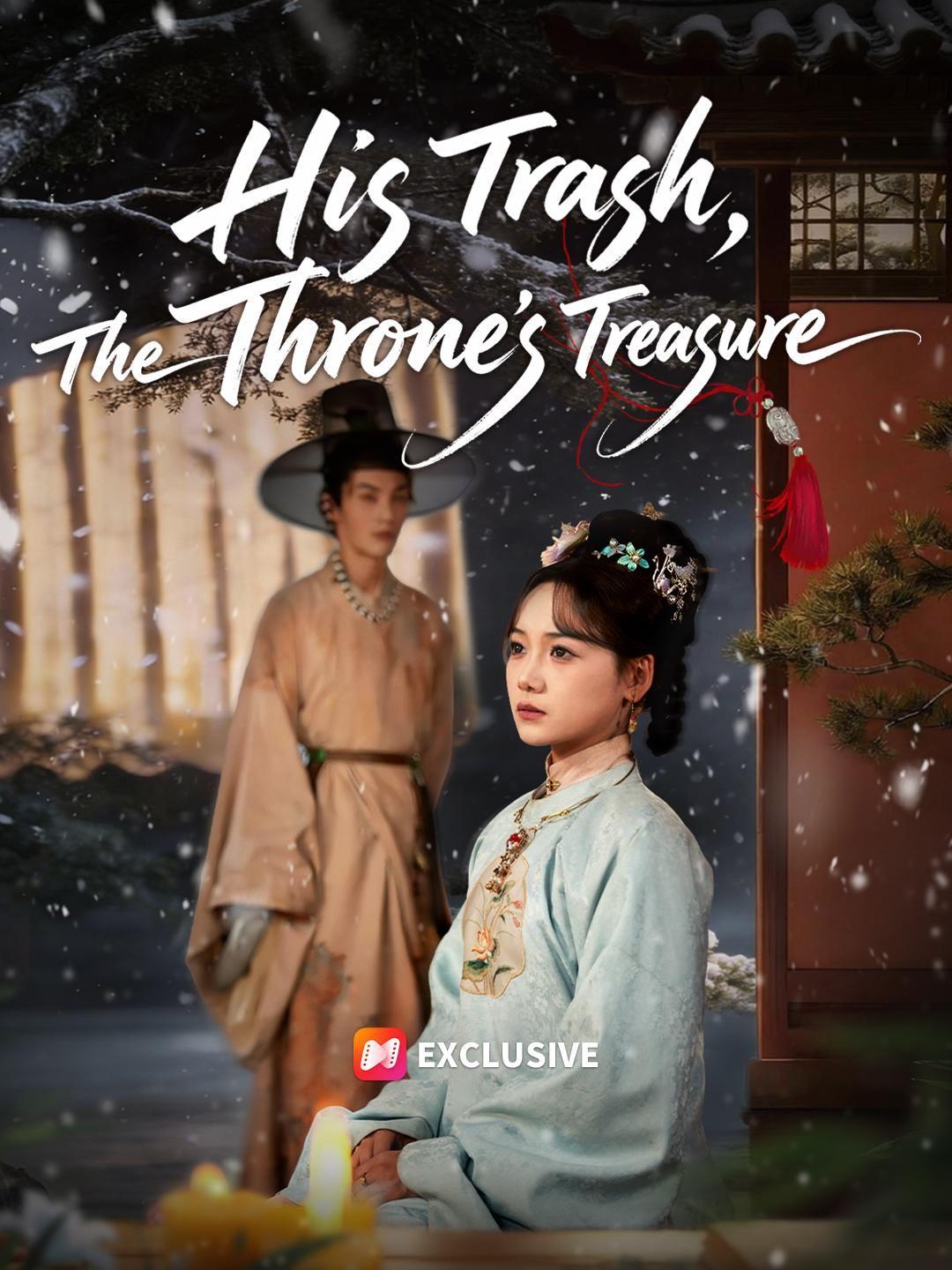
If you think *The Heiress’s Revenge: From Princess to Avenger* is about swords and betrayals, you’ve missed the real weapon: fabric. Yes, Frank Hughes enters with a blade that gleams like liquid gold, and yes, Lian Feng strides through the gate like destiny given legs—but the true climax of this episode isn’t in the courtyard. It’s in the quiet, suffocating stillness of the throne room, where two women kneel on a rug older than their families, and a single folded robe changes everything. Let’s rewind. Jingyi stands, not defiantly, but *deliberately*. Her mint-green dress is layered with meaning: the phoenix brooch at her waist isn’t just decoration—it’s a claim. In ancient court protocol, only imperial consorts wore phoenix motifs. Yet here she is, unescorted, unannounced, wearing it like a challenge. The white fur collar? Not luxury. It’s insulation—against cold, yes, but also against the emotional frost of the men surrounding her. When she clasps her hands before her chest, it’s not submission. It’s containment. She’s holding herself together, stitch by stitch, while the world tries to unravel her. Meanwhile, Minister Lin—whose robes shimmer with threads of silver and gold—doesn’t move. He watches. He *listens*. And what he hears isn’t words. It’s the rustle of silk as Jingyi’s attendant shifts her weight. The creak of wood as a guard adjusts his stance. The distant chime of a wind bell from the garden—too soft to be heard, yet somehow present in every frame. This is where the show’s sound design shines: silence isn’t empty. It’s charged. Like the moment before lightning strikes. Then comes the procession. Lian Feng and Jingyi walk side by side, flanked by guards whose armor bears the insignia of three different provinces. That’s not unity. That’s desperation. The yellow silk on the tray? We see it close-up: embroidered with a coiled dragon, its eyes stitched in black thread, pupils in hematite. Not imperial yellow. *Usurper* yellow. The kind worn by regents who rule in a child-emperor’s name. Jingyi doesn’t look at it. She looks at Lian Feng’s profile. And he catches her gaze. For a heartbeat, his smirk falters. He sees it too—the weight of that cloth. It’s not a gift. It’s a contract. Signed in thread, sealed in silence. Back in the chamber, the tension snaps. Frank Hughes steps forward, not with aggression, but with the precision of a surgeon. His armor is heavier than the others’, layered with plates that click softly as he moves—a sound like bones settling. When he draws his sword, the camera doesn’t focus on the blade. It focuses on Jingyi’s hands. One rests on her lap. The other—hidden behind her back—clutches a scrap of paper. We don’t see what’s written. We don’t need to. Her knuckles are white. Her pulse is visible at her throat. And yet, when the sword tip halts inches from her neck, she doesn’t blink. She *smiles*. Not cruelly. Not triumphantly. Just… knowingly. As if to say: *You think this is the end? This is the prelude.* The real revelation isn’t that Frank Hughes sides with her. It’s that he *already did*. Long before the gates opened. Long before the whip cracked. His loyalty wasn’t bought. It was inherited. There’s a flashback—barely a second—that flickers in the candlelight: a younger Jingyi, maybe twelve, handing a tattered scroll to a soldier in plain clothes. The soldier’s face is obscured, but his posture matches Frank Hughes’ exact stance in the present. The show doesn’t spell it out. It lets you connect the dots. And that’s the brilliance of *The Heiress’s Revenge: From Princess to Avenger*: it trusts its audience to read between the lines, to feel the tremor in a sleeve, the hesitation in a breath. The final image isn’t of violence. It’s of Minister Lin, kneeling—not in surrender, but in shock. His hands are clasped, but his fingers twitch, as if trying to grasp something that’s already slipped away. Behind him, the throne looms, draped in moth-eaten velvet. No emperor sits there. No heir waits in the wings. Just dust, and the echo of a woman’s voice, barely audible: *‘The robe is ready.’* That’s the title’s true meaning. ‘From Princess to Avenger’ isn’t a transformation. It’s an unveiling. She was never powerless. She was just waiting for the right moment to let the world see what she’d been stitching in the dark. And the most terrifying part? She’s not done yet. The yellow silk is still on the tray. And next time, she won’t be carrying it. She’ll be wearing it.
The Heiress’s Revenge: From Princess to Avenger — When the Sword Meets the Silk
Let’s talk about what *The Heiress’s Revenge: From Princess to Avenger* does so brilliantly—not just in costume design or set dressing, but in the quiet, devastating choreography of power. The opening scene is a masterclass in visual storytelling: two women kneel on a crimson rug, backs straight, heads bowed, while two men stand above them like statues carved from authority. One man—let’s call him Minister Lin, though his name isn’t spoken yet—wears a gold-threaded robe that whispers wealth and tradition; the other, in deep burgundy with cloud motifs, holds a jade token like it’s a confession. Their postures are rigid, but their eyes? They’re alive. The camera lingers on Minister Lin’s face—not once, not twice, but three times—and each time, his expression shifts: first suspicion, then irritation, then something colder, sharper. It’s not anger. It’s calculation. He’s not reacting to what’s happening now. He’s replaying what happened *before*. And that’s where the genius lies: this isn’t a courtroom drama. It’s a memory trial. The woman in mint green—her name is Jingyi, we’ll learn later—is the focal point, but she doesn’t speak for nearly thirty seconds. Instead, she *breathes*. Her fingers press into her own sleeves, her shoulders lift slightly as if bracing for impact. Her fur-trimmed outer robe is pristine, but there’s a faint smudge near the hem—blood? Ink? Or just the residue of a long night spent preparing for this moment? The detail matters. When she finally lifts her gaze, it’s not defiance. It’s clarity. She sees the cracks in the system—the way Minister Lin’s left hand trembles when he grips his sleeve, how the eunuch beside him keeps glancing at the door, as if expecting someone else to walk in. That hesitation is the first crack in the facade. And Jingyi? She doesn’t exploit it. She *acknowledges* it. With a slight tilt of her head, a half-smile that’s more sorrow than amusement, she signals: *I know you’re afraid. And I’m not here to punish you. I’m here to replace you.* Cut to the courtyard. The same eunuch—now holding a whip, not a jade token—stands atop the city gate labeled ‘Huai Ding Men’. Sunlight flares behind him, turning his silhouette into a warning. He raises the whip. Not to strike. To *signal*. The banners snap in the wind. Soldiers march in perfect formation, but their armor is mismatched—some lacquered black, others rust-stained bronze. This isn’t a unified army. It’s a coalition held together by fear and a shared enemy. And who leads them? Not Minister Lin. Not the emperor (who remains unseen, implied only by the throne’s empty dais). It’s a younger man—Lian Feng—dressed in obsidian silk embroidered with golden serpents. His crown is small, delicate, almost mocking in its elegance. He walks beside Jingyi, who now carries a wooden tray bearing folded yellow silk. Not a weapon. Not a scroll. A gift. Or a threat. The ambiguity is delicious. When Lian Feng glances at her, his smirk isn’t arrogant—it’s *relieved*. He expected resistance. He got collaboration. And that’s when the real tension begins. Back inside, the kneeling women rise—not because they’re ordered, but because the floor itself seems to shift beneath them. The candles flicker. A guard steps forward, sword drawn. But it’s not aimed at Jingyi. It’s aimed at Minister Lin. And here’s the twist no one saw coming: the commander of the Imperial Guards—Frank Hughes, introduced with on-screen text like a Shakespearean entrance—isn’t there to arrest anyone. He’s there to *witness*. His sword stays sheathed until the very last second, when he draws it not to kill, but to *block*. A blade flashes past Jingyi’s shoulder—aimed at her companion, the pink-robed attendant, whose name we never learn, but whose wide-eyed terror tells us everything. She’s not a pawn. She’s a mirror. Every flinch, every gasp, every trembling hand clutching her skirt—it’s the audience’s reaction, projected onto the screen. What makes *The Heiress’s Revenge: From Princess to Avenger* so gripping is how it subverts the ‘wronged noblewoman’ trope. Jingyi doesn’t scream. She doesn’t beg. She doesn’t even cry—until the very end, when the sword tip rests against her collarbone, and her breath hitches not from fear, but from recognition. She sees the truth in Frank Hughes’ eyes: he’s not loyal to the throne. He’s loyal to *her*. Or to what she represents—a break from the rot. The final shot isn’t of blood or victory. It’s of her hand, still resting on her lap, nails painted pale rose, fingers curled just so—as if she’s holding something invisible. A promise. A secret. A future. This isn’t just revenge. It’s reclamation. And the most chilling line of the entire sequence? Never spoken. It’s in the silence after the sword is drawn, when Minister Lin’s mouth opens—but no sound comes out. Because he finally understands: the game wasn’t about who had the most soldiers. It was about who knew when to stop playing.