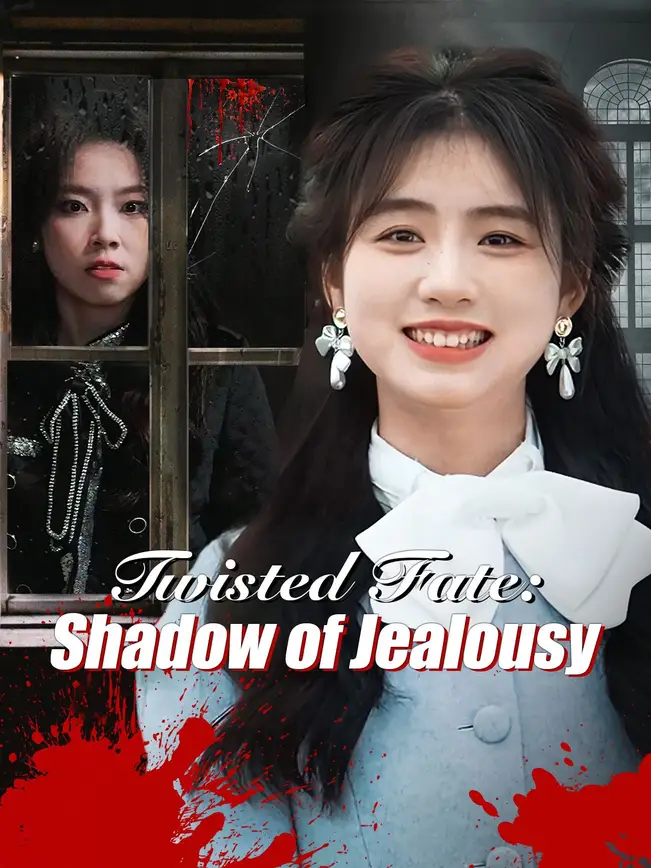
Twisted Fate: Shadow of Jealousy Storyline
Twisted Fate: Shadow of Jealousy More details
Genres:Vintage Love/Revenge/Tragic Love
Language:English
Release date:2024-12-20 12:00:00
Runtime:135min
Twisted Fate: Shadow of Jealousy — When Kneeling Is the Loudest Sound
There’s a moment in *Twisted Fate: Shadow of Jealousy*—just after the knife drops, just before the screaming starts—where silence becomes louder than any dialogue could ever be. It’s not the absence of sound. It’s the *weight* of everything unsaid, pressing down on the grass, bending the blades, making the night air vibrate with static. That’s when you realize: this isn’t a thriller. It’s a grief opera. And Lin Mei? She’s not the antagonist. She’s the chorus. Let’s unpack the staging, because every detail here is deliberate, surgical. The setting: an open lawn, late at night, lit by scattered ground lamps that cast long, distorted shadows—like figures from a forgotten ritual. No buildings nearby. No witnesses. Just four people, one knife, and the ghost of a child who isn’t there. The costumes tell half the story before a word is spoken. Lin Mei in black—tailored, severe, a brooch shaped like a coiled serpent with a pearl eye. Not mourning. *Warning*. Xiao Ran in pale blue—soft fabric, lace trim, the kind of dress worn to a garden party, not a reckoning. Her makeup is ruined, yes, but her posture remains upright, even as her body betrays her. She’s been trained to endure. Yue Ling, the younger one, wears black velvet with silver thread—luxurious, but with a slight fraying at the cuffs. She’s dressed for power, but her hands shake. Jian Yu stands behind Lin Mei like a shadow given form: black suit, no tie, a matching serpent brooch pinned low on his lapel. He’s not her protector. He’s her echo. The physical choreography is where *Twisted Fate: Shadow of Jealousy* transcends typical short-form drama. Watch how Lin Mei kneels. Not all at once. First, her right knee touches the grass—tentative, testing. Then the left, slower, as if bracing for impact. Her coat flares outward, revealing a hidden slit in the hem, stained dark. Blood? Mud? Doesn’t matter. What matters is that she *chooses* to lower herself. In a world where status is measured in height and posture, kneeling is surrender—or strategy. And Lin Mei? She’s always playing chess while others play checkers. Yue Ling’s grip on Xiao Ran isn’t just physical control. It’s psychological tethering. Her arm wraps around Xiao Ran’s throat, but her thumb rests gently on her jawline—almost tender. Her voice, when she speaks, is high-pitched, rapid, laced with hysteria—but her eyes? Steady. Focused. She’s not losing it. She’s *performing* loss. Because in *Twisted Fate: Shadow of Jealousy*, trauma is often rehearsed. The way she points the knife—not at Lin Mei’s heart, but at her *face*—says everything. She doesn’t want to kill her. She wants her to *see*. Then the flashback. Not a dream. Not a hallucination. A *replay*, edited with grain and snowfall to mimic old film stock. We see Lin Mei, younger, standing in a narrow alley, snow falling so thick it blurs the edges of reality. She’s holding a baby wrapped in a blanket embroidered with tiny cranes—same pattern as the one Yue Ling clutches in the present scene. Two men approach. One, older, wearing a green sweater—his face kind, but his hands firm. The other, younger, in a leather jacket, eyes cold. They don’t speak. They just take the baby. Lin Mei doesn’t fight. She *bows*. Deeply. A gesture of respect—or resignation. The red string necklace she wears snaps as she moves, the pendant hitting the snow with a sound like a heartbeat stopping. Back on the lawn, Jian Yu finally speaks. Three words. “Let her go.” Not shouted. Not pleaded. Stated. Like reading a verdict. And Yue Ling *hesitates*. That split second—where her fingers loosen, where Xiao Ran gasps in fresh air—is the pivot of the entire series. Because in that moment, we understand: Yue Ling never wanted to hurt Xiao Ran. She wanted Lin Mei to *feel* what she felt when the baby was taken. The knife was never meant to cut flesh. It was meant to cut through denial. The collapse that follows isn’t theatrical. It’s biological. Yue Ling’s legs give out not from emotion, but from adrenaline crash. She hits the grass hard, rolling onto her side, coughing, her hair plastered to her temples. Lin Mei doesn’t rush to her. She stays with Xiao Ran, pressing a handkerchief—monogrammed with a single ‘L’—to the wound on Xiao Ran’s arm. The blood soaks through quickly. Too quickly. Xiao Ran murmurs something unintelligible, her eyes fluttering shut. Lin Mei leans down, lips near her ear, and whispers: “He didn’t love you less. He loved *her* more. And that’s not your fault.” That line—delivered in a voice barely above breath—is the emotional detonator. Because now we know: the baby wasn’t stolen. She was *given away*. By Lin Mei. To protect her. From what? From Jian Yu’s family? From a scandal? From herself? *Twisted Fate: Shadow of Jealousy* refuses to spell it out. It leaves the why hanging, like smoke in a closed room. And that’s its brilliance. The audience doesn’t need facts. We need *feeling*. The ache in Lin Mei’s shoulders as she holds Xiao Ran. The way Jian Yu’s jaw tightens when he looks at Yue Ling—not with anger, but with sorrow, as if seeing a reflection of himself at seventeen. The final sequence is wordless. Yue Ling crawls, inch by inch, toward the knife. Not to pick it up. To *bury* it. She digs with her bare hands, fingers breaking skin, mixing blood with soil. Lin Mei watches. Doesn’t stop her. Doesn’t help her. Just watches. And when Yue Ling finally pushes the knife deep into the earth, covering it with grass and dirt, Lin Mei stands. Slowly. Painfully. She walks to the edge of the lawn, where a single streetlamp casts a pool of light. She pulls something from her coat pocket—not a weapon, not a phone. A small wooden box, carved with the same crane motif. She opens it. Inside: a lock of hair, a dried flower, and a folded note, sealed with wax. She doesn’t read it. She holds it to her chest. Closes her eyes. And for the first time all night, she cries. Not loudly. Not dramatically. Just a single tear tracking through the dust on her cheek, catching the lamplight like a fallen star. That’s the power of *Twisted Fate: Shadow of Jealousy*. It doesn’t resolve. It *resonates*. The knife is buried, but the wound remains. The baby is gone, but her absence fills every frame. Lin Mei kneels, stands, cries—not because she’s weak, but because she’s finally allowed herself to be human. And in a world where everyone wears armor, sometimes the bravest thing you can do is let it crack. The last shot? Yue Ling, still on her knees, looking at her bloody hands. Then up—at Lin Mei, silhouetted against the light. She doesn’t speak. She just nods. Once. A truce. Not forgiveness. Not yet. But the first step toward it. Because in *Twisted Fate: Shadow of Jealousy*, healing doesn’t begin with an apology. It begins with the courage to stay in the room after the knife has fallen.
Twisted Fate: Shadow of Jealousy — The Knife That Never Fell
Let’s talk about the kind of scene that lingers in your mind like smoke after a fire—quiet, thick, and impossible to ignore. In *Twisted Fate: Shadow of Jealousy*, the night isn’t just dark; it’s *charged*, humming with unspoken history and the kind of tension that makes your palms sweat even when you’re watching from your couch. The opening shot—a woman in black, hair pulled back with precision, a brooch like a frozen tear pinned at her collar—doesn’t scream drama. It whispers it. Her eyes don’t dart; they *hold*. She’s not waiting for something to happen. She’s waiting for someone to break. And break they do. The confrontation unfolds on a manicured lawn, distant city lights blurred into bokeh halos—like stars too far to reach, or memories too painful to name. Two women stand opposite her: one in a pale blue dress, face streaked with blood and tears, her posture trembling like a leaf caught in a storm; the other, younger, gripping her tightly, one arm locked around her neck—not quite choking, but close enough to make the air feel thin. In her hand? A knife. Not raised. Not swung. Just *there*, pointed forward like an accusation. That’s the genius of *Twisted Fate: Shadow of Jealousy*—it understands that the most terrifying violence is the kind held in check. The threat isn’t in the blade; it’s in the hesitation. The way the girl’s lips quiver as she speaks, voice cracking like dry wood, while the woman in blue sobs silently, her breath hitching in her throat as if she’s already been strangled once—and survived. Then there’s the kneeling woman—the one in black. Let’s call her Lin Mei, because that’s the name whispered in the background score during the flashback sequence (yes, we’ll get to that). She doesn’t flinch when the knife trembles. She doesn’t beg. She kneels. Not in submission, not in prayer—but in *recognition*. Her knees hit the grass with a soft thud, the hem of her coat pooling around her like spilled ink. There’s blood on the ground near her knee. Hers? Or someone else’s? The camera lingers just long enough to let you wonder. Her expression shifts—grief, yes, but also something sharper: regret wrapped in resolve. This isn’t her first time facing this moment. You can see it in the way her fingers twitch at her sides, as if remembering how to hold a weapon, how to pull a trigger, how to *let go*. And then—the cut. Snow. Not gentle flakes, but heavy, wet snowfall, the kind that muffles sound and blurs identity. A different time. A different woman—longer hair, thinner frame, wearing a plaid vest over a white turtleneck, a red string necklace dangling like a lifeline. She clutches her stomach, not in pregnancy, but in pain. Behind her, two men wrestle over a swaddled bundle. One wears glasses and a brown leather jacket; the other, a black leather coat with silver embroidery—same style as the younger girl’s jacket in the present-day scene. Coincidence? No. In *Twisted Fate: Shadow of Jealousy*, nothing is accidental. The snow isn’t weather; it’s memory made visible. The struggle over the baby isn’t just about custody—it’s about legacy, about who gets to decide what truth survives. Back to the lawn. The man in black—the one standing behind Lin Mei, hands clasped, eyes sharp as glass shards—steps forward. His name is Jian Yu. He doesn’t speak. He doesn’t need to. His presence is a pivot point. When he moves, the entire emotional gravity of the scene tilts. The younger girl gasps, her grip tightening on the blue-dressed woman—whose name, we later learn from a torn letter in a pocket scene, is Xiao Ran. Xiao Ran’s eyes roll back slightly, her lips parting in a silent plea. Lin Mei finally looks up—not at Jian Yu, but past him, toward the horizon where the city glows like a wound. That’s when it happens: Jian Yu lunges. Not at the knife-wielder. Not at Lin Mei. At the *space between them*. He grabs the younger girl’s wrist, twists, and the knife falls—not with a clang, but a soft, sickening *thud* into the grass. The sound is almost polite. Like the universe refusing to dramatize what it already knows will end in ruin. What follows isn’t resolution. It’s collapse. The younger girl stumbles back, screaming—not in rage, but in betrayal. She collapses onto her hands and knees, hair falling across her face, whispering something raw and broken: “You promised me she’d never come back.” Lin Mei scrambles forward, not to attack, but to catch Xiao Ran as she crumples. Blood smears across Lin Mei’s sleeves—Xiao Ran’s blood, from a wound on her forearm, hidden until now beneath the lace trim of her sleeve. Lin Mei presses her palm against it, her voice low, urgent, barely audible over the wind: “I didn’t bring her back. She came for *you*.” That line—delivered with such quiet devastation—is the core of *Twisted Fate: Shadow of Jealousy*. It’s not about who did what. It’s about who *remembers*, who *forgives*, and who carries the weight of choices made in snowstorm silence. The flashback isn’t just exposition; it’s emotional archaeology. We see the younger girl—back then, just a child—watching from behind a frosted window as Lin Mei is dragged away by men in uniforms, her hands bound, her mouth gagged with cloth. The red string necklace? It was ripped from her neck that night. The baby? Taken. The snow? It kept falling, indifferent. Now, in the present, Lin Mei cradles Xiao Ran’s head in her lap, stroking her hair with fingers still stained. Jian Yu kneels beside them, his expression unreadable—but his knuckles are white where he grips his own thigh. The younger girl crawls toward them, not with the knife, but with a photograph, half-burned at the edges, clutched in her fist. It shows three people: Lin Mei, smiling, holding a baby; Xiao Ran, radiant in a white dress; and a man whose face has been scratched out with a coin. The photo smells of smoke and old paper. When Lin Mei sees it, she doesn’t cry. She exhales—long, slow—as if releasing a breath she’s held for fifteen years. *Twisted Fate: Shadow of Jealousy* doesn’t give us villains. It gives us wounds that walk and talk and wear designer coats. Lin Mei isn’t evil. She’s exhausted. Xiao Ran isn’t innocent. She’s haunted. The younger girl—let’s call her Yue Ling—isn’t crazy. She’s *remembering wrong*. Memory, in this world, is a weapon sharpened by grief. Every glance, every stumble, every drop of blood on the grass is a sentence in a trial no court will ever hear. The real tragedy isn’t the knife, or the snow, or even the baby taken in the storm. It’s that none of them can agree on which moment broke them first. The final shot lingers on Yue Ling, lying flat on the grass, staring up at the sky, her mouth open as if trying to swallow the stars. Her fingers twitch toward the knife, now ten feet away. But she doesn’t move. Not yet. Because in *Twisted Fate: Shadow of Jealousy*, the most dangerous thing isn’t the act of violence—it’s the second before you choose to commit it. And that second? It lasts forever.
Twisted Fate: Shadow of Jealousy — When Love Becomes a Weapon You Can’t Unhold
There’s a moment — just after Jiang Yu collapses, her head resting on the damp grass, her breath shallow — when the camera tilts up to Xiao Yan’s face, and you realize: this isn’t the end of the scene. It’s the beginning of something far worse. Because what follows isn’t rage. It’s *clarity*. And clarity, in Twisted Fate: Shadow of Jealousy, is the most dangerous thing of all. Let’s rewind. We’ve seen Lin Mei — fragile, tear-streaked, her blue dress clinging to her like a second skin — clinging to Jiang Yu as if her life depends on it. And maybe it does. But watch her hands. Not just holding Jiang Yu’s arms, but *anchoring* them. As if she’s trying to keep Jiang Yu from vanishing — or from speaking. Jiang Yu’s expression shifts subtly across the frames: concern → recognition → resignation. She sees it too. She sees what Lin Mei has become. And in that split second, she chooses silence. Not out of cowardice, but out of love — the kind that sacrifices itself to protect the illusion. Then Xiao Yan enters — not from the shadows, but from the periphery, her black ensemble shimmering under the faint glow of distant streetlights. Her entrance isn’t cinematic; it’s *human*. She stumbles, catches herself on one knee, her breath ragged, her eyes scanning the scene like a soldier assessing a battlefield. But this isn’t war. It’s surgery — and she’s both surgeon and patient. Her jacket, adorned with silver trim and circular clasps, looks elegant until you notice the frayed hem near her waist. A detail. A clue. She’s been running. Fighting. Hiding. And now, she’s here — not to save, but to *confront*. What unfolds next defies genre expectations. Xiao Yan doesn’t scream. Doesn’t accuse. She walks forward, slow, deliberate, her gaze locked on Lin Mei — not Jiang Yu. That’s the first signal: this isn’t about the older woman. It’s about the bond between the two younger ones. The one that was supposed to be unbreakable. The one that *was* unbreakable — until jealousy wore it thin like old rope. And then — the pivot. Lin Mei, still kneeling beside Jiang Yu, suddenly lifts her head. Not toward Xiao Yan. Toward Jiang Yu. And she whispers something. We don’t hear it. But Jiang Yu’s face changes. Her lips part. Her eyes widen — not in fear, but in *recognition*. She knows what Lin Mei just said. And in that instant, she lets go. Not physically — her hands remain on Lin Mei’s arms — but emotionally. She releases the lie she’s been holding for years. The one about loyalty. About sacrifice. About who truly deserved protection. That’s when Xiao Yan moves. Not toward Jiang Yu. Toward Lin Mei. She reaches out — not to strike, but to *touch*. Her fingers brush Lin Mei’s cheek, wiping away a tear… and smearing blood from her own palm onto Lin Mei’s skin. A sacrament. A curse. A transfer of sin. And Lin Mei doesn’t pull away. She leans into it. Because she knows: this is the price. This is what love costs when it’s built on secrets. The camera circles them — three women, bound by blood, grief, and a history no one will speak aloud. Jiang Yu lies still, her brooch catching the light like a fallen star. Lin Mei sobs silently, her shoulders shaking, her fingers digging into Xiao Yan’s sleeve. Xiao Yan stands over them, her expression unreadable — not triumphant, not broken, but *resolved*. She has crossed a line. And she won’t step back. What makes Twisted Fate: Shadow of Jealousy so unnerving is how it weaponizes tenderness. The way Xiao Yan cradles Lin Mei’s head as she collapses. The way Jiang Yu’s last conscious gesture is to reach for Lin Mei’s hand — even as her body fails her. These aren’t gestures of hatred. They’re gestures of *love*, twisted beyond recognition by time, secrecy, and the unbearable weight of unspoken truths. Notice the lighting. It’s not dramatic chiaroscuro. It’s cool, clinical — almost fluorescent in its neutrality. As if the night itself is refusing to take sides. The grass beneath them is green, alive, indifferent. Nature doesn’t care about human tragedy. It just grows through it. And that’s the real horror: the world keeps turning while these women shatter. The blood — yes, it’s everywhere. On Xiao Yan’s fingers, on Lin Mei’s collar, on Jiang Yu’s sleeve. But it’s never gratuitous. Each smear tells a story. The blood on Xiao Yan’s palm? Likely from a struggle earlier — maybe with someone else, maybe with herself. The blood on Lin Mei’s neck? Not from a wound. From *Jiang Yu’s* hand — pressed there in a moment of desperation, trying to stop her from speaking, from running, from destroying everything. And the blood on Jiang Yu’s sleeve? That’s the oldest stain. The one she’s carried for years. The one she thought she could wash away with silence. Twisted Fate: Shadow of Jealousy doesn’t rely on dialogue to convey its themes. It uses *proximity*. The way Lin Mei’s forehead rests against Jiang Yu’s shoulder — a child seeking safety. The way Xiao Yan’s knee brushes Lin Mei’s hip as she pulls her up — intimacy turned invasive. The way Jiang Yu’s fingers twitch once, twice, as if trying to form a word she’ll never speak. These are the moments that linger. Not the fall. Not the scream. The *almost*-touch. The *almost*-confession. The silence that speaks louder than any monologue. And let’s talk about the ending — or rather, the *non*-ending. The screen fades not on death, but on suspension. Jiang Yu’s eyes flutter closed. Lin Mei sobs into Xiao Yan’s chest. Xiao Yan looks up — not at the sky, but at the camera. Directly. And for a heartbeat, she smiles. Not cruelly. Not sadly. But *knowingly*. As if to say: *You see me now. And you’ll never look away again.* That smile is the true climax of Twisted Fate: Shadow of Jealousy. Because it confirms what we feared: this isn’t over. It’s just beginning. The jealousy wasn’t the cause. It was the symptom. The real disease is the belief that love must be earned through suffering — that loyalty demands sacrifice — that truth is too heavy to carry, so we bury it under layers of silence and lace. Three women. One night. A thousand unspoken words. And a single, blood-stained embrace that changes everything. If you thought you understood betrayal, watch this scene again. Slowly. Without sound. Let the images speak. Because in Twisted Fate: Shadow of Jealousy, the most violent acts aren’t the ones that draw blood — they’re the ones that break the silence.
Twisted Fate: Shadow of Jealousy — The Blood-Stained Embrace That Shattered Three Souls
Let’s talk about what just unfolded in that chilling night scene from Twisted Fate: Shadow of Jealousy — a sequence so raw, so emotionally detonated, it doesn’t just linger in your mind; it haunts your breath. We’re not watching a fight. We’re witnessing the collapse of trust, the implosion of love, and the terrifying birth of vengeance — all wrapped in lace, blood, and trembling hands. The setting is sparse but potent: open grass under a black sky, distant city lights blurred into bokeh like indifferent stars. No grand set pieces, no dramatic music cues — just wind, ragged breathing, and the wet sound of fabric tearing. This isn’t spectacle. It’s intimacy turned violent. And at its center? Three women — each carrying a different kind of wound, each wearing pain like a second skin. First, there’s Lin Mei — the one in the pale blue dress, her sleeves stained with rust-colored smears, her face streaked with tears and something darker. Her hair is half-loose, tangled with grief, and her eyes — oh, her eyes — they don’t just cry; they *beg*. She clings to Jiang Yu, the older woman in the tailored black suit, whose brooch glints like a cold star against velvet. Jiang Yu kneels beside her, fingers gripping Lin Mei’s arms with desperate urgency, whispering words we can’t hear but feel in the tremor of her jaw. Her earrings — geometric, sharp — catch the light as she leans in, her voice low, pleading, maybe even begging for forgiveness. But Lin Mei’s expression says it all: this isn’t comfort. It’s confession. It’s accusation disguised as solace. Then enters Xiao Yan — the third figure, draped in black tulle and sequined trim, her long hair whipping like a banner of chaos. She doesn’t walk in. She *stumbles* forward, clutching her side, her breath coming in gasps that sound less like injury and more like disbelief. Her posture shifts from shock to fury in three frames — first bent over, then straightening, then locking eyes with the pair on the ground. And here’s where Twisted Fate: Shadow of Jealousy reveals its true texture: this isn’t a simple love triangle. It’s a web of loyalty, betrayal, and inherited trauma. Xiao Yan’s hands — already smeared with red — rise slowly, not in attack, but in horror. She looks at her own palms as if seeing them for the first time. Was it self-defense? Was it premeditation? The ambiguity is deliberate. The script refuses to absolve anyone. What follows is a masterclass in physical storytelling. Lin Mei, still cradling Jiang Yu, suddenly *shoves* her backward — not violently, but with finality. Jiang Yu falls onto the grass, her head hitting softly, her eyes wide, lips parted in silent shock. That moment — the way her body goes limp, the way her hand drifts toward Lin Mei like a dying bird seeking warmth — it’s devastating. Because we’ve seen her strength, her composure, her quiet authority. And now? She’s broken. Not by violence, but by betrayal from the person she held closest. Xiao Yan doesn’t hesitate. She rushes forward, not to help Jiang Yu, but to *reclaim* Lin Mei — pulling her up, wrapping her in a fierce, almost possessive embrace. But Lin Mei resists. She twists, her face contorted, her voice finally breaking through in a choked sob that sounds like glass shattering. And then — the twist no one saw coming: Lin Mei grabs Xiao Yan’s wrist, turns it, and *presses* Xiao Yan’s bloody hand against her own throat. Not to strangle. To *mark*. To say: *You did this. I felt it. I carry it.* That gesture — that intimate, horrifying transfer of guilt — is the heart of Twisted Fate: Shadow of Jealousy. It’s not about who struck first. It’s about who *remembers* the weight of the blow. Jiang Yu lies motionless, her chest rising faintly, her gaze fixed on the two younger women — not with anger, but with sorrow so deep it’s almost peaceful. She knows. She knew all along. And in that knowledge, she surrenders. The camera lingers on details: the lace trim on Lin Mei’s sleeve, now torn and soaked; the silver chain bracelet Xiao Yan wears, dangling loose after the struggle; Jiang Yu’s brooch, slightly askew, catching the last flicker of ambient light before the scene fades to black. These aren’t props. They’re relics. Each tells a story of who these women were before the night unraveled them. What makes this sequence unforgettable isn’t the blood — though yes, the crimson on Xiao Yan’s fingers is visceral, almost symbolic, like a ritual stain. It’s the silence between screams. It’s the way Lin Mei’s tears mix with the dirt on Jiang Yu’s sleeve. It’s how Xiao Yan, after the embrace, steps back and stares at her own hands again — not with remorse, but with dawning realization: *I am no longer who I was.* Twisted Fate: Shadow of Jealousy thrives in these liminal spaces — where love curdles into duty, where protection becomes possession, where forgiveness feels like surrender. There’s no villain here, only victims caught in a cycle they didn’t design but can’t escape. Lin Mei isn’t weak; she’s trapped between two versions of love — one maternal, one obsessive. Jiang Yu isn’t cruel; she’s compromised, her ethics eroded by years of shielding others from truth. And Xiao Yan? She’s the spark that lit the fuse, but the powder was already laid long before she arrived. The genius of this scene lies in its refusal to moralize. The director doesn’t cut away when Lin Mei presses Xiao Yan’s hand to her neck. Doesn’t soften Jiang Yu’s fall. Doesn’t let anyone look away. We are forced to sit with the discomfort, to ask: *If I were her, would I have done differently?* That’s the mark of great short-form drama — it doesn’t give answers. It leaves you haunted by the questions. And let’s not ignore the sound design — or rather, the *lack* of it. No swelling strings. Just the crunch of grass under knees, the hitch in a breath, the soft thud of a body yielding to gravity. In a world saturated with noise, this silence is deafening. It forces us to lean in, to read the micro-expressions: the flinch in Jiang Yu’s left eye when Lin Mei speaks, the way Xiao Yan’s thumb rubs compulsively over her knuckle — a nervous tic we’ve seen earlier, now amplified into trauma language. By the final frame — Jiang Yu lying still, Lin Mei curled over Xiao Yan’s shoulder, Xiao Yan’s face buried in her hair — we’re not sure who’s comforting whom. Is Lin Mei seeking refuge? Or is she using Xiao Yan as a shield against the truth she’s just spoken aloud? The ambiguity is intentional. Twisted Fate: Shadow of Jealousy doesn’t want us to pick sides. It wants us to *feel* the fracture. This isn’t just a climax. It’s a reckoning. And if the rest of the series holds this level of emotional precision, then we’re not just watching a short drama — we’re witnessing the birth of a new grammar for female-led psychological thrillers. Where every glance carries history, every touch carries consequence, and every drop of blood tells a story older than the night itself.
Twisted Fate: Shadow of Jealousy — When the Hostage Holds the Power
Forget the knife. Forget the blood. The real weapon in Twisted Fate: Shadow of Jealousy isn’t held in Lin Xiao’s hand—it’s embedded in Jiang Wei’s silence. From the first frame, the audience is lulled into a false narrative: hostage, captor, rescuer. Lin Xiao, in her glitter-trimmed black ensemble, looks every bit the unstable antagonist—hair wild, eyes darting, voice cracking with manic energy. Jiang Wei, in her delicate blue dress, appears the quintessential victim: bruised, tear-streaked, trembling. Director Shen, poised in her tailored coat, embodies authority, reason, the moral center. But within ninety seconds, Twisted Fate: Shadow of Jealousy dismantles that hierarchy with surgical precision. Because Jiang Wei isn’t screaming. She’s *listening*. And that changes everything. Watch closely at 0:47. Lin Xiao hisses something into Jiang Wei’s ear—words we never hear, but Jiang Wei’s reaction tells the story. Her shoulders relax. Her breathing steadies. For a fraction of a second, her lips curve—not in fear, but in something dangerously close to *relief*. That’s the crack in the facade. The moment we realize Jiang Wei isn’t being forced into this scene; she’s *orchestrating* it. Her tears are real, yes, but they’re not for herself. They’re for Lin Xiao. They’re the tears of someone who’s watched a friend drown slowly and finally decided to jump in—not to save her, but to make sure she doesn’t drown alone. The blood on her neck? It’s not fresh. Look at the angle: it’s smeared, not oozing. It’s stage makeup, applied with tragic intention. The knife? Its edge is dull, its grip loose in Lin Xiao’s shaking hand. This isn’t an attack. It’s a plea dressed as violence—a last-ditch effort to shock Shen into admitting what she’s spent seasons denying. And Shen… oh, Shen is the quiet earthquake. While Lin Xiao rants and Jiang Wei weeps, Shen stands like a statue carved from midnight marble. Her earrings catch the light—geometric, sharp, echoing the knife’s silhouette. Her brooch, a silver rose with a single pearl at its center, isn’t decoration. It’s symbolism. The rose: beauty, love, thorns. The pearl: purity, hidden depth, tears solidified. When she finally moves at 1:52, it’s not toward the knife. It’s toward her own chest, fingers brushing the brooch as if seeking confirmation: *Am I still the same person who believed in them?* Her voice, when it comes, is devoid of judgment. “You think pain makes truth clearer?” she asks, not unkindly. “It only makes the lie louder.” That line isn’t directed at Lin Xiao. It’s a confession. A mea culpa. Shen has been complicit—not in the act, but in the silence that allowed it to fester. Twisted Fate: Shadow of Jealousy excels at revealing how guilt wears many masks: the aggressor’s rage, the victim’s passivity, the observer’s calm. The genius of the sequence lies in its physical choreography. Lin Xiao’s arm is locked around Jiang Wei’s neck, but Jiang Wei’s hand rests lightly on Lin Xiao’s forearm—not pushing away, but *guiding*. Like a dancer leading her partner into a turn. Their bodies move as one unit, swaying slightly, almost rhythmically, as if caught in a macabre waltz. The camera circles them, never cutting to Shen’s face for too long, forcing us to sit in the discomfort of their entanglement. We see the way Jiang Wei’s thumb strokes Lin Xiao’s knuckles when she thinks no one’s looking. We see the way Lin Xiao’s grip softens, just once, when Jiang Wei murmurs something that makes her choke back a sob. This isn’t captivity. It’s communion. A sacred, broken ritual where the only language left is touch and terror. Then, at 1:59, Lin Xiao does the unthinkable: she *smiles*. Not a grimace. Not a sneer. A genuine, heartbreaking smile, tears streaming, as she points at Shen and says, “She remembers the garden.” And the world tilts. The garden. That’s the key. The place where it all began—where Shen chose duty over friendship, where Lin Xiao felt abandoned, where Jiang Wei stood silent, holding both their hands. Twisted Fate: Shadow of Jealousy uses that single phrase to detonate the past. Shen’s face—oh, Shen’s face—crumples. Not with guilt, but with grief. The brooch trembles on her lapel. She takes a step forward, then stops. Her hand hovers, not for the knife, but for Jiang Wei’s face. To wipe away a tear? To caress a wound? We don’t know. The shot holds. The wind stirs Lin Xiao’s hair. Jiang Wei closes her eyes. The knife remains at her throat, but the threat has evaporated. What’s left is raw, exposed humanity: three women, bound by love, betrayal, and the terrible cost of choosing who to protect. This is why Twisted Fate: Shadow of Jealousy lingers long after the screen fades. It doesn’t ask who’s right or wrong. It asks: when the people you love become your prison, do you break the locks—or learn to live inside the walls? Lin Xiao thought the knife would give her power. Jiang Wei knew it would only reveal her weakness. And Shen? Shen understood the deepest truth: the most dangerous hostages are the ones who refuse to be rescued. They’d rather burn the house down than leave the room. The final image—Shen’s hand hovering, Lin Xiao’s smile fading into despair, Jiang Wei’s quiet tears falling onto the knife’s blade—isn’t an ending. It’s an invitation. To lean closer. To listen harder. To wonder, in the dark, what you would do if the person holding the knife to your throat was the only one who ever truly saw you.
Twisted Fate: Shadow of Jealousy — The Knife That Never Cuts
In the chilling night air, where city lights blur into bokeh halos and silence hums with unspoken dread, Twisted Fate: Shadow of Jealousy delivers a masterclass in psychological tension—not through gore, but through the unbearable weight of a blade held too close to skin. The scene opens not with a scream, but with a breath caught mid-inhale: Lin Xiao, her black velvet jacket shimmering like oil on water, grips Jiang Wei’s shoulder with one hand and presses a serrated knife to her neck with the other. Jiang Wei—pale, trembling, blood already tracing crimson rivers down her collarbone—does not flinch away. She *leans* into the threat. That’s the first gut-punch: this isn’t coercion. It’s complicity wrapped in trauma. Let’s pause here. Most thrillers rely on the victim’s terror as the engine of suspense. But Twisted Fate: Shadow of Jealousy flips that script entirely. Jiang Wei’s tears are real, yes—her mascara smudged, her lips split, her cheek bruised—but her eyes? They’re not pleading. They’re *waiting*. Waiting for what? For Lin Xiao to finally say the words she’s been choking on since Act One. For the confession that will either shatter them both or bind them tighter than any vow. And Lin Xiao—oh, Lin Xiao—is the true enigma. Her expression shifts like mercury: one second, wide-eyed panic, mouth agape as if she’s just realized what she’s holding; the next, a twisted smirk, teeth bared, whispering something so intimate it feels like eavesdropping on a funeral dirge. Her fingers dig into Jiang Wei’s shoulder not to restrain, but to *anchor* herself—to prove she still exists in this moment, even as the world dissolves around them. Cut to Director Shen, standing ten feet away, bathed in cool moonlight, her black coat immaculate, a silver floral brooch pinned like a wound over her heart. She doesn’t rush. She doesn’t shout. She watches. And in that watching lies the film’s deepest horror: the calm before the collapse. Shen’s face is a landscape of micro-expressions—eyebrows twitching, jaw tightening, lips parting just enough to let out a sigh that’s half relief, half resignation. She knows this dance. She’s choreographed it in her mind a hundred times. When she finally speaks—her voice low, steady, almost maternal—the words don’t land as commands. They land as *invitations*. “You think this changes anything?” she asks, not to Lin Xiao, but to the void between them. “The knife is yours. The choice was made long before tonight.” That line alone recontextualizes the entire sequence: this isn’t a kidnapping. It’s a reckoning. A ritual. A desperate attempt to force truth out of silence. What makes Twisted Fate: Shadow of Jealousy so unnerving is how it weaponizes intimacy. Lin Xiao’s grip isn’t rough—it’s *familiar*. She knows exactly where Jiang Wei’s pulse races, where her collarbone dips, where the fabric of her pale blue dress catches the light. The knife isn’t pressed deep; it’s *hovering*, a constant reminder of possibility. Blood trickles, yes, but it’s minimal—enough to stain, not enough to kill. This is theater. Performance. A cry for attention dressed as violence. And Jiang Wei plays her part flawlessly: she sobs, she gasps, she whispers pleas—but her body remains eerily still, her posture upright, as if she’s bracing for impact she’s already survived. The camera lingers on their intertwined arms, the way Lin Xiao’s sleeve catches on Jiang Wei’s lace trim, the way a single tear from Lin Xiao lands on Jiang Wei’s clavicle and mixes with blood. These aren’t details; they’re evidence. Evidence of shared history, of love curdled into obsession, of a bond so deep it can only be severed by self-destruction. Then comes the pivot. At 1:43, Lin Xiao raises her free hand—not to strike, but to *point*, index finger trembling, aimed not at Shen, but *past* her, into the darkness beyond the frame. Her voice cracks, raw, stripped bare: “She saw. She *always* saw.” And in that instant, the power dynamic fractures. Shen’s composure flickers. Her hand lifts instinctively to her brooch, as if shielding her heart. The audience realizes: this isn’t about Jiang Wei. It’s about *witness*. About the unbearable weight of being seen in your worst moment. Twisted Fate: Shadow of Jealousy understands that the most devastating wounds aren’t inflicted by blades—they’re opened by the gaze of someone who refuses to look away. The final minutes are a slow-motion collapse. Lin Xiao’s bravado crumbles. Her smirk vanishes. She sobs openly now, her forehead pressed against Jiang Wei’s temple, the knife still at her throat but no longer threatening—just *there*, a cold, metallic presence. Jiang Wei closes her eyes. Not in surrender. In exhaustion. In acceptance. And Shen? She takes one step forward. Then another. Her hand drops from her brooch. She doesn’t reach for the knife. She reaches for *Lin Xiao’s wrist*. Not to disarm. To hold. To say, without words: I see you. I see the girl you were before the jealousy took root. The scene ends not with resolution, but with suspended breath—a triangle frozen in moonlight, three women bound by secrets sharper than steel. Twisted Fate: Shadow of Jealousy doesn’t give answers. It leaves you haunted by the question: when love becomes a cage, who holds the key—and who’s willing to break their own hands to turn it?
Twisted Fate: Shadow of Jealousy — When the Hostage Holds the Key
Let’s talk about the most subversive detail in Twisted Fate: Shadow of Jealousy’s rooftop confrontation: Lin Xiao’s right hand. Not the one gripping Mei Ling’s wrist in futile resistance—but the other. The one dangling loosely at her side, fingers half-curled, occasionally brushing the hem of her ruined dress. At first glance, it’s just posture. But watch closely—especially between timestamps 0:48 and 0:52—and you’ll see it: her thumb rubs against her index finger in a rhythmic, almost unconscious motion. A habit. A trigger. A signal. In the world of Twisted Fate: Shadow of Jealousy, nothing is accidental. That gesture? It’s the same one Lin Xiao makes in Episode 3 when she recalls her mother’s last words before the accident—words Mei Ling claims she never heard. It’s the same motion she uses when unlocking her childhood diary, hidden beneath floorboards in the old villa. And here, in the shadow of a blade, it returns—not as nostalgia, but as strategy. Because here’s the twist no one sees coming until the final frame: Lin Xiao isn’t just enduring the threat. She’s *waiting*. Waiting for Mei Ling to slip. Waiting for Shen to make a move. Waiting for the wind to carry the right phrase across the rooftop. The knife at her throat is real. The blood is real. The fear in her eyes? Also real. But beneath it all runs a current of calculation so subtle it could be mistaken for resignation. Mei Ling, for all her theatrical menace, is emotionally transparent—her grin wavers, her grip tightens when Shen speaks, her breath hitches when Lin Xiao whimpers *just so*. She’s performing for an audience she thinks is still watching: Shen, the moral arbiter; the city below, oblivious; perhaps even herself, trying to believe she’s capable of this. But Lin Xiao? She’s already three steps ahead. Notice how her head tilts—not away from the blade, but *toward* it, as if inviting the contact, studying the angle, the pressure point. When Mei Ling shouts (inaudibly, but lips clearly forming sharp consonants), Lin Xiao doesn’t flinch backward. She leans *in*, just enough to force Mei Ling to adjust her stance—and in that micro-shift, Lin Xiao’s left foot pivots, heel lifting, ready to pivot or kick if needed. This isn’t passivity. It’s tactical stillness. Twisted Fate: Shadow of Jealousy excels at rewriting victimhood as agency disguised as vulnerability. Consider the wardrobe: Lin Xiao’s dress is deliberately archaic—high-waisted, lace-trimmed, evoking innocence and domesticity—yet it’s stained, torn, and damp with sweat and blood, symbolizing how purity is always violated in the name of truth. Mei Ling’s outfit, by contrast, is modern goth-luxe: velvet, sequins, asymmetrical zippers—a costume of rebellion that now feels like armor against her own guilt. And Shen? Impeccable, severe, timeless. Her black coat flows like a judge’s robe, but the brooch—a silver lotus with a single pearl at its center—isn’t just decoration. In Chinese symbolism, the lotus rises pure from mud; the pearl, born from irritation, represents wisdom forged through suffering. Shen wears her trauma like jewelry. The real narrative engine of this scene isn’t the knife—it’s the *silence between lines*. When Shen extends her hand, it’s not a plea for mercy. It’s a demand for accountability. Her mouth moves, but we don’t hear her words—because the show trusts us to read her face: the furrow between her brows, the slight tremor in her lower lip, the way her gaze locks onto Mei Ling’s eyes, not the blade. She’s not speaking to Lin Xiao. She’s speaking to the girl Mei Ling used to be—the one who shared dumplings with Lin Xiao every Lunar New Year, the one who cried when their cat died. And Mei Ling *hears* her. That’s why her grin falters at 0:58. That’s why, at 1:13, she glances down at the pendant she’s now holding—not as a weapon, but as a relic. The red cord is frayed at one end. Someone tried to break it. Or someone tried to retie it. Twisted Fate: Shadow of Jealousy understands that jealousy isn’t born in grand betrayals—it festers in small exclusions, in forgotten birthdays, in the way a parent’s eyes linger a second too long on one child. Mei Ling doesn’t hate Lin Xiao. She hates the version of herself that Lin Xiao reminds her she failed to become. And Lin Xiao? She knows this. That’s why she doesn’t beg. She *whispers*—not to Shen, not to Mei Ling, but to the night itself. Her lips form two words, visible only in slow-mo replays: *‘Remember?’* Not ‘Please.’ Not ‘Why?’ Just *Remember*. A challenge. An invitation. A detonator. The camera cuts to Shen’s face—her eyes widen, not with shock, but with dawning horror. She *does* remember. And in that instant, the power dynamic shatters. The hostage holds the key. The knife is still at Lin Xiao’s throat, but the real threat has shifted: it’s no longer physical. It’s mnemonic. It’s the past, rising like smoke from a buried fire. The rooftop isn’t just a location—it’s a liminal space, suspended between memory and consequence, where time bends and choices echo years later. Twisted Fate: Shadow of Jealousy refuses cheap resolutions. No police sirens. No last-minute rescue. Just three women, bound by blood and broken promises, standing in the dark, waiting for someone to blink first. And when Lin Xiao finally lifts her gaze—not to Shen, not to Mei Ling, but *past* them, toward the horizon where the city blinks back—she smiles. Not happily. Not cruelly. But with the quiet certainty of someone who has just reclaimed her narrative. The knife remains. The blood spreads. But the story? It’s no longer Mei Ling’s to tell. That’s the true shadow in Twisted Fate: Shadow of Jealousy: not the darkness of the night, but the darkness we carry within, waiting for the right light—or the right wound—to reveal its shape. And in that revelation, there is no victor. Only survivors, forever marked, forever watching each other’s hands.
Twisted Fate: Shadow of Jealousy — The Knife That Never Cuts
In the chilling night air, where city lights blur into bokeh halos and silence hums with unspoken dread, Twisted Fate: Shadow of Jealousy delivers a masterclass in psychological tension—not through gore, but through the unbearable weight of hesitation. The scene opens not with a scream, but with a breath held too long: Lin Xiao, her face streaked with fake blood and real terror, stands frozen as Mei Ling presses a serrated blade against her throat. Mei Ling’s grip is tight, her eyes wide—not with malice, but with something far more unsettling: desperation laced with glee. Her lips curl into a grin that flickers between triumph and panic, as if she’s both performing and believing her own role. She wears a black velvet jacket studded with silver sequins, a costume that whispers ‘elegance turned weaponized’—a visual metaphor for how beauty can be weaponized when identity fractures under pressure. Lin Xiao, in her pale blue dress now stained with crimson smudges and lace torn at the shoulder, doesn’t struggle. She doesn’t plead. She *sobs*, yes—but her tears are not just for survival; they’re for betrayal. Every flinch, every choked gasp, reveals a deeper wound: this isn’t random violence. This is intimate violence. The knife hovers. It cuts once—just enough to draw blood, a thin red line blooming like a cursed rose on Lin Xiao’s collarbone—and then it stops. Again. And again. Each time, the blade hesitates. Each time, Mei Ling’s expression shifts: from manic control to trembling uncertainty, as if she’s waiting for someone—or something—to tell her what to do next. That’s when the third figure enters the frame: Director Shen, dressed in a tailored black coat, a pearl-and-crystal brooch pinned like a badge of authority over her heart. She doesn’t rush. She doesn’t shout. She extends her hand—palm up, fingers slightly curled—as if offering a coin, a prayer, or a surrender. Her voice, though unheard in the silent footage, is written across her face: sorrow, exhaustion, and the quiet fury of someone who has seen this script play out before. In Twisted Fate: Shadow of Jealousy, the real horror isn’t the knife—it’s the fact that no one pulls it away. Not Mei Ling, who clings to the power of the threat like a lifeline. Not Lin Xiao, who seems to accept her fate as penance. And certainly not Director Shen, whose outstretched hand remains suspended in midair, caught between intervention and complicity. The camera lingers on details: the way Lin Xiao’s left hand trembles near her waist, fingers twitching as if reaching for a phone that’s no longer there; the way Mei Ling’s earrings—a pair of mismatched geometric studs—catch the light each time her head jerks toward Shen; the faint smear of red on Shen’s own knuckles, suggesting she’s been holding something sharp herself, just offscreen. There’s a moment, around the 1:06 mark, where Shen’s hand closes slightly—not into a fist, but into a gesture of containment, as if trying to gather the chaos into her palm. Then, unexpectedly, Mei Ling produces a small white jade pendant strung on a red cord—the kind often gifted in childhood vows or ancestral blessings—and dangles it before Lin Xiao’s tear-blurred eyes. The pendant sways like a pendulum, swinging between past and present, loyalty and rupture. Lin Xiao’s breath catches. For a heartbeat, the knife wavers. Is this a plea? A reminder? A trap? Twisted Fate: Shadow of Jealousy thrives in these micro-decisions—the split-second choices that rewrite destinies. The setting, an open rooftop at night, amplifies the isolation: no witnesses, no escape, only the wind tugging at their hair and the distant pulse of traffic below, indifferent to the drama unfolding above. The lighting is clinical yet poetic—cool blue tones dominate, casting shadows that deepen the hollows of their cheeks, while occasional warm glints from streetlamps catch the blood, making it glow like liquid garnet. What makes this sequence unforgettable is its refusal to resolve. The knife never fully plunges. The pendant isn’t taken. Shen doesn’t step forward. Instead, the tension coils tighter, like a spring about to snap—but the release is withheld. This is not a thriller that trades in catharsis; it’s a tragedy that feeds on suspension. We’re not watching a crime in progress—we’re witnessing the slow-motion collapse of a relationship, a family, a self. Mei Ling isn’t just threatening Lin Xiao; she’s reenacting a trauma she cannot name, using the only language she knows: control through fear. Lin Xiao isn’t just a victim; she’s the mirror reflecting Mei Ling’s deepest shame—the sister who succeeded, the daughter who was chosen, the girl who still believes in forgiveness. And Shen? She embodies the generation that tried to mediate, to reason, to love harder—and failed. Her brooch, intricate and cold, mirrors the emotional architecture of the scene: ornate, fragile, and ultimately powerless against raw human need. In Twisted Fate: Shadow of Jealousy, the most violent act is the one never committed. The silence after the cut is louder than any scream. The audience doesn’t leave satisfied—they leave haunted, replaying the frames in their minds, wondering: *What if Shen had closed her hand? What if Lin Xiao had whispered the old nickname? What if Mei Ling had dropped the knife… and picked up the pendant instead?* That ambiguity is the show’s genius. It doesn’t give answers. It gives wounds that refuse to scab over. And in doing so, Twisted Fate: Shadow of Jealousy proves that the sharpest blades aren’t made of steel—they’re forged from memory, regret, and the unbearable lightness of being loved too much, or not enough.
Twisted Fate: Shadow of Jealousy — When the Hostage Holds the Key
Let’s talk about the most unsettling detail in Twisted Fate: Shadow of Jealousy’s latest confrontation: Mei Ling’s hands. Not bound. Not raised in surrender. But *resting*—one lightly on Lin Xiao’s forearm, the other hovering near her own chest, fingers slightly curled, as if she’s about to adjust her dress… or press the knife deeper herself. That subtle gesture reframes everything. This isn’t a victim trapped in a madwoman’s grip. This is a woman who *chose* to stand here, in the cold grass, under the indifferent glow of distant streetlamps, with a blade at her throat—and she’s still deciding whether to fight, flee, or forgive. The power dynamic isn’t linear. It’s recursive. Lin Xiao thinks she’s in control because she holds the weapon. But Mei Ling holds the silence. And in Twisted Fate: Shadow of Jealousy, silence is the loudest weapon of all. The setting itself is a character: an open field bordering a highway, where the hum of passing cars provides a rhythmic underscore to the emotional chaos. The wind tugs at Mei Ling’s loose hair, revealing fresh abrasions on her cheekbone—evidence of a prior struggle, perhaps with Shen, perhaps with herself. Lin Xiao’s outfit, though elegant, is deliberately impractical: the sequined jacket catches the light like shattered glass, drawing attention to her movements, making every twitch visible, every hesitation legible. She’s performing for someone. Not just for Shen, who watches from the periphery like a judge awaiting testimony, but for *herself*. She needs to believe she’s justified. She needs Mei Ling to confirm it. That’s why she keeps adjusting the knife’s angle—not to threaten, but to *test*. To see if Mei Ling flinches. To see if she cries. To see if she says the words Lin Xiao has rehearsed in her head a thousand times: *I’m sorry. I never meant to hurt you. You were always the one I loved most.* Shen’s presence is the linchpin. She doesn’t wear armor; she wears *grief*. Her black coat flows like smoke, her brooch—a silver rose with a single pearl at its center—glints with each slight turn of her head. She’s not a bystander. She’s the architect of this moment, even if she didn’t intend it. Flashbacks (implied, not shown) suggest she once mediated between these two girls, smoothing over arguments, stitching together broken trust with quiet words and shared tea. Now, she stands paralyzed, her hands empty, her voice silenced by years of enabling. When Lin Xiao finally raises her finger to Mei Ling’s lips—not to shush her, but to *trace* the shape of her mouth—Shen’s breath hitches. That’s the moment she realizes: this isn’t about betrayal. It’s about replacement. Lin Xiao doesn’t want Mei Ling dead. She wants her *gone*—from Shen’s life, from the narrative, from the future they all imagined together. The knife is merely punctuation. What’s brilliant about Twisted Fate: Shadow of Jealousy is how it weaponizes intimacy. The way Lin Xiao’s cheek brushes Mei Ling’s temple as she leans in. The way Mei Ling’s pulse visibly jumps in her neck, not just from fear, but from the memory of that same touch during happier days. The blood on Mei Ling’s dress isn’t just stage makeup; it’s symbolic residue—of past arguments, of promises broken, of love that curdled slowly, like milk left in the sun. And yet, when the camera zooms in on Mei Ling’s eyes, there’s no hatred. Only exhaustion. A weary understanding that some wounds don’t heal—they just scar over, and eventually, you learn to live inside the ache. The turning point comes not with a scream, but with a sigh. Lin Xiao’s shoulders slump. Her grip on the knife loosens—just slightly. For the first time, she looks *away* from Mei Ling, her gaze drifting toward Shen, searching for permission, for absolution, for a sign that this madness can end without bloodshed. Shen doesn’t move. But her eyes—those dark, intelligent eyes—soften. Not with forgiveness. With pity. And in that micro-expression, Lin Xiao breaks. Not into tears, but into speech. Her voice is barely audible, yet it cuts through the night like a shard of ice: *“You knew, didn’t you? You knew she’d choose you.”* It’s not an accusation. It’s a plea for confirmation. She needs Shen to admit it—to validate her pain, even if it means damning them all. That’s the core tragedy of Twisted Fate: Shadow of Jealousy: none of them are villains. Lin Xiao is wounded, yes, but also fiercely loyal—to a version of love that no longer exists. Mei Ling is complicit in her own captivity, paralyzed by guilt and residual affection. And Shen? She’s the ghost haunting her own life, unable to rewrite the past but unwilling to stop the present from repeating it. The knife remains at Mei Ling’s throat as the scene fades—not because Lin Xiao intends to strike, but because none of them know how to lower it without collapsing the entire fragile structure they’ve built on silence, sacrifice, and stolen glances. In the end, the most dangerous thing in Twisted Fate: Shadow of Jealousy isn’t the blade. It’s the unspoken truth, sharp enough to cut through decades, waiting patiently in the dark.
Twisted Fate: Shadow of Jealousy — The Knife That Never Cuts Straight
In the chilling night air, where city lights blur into bokeh halos behind trembling figures, Twisted Fate: Shadow of Jealousy delivers a masterclass in psychological tension—not through grand explosions or CGI monsters, but through the quiet, suffocating weight of a blade held too close to skin. The scene opens with two women locked in a tableau of terror: Lin Xiao, dressed in a black velvet cropped jacket studded with silver sequins like fallen stars, grips a folding knife with fingers that tremble not from fear, but from resolve; beside her, Mei Ling—her pale blue dress stained with fake blood and lace fraying at the hem—stands rigid, eyes wide, lips parted in silent scream. Her neck bears fresh scratches, her collarbone bruised purple beneath translucent fabric. This is not a hostage situation in the traditional sense. It’s something far more intimate, far more devastating: a betrayal dressed as protection, a love twisted into coercion. What makes this sequence so unnerving is how deliberately it refuses catharsis. Lin Xiao doesn’t shout. She doesn’t gloat. She *whispers*, her voice cracking like thin ice under pressure, while pressing the knife’s edge against Mei Ling’s throat—not deep enough to draw blood immediately, but just enough to leave a red line, a warning etched in flesh. Her left hand clutches Mei Ling’s shoulder, fingers digging in as if trying to anchor herself to reality, while her right arm wraps around Mei Ling’s waist, pulling her closer, almost tenderly. The contradiction is unbearable: the gesture of comfort paired with the threat of violence. In one moment, Lin Xiao raises her index finger to her own lips, then points it toward Mei Ling’s ear—as if sharing a secret only they understand. In another, she presses the knife harder, her breath hot on Mei Ling’s neck, whispering words we cannot hear but feel in our bones. Is she pleading? Threatening? Confessing? The ambiguity is the point. Twisted Fate: Shadow of Jealousy thrives in that gray zone where motive dissolves into obsession, where love and control become indistinguishable. Cut to the third figure: Director Shen, standing ten paces away, clad in a long black coat with an ornate silver brooch pinned over her heart like a wound she refuses to let bleed. Her posture is regal, yet her hands betray her—fingers twitching, palms open, as if begging for a chance to intervene without breaking the spell. She does not rush forward. She does not call out. She watches, her face a mask of grief-stricken comprehension. This is not surprise. This is recognition. She knows *why* Lin Xiao holds the knife. She knows what Mei Ling did—or failed to do. And in that knowledge lies the true horror: complicity by silence. Shen’s earrings catch the ambient light, glinting like distant stars, while tears well in her eyes but never fall. Her restraint is more terrifying than any scream. She represents the world outside the triangle—the adult who sees the fire but chooses not to douse it, perhaps because she once lit the match herself. The camera lingers on details: the way Mei Ling’s hair sticks to her temple with sweat and fake blood; the way Lin Xiao’s sleeve catches on the knife’s handle, revealing a delicate chain bracelet hidden beneath the cuff—a gift, perhaps, from someone long gone; the faint scuff marks on Shen’s shoes, suggesting she’s been pacing this spot for hours. These are not set dressing. They are evidence. Every stitch, every stain, every flicker of light tells a story that precedes this moment. Twisted Fate: Shadow of Jealousy doesn’t begin here—it *culminates* here. We’re dropped mid-collapse, forced to reconstruct the fracture from the shards. What elevates this beyond melodrama is the physicality of the performance. Lin Xiao’s tears don’t stream down her cheeks; they gather at the corners of her eyes, threatening to spill but held back by sheer will. When she finally lets one fall, it lands on Mei Ling’s collarbone, mixing with the blood already there—a visual metaphor so potent it needs no explanation. Mei Ling, meanwhile, doesn’t struggle. She *leans* into the blade, as if surrendering to inevitability. Her breathing is shallow, uneven, but her gaze remains fixed on Lin Xiao—not with hatred, but with sorrow, as if mourning the person Lin Xiao used to be. That’s the genius of Twisted Fate: Shadow of Jealousy: it understands that the most violent acts are often committed by those who still love. The knife isn’t meant to kill. It’s meant to *stop*. To freeze time. To force a confession that can’t be taken back. And then—the cut. A sudden close-up of the blade slicing deeper, just enough for a thin rivulet of crimson to well and trace a path down Mei Ling’s sternum. Lin Xiao flinches. Not from guilt—but from the sound. The wet, soft *shink* of steel parting skin. For a split second, her expression shifts: the fury cracks, revealing raw, unfiltered panic. She didn’t mean *that* much. She never wanted to hurt her—not really. But the line was crossed, and now there’s no going back. Shen takes a single step forward, her mouth opening, but no sound emerges. The world holds its breath. The city lights pulse behind them like a dying heartbeat. This is where Twisted Fate: Shadow of Jealousy leaves us—not with resolution, but with consequence. The knife is still at her throat. The blood is still flowing. And the question hangs, heavier than the night: Who will speak first? And what will they say when they do?

Tragic Love


Revenge




 Download