
From Outcast to CEO's Heart Storyline
From Outcast to CEO's Heart More details
Genres:Underdog Rise/Revenge/Return of the King
Language:English
Release date:2025-01-22 20:50:00
Runtime:132min
From Outcast to CEO's Heart: When the Syringe Drips Truth Instead of Venom
Let’s talk about the syringe. Not the prop, not the aesthetic—but the *weight* of it. In the second half of *From Outcast to CEO's Heart*, after the tea room’s genteel tension gives way to raw, industrial decay, the syringe becomes the film’s true protagonist. Chen Wei holds it like a relic, his knuckles white, his breath ragged. But here’s what the editing hides in plain sight: he doesn’t point it at Zhang Tao. He points it at himself. The camera lingers on his forearm—pale, unmarked, vulnerable—as he presses the needle home. No flinch. No hesitation. Just a slow, deliberate push, as if injecting not a substance, but a confession. The amber liquid inside isn’t some fictional neurotoxin; it’s the color of aged whiskey, of regret, of truths too heavy to speak aloud. And when the drop forms at the needle’s tip—glistening, suspended, defying gravity for a full three seconds—that’s the moment *From Outcast to CEO's Heart* stops being a story about ambition and starts being a eulogy for integrity. Lin Jie’s arc, often misread as mere rebellion, is actually a masterclass in emotional archaeology. Watch how he moves in the tea room: not with swagger, but with the economy of a man who’s learned to conserve energy. Every gesture is minimal—his hand resting on the armrest, his foot tapping once, twice, then still. He’s not waiting for Chen Wei to speak; he’s waiting for Chen Wei to *break*. And break he does—not in the warehouse, not with violence, but in that quiet, devastating collapse against the concrete wall, eyes squeezed shut, tears cutting tracks through the grime on his cheeks. That’s the real climax of *From Outcast to CEO's Heart*: not the confrontation, but the surrender. Chen Wei, the man who built his empire on calculated risks, finally takes the one risk he couldn’t quantify—vulnerability. And Lin Jie? He doesn’t gloat. He doesn’t walk away. He stands just outside the frame, watching, his expression unreadable, because he knows the truth: victory tastes like ash when the enemy you defeated was yourself. Zhang Tao, often sidelined as the ‘cool enforcer,’ is the film’s moral compass disguised as a shadow. His sunglasses aren’t just style—they’re armor. When Chen Wei injects himself, Zhang Tao doesn’t move. He doesn’t intervene. He simply observes, his posture unchanged, his grip on the baton loose, almost dismissive. Why? Because he understands the ritual. In their world, pain is currency, and self-inflicted wounds are the highest denomination. Zhang Tao’s silence speaks louder than any monologue: he’s seen this before. He knows that Chen Wei isn’t punishing himself—he’s *atoning*. The warehouse isn’t a prison; it’s a confessional. The broken windows aren’t symbols of destruction; they’re openings, letting in the harsh daylight that exposes every lie they’ve ever told themselves. And the syringe? It’s not a weapon. It’s a key. A key to the locked room inside Chen Wei’s chest where Lin Jie’s words have been echoing since the tea room. *From Outcast to CEO's Heart* dares to suggest that the most radical act in a world of transactional relationships is to choose honesty—even if it destroys you. The film’s genius lies in its refusal to resolve. There’s no triumphant handshake, no tearful reconciliation. Chen Wei staggers to his feet, wiping his face with the sleeve of his ruined shirt, and walks toward the door—not toward Lin Jie, not toward Zhang Tao, but toward the unknown. Lin Jie watches him go, then turns to Zhang Tao, and for the first time, he smiles. Not a smirk. Not a grin. A real, tired, human smile. And Zhang Tao, ever the observer, nods once. That’s it. That’s the ending. No grand speech. No music swell. Just three men, standing in the wreckage of their own making, understanding that the path from outcast to CEO’s heart isn’t paved with deals or dividends—it’s paved with the shards of broken trust, carefully swept aside so someone, someday, might walk through without cutting themselves. *From Outcast to CEO's Heart* doesn’t ask who’s right or wrong. It asks: when the needle pierces your skin, whose voice do you hear in your head? Lin Jie’s? Chen Wei’s? Or the ghost of the person you promised you’d never become? The answer, the film implies, is always the same: it’s the silence after the drip falls.
From Outcast to CEO's Heart: The Tea Room Tension That Foreshadows Betrayal
The opening sequence of *From Outcast to CEO's Heart* doesn’t just set the scene—it plants a landmine beneath the polished floorboards of tradition. We’re dropped into a dimly lit, wood-paneled tea room where every object whispers legacy: the lacquered low table, the geometric lattice backrests of the chairs, the ceramic gaiwan resting like a silent witness. Enter Lin Jie—casual, almost defiant in his cropped black utility jacket, cargo shorts, and tan work boots, a stark rupture against the room’s solemn elegance. He tosses a white cloth onto the sofa with a flick of his wrist, not carelessly, but deliberately, as if discarding protocol along with fabric. His posture is relaxed, yet his eyes are sharp, scanning the space like a man who knows he’s being watched. Then comes Chen Wei, immaculate in a double-breasted charcoal suit, crisp shirt, and subtly striped tie—the embodiment of corporate order. His entrance isn’t loud; it’s calibrated. He stops precisely two feet from Lin Jie’s seated form, hands clasped behind his back, shoulders squared. The silence between them isn’t empty—it’s thick with unspoken history, a tension that hums like a live wire under the warm glow of the ceramic lamp. What follows isn’t dialogue in the conventional sense. It’s a verbal duel conducted in micro-expressions and tonal shifts. Lin Jie speaks first—not with aggression, but with a kind of weary amusement, his lips quirking as he leans forward, fingers tapping the edge of the tea tray. His voice, when we finally hear it (though no subtitles are provided, the cadence is unmistakable), carries the rhythm of someone used to speaking truth without permission. He gestures not with his hands, but with his eyebrows, his chin—tiny punctuation marks in a sentence only Chen Wei seems fluent in. Chen Wei, meanwhile, listens with the stillness of a predator assessing prey. His gaze never wavers, but his jaw tightens imperceptibly when Lin Jie mentions ‘the old ledger’—a phrase that hangs in the air like smoke. His response is measured, each word enunciated with the precision of a surgeon’s scalpel. He doesn’t raise his voice; he lowers it, forcing Lin Jie to lean in, to surrender a fraction of his physical dominance. This is where *From Outcast to CEO's Heart* reveals its genius: the power dynamic isn’t dictated by clothing or title, but by who controls the silence. Lin Jie may occupy the seat, but Chen Wei owns the pause between breaths. The camera work amplifies this psychological warfare. Tight close-ups on Lin Jie’s neck—veins faintly visible beneath smooth skin—as he exhales slowly, as if releasing steam. Then a cut to Chen Wei’s eyes, narrowed just enough to suggest calculation, not anger. A subtle tilt upward as Lin Jie lifts his chin, challenging the hierarchy encoded in the room’s architecture. The tea cups remain untouched, a deliberate narrative choice: this isn’t about hospitality; it’s about confrontation disguised as civility. When Lin Jie finally stands, the shift is seismic. His height, previously masked by the low chair, now asserts itself. He doesn’t tower over Chen Wei—he matches him, shoulder to shoulder, and for a heartbeat, the frame splits them down the middle, equal halves of a fractured whole. That moment—where neither blinks, neither yields—is the core of *From Outcast to CEO's Heart*. It’s not about who wins the argument; it’s about who survives the aftermath. Because the real story begins when the tea cools and the door clicks shut behind them. Later, in the abandoned warehouse—peeling green paint, shattered glass leaning against the wall like broken teeth—we see the consequence of that tea room standoff. Chen Wei, now stripped of his suit jacket, sleeves rolled up, face slick with sweat, isn’t just angry; he’s unraveling. He grabs a syringe filled with amber liquid—not medicine, not poison, but something far more ambiguous: leverage. His hands tremble, not from fear, but from the weight of decision. Behind him, Zhang Tao watches, sunglasses hiding his eyes, a silver chain glinting against his black silk shirt, holding a baton like a conductor’s baton waiting for the final note. The syringe’s needle catches the light, a single drop forming at the tip—a perfect, trembling sphere of consequence. This is where *From Outcast to CEO's Heart* transcends genre. It’s not a thriller, nor a drama, nor a romance—it’s a study in how power corrupts not through grand gestures, but through the quiet betrayal of a shared silence. Lin Jie didn’t lose in the tea room; he simply chose a different battlefield. And Chen Wei? He’s already injected himself with the poison he meant for someone else. The final shot—Chen Wei collapsing against the wall, mouth open in a silent scream, while Zhang Tao steps forward, calm as a winter dawn—tells us everything. *From Outcast to CEO's Heart* isn’t about rising from nothing. It’s about realizing that the throne you climb to is built on the bones of the people you refused to listen to. And sometimes, the most dangerous weapon isn’t the syringe… it’s the memory of a tea cup left half-empty.
From Outcast to CEO's Heart: When a Ring Meets a Staff—and Truth Can’t Be Ignored
Let’s talk about the *sound* of that rooftop. Not the birds, not the distant traffic—but the silence between Ling Xiao’s breaths as she waits, the almost imperceptible creak of concrete underfoot, the way her high heels click once, twice, then stop. That’s where the story truly begins: in the absence of noise, where every heartbeat becomes audible. Ling Xiao isn’t just a woman in a dress; she’s a study in contained anticipation. Her lace dress—ivory, intricately patterned, with a high collar that frames her neck like armor—speaks volumes. It’s modest yet sensual, traditional yet defiant. The asymmetrical hemline, frayed at the edge, hints at imperfection, at edges worn down by time and struggle. She’s not dressed for a celebration; she’s dressed for a reckoning. And when Kai Chen appears, walking toward her with that familiar stride—shoulders relaxed, hands loose at his sides—the camera doesn’t rush. It lets us watch the shift in her posture: shoulders dropping, spine straightening, a subtle intake of air. This isn’t love at first sight; it’s love *reclaimed*. The way she reaches for him isn’t desperate; it’s deliberate, as if confirming he’s real. Their hug, captured in slow motion at 00:08, is layered with subtext: her cheek pressed to his chest, listening for his heartbeat; his hand cradling the back of her head, fingers threading through her hair like he’s memorizing its texture all over again. The ring on her left hand—pearls strung in a delicate spiral—is visible throughout, a quiet symbol of continuity, of promises kept even when the world turned away. From Outcast to CEO's Heart doesn’t rely on exposition; it trusts the audience to read the language of touch, of proximity, of shared silence. The proposal itself is a masterclass in understated drama. Kai Chen doesn’t drop to one knee with a flourish; he lowers himself gradually, as if gravity itself is resisting, his eyes never leaving hers. The ring box, small and unassuming, contrasts with the magnitude of the moment. Inside, the ring is a masterpiece of subtlety: a pear-shaped diamond, flanked by two teardrop sapphires, set in platinum with filigree details that echo the lace on Ling Xiao’s dress. It’s not generic; it’s *curated*, suggesting Kai Chen spent months, maybe years, designing it in secret. When he opens it, the camera zooms in—not on the stone, but on Ling Xiao’s pupils dilating, on the slight tremor in her lower lip. Her reaction is beautifully human: she laughs, yes, but it’s a laugh that cracks into a sob, her hands flying to cover her mouth not out of embarrassment, but out of sheer, overwhelming disbelief. She looks down at her own hand, then back at Kai Chen, as if verifying that this—*this*—is real. The sunlight catches the diamond, scattering prisms across her face, and for a moment, she looks like she’s been baptized in light. This is the heart of From Outcast to CEO's Heart: not the rise from poverty, but the courage to believe in grace after betrayal. Ling Xiao, once cast out by her family for loving Kai Chen—a man they deemed unworthy—now stands bathed in golden hour glow, her rejection transformed into validation. The ring isn’t just jewelry; it’s a treaty, a peace offering, a declaration that love, when chosen deliberately, can rebuild what society tore down. But here’s where the genius of the narrative lies: it refuses to let the audience rest in comfort. Just as Ling Xiao and Kai Chen share their first post-proposal embrace—her fingers tracing the line of his jaw, his murmur lost in the wind—a shadow falls across them. Mei Lin enters not with fanfare, but with the quiet authority of inevitability. Her black tunic, embroidered with silver motifs reminiscent of ancestral guardians, is a visual counterpoint to Ling Xiao’s lace. The staff she carries isn’t ornamental; it’s functional, polished, heavy with implication. Her earrings—black onyx and white jade—mirror the duality of her role: judge and protector, accuser and keeper of truth. The camera lingers on her face as she watches them, her expression shifting from stoic observation to wounded resignation. She doesn’t interrupt; she *witnesses*. And in that witnessing, the entire emotional architecture of the scene fractures. Kai Chen’s smile vanishes. Ling Xiao’s joy curdles into wary curiosity. The warmth of the sunset suddenly feels like interrogation lighting. Mei Lin’s first words (though unheard) are delivered with such precision that Kai Chen flinches—not physically, but emotionally. His posture stiffens, his hand instinctively moving to his pocket, where the ring box still rests, now feeling less like a gift and more like evidence. The tension isn’t shouted; it’s whispered in the space between breaths. When Mei Lin gestures with the staff—not threateningly, but pointedly—toward Ling Xiao, the message is clear: *You think this is over? This is just the beginning.* From Outcast to CEO's Heart earns its complexity here: it understands that love doesn’t exist in a vacuum. Kai Chen’s journey from outcast to CEO wasn’t linear; it was paved with compromises, silences, and debts he thought he’d paid off. Mei Lin represents those unpaid debts. She isn’t a villain; she’s a consequence. And Ling Xiao, for all her grace, must now decide: does she accept Kai Chen’s love *with* his past, or does she demand he sever it entirely? The final frames—Kai Chen looking torn, Ling Xiao studying Mei Lin with newfound intensity, the staff held aloft like a question mark—leave the audience suspended. The ring is on her finger, yes. But the real proposal, the one that will define their future, hasn’t happened yet. That’s the brilliance of From Outcast to CEO's Heart: it doesn’t sell happily-ever-afters. It sells *choices*—and the terrifying, exhilarating weight of making them. In a world saturated with instant gratification, this short drama dares to linger in the uncomfortable, the unresolved, the *human*. And that, friends, is why we’ll be talking about Ling Xiao, Kai Chen, and Mei Lin long after the credits roll.
From Outcast to CEO's Heart: The Rooftop Proposal That Shattered Silence
The opening shot of the video—Ling Xiao standing alone on a weathered concrete rooftop, her pale lace dress fluttering in the breeze like a fragile promise—immediately establishes a visual metaphor that lingers long after the final frame. She is not just waiting; she is suspended between memory and possibility, her posture poised yet vulnerable, her gaze drifting across the crumbling façade of an old residential building as if searching for echoes of a past she’s trying to outrun. The architecture itself feels like a character: peeling paint, rusted window frames, uneven tiles—all whispering of time’s slow erosion, mirroring Ling Xiao’s own emotional state before the arrival of Kai Chen. Her hair, dark and glossy, catches the late afternoon sun in strands of amber, a subtle contrast to the monochrome decay around her. This isn’t just setting; it’s psychological staging. Every detail—the way her fingers brush against the hem of her dress, the slight tilt of her chin as she exhales—suggests a woman who has rehearsed composure but hasn’t yet convinced herself. The camera lingers on her profile, capturing the delicate curve of her jawline, the faint shimmer of tears held at bay. There’s no music yet, only ambient wind and distant city hum—a deliberate choice to let silence speak louder than dialogue ever could. When she finally turns, the shift is almost imperceptible, yet seismic: her eyes widen, not with shock, but with recognition, as if the world has just realigned itself around a single point of light. That point, of course, is Kai Chen. Kai Chen enters not with fanfare, but with quiet certainty. His black utility jacket—zippers gleaming, sleeves slightly rolled—contrasts sharply with Ling Xiao’s ethereal gown, yet there’s no dissonance; instead, it reads as complementary duality. He walks toward her with measured steps, his expression unreadable at first, then softening into something tender, almost reverent. The green bokeh of trees behind him creates a halo effect, framing him not as a conqueror, but as a returnee—someone who has traveled far only to come back to this exact spot, this exact moment. Their embrace, when it happens, is neither rushed nor overly choreographed. Ling Xiao doesn’t leap into his arms; she leans, her body yielding like water finding its level. Her laughter, captured in close-up at 00:08, is genuine—not performative joy, but the kind that bubbles up from deep relief, from the sudden release of tension held for months, maybe years. Notice how her left hand, adorned with a pearl ring, clutches his shoulder—not possessively, but gratefully, as if anchoring herself to reality. Kai Chen’s smile, in turn, is restrained yet radiant, his eyes crinkling at the corners in a way that suggests he’s been imagining this exact reaction for a long time. The editing here is masterful: alternating between wide shots that emphasize their isolation on the rooftop and tight close-ups that capture micro-expressions—the way Ling Xiao’s eyelashes flutter when he whispers something inaudible, the slight tremor in Kai Chen’s thumb as it brushes her knuckle. This isn’t just romance; it’s reintegration. From Outcast to CEO's Heart isn’t merely about social ascent—it’s about emotional homecoming. Ling Xiao, once ostracized by her family for choosing love over legacy, now stands unapologetically in the sunlight, her vulnerability transformed into strength through Kai Chen’s unwavering presence. The proposal sequence unfolds with cinematic restraint. Kai Chen kneels—not dramatically, but with the humility of someone who knows he’s asking for more than permission; he’s asking for forgiveness, for trust, for a second chance at shared history. The ring box, pale pink and octagonal, is opened with reverence, revealing a solitaire diamond flanked by smaller stones in a floral motif—subtle, elegant, deeply personal. It’s not flashy; it’s *her*. Ling Xiao’s reaction is the emotional core of the entire piece: she doesn’t scream or cry immediately. First, she stares, mouth slightly open, as if processing the physical reality of the ring against the backdrop of everything they’ve survived. Then, her hands fly to her face—not in shock, but in disbelief, as if trying to shield herself from the overwhelming weight of hope. Her laughter returns, this time mingled with tears that finally spill over, tracing paths down her cheeks like liquid silver. The camera holds on her face for three full seconds, letting the audience sit in that raw, unfiltered emotion. When she nods, it’s not a grand gesture; it’s a surrender, a quiet yes that resonates louder than any shout. Kai Chen slides the ring onto her finger with trembling fingers, and the close-up on their joined hands—his calloused palm against her smooth skin, the diamond catching the last rays of sun—is one of the most intimate moments in recent short-form storytelling. From Outcast to CEO's Heart earns its title not through corporate jargon or power plays, but through this singular act of devotion: a man who rose from obscurity to influence chooses not to flaunt his success, but to kneel before the woman who believed in him when no one else did. Yet the narrative refuses to end on saccharine notes. Just as Ling Xiao and Kai Chen share their first post-proposal kiss—soft, lingering, charged with the electricity of new beginnings—a new figure cuts through the frame: Mei Lin. Dressed in stark black with intricate silver embroidery resembling ancient talismans, her hair pulled back in a severe bun, she holds a long, matte-black staff like a weapon and a symbol. Her entrance is not loud, but it *disrupts*. The warm golden hour lighting suddenly feels colder, the breeze sharper. Mei Lin’s expression is not anger, but profound disappointment—her lips pressed thin, her eyes narrowing as she takes in the scene. She doesn’t speak immediately; she lets the silence hang, heavy and judgmental. Kai Chen’s smile fades instantly, replaced by a flicker of guilt, of history resurfacing. Ling Xiao, still glowing from the proposal, turns slowly, her joy dimming like a candle snuffed by wind. The contrast is brutal: two women, both strong, both connected to Kai Chen, but representing utterly different worlds. Mei Lin embodies tradition, duty, perhaps even blood ties—her attire suggests lineage, authority, a past Kai Chen tried to leave behind. Ling Xiao, in her lace and light, represents choice, modernity, self-determination. The tension isn’t melodramatic; it’s psychological. When Mei Lin finally speaks (though we don’t hear the words), her voice is low, controlled, carrying the weight of unspoken accusations. Kai Chen’s response—brief, defensive, yet tinged with regret—reveals the fracture beneath the surface. He didn’t just escape his past; he *abandoned* it. And now, it’s returned, not with vengeance, but with quiet, devastating clarity. From Outcast to CEO's Heart thus transcends the typical romance trope by introducing moral ambiguity: Is Kai Chen truly redeemed, or is he merely repeating patterns under a glossier veneer? Ling Xiao’s silent stare at Mei Lin—neither hostile nor submissive, but assessing—suggests she’s already calculating the cost of this happiness. The final shot, lingering on Kai Chen’s conflicted face as Mei Lin turns away, staff held high like a judge’s gavel, leaves the audience breathless. The rooftop, once a sanctuary, now feels like a battlefield. Love may have won the day, but the war for Kai Chen’s soul? That’s only just beginning. And that, dear viewers, is why From Outcast to CEO's Heart isn’t just another short drama—it’s a mirror held up to our own choices, our own ghosts, and the terrifying, beautiful risk of believing in second chances.
From Outcast to CEO's Heart: When Blood Dries Faster Than Regret
Let’s talk about the blood. Not the theatrical splatter you see in action trailers, but the slow, sticky drip from Zhang Tao’s lip—how it traces a path down his chin, catching the light like syrup, how he licks it away with a tongue that’s seen too many fights and still hasn’t learned when to shut up. That’s the genius of *From Outcast to CEO's Heart*: it doesn’t glorify violence. It *documents* it. Every bruise, every tremor in the hand, every micro-expression that betrays the lie of composure—that’s where the real drama lives. The setting is a forgotten textile mill, its walls stained with decades of grease and neglect, the ceiling hung with rusted pulleys and dangling wires. This isn’t a stage for heroes. It’s a confession booth with concrete floors. Li Xue enters not with fanfare, but with gravity. Her coat flows behind her like smoke, the silver embroidery—two mirrored phoenix motifs—glinting with each step. She doesn’t walk toward Chen Wei. She walks *through* the space he owns, claiming it with her presence alone. The men behind her don’t cheer. They don’t murmur. They stand like statues carved from obligation. One of them, a younger recruit named Lin Jie, keeps glancing at Zhang Tao, as if waiting for permission to act. Zhang Tao, for his part, leans against a support beam, arms crossed, watching Li Xue with the lazy amusement of a cat observing a mouse that’s learned to climb trees. He knows she’s dangerous. He also knows she’s still *herself*—and that’s her weakness. Chen Wei stands apart, not because he’s afraid, but because he’s calculating. His posture is relaxed, but his fingers keep brushing the edge of his vest pocket—where a folded letter, sealed with wax, rests unseen. We don’t know what’s in it. But we know he brought it today for a reason. *From Outcast to CEO's Heart* thrives on these unspoken objects: the cross, the sword, the letter, the earrings. Each is a relic of a past that refuses to stay buried. When Li Xue finally stops before him, the camera circles them slowly, capturing the way their shadows merge on the floor—not as enemies, but as two halves of a broken whole. Her first words aren’t accusations. They’re questions. “Did you tell him about the ledger?” Chen Wei doesn’t blink. “I told him enough.” That’s when Zhang Tao pushes off the beam and steps forward, wiping blood from his mouth with the back of his hand. “Oh, spare us the cryptic crap,” he sneers. “You both knew the rules. Betrayal gets you a bullet. Silence gets you a seat at the table. She chose silence. You chose *her*.” The accusation hangs in the air, heavier than the dust. Chen Wei’s jaw tightens. For the first time, his composure cracks—not into rage, but into something far more devastating: sorrow. He looks at Li Xue, really looks, and says, “I didn’t choose her. I chose *us*.” That line—simple, devastating—is the emotional core of *From Outcast to CEO's Heart*. It reframes everything. This isn’t a power struggle. It’s a grief ritual. Li Xue’s sword isn’t a weapon of conquest; it’s a scalpel, meant to cut away the lies so the truth can breathe. When she attacks, it’s not with fury, but with surgical precision. She disarms Zhang Tao in three moves, flips his wrist, forces him to his knees—and then, instead of striking, she leans in and whispers something only he hears. His smile vanishes. His eyes widen. He goes pale. Whatever she said, it wasn’t a threat. It was a revelation. And in that moment, the balance of power shifts not because of strength, but because of knowledge. The fight that follows is brief, brutal, and strangely poetic. Chen Wei draws his own blade—a slender, antique thing, wrapped in worn leather. He doesn’t swing wildly. He parries, deflects, creates space. Li Xue presses, relentless, her movements fluid, almost dance-like, but there’s hesitation in her strikes. She’s testing him. Not his skill, but his resolve. When their blades lock, sparks fly, and for a heartbeat, they’re back in that alley, seventeen years ago, sharing a cigarette and a promise neither kept. The camera cuts to close-ups: Chen Wei’s knuckles white on the hilt, Li Xue’s breath ragged, the pearl earring swinging with each movement, catching the light like a tear about to fall. Then—silence. The swords lower. Li Xue steps back, breathing hard, blood smudged on her chin from a graze near her temple. Chen Wei doesn’t sheathe his blade. He holds it out, point down, and says, “Take it. If you want it that badly.” She stares at the sword, then at him. The men behind her shift uneasily. One mutters, “Boss, we can’t let him walk.” Li Xue raises a hand—just one—and the room falls still. She walks past Chen Wei, not toward the exit, but toward the center of the room, where a rusted conveyor belt sits idle. She places her sword on it, blade up, and turns to face them all. “What if,” she says, voice clear, steady, “the ledger isn’t about money? What if it’s about names? Names of people you buried so deep, even *you* forgot they existed?” Chen Wei freezes. Zhang Tao swallows hard. Lin Jie takes a half-step back. *From Outcast to CEO's Heart* isn’t just about rising from nothing—it’s about confronting the cost of that rise. The blood on Zhang Tao’s lip dries quickly. Regret? That takes longer. Much longer. As the camera pulls back, we see the full tableau: Li Xue standing alone in the center, the sword gleaming beside her, Chen Wei watching her with something like awe, Zhang Tao wiping his mouth again, and the rest of them caught in the gravity of a truth they’re not ready to face. The sun slants through the high windows, turning the dust into gold. No one moves. No one speaks. And in that suspended moment, *From Outcast to CEO's Heart* achieves what few short dramas dare: it makes silence louder than gunfire.

Underdog Rise


.jpg~tplv-vod-rs:651:868.webp)
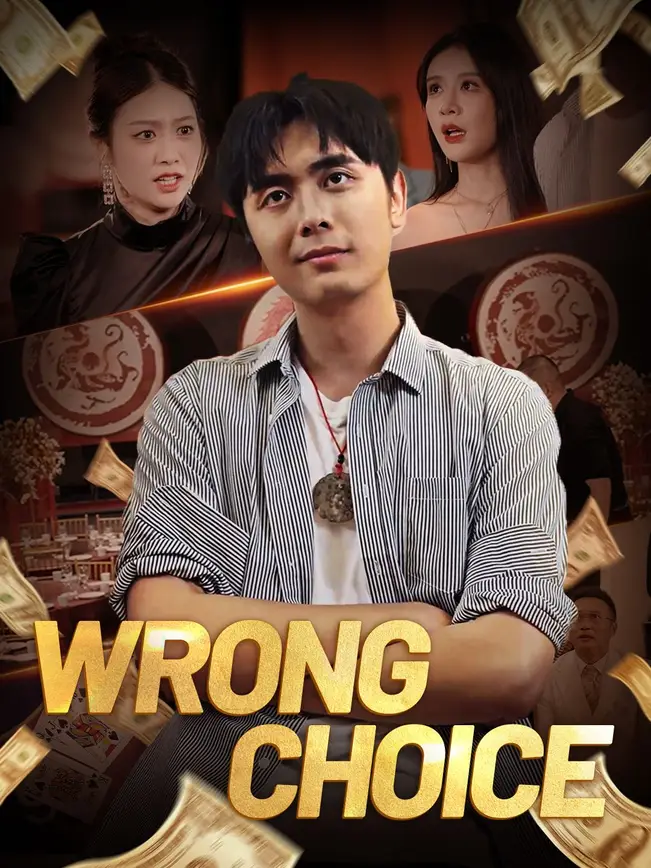

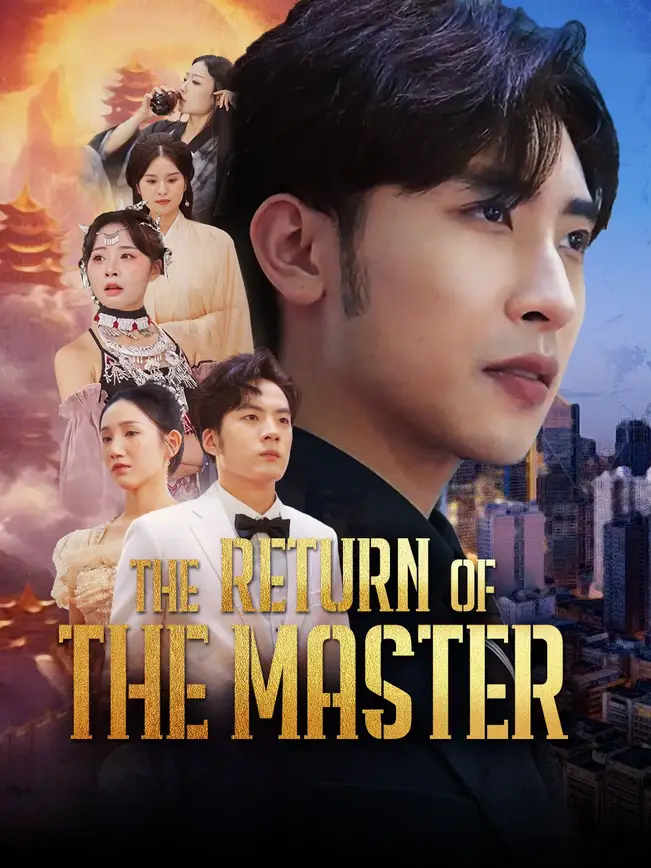

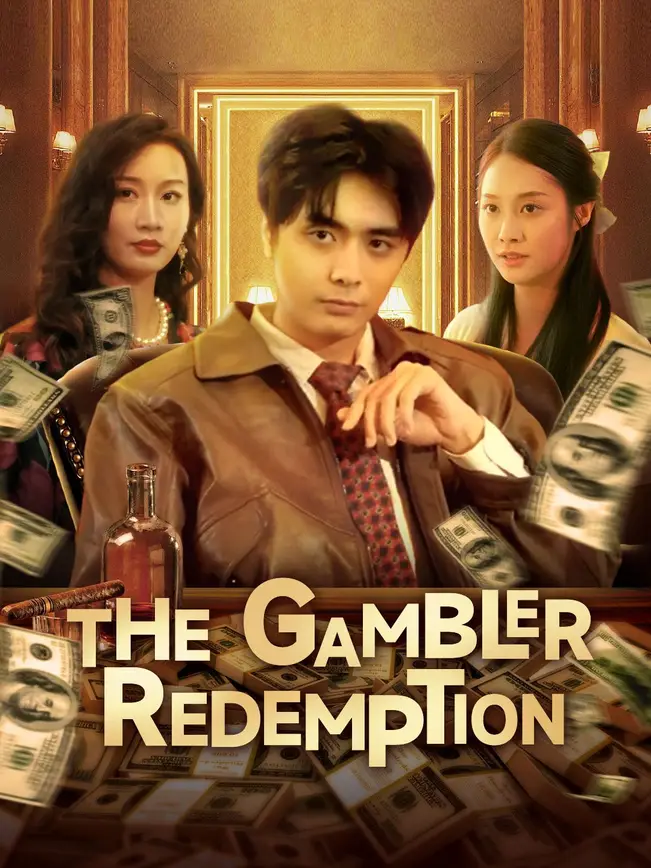
Return of the King
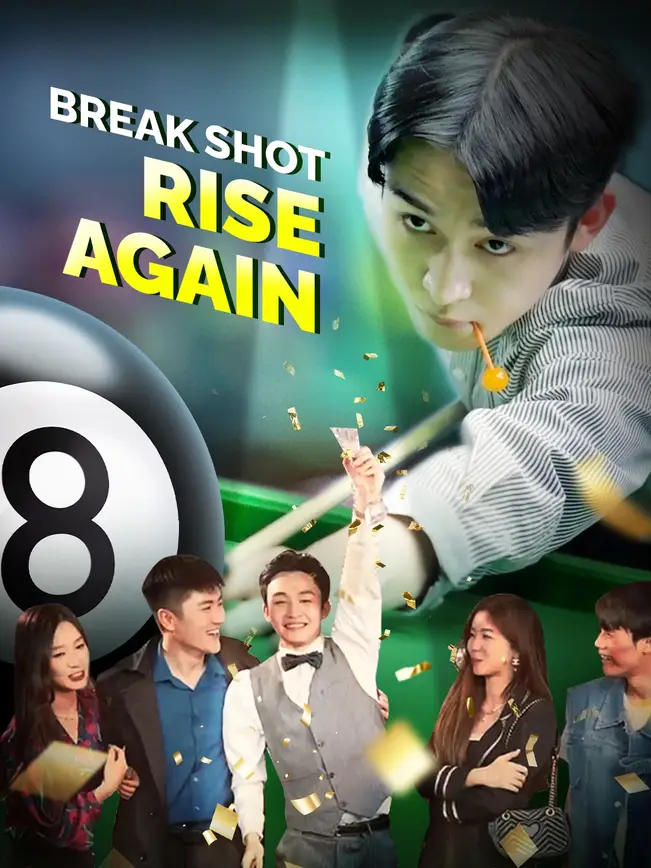

Revenge
.jpg~tplv-vod-rs:651:868.webp)


 Download