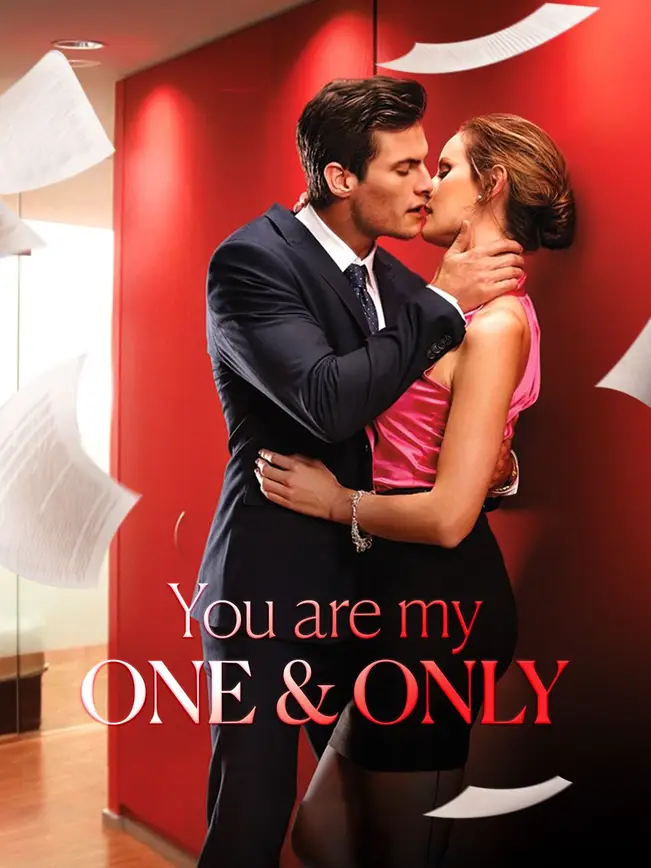
You Are My One And Only Storyline
You Are My One And Only More details
Genres:Love After Marriage/Mistaken Identity/Sweet Romance
Language:English
Release date:2024-12-20 15:00:00
Runtime:84min
A Rolle rcoaster of Emotions: A Must-Watch!
This short drama had me hooked from the start! The twist of mistaken identity was so cleverly done. Marianne and Sebastian's chemistry is undeniable, and the emotional journey they go through is beautifully portrayed. I found myself rooting
A Love Story with a Twist!
This drama is a hidden gem for anyone who loves romance with a twist. The characters are so well-developed, and the storyline is refreshingly unique. Marianne and Sebastian's story is one of love, misunderstandings, and redemption. I laughed, I cried, and I co
Unexpected Twists and Heartfelt Moments
I didn't expect to be so invested in a drama about a marriage shrouded in mystery, but "You Are My One And Only" delivered big time! The plot twists kept me on the edge of my seat, and Marianne's journey of self-discovery was both relatable and in
Intriguing Plot and Captivating Characters
"You Are My One And Only" is a captivating short drama that had me glued to the screen. The mistaken identity angle was executed perfectly, and the chemistry between the leads was palpable. Sebastian's mysterious persona added depth to the story,
You Are My One And Only: When a Child Holds the Key
There’s a particular kind of tension that only exists in romantic scenes where the audience knows more than the characters do—and in *You Are My One And Only*, that tension isn’t manufactured by plot twists or hidden identities. It’s built by a nine-year-old girl with braids and a bouquet of red roses. Let’s unpack this not as a script analysis, but as a human observation: what happens when innocence walks into a room charged with unresolved longing? The answer, in this case, is nothing short of alchemy. Elena sits at the table, poised, elegant, her pearl-trimmed blouse catching the lamplight like scattered moonlight. She’s waiting—not impatiently, but with the quiet readiness of someone who’s rehearsed this moment in her mind a hundred times. The food arrives. She thanks the waiter. But her eyes keep drifting toward the entrance. She’s not just expecting Daniel. She’s wondering if he’ll say the thing she’s afraid to ask herself: *Do you really see me? Or are you just playing the part?* Daniel enters, calm, composed, carrying himself like a man who’s used to being in control. He takes his seat. They exchange pleasantries. The wine is poured. The steak sizzles faintly on the plate. Everything is perfect—and therefore, suspicious. Because perfection in romance is often a mask. And then, Lily appears. Not as a prop. Not as comic relief. As a truth-teller. Her entrance is so unassuming—just a small figure in a white cardigan, holding roses like they’re offerings to the gods—that it disarms everyone, including the viewer. ‘Sir, would you like to buy some flowers for your wife?’ she asks. Note the phrasing: *your wife*. Not *your girlfriend*. Not *the lady you’re with*. *Wife.* That single word does more heavy lifting than a monologue. It forces Daniel to choose: correct her, and risk exposing the fragility of their status—or accept the label, and step into the role she’s handing him. He chooses the latter. ‘I’ll take them all.’ It’s not generosity. It’s surrender. A quiet admission: *Yes. I want this to be true.* Elena’s reaction is the emotional core of the sequence. She doesn’t laugh nervously. She doesn’t deflect. She smiles—a real, unguarded smile—and says, ‘Thank you.’ But her eyes lock onto Daniel’s, and in that glance, we see the shift: she’s no longer performing confidence. She’s allowing herself to hope. And when Lily adds, ‘Valentine’s Day is coming,’ and then, with the gravity of a prophet, ‘I hope you two stay together forever,’ Elena doesn’t just smile—she *leans in*. That’s the moment the film stops being about dinner and starts being about destiny. Because Lily isn’t selling roses. She’s selling belief. And in that moment, Elena buys it. The dialogue that follows is deceptively simple, but layered like sedimentary rock. ‘You’re such a sweetheart,’ Elena says—and then, with a teasing lilt, ‘Who taught you that?’ Daniel’s reply—‘Daddy did’—isn’t just an answer. It’s a lineage. It tells us he learned love not from movies or songs, but from a man who showed up, who held doors, who remembered anniversaries. That kind of upbringing doesn’t produce players. It produces believers. And when Elena presses further—‘Did you drive my mom away just to bring me here?’—she’s not accusing. She’s testing the foundation. She needs to know: is this love built on convenience, or conviction? Her voice is steady, but her fingers tighten around her glass. That’s the kind of detail *You Are My One And Only* excels at: the micro-gestures that speak louder than dialogue. Daniel’s response is masterful. He doesn’t rush. He doesn’t over-explain. He says, ‘No.’ Then, after a beat that feels like eternity, ‘I fell in love with you the first moment I saw you.’ Not *here*. Not *tonight*. *The first moment.* That distinction changes everything. It means this dinner isn’t the origin story—it’s the homecoming. Elena’s face transforms. The skepticism melts. The doubt dissolves. What remains is pure, unadulterated joy—and relief. She looks down, then up, and her smile is no longer polite. It’s triumphant. She’s not just happy he loves her. She’s happy he *chose* her, long before she was ready to be chosen. Lily, meanwhile, watches it all with the serene wisdom of someone who’s seen this dance before. When she murmurs, ‘Mommy is blushing,’ she’s not teasing. She’s observing. And Daniel’s denial—‘No, I’m not’—is so transparently false that it becomes endearing. His ears are flushed. His grin is lopsided. He’s not hiding it anymore. He’s *letting* her see him. That’s the turning point: when vulnerability stops being a risk and starts being a gift. And when he turns to Lily and says, ‘Who’s the clever little one?’ it’s not patronizing. It’s reverence. He recognizes her not as a child, but as a conduit—for love, for truth, for the kind of clarity adults spend lifetimes chasing. The final frames are a visual sonnet. Elena and Daniel, their faces overlapping in soft focus, both smiling—not at the camera, but *through* it, as if they’re looking into a future they’ve just agreed to build together. The lighting warms, the background blurs into golden halos, and the words *The End* appear—not as closure, but as invitation. Because in *You Are My One And Only*, endings are never final. They’re just commas in a longer sentence. The real story isn’t what happened at the table. It’s what happens after: the walk home, the shared silence in the elevator, the way he holds her hand a little tighter, the way she rests her head on his shoulder without thinking. You Are My One And Only isn’t about finding love. It’s about recognizing it when it’s been there all along—sometimes disguised as a waiter’s tray, sometimes delivered by a child with roses, sometimes whispered across a table where two people finally stop pretending and start listening. And in that listening, they hear the same truth: You Are My One And Only. Not because it’s easy. But because it’s true. Elena knew it in her bones. Daniel felt it in his pulse. And Lily? She saw it in their eyes—and she sold them the roses to prove it.

Sweet Romance




.jpg~tplv-vod-rs:651:868.webp)
Mistaken Identity


.jpg~tplv-vod-rs:651:868.webp)

 Download