




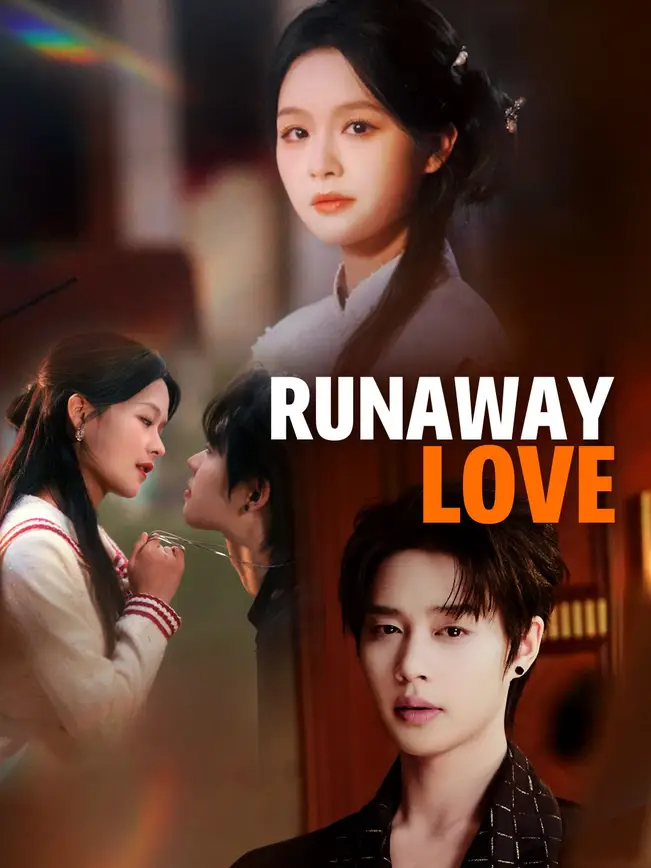
Runaway Love Storyline
Runaway Love More details
Genres:Rich Family Feud/Secret Crush Turned Real/Karma Payback
Language:English
Release date:2025-02-04 10:05:00
Runtime:212min
Love's Power to Transform and Heal
"Runaway Love" offers more than just a romantic storyline; it delves into the complexities of human emotions and the redemptive power of love. Mira and Samuel's story is a beautiful reminder that true love can indeed change lives. The character development is superb, and the plot twists keep you eng
From Torment to Tenderness: A Love Story
I didn't expect to be so captivated by "Runaway Love." The way Mira and Samuel's relationship evolves from a mere convenience to a deep, meaningful connection is truly moving. The series does an excellent job of portraying emotional growth and the courage needed to face one's past. It's refreshing a
A Tale of Redemption and True Connection
What I loved about "Runaway Love" is its genuine portrayal of finding love in the most unexpected places. Mira's journey from using Samuel as an escape to discovering genuine affection is beautifully depicted. The urban backdrop adds a gritty realism that enhances the narrative. This short series is
An Unexpected Journey of Love and Healing
"Runaway Love" is a beautiful blend of romance and redemption. Mira and Samuel's journey is a testament to the power of love to heal old wounds. The chemistry between them is palpable, making every episode a heartfelt experience. The storyline keeps you hooked, and the emotional depth of the charact
Runaway Love: From Bloodstains to Snowflakes—The Redemption Arc That Rewrote Fate
One week later. That’s all it takes. One week between blood on concrete and snow on eyelashes. Between a man lying broken on the floor and the same man—now transformed, now tender—kneeling in a golden forest, holding a ring like it’s the last prayer he’ll ever whisper. This isn’t just a time jump in *Runaway Love*. It’s a resurrection. A metamorphosis so complete, you’d swear the characters stepped into a different universe. But they didn’t. They stayed in the same world. They just chose to see it differently. Let’s rewind. After the warehouse scene—the apple, the betrayal, the silent collapse of Lu Xinyu—we’re left with a question no one answers aloud: *What happens when the person you thought was your enemy becomes the only one who sees you?* The answer, as revealed in the second half of *Runaway Love*, is not redemption through grand gestures, but through quiet consistency. Through snowfall. Through shared silence under trees heavy with autumn’s last breath. Enter Yu Han again—but not the woman who wielded an apple like a blade. Now she wears white: a coat lined with fur, buttons like pearls, hair pinned in a soft chignon, lips painted the color of dawn. She’s not softer. She’s *softer around the edges*. And beside her? Not Zhou Yifan—the architect of her earlier cruelty—but Lu Xinyu. Yes, *that* Lu Xinyu. The one who flinched at the sight of an apple. The one whose eyes held oceans of unshed tears. Now he walks beside her, coat dark against her light, hands tucked in pockets, gaze steady. He doesn’t look haunted anymore. He looks… hopeful. And that shift is the most radical thing *Runaway Love* does: it refuses to let trauma define a person forever. The forest scene is pure cinematic alchemy. Golden leaves carpet the ground. Snow begins to fall—not heavy, not violent, but delicate, like powdered sugar sifted from the sky. Yu Han lifts her hand, palm up, catching flakes. She smiles—not the smirk of control, but the genuine, slightly surprised joy of someone rediscovering wonder. Lu Xinyu watches her, and for the first time, his expression isn’t fear or longing. It’s awe. He reaches out, not to take, but to *touch*—his fingers brushing hers as he lifts her hand to his lips. Not a kiss on the knuckles. A kiss on the *wrist*, where pulse beats like a secret. It’s intimate. It’s reverent. It says: *I see you. I remember you. And I’m still here.* Then comes the ring. Not presented with fanfare, but pulled from his inner pocket like a sacred relic. He doesn’t drop to one knee in the traditional sense—he simply bends, lowers himself just enough, and offers it with both hands, as if handing over his own heart. Yu Han doesn’t gasp. She doesn’t cry. She exhales, slow and deep, and nods. A single tear escapes—not from sadness, but from the sheer weight of being *chosen*, truly chosen, after a lifetime of choosing others over herself. The ring slides onto her finger. Simple. Silver. Unadorned. Perfect. Because love, in *Runaway Love*, isn’t about extravagance. It’s about intention. About showing up, again and again, even when the world has taught you to run. What’s breathtaking is how the film handles the transition. There’s no montage of therapy sessions or dramatic confrontations. Just time. Just presence. Just two people walking, talking, laughing softly as snow gathers in their hair. Lu Xinyu, once paralyzed by fear, now leads her gently by the hand, guiding her past fallen branches, adjusting her coat collar with a touch so familiar it feels like muscle memory. Yu Han, once untouchable, leans into him without thinking—her head resting against his shoulder as they walk, her fingers threading through his arm like roots finding soil. This isn’t manufactured chemistry. It’s earned. It’s built on the ruins of what came before, brick by painful brick. And the snow? It’s not just atmosphere. It’s symbolism made visible. White covering brown. Purity over decay. A fresh start that doesn’t erase the past—but integrates it. When Lu Xinyu kisses her, it’s not the desperate, hungry kiss of a man grasping at salvation. It’s slow. Deep. Full of gratitude. Their foreheads rest together afterward, breath mingling in the cold air, snowflakes melting on their lashes. He whispers something—inaudible, but we don’t need subtitles. We see it in the way her smile widens, in the way his thumb strokes her cheekbone, in the way her hand tightens around his waist like she’s afraid he might vanish if she lets go. *Runaway Love* doesn’t pretend the past didn’t happen. The bloodstains are still there, metaphorically speaking. But it argues—powerfully—that love isn’t about erasing scars. It’s about learning to hold them gently, together. That the most radical act in a world built on control is to surrender—not to weakness, but to trust. To say: *I’ve seen your darkness. I’ve walked through your fire. And I still want to build a home in your light.* The final shot—them embracing as the snow falls heavier, the forest glowing amber behind them—isn’t an ending. It’s a promise. A vow written in falling crystals and shared warmth. And when the text appears—*To all the girls watching this mini-series. Please always save yourself from despair. May every girl embrace happiness.*—it lands not as preachy, but as earned. Because *Runaway Love* doesn’t offer fairy tales. It offers proof: that even the most broken hearts can learn to beat in rhythm again. That love, when it’s real, doesn’t demand perfection. It asks only for presence. For courage. For the willingness to reach out, hand trembling, and catch a snowflake—knowing that this time, it won’t melt before you can hold it.
Runaway Love: The Apple That Shattered a Man’s World
Let’s talk about that apple. Not just any apple—red, glossy, bitten into with deliberate slowness, held like a weapon in the hand of a woman who knows exactly how much power a single fruit can wield. In the first act of *Runaway Love*, we’re dropped into a dim, industrial warehouse—cold concrete, stacked crates labeled with cryptic numbers, flickering red emergency lights casting long shadows. It’s not a place for romance. It’s a place for reckoning. And yet, here stands Yu Han, dressed in black silk and fur-trimmed coat, her hair cascading like ink over her shoulders, earrings catching the light like shattered glass. She doesn’t speak much. She doesn’t need to. Her silence is louder than gunfire. She offers the apple—not to the man seated on the crate, but to the one standing behind him: a younger man in a leather jacket, eyes wide, lips parted, already trembling at the edge of panic. His name is Lu Xinyu, and he’s not just a bystander—he’s the emotional fulcrum of this entire scene. When Yu Han lifts the apple toward him, his breath hitches. His pupils dilate. He doesn’t reach for it. He *watches* it, as if it might explode. That hesitation tells us everything: he knows what’s coming. He’s seen this before—or worse, he’s imagined it. The apple isn’t food. It’s a symbol. A test. A trap disguised as temptation. Meanwhile, the older man—Zhou Yifan—stands beside her, calm, almost amused, his glasses reflecting the overhead bulb like twin moons. He doesn’t intervene. He observes. He *allows*. That’s the real horror: complicity through stillness. When Yu Han finally turns away, offering the apple instead to Zhou Yifan, the shift is seismic. Lu Xinyu’s face crumples—not in relief, but in betrayal. Because now he understands: she never meant to give it to him. She meant to make him *watch* her choose someone else. And then—just as the tension reaches its breaking point—the apple drops. Slow-motion. A perfect arc against the blood-smeared floor where another man lies motionless, mouth open, eyes unblinking, blood pooling like spilled wine. The apple bounces once. Twice. Then rolls to a stop, half-eaten, abandoned. No one picks it up. That moment is the thesis of *Runaway Love*: desire is never innocent. Power is never neutral. And love? Love is the most dangerous game of all—especially when played in a room full of witnesses who’ve already decided whose side they’re on. Lu Xinyu doesn’t scream. He doesn’t cry. He just stares at the floor, jaw clenched, fingers twitching at his sides, as if trying to remember how to breathe. His trauma isn’t loud; it’s internalized, suffocating. He’s not the victim here—he’s the collateral damage of a love that refuses to be tamed. Yu Han walks away with Zhou Yifan, arm linked, heels clicking like a metronome counting down to something irreversible. The camera lingers on Lu Xinyu’s face—not for pity, but for prophecy. We know, even if he doesn’t yet, that this is only the beginning. What makes *Runaway Love* so unnerving isn’t the violence—it’s the elegance of the cruelty. Every gesture is choreographed. Every glance carries weight. Even the crates are arranged like chess pieces, waiting for their turn to fall. The lighting isn’t just moody; it’s psychological. Red for danger, blue for detachment, yellow for false hope—all bleeding into each other like watercolors left in the rain. And the sound design? Minimal. Just the echo of footsteps, the soft crunch of the apple bite, the wet slap of blood hitting concrete. No music. No score. Just silence, thick enough to choke on. This isn’t a love story. It’s a dissection. A forensic examination of how intimacy becomes manipulation when one person holds all the keys—and the other is locked inside the room, watching the door close from the inside. Lu Xinyu isn’t weak. He’s trapped in a narrative he didn’t write, starring people who refuse to let him speak. And when the screen cuts to black after the apple hits the floor, you don’t feel closure. You feel dread. Because you know—somewhere, in another room, another apple is already being polished. Another choice is being made. Another heart is about to break. *Runaway Love* doesn’t ask if love is worth the risk. It shows you the aftermath—and dares you to look away. And you won’t. You’ll keep watching, because deep down, we’ve all been Lu Xinyu. We’ve all held out our hands, hoping for something sweet, only to find the core was poisoned from the start. The genius of this sequence isn’t in what happens—it’s in what *doesn’t*. No shouting. No grand confession. Just an apple, a glance, and the quiet collapse of a world.
Runaway Love: When the Past Holds the Gun
Let’s talk about the most unsettling detail in the entire sequence—not the knife, not the blood, not even the warehouse’s oppressive industrial gloom. It’s the *sound*. Or rather, the lack of it. In the opening wide shot, eight people occupy a vast, echoing space, yet the only audible elements are the faint hum of overhead fluorescents and the soft scrape of Lin Wei’s boot against concrete as he shifts. No dialogue. No threats. Just breathing. Heavy, deliberate, synchronized almost—like a ritual. That silence isn’t empty. It’s loaded. And it’s the first clue that Runaway Love isn’t a crime thriller. It’s a psychological opera, where every gesture carries the weight of a soliloquy. Lin Wei, bound and kneeling, doesn’t beg. He doesn’t curse. He *observes*. His eyes dart—not to the armed men, not to the exits, but to Yao Xue’s hands. Specifically, to the ring on her right index finger: a simple silver band, slightly tarnished, worn smooth by years of use. He knows that ring. It belonged to someone else. Someone who isn’t here. Someone whose absence is the silent ninth character in the room. Yao Xue, for her part, moves like smoke. She doesn’t stride; she *drifts*, her leather coat whispering against her thighs, her gold hoops catching light like compass needles pointing toward danger. When she approaches Lin Wei, she doesn’t raise the knife immediately. She crouches. First, she studies his face—really studies it—as if confirming he’s still the man she remembers, not the ghost the rumors painted. Then, and only then, does she lift the blade. The close-up on her wrist reveals a thin scar, pale against her skin, running parallel to the pulse point. Old. Clean. Surgical. Not from a fight. From a choice. And when she presses the knife to his neck, her thumb rests not on the hilt, but on the flat of the blade—guiding it, controlling the pressure, ensuring it *doesn’t* cut. That’s the genius of Runaway Love: the violence is always implied, never gratuitous. The terror lives in the hesitation. In the millisecond before the steel breaks skin. Lin Wei feels it. His breath hitches. His pupils dilate. But he doesn’t flinch. Because he understands. This isn’t punishment. It’s interrogation. And the only language she trusts is pain. Cut to the courtyard. Warm light. Wooden beams. The scent of aged tea. Madame Chen doesn’t look up when Zhou Jian enters. She already knows he’s there. She’s been waiting. Her hands rest on the binder—thick, leather-bound, stamped with a faded crest. Inside? Not financial ledgers. Not surveillance reports. Photographs. Letters. A child’s drawing of a house with two stick figures holding hands, captioned in shaky script: “Me & Wei.” Zhou Jian sits. He doesn’t speak first. He waits. And in that waiting, we see the fracture in him—the man who built a life of order and protocol, now trembling at the edge of chaos. Madame Chen finally lifts her gaze. Her eyes, behind wire-rimmed glasses, are sharp as flint. She says three words. Subtitles appear: “You broke the seal.” Zhou Jian blinks. The seal. Not a document. A promise. A vow sworn over that same pair of ornamental scissors, now resting on the table between them, their red-stained cloth handles gleaming dully in the afternoon sun. She picks them up. Not to threaten. To *remind*. She opens them slowly, the metal singing a soft, high-pitched note. Then she places them in his palm. His fingers close around them. The camera holds on his knuckles, white with tension. This is the heart of Runaway Love: the past isn’t dead. It’s dormant. And it wakes up when you least expect it—carried in the weight of a childhood toy, the texture of a forgotten ring, the exact angle of a scar. Back in the warehouse, the dynamics have shifted again. Lin Wei is now lying flat on his back, staring at the ceiling grid, his chest rising and falling in ragged bursts. Yao Xue stands over him, but her posture is different—less predator, more pilgrim. Chen Mo, the younger man in the black leather jacket, watches her with an intensity that borders on worship. He believes in her mission. He believes she’s righteous. But then Lin Wei speaks. His voice is hoarse, broken, yet clear: “She asked me to protect you.” Yao Xue freezes. Not a twitch. Not a blink. Just stillness. The kind that precedes an earthquake. Chen Mo’s eyes widen. He glances between them, confused. *Protect her? From whom? From what?* The camera cuts to Li Tao, the bespectacled strategist, who’s been quietly observing from the green armchair. He closes his folder—“Intelligence Reconnaissance”—and sets it aside. He knows what’s coming. Because he was there. Eleven years ago. The flashback returns, sharper this time. Rain. Sirens wailing in the distance. A young Yao Xue, barely eighteen, dragging Lin Wei’s unconscious body behind a dumpster, her own sleeve soaked in blood that isn’t hers. She pulls a small vial from her pocket—clear liquid, labeled in Chinese characters: *Forget-Me-Not Serum*. She hesitates. Looks at his face. Then, with a sob she stifles, she pours half the dose into his mouth. The rest, she drinks herself. That’s why she remembers everything. And why he remembers nothing. The serum didn’t erase memory. It *isolated* it. Buried it under layers of fabricated trauma, false identities, and self-imposed exile. Runaway Love isn’t about running *from* love. It’s about running *toward* it—through fire, through lies, through the very people who tried to bury it. The climax isn’t a shootout. It’s a confession. Yao Xue kneels beside Lin Wei, not to finish him, but to *see* him. She removes her gloves. Reveals her palms—scarred, calloused, one bearing the same pattern as the scissors’ cloth wrap. She places her hand over his heart. He feels it. The rhythm. The heat. The truth. “I let you go,” she whispers, her voice raw, “so you wouldn’t have to choose.” Choose between loyalty and love. Between family and justice. Between the man he was and the man he had to become. Chen Mo steps forward, hand hovering near his jacket pocket. The revolver is there. He could end this now. But he doesn’t draw it. Instead, he looks at Yao Xue—not as a leader, but as a sister. Because that’s what she is. Not his commander. His surviving sibling. The one who stayed. The one who carried the weight. The final shot: Lin Wei sits up, slowly, painfully. Yao Xue helps him. Zhou Jian appears in the doorway, holding the scissors—now clean, the red stains gone, replaced by a faint sheen of oil. He doesn’t speak. He simply extends them toward Lin Wei. A peace offering? A test? Or the key to the lock they’ve all been struggling with for eleven years? The camera lingers on the scissors, then pans up to Lin Wei’s face. Tears track through the grime on his cheeks. He takes them. And for the first time since the night it all ended, he smiles. Not happily. Not sadly. Just… human. Runaway Love ends not with a bang, but with the quiet click of blades closing—a sound that echoes louder than any gunshot. Because some truths don’t need to be shouted. They just need to be held. Carefully. Like scissors wrapped in blood-stained cloth, waiting for the right hands to wield them—not to cut, but to mend.
Runaway Love: The Knife That Never Cuts Twice
In the dim, industrial belly of what looks like a repurposed warehouse—exposed pipes, flickering overhead lights, yellow-black hazard stripes lining the upper walkway—the air hums with tension thicker than the dust motes caught in the spotlights. This isn’t just a scene; it’s a pressure chamber. And at its center, bound not by rope but by silence and stares, sits Lin Wei—a man whose face tells a story of betrayal, exhaustion, and something far more dangerous: hope. He’s kneeling on concrete, wrists tied behind him with coarse rope, his black traditional-style jacket slightly rumpled, sweat glistening at his temples despite the chill. Around him, six figures form a loose circle: two men in sharp suits flanking the perimeter like sentinels, one seated on stacked green crates (marked ‘15–71’, ‘29kg’—military-grade?), another slouched in a leather chair sipping wine, and three women standing like statues carved from midnight silk. One of them—Yao Xue—is the storm. She wears a long brown leather coat cinched at the waist, her hair pulled back in a severe bun, gold hoop earrings catching the light like tiny suns. Her expression is unreadable, yet her posture screams control. She doesn’t shout. She doesn’t need to. When she steps forward, the others part instinctively. Then comes the knife. Not a gun, not a baton—but a tactical blade, serrated edge glinting under the harsh ceiling lamp. Yao Xue lifts it slowly, deliberately, and presses the flat side against Lin Wei’s throat. Not deep enough to draw blood—not yet. Just enough to feel the pulse beneath the skin, to remind him he’s still alive, still *here*. His eyes widen, not with fear, but with recognition. He knows her. And she knows him. The camera lingers on his Adam’s apple bobbing as he swallows. A single bead of sweat rolls down his temple. Then—she leans in. Her lips brush his ear. Her voice, though unheard, is written across her face: calm, precise, lethal. In that moment, Runaway Love isn’t about romance. It’s about leverage. About the unbearable weight of memory pressed against the razor’s edge of now. The scene cuts—abruptly—to a sun-drenched courtyard, all wood grain, hanging lanterns, and potted bonsai trees breathing quiet dignity. An older woman, Madame Chen, sits in a rattan rocking chair, her hands resting on a thick binder. Her cardigan is black, trimmed with leopard-print fabric, her silver hair coiled neatly, glasses perched low on her nose. Across from her stands a younger man in a brown silk tunic—Zhou Jian, Lin Wei’s estranged brother, or so the narrative whispers. He bows slightly, then sits. The contrast couldn’t be starker: one world is all shadows and steel; the other, warmth and tradition. But the tension remains. Zhou Jian speaks—his voice measured, almost reverent—and Madame Chen listens, her fingers tracing the spine of the binder. Then she reaches for the small table beside her. On it rests a pair of scissors. Not surgical. Not kitchen. These are ornamental, their handles wrapped in white cloth patterned with red floral motifs—delicate, almost ceremonial. She picks them up. Her knuckles are swollen, age-spotted, yet her grip is steady. Zhou Jian watches, his breath shallow. She opens and closes the blades once. Twice. A soft *click-click*. Then she extends them toward him. He hesitates. She doesn’t blink. Finally, he takes them. His hands tremble—not from weakness, but from the sheer absurdity of it. Scissors? In a room where power is usually measured in bullets or bank transfers? Yet in this space, they’re more potent than any firearm. Because here, cutting means severing ties. Breaking oaths. Erasing lineage. As he holds them, the camera zooms in on the red stains blooming on the white cloth—blood, dried, old. Not fresh. Eleven years ago. The phrase flashes on screen like a wound reopening. And suddenly, the warehouse scene makes sense. Lin Wei wasn’t just captured. He was *summoned*. By ghosts. By debts. By a love that ran away—and never stopped running. Back in the warehouse, the dynamic shifts again. Lin Wei, still on his knees, lifts his head. His eyes lock onto Yao Xue—not with defiance, but with sorrow. He speaks. We don’t hear the words, but his mouth forms them slowly, deliberately, as if each syllable costs him something vital. Yao Xue’s expression flickers—just for a frame. A micro-expression: her left eyebrow lifts, her lips part, and for half a second, the mask cracks. Is that grief? Regret? Or simply the exhaustion of playing the villain too long? Behind her, a younger man—Chen Mo, the one in the leather jacket and open-collared shirt—stares, wide-eyed, jaw slack. He’s not a soldier. He’s a witness. Maybe even a believer. He believes in *her*. In the righteousness of her cause. But now, watching Lin Wei’s raw vulnerability, he’s beginning to doubt. Doubt is dangerous. Especially when you’re holding a revolver in your pocket, as we see later—Yao Xue’s hand, gloved in black, resting lightly on the grip, thumb hovering over the hammer. She doesn’t draw it. Not yet. She doesn’t need to. The threat is already embedded in the air, in the way Lin Wei’s shoulders slump, in the way Chen Mo’s fists clench at his sides. Then—another cut. A flashback, grainy and desaturated, labeled “Eleven Years Ago.” Rain-slick asphalt. Streetlights haloed in fog. A young girl lies on her back, white sweater stained crimson around her temple, eyes closed, one hand still clutching a broken locket. Beside her, a young man—Lin Wei, barely recognizable without the graying temples, without the lines of guilt etched into his face—lies unconscious, blood smeared across his cheek, glasses shattered beside him. A pair of polished shoes steps into frame. Then another. A figure in a long trench coat bends down, picks up the locket, examines it, and slips it into his pocket. The camera tilts up. It’s Zhou Jian. Younger. Sharper. His expression isn’t cruel. It’s resigned. As if he’s seen this before. As if he knew this day would come. That locket—its design matches the pendant Yao Xue wears now, hidden beneath her coat. The same circular motif. The same delicate chain. So the blood on the scissors? It wasn’t just symbolic. It was literal. And it belonged to someone they both loved. Someone who vanished that night. Someone whose absence has been the engine driving every confrontation since. The present returns with a jolt. Lin Wei is no longer kneeling. He’s on his back, staring up at the ceiling, chest heaving. Yao Xue stands over him, but her posture has changed. She’s not triumphant. She’s… tired. Chen Mo moves toward her, hand outstretched—not to help, but to stop her. She turns. Their eyes meet. And in that glance, Runaway Love reveals its true core: it’s not about who holds the knife. It’s about who remembers the reason it was ever drawn. Later, in a quieter corner, Yao Xue sits beside a man in glasses—Li Tao, the strategist, the archivist—flipping through a folder labeled “Intelligence Reconnaissance” in crisp English. He points to a photo. She traces the edge of her blade with a fingertip, her gaze distant. Li Tao says something. She nods, once. Then she rises, walks to the center of the room, and places the knife—not on Lin Wei’s throat this time—but on the table beside the wine bottles. A surrender? A truce? Or merely a pause? Because the real weapon was never the blade. It was the silence between them. The unspoken names. The eleven years of running, hiding, pretending the past didn’t bleed into the present. Runaway Love isn’t a chase. It’s an excavation. And every character in this room is digging, shoveling through layers of lies, until they hit bedrock: truth, sharp and unforgiving. Lin Wei will speak soon. Yao Xue will listen. Chen Mo will choose. And Zhou Jian? He’s already made his choice. He just hasn’t told them yet. The final shot lingers on the scissors, still wrapped in blood-stained cloth, resting beside the teapot in the courtyard. Some wounds don’t heal. They calcify. And sometimes, the only way to break them open is with something small, precise, and devastatingly familiar. That’s Runaway Love. Not escape. Not redemption. Just the unbearable, beautiful agony of remembering who you were—and deciding, finally, who you dare to become.
Runaway Love: When Silence Holds the Gun
There’s a moment—just after 1:43—when Uncle Feng’s mouth opens, but no sound comes out. His eyes are wide, pupils contracted, sweat glistening at his temples despite the room’s chill. The camera holds on him for seven full seconds, and in that silence, you hear everything: the creak of a crate under weight, the distant hum of a ventilation shaft, the faintest rustle of Ling’s fur sleeve as she shifts her grip on the knife. That’s the magic of *Runaway Love*—not what’s said, but what’s *withheld*. This isn’t a story about betrayal. It’s about the unbearable weight of unspoken history, the kind that settles in your bones like sediment and cracks your voice when you try to speak it aloud. Let’s unpack the architecture of this scene. The setting isn’t a warehouse. It’s a *theater* disguised as a detention block. Notice the elevated catwalk? The numbered cell doors marked 3-202, 3-203—not random, but sequential, like chapters in a book no one’s allowed to read. The green armchair isn’t furniture. It’s a throne. And Ling isn’t sitting on it—she’s occupying it, like a queen who inherited the crown through fire, not blood. Her outfit—black silk blouse, tailored blazer, knee-high patent boots—isn’t fashion. It’s armor with couture stitching. The way her hair falls in waves, one strand dyed copper at the tip, isn’t accident. It’s rebellion. A single thread of warmth in a monochrome world. And those earrings—long, crystalline, catching light like shattered ice—they don’t dangle. They *threaten*. Every time she turns her head, they flash like warning signals. Zhou Wei stands beside her, but he’s never *beside* her. He’s *behind*, slightly to the left, his posture relaxed but his shoulders angled toward the exit. He’s the strategist. The one who counts exits before entrances. When he removes his glasses at 1:17, it’s not vulnerability—it’s recalibration. He’s switching from observer mode to operator mode. His eyes, now unobstructed, scan the room not for threats, but for *patterns*. Who blinks first? Who shifts weight? Who breathes too fast? In *Runaway Love*, micro-expressions are currency. And Zhou Wei is minting them. Then there’s Xiao Mei—the woman in the brown leather coat, her hair pinned up with a single jade hairpin (yes, it’s visible at 1:03 if you pause). She doesn’t speak until 2:07. Not because she has nothing to say, but because she’s waiting for the exact frequency at which truth becomes audible. Her necklace—a simple gold circle pendant—hangs low, resting just above her sternum. Symbolism? Absolutely. A loop. No beginning, no end. Just continuity. And when she finally speaks (we don’t hear the words, but we see her lips form them, slow and deliberate), Uncle Feng’s entire body jerks as if struck. Not by sound, but by *recognition*. He knows that phrase. He’s heard it before—in a different life, a different city, maybe even from her mother. Jian Yu, the younger man in the floral shirt, is the wild variable. His coat is oversized, sleeves swallowing his hands, yet he moves with the economy of a dancer. At 1:27, he touches his chin, not in thought, but in *rehearsal*. He’s running lines in his head. Not for himself—for the others. He’s the only one who smiles, briefly, at 1:29, and it’s not amusement. It’s calculation. He sees the fracture forming between Ling and Zhou Wei—the slight hesitation when she glances at him before turning to Xiao Mei. He’s already drafting the next move. In *Runaway Love*, youth isn’t naivety. It’s adaptability. The ability to pivot before the ground does. The hooded figures? Let’s name them *Silas* and *Kai*, because anonymity is a luxury they no longer afford. When their bags are removed at 0:50 and 0:51, it’s not liberation—it’s exposure. Silas flinches. Kai doesn’t. Kai stares straight ahead, jaw set, as if he’s been waiting for this moment since he was sixteen. His hands, bound behind the crate, are bruised at the wrists. Not from rope. From *struggle*. He fought. And lost. But he didn’t beg. That’s the code here: dignity is the last thing you surrender, even when you’ve given up everything else. What makes *Runaway Love* so unnerving is how it weaponizes stillness. No gunshots. No shouting. Just the scrape of a boot heel on concrete, the whisper of leather against skin, the almost imperceptible tremor in Uncle Feng’s lower lip when Ling leans in at 2:18. The knife isn’t pressed hard enough to draw blood. It doesn’t need to be. The threat is in the *possibility*. In the space between intention and action. That’s where love dies—or is reborn. Because *Runaway Love* isn’t about fleeing. It’s about choosing which cage you’ll wear willingly. Ling could walk out anytime. So could Xiao Mei. Zhou Wei has the keys in his pocket. But they stay. Why? Because the real prison isn’t the room. It’s the memory of what happened before they walked in. Watch the apple again. At 0:17, it sits beside the wine glass, red and perfect. At 2:10, it’s still there. Untouched. Unmoved. While men kneel and women command, the apple remains. A silent witness. A symbol of temptation that no one dares to reach for—not because it’s poisoned, but because taking it would mean admitting you’re still hungry. And in this world, hunger is the first sign of weakness. The final shot—at 2:11—pulls back to the high angle, showing all seven figures arranged like pieces on a board no one fully understands. Ling and Xiao Mei stand side by side, not allies, not rivals—*co-conspirators in ambiguity*. Zhou Wei watches them, his expression unreadable, but his fingers twitch near his coat pocket. Jian Yu crosses his arms, eyes fixed on Kai, who now looks up, not at Ling, but at the ceiling light, as if searching for an exit written in the wiring. Uncle Feng is still kneeling, but his shoulders have squared. He’s not broken. He’s recalibrating. And in that moment, *Runaway Love* delivers its thesis: power isn’t held. It’s *shared*, reluctantly, between those who remember the cost of keeping it alone. The knife is still in Ling’s hand. The apple is still on the table. And the silence? It’s louder than any gunshot ever could be.
Runaway Love: The Knife That Never Cuts
Let’s talk about the kind of tension that doesn’t need dialogue—just a flick of a wrist, a slow heel click on concrete, and the way light bleeds through a cracked ceiling like guilt seeping into a confession. This isn’t just a scene; it’s a psychological ambush wrapped in leather, fur, and silence. In *Runaway Love*, we’re not watching a negotiation—we’re witnessing a ritual. A performance where every gesture is calibrated to unsettle, every glance a loaded chamber. The woman in the black coat with the fur cuffs—let’s call her *Ling* for now, because names matter when you’re holding a knife like it’s an extension of your spine—isn’t threatening anyone. She’s *inviting* them to remember who holds the power. Her boots? Patent leather, sharp-toed, high-heeled—not for walking, but for standing still while the world tilts around her. When she crosses her legs on that green leather armchair, it’s not posture. It’s punctuation. A full stop before the sentence gets dangerous. The man in the grey overcoat—*Zhou Wei*, if the script’s subtle cues are to be believed—stands behind her like a shadow that learned to speak. His glasses aren’t just corrective; they’re armor. Thin frames, wire-rimmed, catching the red emergency light above like a warning flare. He doesn’t move much. He doesn’t need to. His presence is the quiet hum before the explosion. And when he adjusts those glasses at 1:16, it’s not a nervous tic—it’s a reset. A signal that the game has shifted from observation to participation. You can feel the air thicken. The two hooded figures seated on crates? Their faces hidden under stiff black paper bags, mouths sealed not by rope but by implication. They’re not prisoners. They’re props. Symbols. The kind of people you bring to a meeting when you want everyone else to understand the stakes without saying a word. Then there’s *Xiao Mei*, the one in the brown leather trench, hair pulled back in a loose knot, gold hoop earrings catching the dim overhead glow like tiny suns refusing to set. She walks in late—not late as in tardy, but late as in *deliberate*. Her entrance isn’t announced; it’s absorbed. The camera lingers on her boots again—this time, black suede stilettos, pointed, lethal in their elegance. She doesn’t look at Ling first. She looks at Zhou Wei. Then at the hooded men. Then, finally, at the table with the wine glass and the apple. Not a poisoned apple. Just an apple. Which makes it more terrifying. Because in *Runaway Love*, symbolism isn’t decorative—it’s operational. That apple isn’t fruit. It’s leverage. A reminder that even in a room full of knives, someone still controls the menu. What’s fascinating is how the film uses proximity as a weapon. When Ling extends her hand at 0:28, ring glinting—a silver band with what looks like a fractured diamond—the gesture isn’t offering a handshake. It’s testing reflexes. And when Xiao Mei takes it at 0:31, their fingers interlock with the precision of two clockwork gears syncing for the first time, you realize this isn’t alliance. It’s calibration. They’re measuring each other’s pulse through touch. The man in the floral shirt—*Jian Yu*, with his asymmetrical collar and ear piercing that catches the light like a shard of broken mirror—he watches them, arms crossed, lips slightly parted, not smiling, not frowning. He’s the wildcard. The only one whose loyalty hasn’t been priced yet. And that’s why he’s the most dangerous. The lighting here isn’t mood—it’s manipulation. Red bars cast across metal grates, casting prison-like shadows even though no bars are locked. The upper walkway with its yellow-black hazard stripes? It’s not industrial design. It’s visual irony. A warning sign in a place where warnings are obsolete. Everyone knows the rules. The question is who’s willing to break them first. When the older man in the black embroidered jacket—*Uncle Feng*, if the embroidery pattern (bamboo and cranes) means anything—removes his hood at 0:50, his face isn’t relieved. It’s exposed. His eyes dart, his breath hitches, and for a split second, he looks less like a crime lord and more like a man who just realized he forgot to lock the front door. That’s the genius of *Runaway Love*: it doesn’t rely on violence to terrify. It relies on the *anticipation* of it. The knife Ling holds isn’t raised. It’s resting against her thigh, blade down, handle up—like a pen waiting for the right signature. And then, at 2:18, everything changes. Ling doesn’t lunge. She *leans*. One step forward, her fur cuff brushing Uncle Feng’s jawline as she presses the knife—not to his throat, but to the hollow just below his Adam’s apple. His eyes widen. Not in fear. In recognition. He knows this move. He’s taught it. Or maybe he’s received it before. The camera tightens, isolating their faces, the rest of the room blurring into smoke and shadow. Zhou Wei doesn’t intervene. Jian Yu doesn’t flinch. Xiao Mei exhales—softly, almost imperceptibly—and for the first time, she smiles. Not kindly. Not cruelly. *Accurately.* As if she’s just confirmed a hypothesis she’s held for years. This is where *Runaway Love* transcends genre. It’s not noir. It’s not thriller. It’s *psychological choreography*. Every character moves like they’ve rehearsed their role in a dream they can’t wake up from. The wine glass remains untouched. The apple stays whole. The hooded men don’t stir. And yet, the room feels like it’s vibrating. Because in this world, power isn’t taken. It’s *offered*, then revoked, then re-negotiated—all within the span of three breaths. Ling doesn’t need to cut him. She just needs him to believe she will. And in that suspended second, between steel and skin, *Runaway Love* reveals its true theme: love isn’t the escape. It’s the trapdoor beneath your feet, disguised as a promise.

Rich Family Feud



Secret Crush Turned Real


英语.png~tplv-vod-rs:651:868.webp)

.jpg~tplv-vod-rs:651:868.webp)
Karma Payback




 Download

Ep Review