




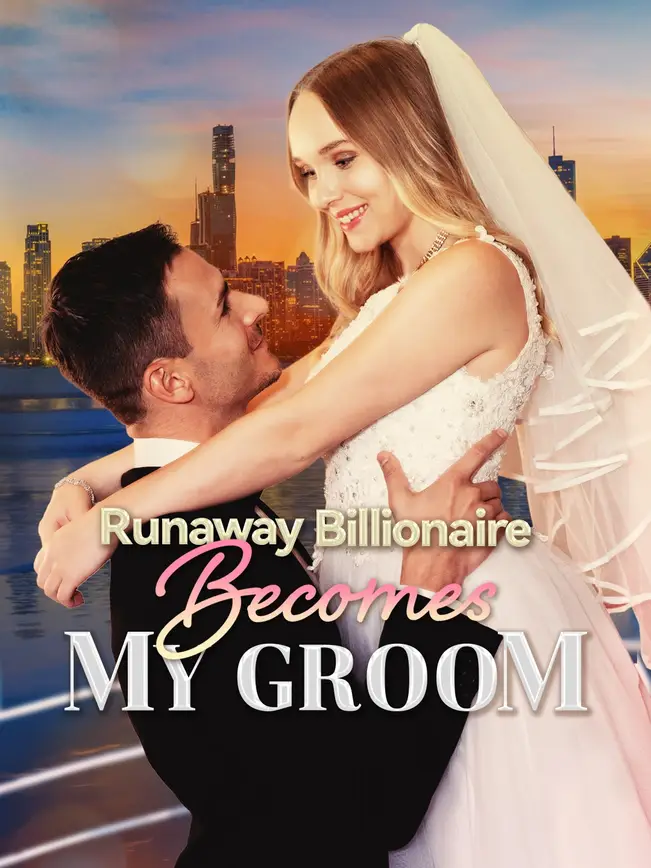
Runaway Billionaire Becomes My Groom Storyline
Runaway Billionaire Becomes My Groom More details
Genres:Love After Marriage/Shotgun Marriage/Childhood Sweethearts
Language:English
Release date:2025-01-10 20:30:00
Runtime:107min
Unexpectedly Emotional and Addictive
Thought this would be cliché, but wow—it’s so emotional! Liana and Jacob got me crying 😭❤️
NetShort nailed it again!
Super slick production and such addictive twists. NetShort is killing it lately! 📱🔥
A CEO Romance with Real Depth
Not your typical billionaire drama. Jacob’s emotional layers? Chef’s kiss! 💼💔👉❤️
From Fake Marriage to Real Feels 😍
I’m a sucker for fake marriage tropes, and this one DELIVERS. Great pacing, great chemistry!
Runaway Billionaire Becomes My Groom: When Twins Mean Two Different Futures
The first time we see Liana’s belly, it’s framed by the doorway of a modest kitchen—wooden cabinets, terracotta tiles, a fiddle-leaf fig spilling over the counter like green smoke. She’s wearing a dress the color of seafoam, sleeves tied in delicate bows at the shoulders, and her hand rests lightly on her abdomen, not protectively, but thoughtfully, as if she’s listening. The camera lingers there for exactly two seconds longer than necessary. That’s the film’s thesis statement, whispered in fabric and light: this body is no longer just hers. It’s a site of negotiation. A borderland. And the men in her life—Jacob, the man who walks in with grocery bags, and Hamilton, the man who reads medical reports like scripture—are already staking their claims. Jacob’s entrance is deliberately anti-grandiose. No chauffeured SUV. No valet. Just a beat-up sedan parked crookedly in the driveway, and him, in jeans and a polo, hauling plastic sacks like they’re trophies. He says, ‘I got your favorite, rib eye,’ and the specificity is everything. He didn’t say ‘steak.’ He said *rib eye*—the cut she ordered on their third date, the one she pretended not to love until he cooked it medium-rare with rosemary and garlic butter. He remembers. Not the grand gestures, but the tiny anchors. That’s how Runaway Billionaire Becomes My Groom rewrites the billionaire trope: wealth isn’t measured in assets, but in attention. In the ability to recall what someone craves when they’re exhausted, hormonal, and terrified of failing at motherhood before the baby even arrives. Liana’s reaction is layered. She smiles, yes—but her eyes narrow just a fraction when she sees the bags. ‘You don’t have to bring all this expensive food,’ she says, and the subtext vibrates: *I don’t want you to feel obligated. I don’t want you to think I need saving.* She’s not rejecting his care; she’s protecting his dignity. Because she knows—better than he does—that the moment he starts playing the provider, the old power dynamic creeps back in. The one where he works 80 hours a week and she waits. The one where love becomes transactional: groceries for gratitude, steak for silence. So she tries to lighten it, to make it playful. But Jacob sees through it. He sees the fatigue in her posture, the way her shoulders dip when she thinks no one’s looking. And he does the only thing that disarms her: he refuses to let her carry anything. ‘You sit down. I’ll cook.’ Not ‘Let me help.’ Not ‘I can do it.’ *I’ll cook.* A declaration of presence. Of participation. Of refusal to let her shoulder this alone. Then—the cut. Not a fade. Not a dissolve. A hard cut to a marble foyer, sunlight streaming through leaded glass, a vase of white tulips so pristine they look Photoshopped. Hamilton stands there, holding a single sheet of paper, his expression unreadable. He’s not smiling. He’s *processing*. The obstetrician’s report isn’t news to him—he’s been tracking it, scheduling appointments, vetting pediatricians. But hearing it aloud changes something. ‘Liana is expecting twins,’ he says, and the words hang in the air like incense. Twins. Not one miracle, but two. A doubling. A multiplication of risk, of joy, of responsibility. And then, the kicker: ‘and both baby boys are perfectly healthy.’ He delivers it like a CEO announcing quarterly earnings—factual, measured, devoid of awe. Because for Hamilton, health isn’t wonder. It’s baseline. Expectation. The minimum standard for a Hamilton heir. Eleanor enters not with fanfare, but with gravity. She rises from her chair like a queen ascending a dais, her movements economical, precise. Her jewelry isn’t decorative—it’s armor. Gold chains layered like chainmail, earrings shaped like interlocking gates. She holds a glass of water, but her grip suggests she could snap it in half if provoked. When she says, ‘Hamilton family children should not be born outside of the home,’ it’s not a suggestion. It’s a constitutional amendment. The word *should* is doing heavy lifting here—it implies moral imperative, historical precedent, divine ordinance. She’s not worried about Liana’s comfort. She’s worried about precedent. About optics. About the narrative that will be written in society columns: *Heir Apparent Born in Private Residence, Continuing Legacy of Discretion and Dignity.* What’s fascinating—and deeply human—is how Hamilton reacts. He doesn’t argue. He doesn’t defend Liana. He just… blinks. His mouth opens, then closes. For the first time, he looks uncertain. Not because he disagrees, but because he’s caught between two truths: the medical reality (Liana is pregnant, twins, healthy) and the familial reality (this birth must be choreographed). His loyalty is split, and the film lets us sit in that discomfort. No music swells. No dramatic pause. Just the faint ticking of a grandfather clock in the background, counting down to a decision he hasn’t made yet. Runaway Billionaire Becomes My Groom thrives in these micro-tensions. It’s not about the billionaire running away—it’s about the woman he left behind learning to run *toward* herself. Liana isn’t waiting for Jacob to rescue her. She’s building a life that accommodates his return, not one that depends on it. And Hamilton? He’s not the villain. He’s the product of a system that confuses control with care. When Eleanor says, ‘It’s time to bring Mr. Hamilton at the lady of the house home,’ she’s not summoning a man—she’s invoking a role. A function. A title. And Hamilton, for all his polish, is still figuring out whether he wants to wear that crown, or whether he’d rather trade it for an apron and a pot of simmering broth. The genius of the script lies in its refusal to resolve. We don’t see the birth. We don’t see the confrontation. We see Jacob walking toward the kitchen, Liana watching him, her hand still on her belly, and then—cut to Eleanor standing, her face unreadable, the words ‘Let’s go’ hanging in the air like smoke. That’s the cliffhanger: not *what* will happen, but *who* will get to define it. Will the twins be born in a sterile, sunlit suite with a butler on standby? Or in a hospital room where Jacob holds Liana’s hand and whispers, ‘You’re doing great,’ like he did when she sprained her ankle hiking last summer? Runaway Billionaire Becomes My Groom understands that the most radical act in a world obsessed with legacy is to choose the present. To prioritize the woman over the institution. To believe that love isn’t inherited—it’s built, day by day, grocery bag by grocery bag, with burnt garlic and imperfect timing. And when the baby boys finally arrive, whoever they are, wherever they’re born—they’ll inherit something far more valuable than a trust fund: the knowledge that their father chose to stay, and their mother chose to speak, and together, they rewrote the rules before the first cry even echoed in the room. That’s not fairy tale. That’s revolution. Quiet, domestic, and utterly devastating in its sincerity.
Runaway Billionaire Becomes My Groom: The Grocery Bag That Changed Everything
There’s something quietly devastating about the way Jacob walks through that front door—shoulders slightly hunched, eyes scanning the hallway like he’s still half outside, still half in the world where he had to earn every dollar. He’s carrying two brown plastic bags, one in each hand, knuckles white from the grip. The house is modest, sun-bleached stucco with a roof that sags just enough to suggest it’s seen better days. A tree looms overhead, casting dappled shadows across the walkway. And then the text appears: ‘6 Months Later.’ Not ‘One Year,’ not ‘A Few Weeks’—six months. Precisely calibrated. Enough time for hope to settle into routine, but not so much that memory has softened. This isn’t a reunion; it’s a return. A man coming home not because he’s won, but because he’s chosen to stay. Inside, the blue-painted wall greets him like an old friend—string lights strung haphazardly, a hexagonal shelf holding keys and a tiny succulent. It’s lived-in, imperfect, warm. Jacob says, ‘Honey, I’m back,’ and the phrase lands with the weight of a promise he’s been rehearsing in his head since he left the grocery store parking lot. His voice is steady, but his fingers twitch near the bag handles. He’s not just bringing rib eye—he’s bringing proof. Proof he remembers what she likes. Proof he still pays attention. Proof he hasn’t let success erode the tenderness he once carried like a secret. Then Liana steps out from the kitchen doorway, barefoot, wearing a soft blue dress that hugs her growing belly like a second skin. Her hair is half-up, pinned with a simple clip, and she’s smiling—but it’s not the kind of smile that says ‘I missed you.’ It’s the kind that says ‘I’ve been bracing myself.’ She says, ‘You don’t have to bring all this expensive food,’ and her tone is gentle, almost apologetic, as if *she’s* the one inconveniencing *him*. That’s the first crack in the facade: she’s not angry. She’s worried. Worried he’s overextending himself. Worried he’s trying too hard. Worried he’ll vanish again the moment the baby arrives. Jacob’s response is disarmingly simple: ‘You’ve already been working so hard with food delivery.’ He doesn’t say ‘I know you’re tired.’ He doesn’t say ‘Let me take over.’ He names her labor—not as burden, but as effort. As dignity. And when she reaches for the bags, he pulls them back, just slightly, and says, ‘No, no, no. You sit down. I’ll cook.’ It’s not a command. It’s a plea wrapped in service. He wants to be useful. He wants to be *needed*, not as a provider, but as a partner. The way he looks at her belly—his hand hovering near it, not touching, not presuming—is the most intimate gesture in the entire sequence. He’s not claiming ownership. He’s asking permission to love. Cut to the mansion. Not a cutaway. A rupture. An aerial shot so vast it feels like God just tilted the camera down to remind us: this world exists. Stone façade, slate roof, circular turret, wrought iron balconies—all gleaming under late afternoon light. There are no cars in the driveway. No children’s bikes. No laundry line. Just silence, and trees, and money that breathes like a living thing. And then we’re inside: Hamilton, impeccably dressed in a linen blazer and striped tie, holding a single sheet of paper like it’s a sacred text. ‘The obstetrician confirms Liana is expecting twins.’ His voice is calm, practiced. He’s delivering news, not emotion. Behind him, white tulips stand tall in a crystal vase—sterile, perfect, unblemished. This isn’t celebration. It’s announcement. Protocol. Enter the matriarch—let’s call her Eleanor, though the script never gives her a name. She sits in a cream armchair, draped in silk and gold chains, a glass of water balanced on her knee like a scepter. Her earrings are oversized, geometric, modernist. Her expression is serene, but her eyes flicker when Hamilton says ‘both baby boys are perfectly healthy.’ She doesn’t smile. She *assesses*. And then she speaks: ‘Hamilton family children should not be born outside of the home.’ Not ‘I prefer.’ Not ‘It would be better.’ *Should not.* A decree. A boundary drawn in marble dust. She doesn’t say ‘I’m concerned for Liana.’ She says ‘the Hamilton family.’ The child is already a legacy, not a person. The womb is already a vessel for dynasty. What makes Runaway Billionaire Becomes My Groom so unnerving—and so brilliant—is how it refuses to villainize either world. Jacob isn’t noble poverty; he’s exhausted resilience. Eleanor isn’t cold aristocracy; she’s terrified tradition. Liana isn’t passive victim; she’s the fulcrum, the silent negotiator between two irreconcilable definitions of love. When Jacob insists on cooking, he’s not rejecting wealth—he’s rejecting the idea that care must be outsourced. When Eleanor demands the birth happen ‘at the lady of the house home,’ she’s not denying Liana’s autonomy—she’s enforcing a centuries-old covenant that equates legitimacy with location. The real tension isn’t between rich and poor. It’s between *intimacy* and *institution*. Jacob’s kitchen has mismatched cabinets and a dish rack full of used plates. Eleanor’s drawing room has a fireplace carved with cherubs and a clock that chimes on the quarter hour. One space invites you to sit and spill something. The other expects you to stand and be measured. And Liana? She’s standing in the doorway between them, one hand on her belly, the other reaching for Jacob’s grocery bag—her body literally bridging two worlds, her heartbeat syncing with two tiny ones who haven’t even drawn breath yet. Runaway Billionaire Becomes My Groom doesn’t ask who’s right. It asks: what does it cost to belong? To Jacob, belonging means showing up with groceries and remembering how she takes her tea. To Eleanor, belonging means lineage, ceremony, control. To Liana, belonging might mean choosing neither—and forging a third path, one where the baby boys are born not in a marble hall or a cramped kitchen, but in a hospital room with Jacob holding her hand and Eleanor waiting in the lobby, clutching a gift-wrapped bassinet she bought three months ago, just in case. The final shot isn’t of the birth. It’s of Eleanor rising from her chair, smoothing her skirt, saying, ‘Let’s go.’ Not ‘I’ll accompany you.’ Not ‘We’ll make arrangements.’ *Let’s go.* As if motion itself can outrun doubt. As if stepping forward is the only way to keep from being buried under the weight of expectation. And somewhere, miles away, Jacob is chopping onions, humming off-key, while Liana watches him from the counter—her smile small, her fingers tracing the curve of her stomach, wondering if the boys inside will ever know a man who cries when he burns the garlic. That’s the heart of Runaway Billionaire Becomes My Groom: not the escape, not the fortune, but the quiet, daily rebellion of choosing love over legacy, one grocery bag at a time.
Runaway Billionaire Becomes My Groom: When Power Kneels to Love
Let’s talk about the moment Jacob doesn’t speak—but his shoulders do. In *Runaway Billionaire Becomes My Groom*, the most powerful scenes aren’t the boardroom showdowns or the yacht arguments. They’re the ones where no one raises their voice, but the air thickens like syrup. When the matriarch—let’s call her Eleanor, though the subtitles never name her—says, ‘I know I have made mistakes. Please forgive me,’ she doesn’t bow. She doesn’t kneel. But her eyes, wide and wet, do the kneeling for her. That’s the genius of this sequence: power doesn’t vanish when it apologizes; it *transforms*. Eleanor isn’t losing control—she’s recalibrating it. She offers Liana freedom, autonomy, even privilege—‘you can live however you wish’—not as a bribe, but as a plea wrapped in velvet. And the irony? Liana, pregnant, soft-spoken, wearing a dress that flows like water, holds more authority in that doorway than Eleanor ever did in her marble-floored office. Because Liana carries the future. Literally. And in dynastic narratives, the future *always* wins—even when it arrives barefoot and uncertain. Jacob’s arc here is quieter, but no less profound. He’s not the rebellious heir we expect; he’s the reluctant steward. When he tells Liana, ‘Wherever you are, that’s where I want to be,’ it’s not romantic cliché—it’s a quiet revolution. He’s rejecting the Hamilton legacy not by burning it down, but by refusing to let it define his compass. His polo shirt, slightly rumpled, his jeans worn at the cuff—these aren’t signs of poverty. They’re declarations of identity. He’s chosen *her*, not the mansion, not the title, not the expectation. And yet—watch how he looks at the door when it closes. Not relief. Not triumph. Just… weight. Because choosing love in a world built on inheritance means carrying both joy and burden. The scene where he asks, ‘What do you think?’ and then immediately adds, ‘Depends on you,’ reveals everything: he’s not leading anymore. He’s following. And in a story like *Runaway Billionaire Becomes My Groom*, that’s the most radical act of all. Liana’s silence speaks volumes. She doesn’t rush to accept. She doesn’t cry. She *considers*. Her hand rests on her belly—not protectively, but thoughtfully, as if consulting the life inside before answering the world outside. When she finally smiles, it’s not the smile of victory. It’s the smile of someone who’s just realized she’s been given a choice—and that choice, however fraught, is hers alone. The Hamilton family ‘genuinely welcomes you,’ Eleanor insists. But genuine welcome isn’t declared; it’s demonstrated. And we haven’t seen the demonstration yet. We’ve only seen the invitation. That’s where *Runaway Billionaire Becomes My Groom* excels: it understands that the most dramatic moments aren’t the arrivals, but the pauses before the step across the threshold. The ivy on the wall behind them? It’s not decoration. It’s a warning—and a promise. It climbs slowly, patiently, relentlessly. Like love. Like consequence. Like legacy. And as the camera lingers on that heavy oak door, now shut, we’re left wondering: Did they walk back into the mansion? Or did they walk away from it—into something smaller, quieter, and infinitely more theirs? The answer isn’t in the frame. It’s in the breath we hold afterward. That’s storytelling. That’s cinema. That’s why *Runaway Billionaire Becomes My Groom* doesn’t just entertain—it unsettles, invites, and lingers long after the screen fades.
Runaway Billionaire Becomes My Groom: The Door That Changed Everything
There’s a quiet kind of tension that settles in when a wooden door—solid, ornate, with that arched stained-glass window—stands between two worlds. In *Runaway Billionaire Becomes My Groom*, that door isn’t just architecture; it’s the threshold between defiance and surrender, between exile and homecoming. What unfolds in those first few minutes isn’t merely dialogue—it’s emotional archaeology, unearthing layers of guilt, longing, and power dynamics buried beneath years of silence. Jacob, standing inside with arms crossed like armor, isn’t just resisting—he’s guarding Liana, who cradles her belly as if it holds both their future and their last chance at redemption. His posture says everything: he’s not angry, he’s exhausted. He’s been holding the line for too long, and now the line is crumbling—not because he’s weak, but because love, especially when pregnant and vulnerable, doesn’t negotiate. It simply *is*. The woman outside—the matriarch, the one whose voice trembles just enough to betray how much she’s sacrificed—isn’t delivering ultimatums. She’s begging. And that’s what makes this scene so devastatingly human. She doesn’t say ‘You must come back.’ She says, ‘I won’t impose any rules or regulations. You can live however you wish. Do whatever you want. I will not interfere.’ Those aren’t concessions—they’re surrender papers signed in tears and gold chains. Her earrings, oversized and geometric, catch the light like broken promises; her layered necklaces, heavy and intricate, mirror the complexity of her role: mother, CEO, penitent, manipulator? All at once. When she calls Liana ‘a wonderful daughter-in-law,’ it’s not flattery—it’s an admission that she misjudged her, underestimated her, and now must rebuild trust brick by fragile brick. The two men behind her—silent, sunglasses on, hands clasped—aren’t bodyguards. They’re symbols. One represents loyalty to the old order; the other, perhaps, the quiet hope that the new order might still be salvageable. Inside, the shift is subtle but seismic. Jacob’s expression softens not because he’s convinced, but because he sees Liana’s hesitation—not fear, but *consideration*. She’s weighing not just safety or status, but whether forgiveness is possible when the wound is still fresh. Her pearl necklace, delicate and classic, contrasts sharply with the matriarch’s bold jewelry—a visual metaphor for generational difference: restraint versus assertion, quiet dignity versus performative authority. When Jacob finally says, ‘It doesn’t matter to me either way. I just want to be with you,’ he’s not compromising. He’s redefining the stakes. In *Runaway Billionaire Becomes My Groom*, wealth and legacy are props; love is the only script that matters. And yet—the most telling moment comes after the hug, after the ‘The End’ card fades in. Because real endings aren’t marked by embraces. They’re marked by the silence that follows. The way Liana glances toward the door again, just once, as if checking whether the world outside has truly changed—or whether they’ve just stepped into a gilded cage with softer bars. The Hamilton Mansion may welcome them, but will it ever *see* them? That’s the question the show leaves hanging, like ivy creeping up white shutters: beautiful, persistent, and impossible to ignore.
Runaway Billionaire Becomes My Groom: When Brunch Meets Bloodline
Let’s talk about the silence between bites. In the opening minutes of *Runaway Billionaire Becomes My Groom*, we’re lulled into believing this is a simple love story—two people, a cozy home, a beautifully laid table. But cinema has always whispered its truths in the pauses, in the way a hand hovers before touching another, in the slight tremor of a spoon as it lifts toward lips. Daniel serves Liana with care, placing the plate down with precision, his wrist rotating just so—almost ritualistic. He’s not just feeding her; he’s reaffirming a promise. And Liana, radiant in that sky-blue dress, walks in with a sway that’s equal parts grace and guarded hope. Her fingers trace the curve of her abdomen—not with anxiety, but with quiet awe. She’s not just carrying a child; she’s carrying a future she’s only just begun to believe in. The floral tablecloth beneath them is vintage, slightly faded at the edges, like a memory worn soft by time. It’s the kind of detail that suggests this house isn’t new money—it’s chosen. Intentional. A refuge. Their dialogue is sparse, but each line is a thread pulled taut. ‘You have outdone yourself,’ Liana says, and the compliment lands like a feather on glass—light, but capable of shattering. Daniel’s response—‘Thank you’—is polite, but his eyes stay fixed on her, searching for cracks in her joy. He knows the fragility of this peace. When he urges her to try the fries first, it’s not whimsy; it’s scaffolding. He needs her to anchor herself in pleasure before the weight of reality returns. And she does—she eats, she smiles, she even feeds him, her wrist adorned with a delicate beaded bracelet he likely gifted her during one of those stolen nights when the world felt far away. The intimacy is tactile, almost sacred: his hand over hers, her thumb brushing his knuckles, the shared glance that says, *We’re okay. For now.* But then—the shift. It starts subtly. Liana glances toward the hallway. Daniel’s posture changes—not dramatically, but enough. His shoulders square, his breathing slows, and for the first time, he looks less like a lover and more like a man bracing for impact. The camera lingers on his forearm, where a faint scar peeks from beneath his sleeve—a detail we missed earlier, now suddenly significant. Who hurt him? Or did he do that to himself? The show loves these breadcrumbs. And then—the door opens. Not with fanfare, but with the quiet inevitability of fate knocking politely. Enter Mrs. Hamilton, flanked by two men whose presence alone rewrites the room’s atmosphere. One wears sunglasses indoors—a power move, a warning. The other stands slightly behind, hands clasped, radiating loyalty. Mrs. Hamilton’s outfit is expensive but not ostentatious; her jewelry is bold, her posture regal. She doesn’t enter the room. She *occupies* the threshold. And when she says, ‘You’ve been away for six months,’ it’s not accusation—it’s arithmetic. Cold, precise, unassailable. Daniel’s reaction is masterful acting. He doesn’t shout. He doesn’t flee. He stands, straight-backed, and says, ‘I’m quite content here.’ The words are calm, but his pupils dilate. His pulse is visible at his neck. This isn’t defiance—it’s surrender disguised as stability. He’s not fighting her; he’s protecting Liana. And Liana? She remains seated, her posture unchanged, but her fingers have stilled on her belly. She doesn’t look at Daniel. She looks at Mrs. Hamilton. There’s no fear in her eyes—only assessment. She’s calculating risk, weighing options, deciding whether this woman is threat or potential ally. That’s the genius of *Runaway Billionaire Becomes My Groom*: it refuses to paint anyone as purely villainous or virtuous. Mrs. Hamilton isn’t evil; she’s a mother who believes she’s saving her son from himself. Daniel isn’t rebellious; he’s terrified of becoming the man his father was. And Liana? She’s the wildcard—the woman who walked into his life while he was hiding, who loved him before she knew his name, and who now must decide if love is enough when blood demands its due. The final exchange—‘What’s the point of going back?’—is the emotional climax of the scene. It’s not shouted. It’s whispered, almost conversational, but loaded with years of resentment, grief, and longing. Daniel isn’t asking for permission; he’s stating a truth he’s only just admitted to himself. Going back means surrendering Liana. Going back means returning to boardrooms and expectations and a life that suffocated him. But staying? Staying means defying a dynasty. It means risking everything for a woman he barely knows how to protect. *Runaway Billionaire Becomes My Groom* excels in these moral gray zones, where every choice has collateral damage. The breakfast table, once a symbol of safety, now feels like a battlefield—set with silverware instead of swords, but no less lethal. And as the camera pulls back, showing the four figures suspended in that doorway—the past and the present, the bloodline and the baby, the empire and the eggshell home—we understand: this isn’t the end of a chapter. It’s the moment the story truly begins. Because love is easy when no one’s watching. The real test comes when the world shows up at your door, demanding you choose. And in *Runaway Billionaire Becomes My Groom*, choice isn’t freedom—it’s consequence. Liana will have to decide if she’s willing to be the reason he stays. Daniel will have to decide if he’s strong enough to walk away from everything he was born to inherit. And Mrs. Hamilton? She’ll decide whether a grandson is worth losing a son. The fries are cold now. The pancakes are untouched. And the silence between them is louder than any scream.
Runaway Billionaire Becomes My Groom: The Breakfast That Broke the Illusion
There’s a quiet kind of tension that builds in domestic spaces when love and legacy collide—especially when the table is set with French toast, pancakes crowned with berries, and golden-brown fries that smell like comfort. In this deceptively serene scene from *Runaway Billionaire Becomes My Groom*, we witness Liana stepping into the dining room, her hand resting gently on her belly, her smile wide but not quite reaching her eyes—a subtle flicker of uncertainty beneath the joy. She wears a soft blue dress with bow-tied shoulders, a garment that suggests both innocence and intention, as if she’s dressed not just for breakfast, but for a performance. Her entrance is met with warmth from the man beside her—let’s call him Daniel, though his name isn’t spoken yet—but the way he leans in, the way his fingers brush hers as they sit, tells us more than dialogue ever could: this is a relationship built on tenderness, yes, but also on careful negotiation. Daniel carries the plate himself—not delegated to staff, not left for someone else. He walks from the kitchen, past wooden cabinets and a fiddle-leaf fig that sways slightly in the breeze from an open window, and says simply, ‘Dinner is ready.’ Except it’s not dinner. It’s brunch. And the mislabeling feels deliberate, almost symbolic: he’s trying to normalize something still fragile, still new. When he adds, ‘Come and eat,’ it’s less invitation and more plea—like he’s anchoring himself in routine, in ritual, because the world outside this room is shifting beneath his feet. Liana responds with a delighted ‘Wow,’ then, with a laugh, ‘You have outdone yourself.’ Her tone is genuine, but there’s a pause before she says it—a micro-second where her gaze lingers on the spread, as if confirming that yes, this is real, this abundance is meant for her. The floral tablecloth, the mismatched plates, the small ramekin of doughnut holes—all speak of home, of effort, of love made visible through food. What follows is a dance of intimacy and control. Daniel insists she try the fries first—‘Of course. French fries first.’ It’s playful, but also strategic. He knows she’ll love them. He wants her to taste certainty before the conversation turns heavier. And she does: she picks one up, bites, and sighs, ‘So good.’ Her satisfaction is palpable, and for a moment, the camera holds on their joined hands, his thumb stroking the back of hers. Then comes the feeding—the tender gesture where she offers him a bite of pancake, and he accepts, chewing slowly, watching her. ‘Not bad,’ he murmurs, and the understatement is everything. He’s not just commenting on the food; he’s acknowledging the precarious beauty of this moment, this life they’re building in secret. Because here’s the thing no one says aloud yet: Liana is pregnant. And Daniel? He’s not just any man. He’s the runaway billionaire—the heir who vanished after a scandal, who changed his name, who chose anonymity over empire. *Runaway Billionaire Becomes My Groom* doesn’t begin with a proposal or a grand reveal; it begins with syrup on a fork and a woman’s hand on her stomach, wondering if this peace can last. Then—the knock. Not loud, not urgent, but unmistakable. The kind of knock that halts breath. Daniel stiffens. Liana looks up, her smile freezing mid-air. The camera cuts to the doorway, where three figures stand silhouetted against daylight: a woman in a patterned blouse and layered gold chains, flanked by two men in dark suits, sunglasses hiding their eyes. One is younger, sharp-faced; the other older, broad-shouldered, radiating silent authority. The subtitle reads: ‘Mr. Hamilton.’ And Daniel’s face—oh, Daniel’s face—shifts like tectonic plates grinding. His posture tightens. His jaw locks. He steps forward, hand on the doorframe, and asks, ‘Mom?’ The word hangs like smoke. It’s not surprise—it’s recognition, dread, resignation. She doesn’t smile. She says, ‘You’ve been away for six months. It’s time to come home, don’t you think?’ This is where *Runaway Billionaire Becomes My Groom* reveals its true architecture. The breakfast wasn’t just a meal—it was a final act of normalcy before the storm. Every detail—the mismatched cutlery, the banana art on the wall, the string lights draped like fairy tales—was a shield. And now the shield is cracking. Daniel’s reply—‘I’m quite content here’—is delivered with calm, but his eyes betray him. They dart to Liana, who sits frozen, her hand still on her belly, her expression unreadable. Is she afraid? Angry? Resigned? The brilliance of this sequence lies in what’s unsaid: Liana doesn’t know who these people are. Or maybe she does. Maybe she’s been waiting for this. The show thrives in these liminal spaces—between truth and omission, between love and obligation, between the man he was and the man he’s trying to become. When Daniel asks, ‘What’s the point of going back?’ it’s not rhetorical. It’s existential. He’s not refusing his fortune; he’s refusing the identity that came with it. And Liana? She’s the variable he didn’t calculate—the pregnancy, the love, the life he never planned to build. *Runaway Billionaire Becomes My Groom* isn’t about wealth or escape; it’s about whether a man can outrun his bloodline long enough to choose his own future. And as the camera lingers on Liana’s profile, sunlight catching the pearl necklace Daniel gave her last week, we realize: the real question isn’t whether he’ll go back. It’s whether she’ll let him leave.

Shotgun Marriage



Love After Marriage


Childhood Sweethearts



 Download

Ep Review