Rise of the Gold Dragon Empress Storyline
Rise of the Gold Dragon Empress More details
Genres:Rebirth/Plot Twist/Karma Payback
Language:English
Release date:2024-12-22 14:05:00
Runtime:57min
A Fiery Tale of Empowerment and Revenge
Rise of the Gold Dragon Empress is an absolute gem! Kimberly's journey from betrayal to empowerment is so satisfying. The rebirth theme adds a mystical twist that kept me hooked. Her transformation into a strong, independent woman is inspiring,
Rebirth, Dragons, and Drama Galore!
This short series is a wild ride! Kimberly's rebirth story is both thrilling and heartfelt. I loved watching her navigate the challenges thrown her way, especially with the dragon king by her side. The plot twists are insane, and the characters are
Empowering and Enchanting Fantasy Drama
From the moment Kimberly was reborn, I was hooked. Her path to revenge is not only thrilling but empowering. The interplay between her and Kenneth, the sealed Dragon King, adds layers of depth to the story. It's refreshing to see a female protago
A Must-Watch for Fantasy and Drama Lovers
Rise of the Gold Dragon Empress is a masterpiece in the fantasy drama genre. Kimberly's character development is top-notch, and the storyline is filled with unexpected twists and turns. The way she handles betrayal and emerges stronger is truly
Rise of the Gold Dragon Empress: When Silence Speaks Louder Than Thunder
There’s a moment in *Rise of the Gold Dragon Empress*—around the 47-second mark—where Ling Xue stands over the fallen man, her white sleeves catching the light like wings about to unfold, and she doesn’t speak. Not a word. Just exhales, slow and deliberate, as if releasing a spell she’s been holding since birth. The camera holds on her face: lips parted, eyes steady, brows slightly furrowed—not in anger, but in *consideration*. Like she’s weighing the cost of mercy against the price of precedent. And in that silence, the entire courtyard holds its breath. Even the wind seems to pause. That’s the magic of this series: it doesn’t need explosions to shake the earth. It uses stillness like a weapon. Let’s unpack the players. Ling Xue—the titular Gold Dragon Empress, though she hasn’t claimed the title yet—is dressed in layers of translucent silk, each panel embroidered with migratory birds and blooming plum branches. Her jewelry isn’t ostentatious; it’s *intentional*. The pearl earrings sway with the slightest movement, the forehead ornament—a lotus-shaped crystal—catches the sun and fractures it into tiny rainbows across her cheekbones. She doesn’t wear armor. She doesn’t need to. Her presence is the shield. Behind her, the two attendants—Yun Mei and Lan Ruo—are equally telling. Yun Mei, in lavender and silver, keeps her hands clasped low, eyes downcast, but her shoulders are squared. Lan Ruo, in mint and gold, stands slightly ahead, her chin lifted, her gaze fixed on Shen Yu like a hawk tracking prey. They’re not servants. They’re sentinels. And their loyalty isn’t to the throne—it’s to Ling Xue herself. Now, Shen Yu. Oh, Shen Yu. Dressed in black silk with gold brocade running like veins down the front of his robe, his antlered crown heavy with symbolism—deer for longevity, gold for authority, the small jade beads woven into his hair for protection against ill fortune. He walks like a man who’s never been denied. But watch his micro-expressions: when Ling Xue turns away, his jaw tightens. When the younger man collapses, his fingers curl inward—not in sympathy, but in irritation. He sees chaos as inefficiency. Pain as weakness. And yet… when he finally steps toward Ling Xue, his voice drops, and for the first time, there’s hesitation in his posture. He doesn’t stand *over* her. He stands *beside* her. Almost equal. Almost vulnerable. That’s the pivot. That’s where *Rise of the Gold Dragon Empress* shifts from spectacle to soul. The fallen man—let’s call him Wei Feng, though the series never names him outright—is the emotional fulcrum of the sequence. His costume is striking: black leather jacket with silver dragon embroidery, red sash tied high at the waist, antlers of polished bone tipped in gold. His makeup—green jade markings across his brow, blue accents near his temples—suggests he’s not just a warrior, but a *channeler*, someone who walks between realms. When he collapses, it’s not theatrical. It’s biological. His breath hitches. His knuckles whiten. He tries to push himself up, fails, then slumps forward, forehead nearly touching the stone. And yet—his eyes stay open. Fixed on Ling Xue. Not pleading. Not accusing. Just *seeing*. As if he’s finally understood something the rest of them are still pretending not to know. What follows is pure visual storytelling. Ling Xue lifts her hand. Not in anger. Not in blessing. In *acknowledgment*. Blue energy surges—not from her palms, but from the air itself, as if the world is responding to her will like a loyal hound. The energy coils around Wei Feng, lifting him just enough to spare him the indignity of lying flat. His body trembles, but he doesn’t cry out. He *accepts*. And in that acceptance, something changes. The elder statesman—Master Hong, with his silver beard and flame-embroidered robes—steps forward, not to intervene, but to *witness*. His expression is grave, but his hands remain at his sides. He knows better than to interfere with what’s unfolding. This isn’t a duel. It’s a coronation by fire and silence. Then the crowd reacts. Not with gasps, but with *kneeling*. One by one, the courtiers drop to their knees—not out of fear, but out of recognition. They’ve seen the truth: Ling Xue doesn’t seek power. Power seeks *her*. And *Rise of the Gold Dragon Empress* understands this deeply. It doesn’t glorify conquest. It examines the burden of inevitability. When Ling Xue finally speaks—softly, almost to herself—her words are lost beneath the ambient hum of the scene, but her meaning is clear: *This is not the end. It’s the beginning of the reckoning.* The final shot lingers on Shen Yu and Ling Xue, standing side by side, their profiles aligned against the backdrop of the ascending palace steps. He looks at her. She looks ahead. Neither smiles. Neither frowns. They simply *are*. And in that stillness, the audience realizes: the real battle wasn’t on the courtyard floor. It was in the space between their heartbeats. *Rise of the Gold Dragon Empress* doesn’t give us heroes or villains. It gives us humans—flawed, fierce, and terrifyingly aware of their place in a cosmos that demands more than obedience. It asks: What do you do when the world kneels, but you refuse to sit on the throne? Ling Xue’s answer isn’t spoken. It’s lived. Every step she takes after that moment is a declaration. And we? We’re just lucky enough to be watching.
Rise of the Gold Dragon Empress: The Fall That Shook the Courtyard
Let’s talk about that moment—yes, *that* moment—when the man in black leather and silver dragon embroidery collapsed onto the stone courtyard like a puppet with its strings cut. Not dramatically, not poetically, but with the raw, unvarnished panic of someone who just realized his internal organs had staged a mutiny. His face, twisted in disbelief, eyes wide as if he’d just seen his own reflection betray him in a mirror. And above him? Ling Xue, standing still as a statue carved from moonlight, her white silk robes fluttering faintly in the breeze, her expression unreadable—yet somehow heavier than the entire palace behind her. This isn’t just a fall. It’s a rupture. A crack in the carefully constructed hierarchy of the Celestial Court, where power is measured not in swords, but in silence, in the weight of a glance, in the way one chooses to kneel—or not. The scene opens with Ling Xue walking forward, flanked by two attendants whose postures scream deference. Her hair, long and jet-black, flows like ink spilled across parchment, held aloft by a crown of feathered silver and pale blue crystals—delicate, yes, but unmistakably regal. She wears the signature layered silks of the Imperial Consort lineage, embroidered with cranes and blossoms that seem to breathe with every step. But it’s her eyes that hold you. Not cold, not warm—just *aware*. As if she already knows what’s coming before the first tremor hits the ground. Behind her, the architecture looms: tiered roofs, white marble stairs, pillars coiled with serpentine carvings. This is no ordinary courtyard—it’s a stage built for divine judgment. Then enters Shen Yu, the man in black silk and gold-trimmed sashes, antler-like headpiece gleaming under the sun. He moves with the confidence of someone who has never been questioned—not because he’s invincible, but because no one dares. His voice, when he speaks (though we don’t hear the words, only the cadence), carries the rhythm of command. Yet watch his hands: they’re steady, but his fingers twitch slightly at his belt, where a silver pendant shaped like a phoenix hangs loose. A tell. A vulnerability he doesn’t know he’s broadcasting. When he locks eyes with Ling Xue, there’s no hostility—only calculation. He’s assessing her not as a rival, but as a variable. And variables, in his world, must be controlled. But then—*snap*—the shift. Another figure appears: a younger man, clad in black leather with white dragon motifs stitched across his chest, antlers of bone and ivory pinned into his hair, green jade markings on his brow. His entrance is abrupt, almost violent—a gust of wind in a still room. He doesn’t bow. He doesn’t speak. He just *stares*, mouth slightly open, as if trying to remember how to breathe. And then—he falls. Not gracefully. Not theatrically. He drops to one knee, then collapses fully, clutching his side, his face contorted in pain so visceral it makes your own ribs ache. The camera lingers on his hand, trembling against the stone, veins standing out like rivers on a map of suffering. This is where *Rise of the Gold Dragon Empress* stops being a political drama and becomes something else entirely: a myth in motion. What’s fascinating isn’t *why* he fell—it’s how everyone *reacts*. Ling Xue doesn’t rush. She doesn’t flinch. She simply watches, her lips parting just enough to let out a breath that might be pity, might be triumph, might be neither. Meanwhile, the elder statesman with silver hair and flame-patterned robes steps forward, his expression unreadable, but his posture rigid—like a man holding back a tide with his bare hands. And the two women behind Ling Xue? One looks away, fingers twisting the hem of her sleeve; the other glances at Shen Yu, then back at the fallen man, her eyes narrowing ever so slightly. They’re not just witnesses. They’re participants in a silent negotiation, each gesture a word in a language older than script. Then comes the magic—or rather, the *unmaking* of magic. Ling Xue raises her arm. Not with flourish, not with incantation, but with the quiet certainty of someone who has done this a thousand times before. Light erupts—not golden, not red, but *electric blue*, crackling like lightning trapped in glass. It wraps around the fallen man, lifting him slightly off the ground, his body arching as if pulled by invisible threads. His eyes snap open, wide with terror and awe. This isn’t healing. This isn’t punishment. It’s *revelation*. In that instant, the audience understands: Ling Xue doesn’t wield power. She *is* power. And *Rise of the Gold Dragon Empress* isn’t about claiming a throne—it’s about surviving the weight of one. Later, when the dust settles and the courtiers kneel in synchronized submission, Shen Yu approaches Ling Xue again. This time, there’s no distance between them. He leans in, close enough that his breath stirs the feathers in her headdress. His voice is low, almost tender—but his eyes? They’re sharp as daggers. She meets his gaze without blinking, her expression softening just enough to unsettle him. That’s the genius of *Rise of the Gold Dragon Empress*: it refuses to let us pick sides. Is Shen Yu a tyrant or a tragic figure? Is Ling Xue a savior or a force of nature too vast to be contained by morality? The show doesn’t answer. It lets the silence speak. And in that silence, we see the real conflict—not between kingdoms, but between identity and expectation, between duty and desire. The fallen man remains on the ground, now silent, now still, his red sash pooling around him like spilled wine. No one helps him up. Not yet. Because in this world, rising isn’t granted. It’s taken. And Ling Xue? She hasn’t moved an inch. She’s already won.
Rise of the Gold Dragon Empress: When Antlers Speak Louder Than Words
Let’s talk about Shen Yufeng’s antlers. Not the costume department’s craftsmanship—though yes, the matte-black finish with gold-tipped tines is exquisite—but what they *do* in the narrative economy of *Rise of the Gold Dragon Empress*. They’re not accessories. They’re punctuation marks. Every tilt, every shadow cast by their curve, signals a shift in power, intention, or emotional exposure. In the opening sequence, when Shen Yufeng stands beside Li Xueying, his antlers are angled slightly downward, passive, almost apologetic. But when Elder Mo enters, they snap upright—subtly, imperceptibly to the untrained eye, but the camera catches it. A micro-adjustment of his neck, a tightening of the muscles at his jaw, and suddenly those antlers aren’t just ornamental; they’re *alert*. Like a stag sensing danger. And that’s the brilliance: the costume becomes character. The antlers don’t speak, but they scream. Li Xueying, meanwhile, wears her own crown—a lattice of silver wire, feathers dyed sky-blue, and dangling pearls that catch the light like dewdrops. Her headpiece is delicate, intricate, *fragile*. It mirrors her position: elevated, revered, yet vulnerable. When she argues with Shen Yufeng, her voice rises, but her hands remain clasped before her, fingers interlaced so tightly the knuckles bleach white. She doesn’t gesture. She *contains*. That restraint is her armor. And when Shen Yufeng finally responds—not with anger, but with a quiet, devastating line—‘You still wear it,’ his gaze fixed on the pendant—her composure fractures. Just for a second. Her lips quiver. Her eyes glisten, but no tear falls. She blinks slowly, deliberately, as if trying to reset her vision, to see him anew. That blink is worth ten pages of dialogue. It says: I thought I understood you. I was wrong. The third player in this triangulated tension is Elder Mo, whose entrance reconfigures the entire emotional geometry of the scene. He doesn’t walk in—he *materializes*, stepping from behind a pillar with the quiet certainty of someone who has seen empires rise and fall. His robes are layered, luxurious, but practical: reinforced shoulders, hidden pockets, a sash tied in the knot of the First Oath. He doesn’t raise his voice. He doesn’t need to. His presence alone compresses the space between Li Xueying and Shen Yufeng, forcing them into alignment—or opposition. When he points, it’s not accusatory; it’s *diagnostic*. He’s not scolding Shen Yufeng. He’s diagnosing a disease. And the disease has a name: legacy. The antlers, the pendant, the embroidered cranes—all are symptoms of a deeper malady: the inability to let go of what was, in order to survive what is. What’s fascinating is how the film uses background characters as emotional barometers. In the wide shots, we see apprentices in muted robes standing at the edge of the plaza, some whispering, others frozen mid-step. One young woman clutches a scroll to her chest, her eyes wide with awe and fear. Another older man adjusts his spectacles, muttering under his breath—likely quoting scripture about ‘the weight of ancestral sin.’ These aren’t filler extras. They’re the chorus, the Greek tragedy audience, reacting in real time to the unraveling of a myth. And their reactions tell us more than any monologue could: this isn’t just personal. It’s political. It’s theological. It’s *cosmic*. The pendant, again—let’s return to it. At 00:36, the camera zooms in, and we see the fine cracks along its edge, the slight discoloration near the loop where the cord attaches. This isn’t a new artifact. It’s been handled, worried over, *loved*. And when Li Xueying touches it at 00:35, her thumb brushes a specific groove—a hidden seam. Later, in a cutaway we don’t see here but can infer (given the series’ pattern), that seam will open, revealing a sliver of parchment inside: a map, a confession, a plea written in ink that only appears under moonlight. *Rise of the Gold Dragon Empress* thrives on these buried layers. Nothing is surface-level. Even the wind plays a role—how it lifts the hem of Li Xueying’s robe, how it stirs the fringe on Shen Yufeng’s sleeves, how it carries the scent of incense from the distant altar, reminding them both of the rituals they’ve abandoned. The emotional climax isn’t a shout or a strike. It’s Shen Yufeng’s exhale. At 00:51, after Elder Mo’s ultimatum, he closes his eyes, lifts his chin just a fraction, and releases a breath so slow it feels like time itself is pausing. In that breath, we see everything: resignation, resolve, regret. He knows what he must do. And Li Xueying sees it too. She doesn’t stop him. She doesn’t beg. She simply watches, her expression shifting from hurt to understanding to something harder—determination. Because in *Rise of the Gold Dragon Empress*, love isn’t about holding on. It’s about knowing when to let go, even if it means walking into darkness alone. The antlers may mark him as heir, but it’s her silence that crowns her as queen. And that’s the real rise—not of power, but of self. The final shot, though not shown here, would likely linger on the pendant, now resting on the stone floor where she dropped it, glowing faintly as the sun dips below the horizon. A promise left behind. A story not yet finished. And we, the viewers, are left breathless, waiting for the next chapter—where antlers may shatter, and jade may sing.
Rise of the Gold Dragon Empress: The Jade Pendant That Shattered Silence
In the sun-dappled courtyard of what appears to be a celestial academy or imperial enclave, two figures stand like opposing constellations—Li Xueying in her ethereal white-and-azure robes, and Shen Yufeng draped in obsidian silk embroidered with gold filigree and crowned by antler-like horns. Their confrontation is not loud, but it vibrates with unspoken history. Li Xueying’s hands tremble slightly as she grips the edge of her sleeve, her gaze flickering between Shen Yufeng’s impassive face and the jade pendant hanging at her chest—a delicate, spiraling piece threaded with red and black cord, its surface worn smooth by years of touch. This isn’t just jewelry; it’s a relic, a silent witness to vows made and broken. When she finally speaks, her voice is low, almost swallowed by the breeze rustling through the willow trees behind them, yet every syllable lands like a stone dropped into still water. She doesn’t accuse. She *recalls*. And that’s far more dangerous. The camera lingers on her forehead ornament—a silver lotus petal pinned just above her brow—its facets catching light as she tilts her head, searching for the man she once knew beneath the regal detachment. Shen Yufeng does not flinch. His posture remains rigid, his eyes fixed somewhere beyond her shoulder, as if he’s already retreated into memory. Yet his fingers twitch—once, twice—near the hem of his robe, betraying the storm beneath the calm. In *Rise of the Gold Dragon Empress*, silence isn’t emptiness; it’s tension coiled tight, waiting for the right word to snap it. And when that word comes—not from Li Xueying, but from the sudden intrusion of Elder Mo, his silver hair tied high with bone pins and his robes stitched with crimson phoenix motifs—the air shifts like a blade drawn from its sheath. Elder Mo strides forward, his expression unreadable until he stops three paces away, then points directly at Shen Yufeng, his voice cutting through the quiet like a gong struck at dawn. ‘You dare wear the Crown of Antlers *here*?’ he demands, not shouting, but speaking with the weight of centuries. The phrase hangs, heavy with implication. The antlers aren’t mere decoration—they’re a symbol of lineage, of sovereignty over the Azure Deep, a realm said to lie beneath the mortal seas. To wear them outside their designated sanctum is sacrilege—or declaration. Li Xueying’s breath catches. Her eyes widen, not in fear, but in dawning realization. She glances down at her pendant again, then back at Shen Yufeng, and something clicks. The pendant isn’t just hers. It’s *his*. Or rather, it was *theirs*. A shared token, forged during the time before the schism, before the war that split the Celestial Clans. The embroidery on her sleeves—cranes in flight, plum blossoms blooming mid-winter—mirrors the motifs on his inner collar, subtly stitched in pale turquoise thread. They are echoes of the same design, separated by time and betrayal. What follows is not a duel of swords, but of glances. Shen Yufeng finally meets her eyes, and for a heartbeat, the mask slips. There’s grief there, raw and unguarded, the kind that only surfaces when you think no one is watching. He opens his mouth—perhaps to deny, perhaps to confess—but Elder Mo intervenes again, this time with a gesture: palms pressed together, fingers interlaced, the ancient sign of binding oath. His voice softens, but the threat remains implicit. ‘The Council convenes at dusk. You will present the pendant. Or you will answer for the Blood Tide.’ The Blood Tide. A phrase whispered in hushed tones among apprentices, a catastrophe that drowned three coastal provinces fifty years ago—and was blamed on the Dragon Clan’s hubris. Li Xueying’s hand flies to her chest, fingers brushing the cool jade. Her lips part, but no sound emerges. She looks at Shen Yufeng, and now it’s clear: she didn’t know. She carried the pendant all these years, believing it a keepsake, never realizing it was evidence. A key. A curse. The genius of *Rise of the Gold Dragon Empress* lies not in spectacle, but in these micro-moments—the way Li Xueying’s earrings sway as she turns her head, the faint crease between Shen Yufeng’s brows when he exhales, the way Elder Mo’s knuckles whiten as he holds his stance. These are not characters performing drama; they’re people trapped in the aftermath of choices they can’t undo. The setting reinforces this: wide stone plazas, carved pillars depicting serpentine deities, distant pagodas half-lost in mist. It’s a world where architecture remembers what people try to forget. And the music—absent in the frames, but implied by the pacing—is sparse guqin notes, each one resonating like a drop of water falling into an abandoned well. Later, when Shen Yufeng walks away without another word, Li Xueying doesn’t call after him. Instead, she lifts the pendant higher, studying the spiral pattern under the daylight. It’s not just jade. It’s *living* jade—veined with threads of luminescent moss, dormant unless touched by bloodline. She presses her thumb against its center, and for a fraction of a second, it pulses faintly blue. A response. A recognition. The pendant knows her. But does it know *him*? That’s the question that lingers as the scene fades, leaving the audience suspended between loyalty and truth, duty and desire. *Rise of the Gold Dragon Empress* doesn’t give answers—it gives *questions*, wrapped in silk and sorrow, and that’s why we keep watching. Because in a world where power is inherited and love is forbidden, the most dangerous weapon isn’t a sword or a spell. It’s a memory, held close to the heart, waiting for the right moment to break open.
Rise of the Gold Dragon Empress: When Antlers Speak Louder Than Swords
There’s a moment in *Rise of the Gold Dragon Empress*—just after Ling Xuan collapses for the third time—that the camera tilts upward, past his trembling hand, past the smoke rising from his palm like a dying prayer, and settles on Prince Yue Feng’s face. He doesn’t blink. Doesn’t frown. His expression is one of mild curiosity, as if observing a particularly interesting insect caught in amber. And yet, everything about him screams control: the way his antlered crown—black horn tipped in gold, studded with jade—catches the sun like a weapon sheathed in poetry; the way his embroidered collar, lined with intricate gold filigree, frames a neck that has never known the sting of shame. This is the genius of the series’ visual storytelling: power isn’t shouted here. It’s *worn*. It’s woven into silk, forged into hairpins, embedded in the very geometry of posture. Yue Feng doesn’t need to raise his voice because his silence already commands the air. Meanwhile, Ling Xuan—once the pride of the Black Scale Sect, famed for his lightning-fast strikes and unbreakable will—is reduced to crawling, his black leather armor now looking less like protection and more like a cage. His face, streaked with sweat and something darker (blood? ink? shame?), twists in a cycle of denial, anger, and dawning horror. Each time he tries to push himself up, his body betrays him—not with weakness, but with *precision*. As if an invisible hand is guiding his failure. That’s the chilling implication: this isn’t random misfortune. It’s choreographed collapse. And the director knows it. The repeated cuts between Ling Xuan’s struggle and Jingyu’s serene approach aren’t just editing—they’re psychological warfare. Jingyu moves like water given form, her layered robes whispering secrets with every step. Her hair, bound in a celestial knot adorned with silver blossoms and dangling pearls, sways just enough to catch the light, drawing the eye away from Ling Xuan’s suffering and toward her own quiet dominance. She doesn’t look down at him. She looks *through* him. To Yue Feng. To the future. Her necklace—a carved jade pendant shaped like a coiled serpent—rests against her collarbone, pulsing faintly in the sunlight, as if alive. This detail matters. In the lore of *Rise of the Gold Dragon Empress*, serpents don’t symbolize deceit here. They represent transformation—the shedding of skin, the rebirth that follows annihilation. And Jingyu? She’s not just surviving the storm. She’s *becoming* it. The elder Master Baiyun, with his long silver beard and deer-horn hairpins (a nod to ancient shamanic lineage), watches from the periphery, his face a map of conflicting loyalties. He trained Ling Xuan. He once praised his discipline. Now, he stands still, hands clasped behind his back, as if holding himself together. His eyes flick between Ling Xuan’s agony and Jingyu’s composure—and in that flicker, we see the fracture in the old world. Tradition demanded loyalty to bloodline. But *Rise of the Gold Dragon Empress* whispers a new doctrine: loyalty belongs to the one who *understands the rules well enough to rewrite them*. The courtyard itself becomes a character. The stone tiles, worn smooth by centuries of footsteps, now bear the imprint of Ling Xuan’s fall—not as a stain, but as a signature. The dragon-carved pillar nearby seems to lean inward, as if listening. Even the breeze carries meaning: it lifts Jingyu’s sleeve just enough to reveal a hidden tattoo—a golden phoenix, half-formed, emerging from ash. A motif that recurs in later episodes, but here, in this silent tableau, it’s a prophecy in motion. What’s most unsettling is how *ordinary* the violence feels. No explosions. No screaming crowds. Just three people, one fallen man, and the unbearable weight of unspoken truths. Yue Lan, the second woman in dark brocade with flame motifs, remains silent throughout—but her presence is electric. She doesn’t pity Ling Xuan. She studies him, like a scholar examining a specimen. Her red ribbon, tied high in her hair, trembles slightly with each of his gasps. Is she holding back laughter? Or suppressing the urge to finish what was started? The ambiguity is deliberate. *Rise of the Gold Dragon Empress* refuses to paint anyone in pure light or shadow. Ling Xuan isn’t a villain—he’s a man who believed the world operated on merit, only to discover it runs on narrative. Jingyu isn’t a saint—she’s a strategist who understands that the most dangerous weapon isn’t a blade, but the moment *after* the blade has struck, when everyone is still processing what just happened. And Yue Feng? He’s the architect of the silence. His antlers aren’t decoration. They’re a declaration: *I am not human. I am consequence.* When he finally speaks—just two words, barely audible—the courtyard holds its breath. ‘Proceed.’ Not ‘Help him.’ Not ‘Explain.’ Just *proceed*. As if Ling Xuan’s collapse were merely a pause in a ceremony already ordained. That’s the true horror—and beauty—of *Rise of the Gold Dragon Empress*: it shows us that empire isn’t built on conquest. It’s built on the space between breaths, where one person chooses to rise… and another chooses to let them fall. And in that space, legends are born—not with fanfare, but with the soft, inevitable rustle of silk over stone.
Rise of the Gold Dragon Empress: The Fall That Shook the Courtyard
In the opening frames of *Rise of the Gold Dragon Empress*, we are thrust into a world where hierarchy is not just written in scrolls but etched into every gesture, every glance, and every fold of silk. The courtyard—sunlit, serene, flanked by carved dragon pillars and a solitary wooden chair beside a low table—feels less like a stage and more like a courtroom waiting for judgment. And yet, the first real drama doesn’t come from a sword clash or a whispered conspiracy. It comes from a man collapsing onto stone tiles, his black robe spilling open to reveal a crimson undergarment, as if his very blood were trying to escape the confines of decorum. That man is none other than Ling Xuan, the once-unshakable heir of the Black Scale Sect, now writhing on the ground with teeth bared and eyes wide—not in pain alone, but in disbelief. His hands clutch at his chest, fingers digging into fabric embroidered with silver dragons, as though he’s trying to pull out the betrayal lodged there. The camera lingers on his face, catching the flicker of humiliation beneath the rage. This isn’t just injury; it’s erasure. In a world where status is armor, falling in public is the ultimate vulnerability. And who stands over him? Not the enemy, not the assassin—but the calm, almost amused gaze of Prince Yue Feng, whose golden-trimmed black robes shimmer like liquid authority. He doesn’t move. Doesn’t speak. Just watches, head tilted slightly, antlered crown glinting in the daylight like a challenge thrown down without words. Meanwhile, the woman in white—Empress Jingyu, the titular Gold Dragon Empress—steps forward, her translucent sleeves fluttering like wings caught mid-flight. Her expression shifts with astonishing subtlety: concern, then calculation, then something colder—a quiet triumph masked by grace. She wears a floral forehead jewel that catches light like a shard of ice, and her lips part just enough to let out a breath that might be pity, or might be the first note of a song no one else dares hum. Behind her, another woman—Yue Lan, the sharp-tongued strategist of the Crimson Veil—stands rigid, arms folded, eyes narrowed. She knows what this fall means: the balance has shifted. The old order, held together by tradition and fear, is cracking under the weight of ambition dressed in elegance. What makes this sequence so gripping is how little is said. No grand monologues. No dramatic music swelling. Just the sound of Ling Xuan’s ragged breathing, the soft shuffle of silk as Jingyu approaches, and the distant chime of wind through temple bells. The silence becomes its own language. And in that silence, we see the true architecture of power in *Rise of the Gold Dragon Empress*: not built on strength alone, but on perception, timing, and the willingness to let someone else fall while you remain standing—gracefully, effortlessly, lethally. Later, when the elder with silver hair and deer-horn hairpins (Master Baiyun, the sect’s former mentor) steps forward, his voice is low, measured, but his knuckles are white where he grips his sleeve. He doesn’t rush to help Ling Xuan. He looks at Jingyu instead—his gaze heavy with history, with regret, with the unspoken question: *Was this your design?* The tension here isn’t about who struck the blow—it’s about who allowed it to land. Ling Xuan’s repeated attempts to rise, each time met with a fresh wave of dizziness and smoke curling from his palms (a sign of internal energy collapse), become a metaphor for the entire factional struggle: noble intentions, shattered by unseen forces. His facial contortions—from fury to desperation to something resembling awe—are masterfully rendered, suggesting he’s realizing, in real time, that the game was never about winning. It was about being *allowed* to play. And now, he’s been removed from the board. Jingyu’s smile, when it finally blooms in full, is not cruel—but it is final. It says: *You thought you were the dragon. But dragons do not fall. They choose when to descend.* That moment, frozen in the frame as smoke drifts across the courtyard like incense at a funeral rite, is where *Rise of the Gold Dragon Empress* transcends costume drama and becomes mythmaking. We’re not watching a battle. We’re witnessing a coronation—silent, bloodless, and utterly devastating. The throne wasn’t seized. It was vacated… and she simply stepped into the space left behind. The wooden chair remains empty. The teacup on the side table hasn’t been touched. And somewhere, deep in the palace corridors, a scroll is being sealed—not with wax, but with the weight of inevitability. This is how empires change hands: not with thunder, but with the soft thud of a body hitting stone.

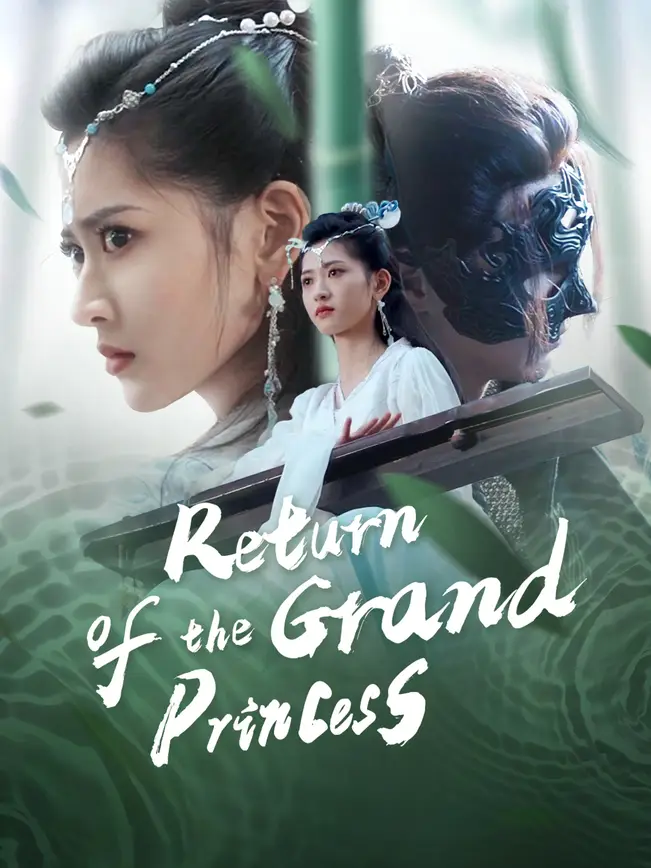
Rebirth




Karma Payback


 Download