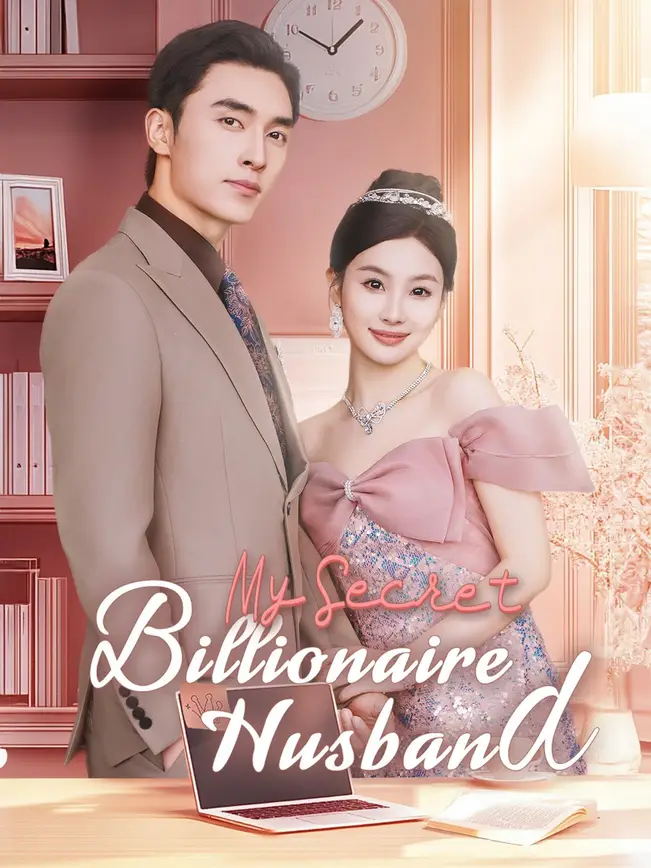
My Secret Billionaire Husband Storyline
My Secret Billionaire Husband More details
Genres:Slow-Burn Romance/Flash Marriage/Love After Marriage
Language:English
Release date:2024-12-06 18:00:00
Runtime:106min
My Secret Billionaire Husband: When the Gala Lights Expose More Than Diamonds
There’s a specific kind of horror that only elite social events can produce—not the jump-scare kind, but the slow-drip dread of realizing your entire life has been staged without your consent. In this unforgettable sequence from *My Secret Billionaire Husband*, the grand ballroom of the Shen Group Annual Gala isn’t just a venue; it’s a cage lined with velvet and lit by deception. Every detail is curated to impress: the floral mural dominating the back wall, the geometric patterns in the carpet that guide guests like cattle toward the stage, the way the microphones gleam under spotlights like weapons waiting to be drawn. And at the center of it all? Three people whose fates collide with the precision of a clockwork trap. Lin Xiao enters the frame like a ghost haunting her own life. Her gown—yes, the one covered in metallic discs and fractured gemstones—isn’t flashy; it’s *defiant*. It says: I am here, and I refuse to fade. Her hair is braided in a crown of restraint, her pearl earrings modest, almost apologetic. She wears no tiara. No crown. Just a necklace that drips with elegance and exhaustion. When she speaks, her voice wavers—not from weakness, but from the sheer weight of holding back what she *wants* to scream. Her eyes dart between Shen Yichen and Su Mian, two figures who’ve somehow become a single unit in the span of five minutes. Shen Yichen, in his taupe suit with the ornate lapel pin (a phoenix clutching a sapphire—how *on the nose*), doesn’t look guilty. He looks *resolved*. His posture is upright, his gestures economical. He’s not hiding. He’s *presenting*. And Su Mian? Oh, Su Mian. She doesn’t smirk. She doesn’t gloat. She *blossoms*. Her dress—a dusty rose confection with a bow so enormous it defies physics—doesn’t hide her. It announces her. The tiara isn’t borrowed; it’s inherited. The diamond necklace matches her earrings, which match her bracelet, which matches the clasp on her clutch. Everything about her is coordinated, calculated, *complete*. She holds the violin case like a relic, not a tool. It’s not about music. It’s about legacy. About lineage. About being the *right* kind of woman for a man like Shen Yichen. The real storytelling happens in the silences. Watch Shen Yichen’s hands. When he takes Su Mian’s, his thumb strokes her knuckles—once, twice—a gesture so intimate it feels invasive to witness. Compare that to how he *didn’t* touch Lin Xiao when she approached him earlier. No handshake. No brush of fingers. Just a stiff nod, as if acknowledging a staff member. And Lin Xiao? She notices. Of course she does. Her breath hitches. Her shoulders tense. She doesn’t cry. She *calculates*. Her gaze flicks to the audience—the women in gold and ivory, the men in charcoal and navy—and she sees it: the knowing glances, the suppressed giggles, the way two guests raise their glasses not in toast, but in *tribute*. They’re not celebrating love. They’re celebrating *order restored*. Because in this world, Lin Xiao was always the anomaly: the girl who married the billionaire without a pedigree, without a trust fund, without a single relative who’d ever graced the cover of *Wealth & Legacy* magazine. What’s chilling is how *normal* it all feels. No shouting. No dramatic collapses. Just a quiet unraveling, conducted in whispers and wrist movements. When Lin Xiao stumbles toward the podium, it’s not clumsiness—it’s displacement. Her body doesn’t know where to go because her identity has been erased. The dress that once made her feel powerful now feels like a costume she forgot to take off after the play ended. And yet… there’s power in that stumble. In that moment, she becomes the only person in the room who’s *real*. Everyone else is performing. Shen Yichen plays the dutiful heir. Su Mian plays the destined bride. The guests play the appreciative audience. Only Lin Xiao is living the truth: that love, when built on sand, doesn’t crumble with a roar—it dissolves with a sigh. The kiss is the final nail. Not violent. Not passionate. Just… inevitable. Shen Yichen leans in, Su Mian tilts her head, and the world holds its breath. The camera zooms in—not on their lips, but on Lin Xiao’s face, reflected in the polished surface of the podium. In that reflection, you see everything: the shock, the grief, the dawning fury. And then—something else. A spark. A refusal to be erased. She doesn’t leave. She *stays*. She watches. She *records* it in her memory like evidence. Because in *My Secret Billionaire Husband*, the most dangerous weapon isn’t money or influence. It’s awareness. The moment you realize you’ve been cast as the supporting character in your own story? That’s when the revolution begins. Notice the details the director lingers on: the way Su Mian’s earring catches the light like a beacon. The way Shen Yichen’s cufflink—a tiny dragon’s eye—glints when he moves his arm. The way Lin Xiao’s bracelet, simple and silver, remains untouched, unadorned, *hers*. These aren’t accidents. They’re clues. The dragon’s eye watches. The earring signals status. The bracelet? It’s the only thing that hasn’t been bought, bartered, or inherited. It’s the last piece of her that belongs solely to her. And then—the applause. Not for love. For closure. For the restoration of hierarchy. The two women in the crowd—the one in ivory, the one in gold—they don’t just clap. They *lean in*, as if sharing a secret. Their laughter is bright, sharp, devoid of malice because they don’t see Lin Xiao as a threat anymore. She’s been neutralized. Written out. Replaced. But here’s the twist the audience feels in their bones: Lin Xiao isn’t broken. She’s *awake*. The gala didn’t end her story. It gave her a new first line. The final shot—her turning away, not in defeat, but in decision—tells us everything. *My Secret Billionaire Husband* isn’t about the man who left. It’s about the woman who finally stopped asking for permission to exist. The red carpet is stained now. Not with wine. With truth. And she’s the only one walking away with clean shoes.
My Secret Billionaire Husband: The Red Carpet Betrayal That Shattered Her Smile
Let’s talk about the kind of emotional whiplash that only a high-stakes gala scene can deliver—especially when it’s wrapped in sequins, champagne flutes, and a tiara that glints like a warning sign. In this pivotal sequence from *My Secret Billionaire Husband*, we’re not just watching a party; we’re witnessing the slow-motion collapse of a woman’s world, staged under glittering chandeliers and a backdrop that screams ‘corporate prestige.’ The protagonist, Lin Xiao, stands center frame in a strapless gown woven with iridescent coins and shattered-mirror fragments—a costume that feels less like fashion and more like armor forged from broken promises. Her hair is braided tightly, almost punishingly so, as if she’s trying to hold herself together with sheer willpower. And her necklace? A cascade of pearls and crystals, dangling like teardrops frozen mid-fall. She doesn’t cry—not yet—but her eyes do the talking: wide, trembling, betraying a disbelief so raw it borders on physical pain. Across the red carpet, Shen Yichen—the man who once whispered vows into her ear over candlelight—is now standing beside another woman. Not just any woman. It’s Su Mian, the heiress whose name has been whispered in boardrooms and gossip columns alike, dressed in a blush-pink confection with a bow so large it could double as a surrender flag. Her tiara isn’t just jewelry; it’s a crown of entitlement, perched atop a bun so immaculate it looks surgically secured. She holds a violin case—not because she plays, but because symbolism matters more than function in this world. When Shen Yichen turns toward her, his expression shifts from polite detachment to something softer, warmer, *intentional*. He reaches for her hand—not with urgency, but with ceremony. His fingers brush hers, then close around them, slow and deliberate. The camera lingers on their clasped hands: his gold watch gleaming, her diamond ring catching the light like a shard of ice. That ring. That very same ring Lin Xiao wore just minutes earlier—before the switch, before the silence, before the audience gasped in unison. What makes this scene so devastating isn’t the betrayal itself—it’s the *performance* of it. Everyone knows. The guests don’t whisper; they *laugh*, clink glasses, raise eyebrows in synchronized amusement. Two women in the crowd—one in ivory, one in gold—watch with open mouths, then erupt into delighted applause. They aren’t shocked. They’re *entertained*. This isn’t tragedy; it’s theater. And Lin Xiao? She’s the lead actress who just realized she’s been handed the wrong script. Her stumble backward, the way she grips the podium like it’s the last solid thing in a dissolving reality—that’s not acting. That’s real. Her dress, once dazzling, now seems to shimmer with irony: every sequin reflects a different angle of humiliation. When she finally speaks—her voice cracking like thin glass—it’s not an accusation. It’s a plea disguised as a question: ‘Was I ever part of the plan?’ The genius of *My Secret Billionaire Husband* lies in how it weaponizes glamour. The setting—a banquet hall with a mural of blooming peonies, tables draped in ivory linen, wine bottles lined up like soldiers—should feel celebratory. Instead, it feels like a courtroom where everyone’s already decided the verdict. Even the lighting conspires: cool blues and purples wash over the stage, while warm amber spotlights isolate Lin Xiao in the foreground, making her isolation *visible*. Shen Yichen doesn’t shout. He doesn’t sneer. He simply *looks away* when she locks eyes with him, his jaw tightening just enough to suggest regret—or maybe just inconvenience. And Su Mian? She smiles. Not cruelly. Not triumphantly. Just… serenely. As if she’s been waiting for this moment since childhood, rehearsing her entrance in front of a mirror while Lin Xiao was busy believing love could be quiet, steady, *theirs*. Then comes the kiss. Not a passionate clinch, but a slow, public ritual—lips meeting under the glow of LED stars projected onto the screen behind them. The crowd cheers. Someone shouts ‘Congratulations!’ Lin Xiao watches, frozen, as if time has peeled back a layer of her skin. In that instant, you see the exact moment hope dies. Not with a bang, but with a sigh. A breath held too long. A hand that reaches out instinctively, then drops. The camera cuts to her bracelet—a delicate silver chain, the kind you’d buy at a street market, not a boutique. It’s the only thing on her that doesn’t sparkle. The only thing that still feels *hers*. This isn’t just a breakup. It’s a recalibration of identity. Lin Xiao entered this room as Shen Yichen’s wife. She leaves it as ‘the woman in the coin dress’—a footnote in someone else’s fairy tale. And yet… there’s a flicker. In the final shot, as the applause swells and Su Mian leans into Shen Yichen’s shoulder, Lin Xiao lifts her chin. Not defiantly. Not angrily. Just… deliberately. Her lips part, not to speak, but to breathe. To remember she still owns her lungs. Her legs. Her name. The music swells, the lights flare, and for one heartbeat, the camera holds on her face—not as a victim, but as a woman who’s just realized the script wasn’t written for her… but she can rewrite it anyway. That’s the real twist in *My Secret Billionaire Husband*: the secret wasn’t that he was rich. The secret was that she was never the damsel. She was always the storm. And let’s not forget the violin. Su Mian never opens the case. She doesn’t need to. The instrument is symbolic—a promise of harmony, of artistry, of a life curated for aesthetic perfection. Meanwhile, Lin Xiao’s only prop is the podium, a symbol of voice, of testimony, of being heard. One holds music. The other holds truth. Guess which one cracks first.
My Secret Billionaire Husband: When Gowns Speak Louder Than Words
In the hushed opulence of the Celestial Banquet Hall, where chandeliers drip like frozen constellations and the carpet swirls in patterns reminiscent of ancient silk maps, a silent war unfolds—not with swords or scandals, but with sequins, silhouettes, and the precise angle of a raised eyebrow. This is not merely a gala; it’s a stage set for psychological theater, and the lead performers—Mei Lin, Ling Xiao, and Jian Yu—are delivering a performance so layered, so meticulously calibrated, that even the waitstaff pause mid-stride to watch. My Secret Billionaire Husband has long mastered the art of visual subtext, but this sequence elevates it to high art: every stitch, every jewel, every hesitation is a sentence in a language only the initiated can fully translate. Let’s begin with Mei Lin. Her dress—strapless, sculpted, a mosaic of iridescent discs—is not clothing; it’s a manifesto. Each reflective shard catches the ambient light and fractures it into prismatic shards, mirroring the fragmentation of her composure. She wears no gloves, no shawl, no veil—only a delicate pearl choker that seems to pulse with each heartbeat. Her hair, braided in a crown-like weave, suggests both regality and restraint, as if she’s holding herself together with thread and willpower alone. When Jian Yu approaches, her breath hitches—not audibly, but visibly, in the slight lift of her collarbone. She doesn’t flinch. She doesn’t retreat. Instead, she tilts her head, just enough to let the light catch the teardrop earring she’s worn since their engagement party two years ago. That earring is a ghost. A relic. A question no one dares ask aloud. And yet, in My Secret Billionaire Husband, ghosts have volume. They speak through the way Mei Lin’s fingers brush the edge of her gown, as if checking for seams that might give way under pressure. Then there’s Ling Xiao—radiant, composed, devastatingly *present*. Her gown, a confection of blush silk and holographic sequins, features a bow so large it functions less as adornment and more as a declaration: *I am here. I am seen. I am not leaving.* The tiara perched atop her updo isn’t borrowed; it’s commissioned, custom-fitted, a symbol of legitimacy she’s fought for. Her necklace, a cascade of diamonds shaped like falling petals, echoes the floral motif on Jian Yu’s tie—a detail too deliberate to be coincidence. This is the genius of My Secret Billionaire Husband: the costuming isn’t random. It’s forensic. When Ling Xiao smiles at the microphone, her lips part just enough to reveal the faintest hint of tension in her jawline. She’s not nervous. She’s *ready*. Ready to perform the role of the perfect wife, even as her eyes dart toward Mei Lin with the precision of a sniper assessing a target. Their interaction is a dance of proximity and avoidance—Ling Xiao extends her hand, palm up, inviting Jian Yu to join her at the podium, while Mei Lin remains rooted, her posture rigid, her wineglass held like a talisman against intrusion. Jian Yu, meanwhile, moves through this minefield with the grace of a man who’s memorized every landmine but still expects to step on one. His taupe suit is understated, almost humble—until you notice the brooch: a silver eye with a sapphire pupil, suspended by a delicate chain that sways with each step. It’s not jewelry; it’s surveillance equipment disguised as elegance. He speaks sparingly, his voice low, modulated, each word chosen like a chess piece. When he addresses Ling Xiao, his tone is warm, reverent—even tender. But when his gaze slides toward Mei Lin, it hardens, not with anger, but with something colder: recognition. He knows what she knows. He remembers what she remembers. And in My Secret Billionaire Husband, memory is the most dangerous currency of all. The turning point arrives not with a shout, but with a gesture. Mei Lin, after enduring minutes of polite torment, lifts her hand—not to strike, not to plead, but to *adjust* her sleeve. A seemingly trivial act. Except her sleeve is sheer, embroidered with gold chains that drape over her forearm like shackles. As she moves, the chains catch the light, and for a split second, the reflection reveals something etched into the inner lining: a date. June 17th. The day Jian Yu disappeared for three days. The day Ling Xiao’s engagement ring was first photographed in the society pages. The audience doesn’t see it clearly—but Mei Lin does. And in that instant, her expression shifts from wounded pride to quiet fury. She doesn’t confront him. She doesn’t demand answers. She simply turns her head, lets her hair fall forward like a curtain, and whispers something to the woman beside her—a friend, a confidante, perhaps even a private investigator hired months ago. The friend’s eyes widen. She nods. The gossip network activates in real time. What follows is a symphony of micro-reactions. Ling Xiao’s smile tightens at the corners. Jian Yu’s knuckles whiten where he grips the podium. A waiter stumbles, spilling champagne—not on anyone, but near Mei Lin’s feet, as if the universe itself is trying to wash away the tension. The camera pulls back, revealing the full tableau: three figures at the center, surrounded by onlookers who are no longer passive. They’re participants. One woman in a gold halter gown raises her glass in a mock toast; another mouths the words *‘She knew’* to her companion. This is the true horror—and beauty—of My Secret Billionaire Husband: the scandal isn’t the affair. It’s the collective complicity. Everyone sees. Everyone knows. And yet, no one intervenes. Because in this world, truth is not spoken; it’s *worn*, it’s *lit*, it’s *performed* until the mask becomes the face. The final moments are haunting in their restraint. Mei Lin walks away—not fleeing, but retreating with dignity, her gown catching the light like a dying star. Jian Yu watches her go, his expression unreadable, but his hand drifts unconsciously to his pocket, where a folded letter rests, sealed with wax bearing the same eye motif as his brooch. Ling Xiao steps forward, takes the microphone, and begins to speak. Her voice is clear, melodic, flawless. She thanks the donors, praises the cause, mentions ‘unity’ and ‘shared purpose.’ But her eyes—oh, her eyes—they keep flicking toward the exit, toward where Mei Lin vanished. And in that glance, we understand everything. My Secret Billionaire Husband isn’t about who slept with whom. It’s about who gets to define the story. Who controls the lighting. Who decides which truth gets to glitter under the spotlight—and which one gets buried in the shadows, waiting for the next gala, the next gown, the next betrayal dressed in silk and sorrow.
My Secret Billionaire Husband: The Red Carpet Betrayal
The grand banquet hall of the Grand Jade Palace glows under a constellation of recessed ceiling lights, its polished marble floors reflecting the shimmer of sequined gowns and tailored suits. At the center of this opulent stage, two women—Ling Xiao and Mei Lin—stand poised like rival queens on a crimson runway, their postures elegant but charged with unspoken tension. Ling Xiao, in a blush-pink off-shoulder gown adorned with a colossal satin bow and iridescent sequins, wears a tiara that catches every flash of light like a crown of stolen stars. Her smile is practiced, her eyes sharp, her voice smooth as honey poured over ice when she speaks into the microphone—though what she says remains unheard, the cadence alone suggests performance, not confession. Beside her, Mei Lin radiates defiance in a strapless dress woven from mirrored discs and metallic confetti, each movement sending ripples of silver, cobalt, and rose-gold across her torso. Her braided hair frames a face that shifts from haughty composure to raw disbelief within seconds—a micro-expression arc that tells more than any dialogue ever could. Enter Jian Yu, the man whose presence instantly rewrites the emotional gravity of the room. Dressed in a taupe suit with a floral-patterned navy tie and a brooch shaped like a winged eye—perhaps a nod to surveillance, perhaps just aesthetic irony—he steps between them with the calm of someone who’s rehearsed this entrance a hundred times. His first gesture is subtle: he takes Ling Xiao’s hand, not in affection, but in protocol. A public affirmation. Yet his gaze flickers—just once—to Mei Lin, and in that split second, the audience (and we, the viewers) feel the tremor. This isn’t just a social gathering; it’s a live broadcast of a marriage unraveling in real time, disguised as a charity gala. The background guests murmur, sip wine, and lean in—not out of malice, but because human drama, especially when dressed in couture and lit by LED gradients, is irresistible. Two women in gold-and-silver gowns—one holding a violin case like a weapon, the other clutching a glass of Bordeaux like a shield—exchange glances that speak volumes about shared history, betrayal, and the unbearable weight of being the ‘other woman’ in a story where no one admits to writing the script. What makes My Secret Billionaire Husband so compelling here is how it weaponizes silence. There are no shouted accusations, no dramatic slaps—only the tightening of Mei Lin’s jaw as Jian Yu turns toward Ling Xiao, the way her fingers twitch at her side as if resisting the urge to reach for something hidden beneath her gown. Is it a phone? A letter? A vial of truth serum? We don’t know—and that’s the point. The show thrives on ambiguity, letting costume, lighting, and choreographed proximity do the storytelling. Notice how the camera lingers on hands: Ling Xiao’s manicured nails gripping the violin case, Mei Lin’s trembling fingers around her wineglass, Jian Yu’s steady grip on Ling Xiao’s wrist—each touch a silent declaration. Even the background extras contribute: the woman in the ivory chain-strap gown points discreetly toward Mei Lin, whispering to her friend in gold sequins, their expressions oscillating between shock and schadenfreude. They’re not just spectators; they’re co-conspirators in the narrative, feeding the rumor mill with every raised eyebrow. The emotional pivot arrives when Mei Lin finally speaks—not to Jian Yu, but to Ling Xiao. Her voice, though muffled by ambient music and distance, carries a brittle clarity. She doesn’t accuse; she *recalls*. A phrase slips out—‘You said you’d never wear that dress again’—and suddenly, the entire scene fractures. Ling Xiao’s smile wavers. Jian Yu stiffens. The violin case is lowered an inch. That single line implies a past intimacy, a shared secret, a pact broken not by infidelity, but by *style*. In My Secret Billionaire Husband, fashion isn’t decoration—it’s evidence. The pink bow isn’t just pretty; it’s a flag planted on contested ground. The mirrored dress isn’t flashy; it’s armor, reflecting back the lies everyone else is too polite to name. And Jian Yu? He stands frozen, caught between two versions of truth, neither of which he can fully claim without collapsing the facade he’s spent years constructing. What follows is a masterclass in nonverbal escalation. Mei Lin doesn’t raise her voice. She steps forward—just one step—her heels clicking like a metronome counting down to detonation. Her eyes lock onto Jian Yu’s, and for the first time, he looks away. Not out of guilt, but out of calculation. He knows the rules of this game: the man who blinks first loses the narrative. Ling Xiao, sensing the shift, lifts her chin, adjusts her tiara with a flourish that’s equal parts grace and threat, and murmurs something that makes Mei Lin’s lips part in stunned recognition. Was it a name? A date? A location only they would know? The camera cuts to the crowd: gasps, stifled laughter, a man in a gray suit pulling out his phone—not to record, but to text. The gossip has already begun before the scene ends. This sequence exemplifies why My Secret Billionaire Husband resonates beyond typical melodrama. It understands that in elite circles, power isn’t seized—it’s *styled*. Every accessory, every pause, every sip of wine is a tactical move. Mei Lin’s pearl earrings aren’t just jewelry; they’re heirlooms, symbols of old money versus Ling Xiao’s new-money sparkle. Jian Yu’s brooch? It’s not decorative—it’s a signature, a brand logo stitched onto his identity. When he finally speaks, his words are measured, almost poetic: ‘Some truths don’t need witnesses. They just need light.’ And in that moment, the LED backdrop shifts from violet to crimson, bathing all three in the color of revelation. The audience doesn’t need subtitles to understand: the secret is out. Not because someone confessed, but because the lighting changed, and in this world, illumination is the ultimate betrayal. The final shot lingers on Mei Lin’s face—not crying, not shouting, but smiling faintly, as if she’s just won a war she never intended to fight. Because in My Secret Billionaire Husband, the real victory isn’t exposure—it’s surviving the aftermath with your dignity intact, even if your dress is still glittering with someone else’s lies.
My Secret Billionaire Husband: When the Tea Set Tells the Truth
Let’s talk about the tea set. Not the characters, not the dialogue, not even the brooch—though God knows that ship’s wheel deserves its own thesis—but the porcelain tea set, resting on the black lacquered table like a silent jury. White bone china, hand-painted with delicate floral motifs in rose and gold, arranged on a silver tray with handles shaped like swans’ necks. It’s absurdly ornate for a confrontation. And that’s exactly the point. In My Secret Billionaire Husband, luxury isn’t backdrop—it’s language. Every object in that room speaks louder than the actors themselves, and the tea set? It’s the chorus. The scene opens with Lin Jian bursting through the door, his suit rumpled, his breath uneven, his eyes scanning the room like a man searching for an exit he’s already missed. He doesn’t see the tea set. He sees Zhao Zeyu and Chen Yuxi, standing like statues in a museum exhibit he wasn’t invited to. But the camera does. It lingers on the teapot’s lid, slightly askew, as if someone reached for it and paused—mid-gesture, mid-thought. The cups are empty. No steam rises. No sugar spoon rests beside the creamer. This isn’t a gathering. It’s an interruption. A ritual halted. And the fact that the tea remains untouched tells us everything: no one came here to share comfort. They came to settle accounts. Chen Yuxi’s posture is impeccable—shoulders back, chin level, hands folded in front of her like a schoolgirl reciting poetry. But look closer. Her left hand, the one hidden from Lin Jian’s view, is curled slightly inward, thumb pressing against her index finger in a micro-gesture of anxiety—or anticipation. Her dress, pale blue with ruffled ivory trim, is vintage-inspired, modest, almost innocent. Yet the way she wears it—no fidgeting, no nervous tics—suggests she’s not playing the role of the wronged party. She’s playing the role of the *architect*. And Zhao Zeyu? He stands with his weight evenly distributed, one hand in his pocket, the other resting lightly on the back of the sofa, as if he owns the very air in the room. His brown suit is tailored to perfection, the fabric rich and heavy, the double-breasted cut giving him an air of authority that borders on regal. The brooch—yes, that damn brooch—is positioned precisely over his heart, not as decoration, but as a statement: *I steer my own fate.* When Lin Jian speaks—his voice urgent, his gestures broad and pleading—the camera cuts not to Zhao Zeyu’s reaction, but to Chen Yuxi’s eyes. They don’t widen in shock. They narrow, just slightly, as if she’s recalibrating her internal compass. She’s not surprised. She’s *waiting*. And when she finally responds, her voice (implied, not heard) is measured, deliberate, each word landing like a pebble dropped into still water. Her lips move with precision, her head tilted just enough to convey both respect and distance. She’s not defending herself. She’s redefining the terms of engagement. And in that moment, the tea set becomes symbolic: the cups remain empty because no one is offering reconciliation. They’re waiting for the verdict. The turning point arrives not with a shout, but with a touch. Zhao Zeyu steps forward—not toward Lin Jian, but toward Chen Yuxi. His movement is unhurried, confident, as if he’s walking across a stage he’s performed on a thousand times. He takes her hand. Not roughly. Not possessively. *Gently.* And the camera zooms in, not on their faces, but on their hands: her slender fingers, adorned with two rings—one simple gold band, the other a delicate diamond solitaire—and his larger, stronger hand, the watch on his wrist catching the light like a beacon. The contrast is intentional. She is refinement; he is power. Together, they form a new equation. And Lin Jian, standing just outside the frame of that intimacy, looks like a man watching his own reflection fade from a mirror. What’s fascinating about this sequence is how it subverts expectation. We’re conditioned to believe that the man in the dark suit is the protagonist—the wronged husband, the loyal lover, the moral center. But My Secret Billionaire Husband refuses that simplicity. Lin Jian is sympathetic, yes. His confusion is palpable, his pain visible in the tremor of his lower lip, the way his shoulders slump ever so slightly when Zhao Zeyu speaks. But sympathy isn’t the same as righteousness. And Chen Yuxi? She’s not a femme fatale. She’s not a victim. She’s a woman who has spent years navigating a world where her choices were limited, her voice muted, her worth measured in compliance. And now, standing in that opulent living room, she’s choosing differently. Not out of spite. Not out of greed. But out of *self-preservation*. The tea set remains untouched because she’s done performing hospitality for men who refuse to see her as anything but accessory. Zhao Zeyu’s final monologue—again, silent in the frame, but deafening in implication—is delivered with the calm of a man who knows he’s already won. His eyes never leave Chen Yuxi’s face. He doesn’t glance at Lin Jian. He doesn’t need to. The battle isn’t between them. It’s already been fought, and Chen Yuxi made her choice long before Lin Jian walked through that door. The brooch glints one last time as he nods, a gesture of acknowledgment, not triumph. He’s not gloating. He’s *relieved*. Because for him, this isn’t a conquest. It’s a homecoming. And Lin Jian? He stands there, hands clasped in front of him, his expression shifting from disbelief to dawning horror to something quieter, sadder: resignation. He doesn’t argue. He doesn’t beg. He simply *accepts*. And in that acceptance, we see the true tragedy of My Secret Billionaire Husband—not that Chen Yuxi chose Zhao Zeyu, but that Lin Jian never realized she had a choice at all. The tea set remains on the table, pristine, unused, a monument to the conversations that never happened, the truths that went unspoken, the love that was never truly mutual. This is the genius of the show: it doesn’t ask us to pick sides. It asks us to *witness*. To see how power operates not through force, but through silence, through gesture, through the careful placement of a teacup. Chen Yuxi’s transformation isn’t sudden. It’s cumulative. Every time she smiled politely while being dismissed, every time she nodded while being interrupted, every time she held her tongue to keep the peace—that was the groundwork. And now, in this single scene, she dismantles it all with a look, a gesture, a hand placed in another’s. The tea set stays untouched because some rituals, once broken, cannot be resumed. And in the world of My Secret Billionaire Husband, the most revolutionary act is not rebellion—it’s refusal. Refusal to perform. Refusal to wait. Refusal to be the silent guest at your own life’s banquet.
My Secret Billionaire Husband: The Ring That Changed Everything
The opening shot of the video—dark, quiet, a heavy wooden door parting just enough to let in a sliver of moonlight—sets the tone like a classic melodrama whispered behind velvet curtains. Then he steps through: Lin Jian, dressed in a charcoal suit that fits him like armor, his expression caught mid-breath, eyes wide not with fear but with the kind of startled realization that only comes when you’ve walked into a room where the rules have already changed without your consent. He doesn’t enter so much as *collide* with the scene already unfolding inside—a living room draped in opulence, where every detail screams inherited wealth and curated taste: the gilded chandelier casting honeyed light over a lacquered coffee table, the deep plum sofa flanked by silk-draped windows, the single rose in a white vase like a silent witness. And there they stand—Chen Yuxi in her pale blue dress, hair neatly parted and pinned low, pearl earrings catching the light like tiny moons; and Zhao Zeyu, the man in the caramel double-breasted suit, his lapel adorned with a ship’s wheel brooch that glints like a challenge. This isn’t just a meeting. It’s a reckoning. Lin Jian’s entrance is rushed, almost clumsy—he stumbles slightly on the threshold, his hand instinctively reaching for his pocket, perhaps for a phone, perhaps for reassurance. But what he finds instead is silence. Not the kind of silence that invites conversation, but the kind that presses down, thick and suffocating, like the air before a storm. His mouth opens—not to speak, but to *react*. His eyebrows lift, his lips part, and for a full three seconds, he does nothing but stare at Zhao Zeyu, who stands with one hand tucked casually into his trouser pocket, posture relaxed, gaze steady, as if he’s been expecting this moment for years. Chen Yuxi, meanwhile, remains still, hands clasped loosely in front of her, but her eyes flick between the two men like a pendulum caught between gravity and defiance. There’s no anger yet—only calculation, a quiet recalibration of reality. She knows something Lin Jian doesn’t. And that knowledge is the first crack in the foundation of his world. The camera lingers on Lin Jian’s face as he begins to speak—his voice, though unheard, is written across his features: confusion sharpening into suspicion, then into something sharper, something dangerous. He gestures with his palm up, an open-handed plea or accusation—it’s ambiguous, and that ambiguity is the point. He’s not asking a question; he’s demanding an explanation he’s not sure he wants to hear. Zhao Zeyu doesn’t flinch. Instead, he tilts his head, just slightly, and his lips curve—not quite a smile, more like the ghost of one, the kind reserved for people who’ve already won the game before the first move is made. His tie, patterned in gold-threaded herringbone, catches the light as he shifts his weight, and the brooch on his lapel seems to pulse with significance. That ship’s wheel isn’t just decoration. It’s symbolism. A man who navigates fate. A man who steers others’ lives. And now, he’s steering Lin Jian’s. Chen Yuxi’s turn comes next—and oh, how she owns it. Her expression shifts like quicksilver: from polite neutrality to mild surprise, then to something far more deliberate. When she raises her hand, index finger extended—not in accusation, but in *emphasis*—her nails are perfectly manicured, her ring catching the light: a simple band, silver, unadorned. Yet in that moment, it feels like a declaration. She doesn’t shout. She doesn’t cry. She simply *states*, and the weight of her words lands like a dropped anchor. Her voice, though silent in the frame, is implied in the way Zhao Zeyu’s eyes narrow, the way Lin Jian’s jaw tightens, the way the air itself seems to thicken around her. She’s not a victim here. She’s a strategist. And her weapon? Truth, delivered with the calm of someone who’s rehearsed this speech in the mirror a hundred times. What follows is a masterclass in nonverbal storytelling. Zhao Zeyu’s expression softens—not into kindness, but into something more insidious: *patience*. He watches Chen Yuxi with the quiet intensity of a predator who knows the prey has already stepped into the trap. His hands, previously loose, now come together in front of him, fingers interlaced, a gesture of control, of containment. He speaks again, and though we don’t hear the words, we see their effect: Chen Yuxi’s shoulders relax, just a fraction. Her lips part, not in shock, but in dawning understanding. And then—the turning point. Zhao Zeyu reaches out. Not toward Lin Jian. Not toward the table. Toward *her*. His hand covers hers, gently, deliberately, and the camera zooms in on their joined hands: her delicate wrist, adorned with a diamond bracelet that sparkles like captured starlight; his strong fingers, a gold watch gleaming beneath the cuff of his sleeve. The contrast is staggering. Power and grace. Control and surrender. And in that single touch, the entire dynamic shifts. Lin Jian, standing just feet away, looks like a man watching his own life dissolve in real time. This is where My Secret Billionaire Husband reveals its true texture—not in grand declarations or explosive confrontations, but in the quiet erosion of certainty. Lin Jian believed he knew Chen Yuxi. He believed he understood their relationship. He believed he was the center of her world. And yet here she stands, her hand in another man’s, her expression not guilty, but *resigned*, as if she’s finally allowed herself to stop pretending. The tragedy isn’t that she betrayed him. It’s that she never needed to. The betrayal was built into the architecture of their lives long before he walked through that door. Zhao Zeyu’s final lines—whatever they are—are delivered with the cadence of a man who’s already written the ending. His eyes lock onto Chen Yuxi’s, and for the first time, she smiles. Not the polite, practiced smile she wears for guests or colleagues. This is different. This is relief. This is recognition. This is the smile of a woman who has stopped running. And Lin Jian? He stands frozen, his mouth slightly open, his body rigid, his entire identity suspended in the space between what he thought was true and what is now undeniable. The camera pulls back, revealing the full tableau: three figures in a room too elegant for such raw human drama, the tea set on the table untouched, the rose wilting slowly in its vase, as if even nature is holding its breath. What makes this sequence so devastatingly effective is how it refuses melodrama. There are no raised voices, no shattering glass, no dramatic music swells. Just silence, gesture, and the unbearable weight of implication. Every glance, every shift in posture, every subtle tightening of the jaw tells a story deeper than any dialogue could. Chen Yuxi’s transformation—from demure observer to quiet architect of her own fate—is executed with such restraint that it feels inevitable, even righteous. Zhao Zeyu doesn’t need to dominate the scene; he simply *occupies* it, like a king returning to his throne. And Lin Jian? He’s the tragic figure not because he’s weak, but because he’s *honest*. He believed in love as a contract, not a negotiation. And in the world of My Secret Billionaire Husband, love is always a negotiation—one where the terms are written in gold leaf and signed in blood. The final shot lingers on Chen Yuxi’s face as she looks at Zhao Zeyu, her smile softening into something tender, almost reverent. Then, slowly, her gaze drifts to Lin Jian—not with pity, but with sorrow. Not for him, perhaps, but for the version of herself she had to bury to survive. In that moment, we understand: this isn’t about who she chooses. It’s about who she *becomes*. And My Secret Billionaire Husband, in its quiet, devastating brilliance, reminds us that sometimes, the most radical act a woman can commit is to stop waiting for permission to claim her own destiny.
My Secret Billionaire Husband: The Podium and the Pawn
The moment Chen Wei stepped onto the stage, the atmosphere in the banquet hall didn’t shift—it *fractured*. Like glass under pressure, the polished veneer of corporate camaraderie splintered into something raw, electric, and deeply personal. He moved with the confidence of a man accustomed to commanding boardrooms, yet his hands betrayed him: one rested lightly on the lectern, the other flexed at his side, fingers curling inward as if gripping an invisible thread. Behind him, the LED screen pulsed with animated stars and the bold Chinese characters 沈氏集团年度团建宴—Shawn Group Annual Team Building Banquet—but the real story unfolded in the micro-expressions of those watching. Lin Xiao stood frozen near the front, her sequined gown catching the light like scattered currency, her face a mask of practiced neutrality. Yet her pulse, visible at the base of her throat, throbbed like a second heartbeat. Shen Yuting, still holding her violin, watched Chen Wei with the quiet intensity of a predator assessing prey—not out of malice, but out of duty. She had rehearsed this moment in her mind a thousand times. In *My Secret Billionaire Husband*, she wasn’t just a musician; she was the keeper of a secret so heavy it had bent her spine over the years. And tonight, she would let it go—or force someone else to pick up the pieces. Chen Wei began to speak. His voice, amplified by the microphone, was smooth, practiced, the kind of tone used to announce quarterly profits or welcome new investors. ‘Thank you all for being here,’ he said, ‘for celebrating not just our successes, but the people who make them possible.’ Polite applause followed. But his eyes didn’t scan the crowd. They locked onto Lin Xiao. Not with affection. With suspicion. Earlier, during the pre-event mingling, he’d overheard a fragment of conversation—Li Na, his assistant, murmuring to Wang Mei, ‘Did you know Lin Xiao’s father was Chairman Lin? The one who vanished after the audit?’ Chen Wei had dismissed it as gossip. Until he saw Lin Xiao’s reaction when Shen Yuting entered the room: not surprise, but *recognition*. A flicker of something ancient passing between them—like two chess pieces remembering they belonged to the same game. Now, as he spoke, his words grew tighter, more precise. ‘We build teams not just through strategy,’ he continued, ‘but through trust. And trust, as we all know, is fragile. It can be broken by a single lie.’ He paused. The room tensed. Shen Yuting’s knuckles whitened around the violin’s neck. Lin Xiao didn’t blink. What followed wasn’t a speech. It was an interrogation disguised as gratitude. Chen Wei spoke of loyalty, of legacy, of debts unpaid—and each phrase landed like a stone dropped into still water, sending concentric ripples through the audience. Some guests exchanged glances, confused. Others, like the older woman in the silver qipao—Madam Zhou, Chairman Lin’s former legal counsel—simply closed her eyes, as if bracing for impact. She knew what was coming. In *My Secret Billionaire Husband*, Madam Zhou had been the one who handed Lin Xiao the forged documents, the fake ID, the one-way ticket to Shanghai. ‘You’re not safe here,’ she’d said. ‘But you’ll be safe *with him*.’ She hadn’t known Chen Wei would fall in love with the ghost Lin Xiao had become. Nor had she predicted that Shen Yuting, the violinist who’d once played lullabies for Lin Xiao during sleepless nights in Vienna, would return—not for fame, but for justice. Then came the turning point. Chen Wei stepped away from the lectern, his voice dropping to a near-whisper, though the mic caught every syllable. ‘There’s someone here tonight who knows more than she lets on. Someone who’s been waiting for this moment.’ He turned fully toward Shen Yuting. ‘You’ve played beautifully. But music isn’t the only language you speak, is it?’ Shen Yuting didn’t flinch. She simply raised the violin again—not to play, but to hold it like a shield. ‘I speak the truth,’ she said, her voice clear, unwavering. ‘And the truth is this: Lin Xiao didn’t marry you for your money. She married you because you were the only person in the world who wouldn’t ask questions. Because you were kind. Because you saw *her*, not the name on the papers.’ A gasp rippled through the crowd. Lin Xiao’s composure cracked—just for a second—as tears welled, unshed. Chen Wei’s face went pale. He took a step back, then another, as if the floor itself had turned unstable. ‘You’re lying,’ he said, but his voice lacked conviction. Shen Yuting shook her head. ‘Check the safe behind the painting in your study. The one with the phoenix emblem. Inside, you’ll find the original will. Signed by Chairman Lin. Dated the day before he disappeared. It names Lin Xiao as heir. And you… as guardian. Not husband. Not lover. *Guardian*.’ The room erupted—not in chaos, but in stunned silence, heavier than any noise. Li Na dropped her wineglass. Wang Mei covered her mouth. Madam Zhou opened her eyes and nodded, just once, as if confirming a prophecy fulfilled. Chen Wei stood motionless, his mind racing through three years of memories, recontextualizing every laugh, every kiss, every whispered ‘I love you’—had they been lies? Or had Lin Xiao loved him *despite* the deception? In *My Secret Billionaire Husband*, this was the climax: not a confrontation, but a revelation that rewrote reality. Lin Xiao finally moved. She walked past Chen Wei, not toward the exit, but toward Shen Yuting. She didn’t take the violin. She took Shen Yuting’s hand. ‘You didn’t have to do this,’ she said softly. ‘I was going to tell him myself. On our anniversary. Tomorrow.’ Shen Yuting smiled—a real smile, weary but warm. ‘Some truths don’t wait for calendars.’ Then, without warning, Chen Wei reached out. Not to stop them. Not to accuse. He took Lin Xiao’s other hand. His grip was firm, his eyes searching hers. ‘Then tell me now,’ he said. ‘Not as Chairman Lin’s daughter. Not as Shawn Group’s heir. Tell me as *you*. Who are you?’ The question hung in the air, unanswered, as the lights dimmed and the screen behind them faded to black—leaving only the echo of a violin string, still vibrating, long after the bow had left it.
My Secret Billionaire Husband: The Violinist's Silent Rebellion
In the opulent ballroom of the Shawn Group Annual Team Building Banquet, where crystal chandeliers cast fractured light across a sea of sequins and silk, something far more volatile than champagne bubbles was simmering beneath the surface. The air hummed not just with ambient music but with unspoken tensions—glances held too long, fingers tightening around wineglasses, smiles that never quite reached the eyes. At the center of it all stood two women, each radiating a different kind of power: Lin Xiao, in her iridescent strapless gown studded with mirrored discs that caught every flicker of light like shattered constellations, and Shen Yuting, draped in a blush-pink confection crowned by a bow so large it seemed to defy gravity—and perhaps logic. Shen Yuting carried a violin, not as an accessory, but as a weapon she hadn’t yet drawn. Her posture was poised, her smile serene, yet her eyes—those sharp, intelligent eyes—held the quiet intensity of someone who knew exactly how much control she wielded over the room. She didn’t need to speak to command attention; the mere act of walking toward the stage, heels clicking like a metronome counting down to revelation, sent ripples through the crowd. Guests shifted, whispered, turned their heads—not out of curiosity, but out of instinct. Something was about to break. Lin Xiao, meanwhile, stood near the front row, arms folded, her expression unreadable. She wore pearls—not the delicate strands one might expect at such an event, but a multi-tiered cascade that clung to her collarbone like armor. Her hair was braided back with precision, each strand in place, as if her entire being had been curated for maximum composure. Yet when Shen Yuting passed her on the way to the stage, Lin Xiao’s breath hitched—just slightly—and her gaze followed, not with envy, but with something colder: recognition. This wasn’t the first time they’d shared a stage, though the audience didn’t know that. In *My Secret Billionaire Husband*, the narrative had already seeded this moment: Lin Xiao, the heiress who married into wealth under mysterious circumstances; Shen Yuting, the prodigy whose talent was matched only by her discretion. Their past intersected in a conservatory in Vienna, where both studied under Maestro Voss—a man whose influence lingered like perfume in a sealed room. He’d once told them, ‘Music doesn’t lie. But people do.’ That line echoed now, unspoken, as Shen Yuting lifted the violin to her chin and drew the bow across the strings. The performance began not with a grand flourish, but with a single, sustained note—pure, clear, almost painful in its simplicity. The room fell silent. Even the waitstaff paused mid-step. Shen Yuting’s fingers moved with surgical grace, her left hand pressing into the neck of the instrument as if coaxing secrets from its wood. Her right arm, wrapped in sheer fabric, arced like a dancer’s limb, each motion deliberate, each pause pregnant with meaning. She wasn’t playing for applause. She was playing for *him*. And he was watching. Chen Wei, the man in the taupe suit with the ornate lapel pin shaped like a phoenix—his presence had been subtle until now, standing slightly apart, arms crossed, jaw set. He was the CEO of Shawn Group, yes, but more importantly, he was the man Lin Xiao had married three years ago without ever revealing her true identity to him. In *My Secret Billionaire Husband*, his ignorance was the engine of the plot: he believed she was a former assistant, a girl from a modest background who’d charmed her way into his life. What he didn’t know was that Lin Xiao was the daughter of the late Chairman Lin, whose empire had collapsed under scandal—and whose final will named Chen Wei as sole executor… and Lin Xiao as sole heir, provided she remained anonymous until the third anniversary of their marriage. Tonight was that night. As Shen Yuting played, her melody shifted—subtly, dangerously—from classical to something more modern, more dissonant. A motif emerged, one that Chen Wei would recognize instantly if he’d ever listened closely to the recordings hidden in his study: the theme from the Lin family’s private symphony, composed by Chairman Lin himself for his daughter’s sixteenth birthday. Shen Yuting wasn’t just performing. She was testifying. Her eyes, when they met Lin Xiao’s across the room, held no malice—only sorrow, and resolve. She had been Lin Xiao’s confidante, her protector, the one who helped her disappear after the scandal broke. And now, she was forcing the truth into the open, not with words, but with sound. The guests, unaware of the subtext, murmured in awe. One woman in gold sequins—Li Na, Chen Wei’s longtime executive assistant—leaned toward her friend and whispered, ‘She’s incredible. But why does she keep looking at Lin Xiao like that?’ Her friend, Wang Mei, sipped her wine and replied, ‘Because Lin Xiao isn’t who she says she is. I saw her passport once. The name was different.’ Chen Wei, however, remained still. Too still. His expression didn’t change—not when the violin’s pitch climbed, not when Shen Yuting’s bow trembled ever so slightly, not even when the final note hung in the air like a blade suspended above the crowd. Then, silence. Absolute. For three full seconds, no one breathed. Shen Yuting lowered the violin, her chest rising and falling rapidly, her lips parted as if she’d just run a marathon. She didn’t look at the audience. She looked at Lin Xiao. And Lin Xiao, finally, stepped forward. Not toward the stage—but toward *him*. She walked with the same measured pace Shen Yuting had used, her heels echoing in the sudden void of sound. When she reached the edge of the red carpet, she stopped. Chen Wei turned to face her. No words. Just eye contact—two people who had shared a bed, a life, a future, and yet stood on opposite sides of a truth neither had dared name. Then, slowly, Lin Xiao extended her hand. Not in supplication. In invitation. To the truth. To the reckoning. To the next chapter of *My Secret Billionaire Husband*, where love and legacy collide in a ballroom lit by false stars and real consequences.
My Secret Billionaire Husband: When the Violin Speaks Louder Than Words
There’s a moment in *My Secret Billionaire Husband*—around the 1:14 mark—that doesn’t feature dialogue, close-ups, or even direct eye contact. Just a violin, lifted by a woman in a gown that shimmers like liquid moonlight, and a man in a beige suit who stops walking, mid-stride, as if the floor beneath him has turned to quicksand. That moment isn’t background filler. It’s the thesis statement of the entire series. Because in *My Secret Billionaire Husband*, music isn’t decoration. It’s testimony. And Chen Yiran, with her bow hovering above the strings, isn’t performing. She’s *accusing*. Let’s rewind. Earlier, in the sterile calm of Room 307, Lin Xiao’s world was measured in milliliters of saline and the rhythm of a heart monitor. Her wrist—bandaged, fragile—was the only proof she’d survived whatever happened before the screen faded to black. Shen Yu arrived not with flowers or platitudes, but with presence: his coat draped over the chair, his watch checked not for impatience, but for precision. He spoke softly, his voice low and steady, like a surgeon explaining a procedure. ‘You’re safe now,’ he said—not as reassurance, but as fact. And Lin Xiao, who had spent the previous minutes blinking back tears she refused to shed, finally let one fall. Not because she was broken. Because she was *believed*. That’s the foundation *My Secret Billionaire Husband* builds upon: trust as architecture. Not grand gestures, but the quiet accumulation of evidence—his hand resting on hers for three full seconds longer than necessary, the way he adjusted the pillow behind her back without asking, the subtle shift in his posture when she mentioned her sister’s name. Every detail was a brick. And when she hugged him—when she *melted* into him—it wasn’t surrender. It was recognition. She finally saw the man behind the suit, the billionaire behind the secrecy, and she chose him anyway. Not because he saved her life, but because he *witnessed* her fear and didn’t look away. Cut to the banquet. The room is a cathedral of excess: crystal chandeliers, crimson carpets, guests dressed like they’re auditioning for a royal wedding. Lin Xiao enters not as a guest, but as a revelation. Her silver gown isn’t just beautiful—it’s *defiant*. Each sequin catches the light like a tiny mirror, reflecting not just the room, but the transformation within her. She moves with a new gravity, her heels clicking like a metronome counting down to inevitability. And when she spots Shen Yu—walking in with his assistant, checking his watch, that same controlled elegance intact—her pulse doesn’t race. It *settles*. Because she knows. She knows the weight of his silence, the depth of his loyalty, the way his fingers still remember the shape of her wrist. Then Chen Yiran appears. Not from the wings. From the *center*. Her entrance is a sonnet in motion: pink tulle, oversized bow, tiara gleaming like a coronet, violin cradled like a sacred text. She doesn’t smile at the crowd. She smiles at *him*. And for a second—just a second—Shen Yu’s expression flickers. Not guilt. Not hesitation. *Recognition*. Because Chen Yiran isn’t a rival. She’s a ghost. A reminder of the life he almost led, the persona he wore before Lin Xiao cracked it open in a hospital bed. Her music, when it finally begins, isn’t melodic. It’s questioning. Sharp staccatos, lingering minors, a phrase repeated three times like a plea he’s heard before. The guests lean in. Women exchange glances—some pitying, some calculating. One in gold sequins whispers to another in ivory: ‘Is that *her*?’ Meaning Lin Xiao. Meaning the girl who vanished after the accident. Meaning the one who came back… different. Stronger. *Known*. What makes *My Secret Billionaire Husband* so devastatingly effective is how it weaponizes silence. Shen Yu never says ‘I love you’ in the banquet scene. He doesn’t need to. His body language does the talking: the way he steps *toward* Lin Xiao when Chen Yiran’s bow lifts, the way his hand drifts toward his pocket—where, we later learn, he keeps a folded note she wrote him during her recovery. And Lin Xiao? She doesn’t confront Chen Yiran. She doesn’t demand explanations. She simply walks forward, her gown whispering against the carpet, and takes Shen Yu’s hand. Not dramatically. Not for show. Like it’s the most natural thing in the world—which, for them, it is. The violin stops. The room holds its breath. Chen Yiran lowers her instrument, her smile tight, her eyes glistening—not with tears, but with the dawning understanding that some battles aren’t won with talent or beauty, but with *time*. With shared silence. With a bandaged wrist held in a billionaire’s palm while the world slept outside the window. *My Secret Billionaire Husband* doesn’t romanticize wealth. It interrogates it. What does it mean to be rich when the only thing you crave is to be *seen*? Shen Yu had everything—power, influence, a reputation polished to perfection—until Lin Xiao looked at him with her bruised eyes and said, ‘Who are you, really?’ And in that question, his empire cracked open. The hospital room wasn’t a setback. It was the excavation site. Where they dug past the titles, the suits, the brooches, and found the man underneath: flawed, fiercely loyal, terrified of losing her twice. The final shot—Lin Xiao turning away from the stage, Shen Yu’s hand still in hers, Chen Yiran watching from the shadows—says everything. This isn’t a love triangle. It’s a reckoning. And the violin? It didn’t play the ending. It played the *before*. The life Shen Yu almost lived. The woman he almost became. The secret he almost kept forever. *My Secret Billionaire Husband* reminds us that sometimes, the loudest truths are spoken in the spaces between notes—in a hospital bed, in a handshake, in the quiet certainty of a woman who finally knows her worth isn’t measured in sequins or stock portfolios, but in the weight of a hand that refuses to let go.
My Secret Billionaire Husband: The Bandaged Wrist That Changed Everything
Let’s talk about the quiet storm that erupts in the first ten minutes of *My Secret Billionaire Husband*—where a hospital bed becomes the stage for emotional detonation. Lin Xiao, wrapped in pink-and-gray striped pajamas, sits upright with her left wrist swathed in white gauze, fingers slightly curled as if still holding onto pain—or memory. Her eyes, wide and unblinking, lock onto Shen Yu’s face like she’s trying to decode a cipher only he knows. He kneels beside her, not in supplication, but in deliberate proximity: brown double-breasted suit, gold ship-wheel brooch pinned like a silent declaration, his tie patterned with herringbone whispers of old money. His hands—clean, manicured, one bearing a simple gold band—gently cradle hers. Not to examine. To reassure. To claim. What’s fascinating isn’t just the physical gesture, but the *timing*. She doesn’t flinch. Doesn’t pull away. Instead, her expression shifts from guarded neutrality to something softer—almost startled—as if she’s just realized the man before her isn’t merely visiting. He’s *here*, fully, irrevocably. And when she finally speaks—her voice barely above breath—the camera lingers on her lips, the slight tremor in her lower jaw. It’s not weakness. It’s recalibration. She’s reassembling her world around this man who, moments ago, was just another well-dressed stranger in a corridor lined with antiseptic and silence. Then comes the hug. Not the polite side-embrace of acquaintances, but the kind where bodies collapse inward, ribs pressing against ribs, hair spilling over shoulders like spilled ink. Lin Xiao buries her face in Shen Yu’s chest; he holds her with both arms, one hand splayed across her back, the other threading through her hair—not possessive, but protective, as if shielding her from the very air around them. His eyes, visible over her shoulder, flicker with something raw: relief, yes, but also resolve. This isn’t just comfort. It’s a vow made without words. In that embrace, the hospital room shrinks. The IV stand fades. Even the warning sign on the wall—‘Observe dosage, timing, name’—becomes irrelevant. What matters is the pulse beneath fabric, the weight of trust transferred from one heartbeat to another. Later, when she smiles—*really* smiles, teeth showing, eyes crinkling at the corners—it’s not the smile of a patient recovering. It’s the smile of someone who’s just been handed a key to a door she didn’t know existed. And Shen Yu? He watches her like she’s the only light in a blackout. His posture remains formal, but his gaze softens, his lips parting just enough to let out a breath he’s been holding since he walked in. That moment—when he reaches for her wrist again, not to inspect the bandage, but to trace the edge of it with his thumb—is where *My Secret Billionaire Husband* stops being a trope and starts being *true*. Because love isn’t always fireworks. Sometimes, it’s a man in a tailored suit kneeling beside a hospital bed, whispering promises no nurse chart can document. The transition to the banquet hall isn’t just a scene change—it’s a tonal detonation. One minute, Lin Xiao is in pajamas, her world reduced to four walls and a drip stand. The next, she’s in a silver-sequined strapless gown, hair braided like a crown, pearls dripping from her neck like frozen tears turned to treasure. The contrast isn’t accidental. It’s narrative warfare. The banquet—Shawn Group Annual Team Building Banquet, per the screen behind her—is all glitter and noise, champagne flutes raised like weapons, women in gold and ivory sizing each other up with practiced glances. But Lin Xiao stands apart. Not because she’s aloof, but because she’s *changed*. Her smile now carries weight. It’s not naive joy; it’s hard-won certainty. When she catches sight of Shen Yu entering—this time in a beige suit, floral tie, a different brooch (a silver eagle with sapphire eyes)—her breath hitches. Just once. A micro-expression. But it’s enough. Because we, the audience, remember the bandage. We remember the hug. We know what *he* means to her now. And then—the violin. Not just any violin. A rich, amber wood instrument held like a relic, its bow poised mid-air as if waiting for permission to speak. Enter Chen Yiran, the third pillar of this emotional triangle, stepping forward in a blush-pink gown with a bow the size of a small sail, tiara catching the stage lights like scattered diamonds. She doesn’t play immediately. She *arrives*. Every step is choreographed confidence, every glance a challenge wrapped in silk. The guests murmur. The camera circles her like prey circling a flame. And Lin Xiao? She doesn’t look away. She watches, not with jealousy, but with quiet appraisal—as if measuring how much space this new variable occupies in Shen Yu’s orbit. That’s the genius of *My Secret Billionaire Husband*: it never tells you who the villain is. Chen Yiran isn’t evil. She’s *brilliant*, polished, musically gifted—and utterly unaware that the man she’s been courting for months has already pledged his silence, his loyalty, his *life* to someone else, in a hospital room no one else witnessed. When Shen Yu extends his hand—not to Chen Yiran, but to Lin Xiao, who’s standing near the edge of the crowd, still in her sequined armor—he doesn’t announce anything. He simply offers his palm. Open. Waiting. And Lin Xiao, after a heartbeat that stretches into eternity, places her hand in his. Not tentatively. Not reluctantly. *Decisively.* The banquet doesn’t end with a speech or a toast. It ends with three people standing in a triangle of unspoken history: Shen Yu, Lin Xiao, and Chen Yiran—each holding a different truth, each wearing a different kind of armor. The music swells. The lights dim. And somewhere, off-camera, a nurse checks a chart, unaware that the patient she treated last week just rewrote her entire future in a single handshake. That’s the magic of *My Secret Billionaire Husband*: it turns bandages into banners, hospital beds into altars, and quiet moments into revolutions. You don’t need explosions when you have a wrist held just so, a gaze held just longer, and a violin waiting—not to play, but to be heard.

Slow-Burn Romance
Flash Marriage


.jpg~tplv-vod-rs:651:868.webp)

 Download