




.jpg~tplv-vod-rs:651:868.webp)
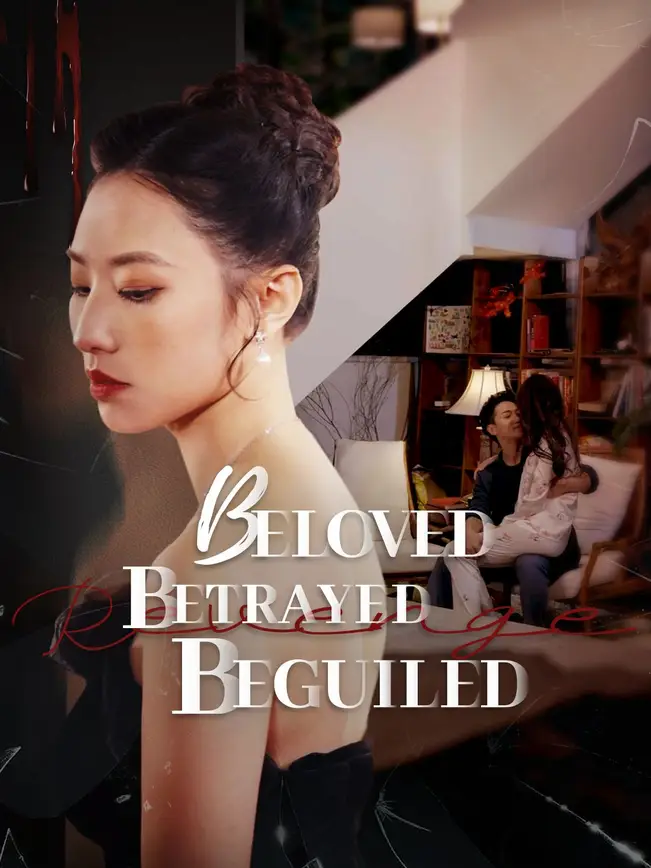
Betrayed by Beloved Storyline
Betrayed by Beloved More details
Genres:Rebirth/Underdog Rise/Karma Payback
Language:English
Release date:2024-12-20 12:00:00
Runtime:118min
Empowering and Captivating Drama for the Ages
Betrayed by Beloved is a masterpiece of drama and suspense. Darcy Allen's transformation from a wronged ex-wife to a successful businesswoman is both empowering and inspiring. The show brilliantly unravels the layers of deceit and misunderstandings, keeping viewers hooked with every episode. The emo
A Masterclass in Plot Twists and Character Growth
What makes Betrayed by Beloved stand out is its impeccable storytelling. The rebirth arc is handled with such finesse that it leaves you rooting for Darcy from start to finish. I loved how the show tackles misunderstandings and personal growth with such depth. The performances are stellar, and the d
Time Travel Done Right in this Emotional Rollercoaster
Ever wondered what you would do if you got a second chance at life? Betrayed by Beloved paints a vivid picture of just that. Darcy Allen's story is both heart-wrenching and empowering. The show does a fantastic job of blending the themes of rebirth and counterattack with the perfect sprinkle of dram
A Heart-Pounding Journey of Redemption!
Betrayed by Beloved is more than just a drama; it's a soul-stirring tale of redemption and second chances. Darcy's journey through time, caught between betrayal and love, kept me glued to my screen. The way she reinvents herself and tackles life's hurdles is truly inspiring. Plus, the twists with Ka
Betrayed by Beloved: When the Staircase Becomes a Confessional
The staircase in *Betrayed by Beloved* isn’t just architecture—it’s a psychological fault line. Marble steps, polished to a mirror sheen, reflect not just the figures ascending or descending, but the fractures in their relationships. When Xiao Yu first appears halfway up those stairs, clutching a blue book like a shield, she’s not reading. She’s rehearsing. Her lips move silently, her eyes fixed on the landing below where Chen Zhihao sits in his wheelchair, absorbed in the *City Daily*. He doesn’t look up. He doesn’t need to. He hears her footsteps—the hesitant tap of her white heels, the slight drag of her left foot, a habit she’s had since childhood when she broke her ankle chasing a kite. That detail matters. In *Betrayed by Beloved*, nothing is accidental. Every stumble, every pause, every misplaced button on Jiang Wei’s cream jacket (the third one from the top, slightly crooked) tells a story the script won’t name outright. Xiao Yu stops mid-step, her breath catching. She closes the book, tucks it under her arm, and forces a smile. ‘Dad,’ she says, her voice too sweet, too practiced. Chen Zhihao lifts his gaze—not fully, just enough to register her presence—and nods once. No warmth. No welcome. Just acknowledgment, like noting the time on a clock. That’s when the betrayal crystallizes: not in grand declarations, but in the absence of expectation. He doesn’t ask how she’s been. He doesn’t comment on her dress. He simply returns to his paper, folding the corner with deliberate slowness, as if buying time to decide whether to engage or erase her. Meanwhile, Jiang Wei enters from the opposite side of the hall, descending the secondary stairwell with a tray of tea. Her movements are precise, economical—trained, perhaps, by years of serving a household that values control over compassion. She places the cup before Chen Zhihao without a word, her fingers brushing the rim just long enough to leave a faint smudge. He doesn’t notice. Or he pretends not to. But Xiao Yu does. Her smile tightens. She knows that smudge isn’t accidental. It’s a signature. A tiny act of rebellion in a world where even breathing feels choreographed. The real turning point comes later, in the courtyard dinner scene—a stark contrast to the sterile elegance of the mansion’s interior. Here, the walls are weathered brick, the table is scarred wood, and the light is dim, intimate, unforgiving. Lin Meiyu sits at the head, not by title, but by default—the only one willing to face the center. Shen Lian stands beside her, pouring wine with a hand that doesn’t tremble, though her eyes do. When Chen Zhihao is wheeled into the space, the air shifts. Not dramatically. Subtly. Like the moment before thunder. He doesn’t speak for nearly two minutes. Just watches them eat. Watches Xiao Yu pick at her rice. Watches Jiang Wei avoid his gaze. Watches Shen Lian’s fingers tighten around the wine bottle. Then, quietly, he says, ‘You all look older.’ Not ‘I missed you.’ Not ‘I’m sorry.’ Just an observation—cold, clinical, and utterly devastating. Because in that sentence, he admits he’s been watching. From afar. Through intermediaries. Through letters he never answered. Through the silence that grew louder with each passing year. Lin Meiyu is the only one who meets his eyes. She doesn’t flinch. Instead, she pushes her bowl forward and says, ‘Try the fish. I made it the way you liked it—without the ginger.’ A detail only a wife would remember. A detail that confirms she never stopped thinking of him, even as he erased her from his daily life. That’s the core tragedy of *Betrayed by Beloved*: the betrayal isn’t sudden. It’s slow. It’s the accumulation of small absences—the missed calls, the unopened letters, the way Chen Zhihao taught his daughters to address him as ‘Father’ instead of ‘Dad’, as if formality could protect them from disappointment. Xiao Yu’s transformation throughout the episode is the most haunting. She begins in the schoolgirl outfit—white blouse, bow tie, pleated skirt—playing the dutiful daughter. By the dinner scene, she’s in the pink tweed dress with black ribbons, her hair adorned with matching bows. It’s a costume of innocence, but her eyes are weary. She laughs too loud, gestures too broadly, tries to fill the silence with chatter about university exams and new teacups. But when Chen Zhihao finally asks, ‘And what do you want, Xiao Yu?’, her laughter dies. She looks down at her hands, then up at him, and whispers, ‘I want you to see me.’ Not as the child. Not as the replacement. As herself. That moment—barely ten seconds long—is the emotional epicenter of the entire series. Because in *Betrayed by Beloved*, the greatest wounds aren’t inflicted by enemies. They’re left open by the people who swore they’d never let you bleed. The final toast—glasses raised, smiles strained, laughter echoing too long—isn’t unity. It’s surrender. They’ve agreed to coexist, not reconcile. And as the camera pulls back, revealing the red Chinese knot hanging above the table—a symbol of luck, of binding, of continuity—the irony is suffocating. They’re bound, yes. But not by love. By obligation. By history. By the suitcase that never left the threshold, still sitting just inside the front door, waiting for someone to decide whether to pack it again—or finally let it go. The last frame shows Lin Meiyu’s hand resting on the suitcase handle, not gripping, not releasing—just touching. As if she’s asking the object itself: What do you remember? What did you carry that I forgot? In *Betrayed by Beloved*, the truth isn’t spoken. It’s held. And sometimes, the heaviest things are the ones we refuse to lift.
Betrayed by Beloved: The Suitcase That Never Left the Threshold
In the opening sequence of *Betrayed by Beloved*, a black suitcase rolls across polished marble—its wheels whispering against the floor like a secret being dragged out into the light. The camera lingers on the feet of Lin Meiyu, dressed in cream trousers and black flats, her posture rigid yet fragile, as if she’s already bracing for impact. She grips the handle with both hands—not to pull it forward, but to hold it back. This is not departure; it’s hesitation staged as motion. Behind her, the ornate doorway frames three women: Xiao Yu, with her white bow and trembling fingers; Jiang Wei, arms crossed like a sentry guarding a truth she hasn’t yet spoken; and Shen Lian, standing slightly apart, her black polka-dot coat gleaming under the daylight like armor stitched with regret. Their silence is louder than any dialogue could be. When Xiao Yu finally reaches out and places her hand over Lin Meiyu’s on the suitcase handle, it’s not comfort—it’s intervention. A plea disguised as support. Lin Meiyu flinches, just slightly, her eyes darting toward the interior where a man sits in a wheelchair, his expression unreadable but his presence undeniable. That man is Chen Zhihao—the patriarch whose stillness speaks volumes. He doesn’t rise. He doesn’t speak. He simply watches, his hands folded neatly in his lap, as if he’s already accepted the verdict before the trial begins. The tension isn’t about whether Lin Meiyu will leave. It’s about why she’s still holding the handle at all. In *Betrayed by Beloved*, every gesture is a confession. The way Jiang Wei’s fingers twitch near her belt buckle, the way Shen Lian’s gaze never quite meets Lin Meiyu’s—these aren’t mannerisms; they’re evidence. And the suitcase? It becomes a character in its own right: heavy, silent, unyielding. It doesn’t roll away until Lin Meiyu makes a choice—not to flee, but to turn back. She releases the handle, steps aside, and walks past the others, not toward the gate, but toward the garden behind the house, where greenery softens the edges of the mansion’s severity. The others watch her go, their faces shifting from concern to confusion to something darker: realization. Because in that moment, they understand—Lin Meiyu isn’t leaving because she’s been cast out. She’s staying because she’s choosing to confront what she’s been avoiding. Later, inside the house, Chen Zhihao reads a newspaper titled ‘City Daily’, his glasses perched low on his nose, his brow furrowed not at the headlines, but at the silence between the lines. When Xiao Yu descends the marble staircase in a pink tweed dress with black ribbons tied like shackles at her chest, her smile is too bright, too rehearsed. She greets him with a chirpy ‘Dad!’—but her voice wavers on the second syllable. Chen Zhihao looks up, removes his glasses slowly, and says only one word: ‘You.’ Not ‘Hello.’ Not ‘Sit down.’ Just ‘You.’ That single syllable carries the weight of years of unspoken accusations, of letters burned, of birthdays missed. Xiao Yu’s smile falters. Her hands clutch the railing, knuckles whitening. She doesn’t sit. She stands there, suspended between childhood and consequence, while Chen Zhihao folds the paper and sets it aside—as if he’s done reading the story and is now waiting for the next chapter to begin. The real betrayal in *Betrayed by Beloved* isn’t the affair, the inheritance dispute, or the hidden will. It’s the quiet erosion of trust within a family that once believed love was enough to hold them together. Lin Meiyu’s return to the courtyard dinner—where the table is set with braised pork belly, steamed fish, and a red Chinese knot hanging above like a warning—isn’t reconciliation. It’s reckoning. The women gather around the wooden table, their outfits carefully curated: Jiang Wei in grey tweed, Shen Lian in ivory silk, Xiao Yu in pink innocence, Lin Meiyu in muted beige—each color a metaphor for their emotional state. Chen Zhihao arrives last, pushed in his wheelchair by a servant, his presence altering the air pressure in the room. No one speaks until Lin Meiyu raises her glass. ‘To family,’ she says, her voice steady. The others echo her, but their eyes tell another story. Shen Lian glances at Jiang Wei, who subtly shakes her head. Xiao Yu looks at her father, searching for forgiveness in his eyes—and finding only exhaustion. The clinking of glasses sounds hollow against the brick walls of the old courtyard. A single lightbulb hangs overhead, flickering once, twice, as if even the electricity is holding its breath. In *Betrayed by Beloved*, the most devastating moments aren’t shouted—they’re whispered over rice bowls, passed between chopsticks, buried in the pause before a toast. When Chen Zhihao finally speaks, it’s not to accuse. It’s to ask: ‘Why did you come back?’ Lin Meiyu doesn’t answer immediately. She picks up a piece of fish, places it on his plate, and says, ‘Because someone had to remember how to set the table.’ That line—simple, domestic, devastating—reveals everything. She didn’t return for money, for status, or even for justice. She returned to restore the ritual, to reclaim the role no one else would fill. And in that act, she exposes the true fracture: not that they betrayed her, but that they let her become the keeper of their shared memory while they moved on. The fireworks at the end—bursting in violet and silver against the night sky—are ironic. They’re meant to celebrate, but they feel like punctuation marks on a sentence no one wants to finish. The final shot shows all five characters raising their glasses again, smiling for the camera—or for the sake of the story they’ll tell tomorrow. But their shadows stretch long and disjointed across the ground, refusing to merge. *Betrayed by Beloved* doesn’t end with closure. It ends with coexistence. And sometimes, that’s the cruelest fate of all.
Betrayed by Beloved: When the Camera Becomes the Witness
Let’s talk about the camera—not the Panasonic M1000 held by the crew member, but the *other* one. The one embedded in the narrative itself. In Betrayed by Beloved, every frame is complicit. The opening shots linger on Lin Xue’s earrings—gold teardrops, dangling like accusations—as if the film itself is already judging her. Her black polka-dot coat, adorned with oversized crystal buttons, isn’t fashion; it’s symbolism. Each button glints like a surveillance lens, reflecting the faces of those watching her, waiting for her to slip. And slip she does. Not with a stumble, but with a whisper. A glance too long at Zhou Wei. A hesitation before speaking. The audience feels it before the characters do: the air has thickened, the lighting grown colder, the floral arrangements on the side tables suddenly looking like funeral wreaths. The brilliance of this sequence lies in its refusal to explain. We never learn *what* Lin Xue did. Was it embezzlement? Sabotage? An affair with Zhou Wei’s brother? The script wisely withholds the specifics because the emotional truth transcends the factual one. What matters is how the betrayal *feels*. When Lin Xue raises her fist—not in anger, but in denial—her knuckles white against the gold sequins, we understand: she’s not fighting *him*. She’s fighting the inevitability of exposure. Her body language shifts from regal to ragged in seconds. One moment she’s addressing the room like a CEO delivering bad news; the next, she’s clutching her necklace, her breath shallow, her eyes scanning the crowd for an ally who won’t meet her gaze. That’s the cruelty of Betrayed by Beloved: betrayal isn’t just about the act. It’s about the isolation that follows. You realize, mid-scream, that no one is on your side—not even the people who claimed to love you. Consider Madam Chen. Her tweed jacket, beige and unassuming, is the visual counterpoint to Lin Xue’s flamboyance. She represents tradition, restraint, the old guard. Yet her reaction is the most nuanced. When Zhou Wei grabs Lin Xue, Madam Chen doesn’t intervene. She doesn’t faint. She *steps forward*, her hand hovering near Lin Xue’s elbow—not to comfort, but to assess. Is she measuring the damage? Calculating the fallout? Her expression is unreadable, but her posture screams resignation. She knew this day would come. Perhaps she even enabled it. In Betrayed by Beloved, the most dangerous characters aren’t the ones who strike first—they’re the ones who watch silently while the world burns. And then there’s Qin Lan, the woman in ivory, who emerges like a ghost from the background. Her entrance is timed to perfection: just as Zhou Wei’s voice reaches its breaking point, she steps into the light, holding that damning plastic bag. Her delivery is calm, almost bored. She doesn’t need to raise her voice. The evidence speaks louder than any accusation. Her presence reframes the entire conflict: this wasn’t a personal vendetta. It was a forensic operation. Lin Xue wasn’t caught off-guard. She was *set up*. The physicality of the confrontation is choreographed like a ballet of ruin. Zhou Wei doesn’t punch Lin Xue. He *chokes* her—not to kill, but to dominate. His fingers press into her neck, her head tilting back, her mouth open in a silent O of disbelief. That shot, frozen in time, is the heart of Betrayed by Beloved. It’s not violence; it’s violation of trust. The man who once held her hand now holds her breath. And the room? It doesn’t erupt. It *freezes*. People stand rooted, some turning away, others filming on phones, their screens glowing like tiny altars to schadenfreude. The camera operator, initially passive, becomes active—he’s not just recording; he’s *choosing* angles, framing Lin Xue’s humiliation in wideshot, then close-up, then Dutch tilt. The medium *is* the message. In this world, truth isn’t spoken. It’s captured, edited, and broadcast. What elevates Betrayed by Beloved beyond melodrama is its refusal to offer redemption. Lin Xue doesn’t get a last-minute alibi. Zhou Wei doesn’t soften his stance. Even when two men in blue shirts drag him away, his eyes remain locked on her, burning with a hatred that feels older than the argument. And Lin Xue? She doesn’t break down. She *stares*. At the screen behind them, where the spreadsheet of names scrolls endlessly—‘Wang Shouzhi’, ‘Li Yufeng’, ‘Zhou Wei’—as if the system itself is indifferent to human suffering. The final image isn’t of her being led out. It’s of Madam Chen, tears finally spilling over, turning to Qin Lan and whispering something we can’t hear. But we know what it is. It’s the phrase that haunts every betrayal: ‘I saw it coming.’ Betrayed by Beloved doesn’t ask us to pick sides. It forces us to admit we’ve all been Lin Xue—dressed in confidence, armed with lies, walking toward a truth we prayed would stay buried. The camera keeps rolling. And we keep watching, because deep down, we’re waiting for our own name to appear on that screen.
Betrayed by Beloved: The Golden Dress That Unraveled Everything
In the opulent, dimly lit conference hall of what appears to be a high-stakes corporate or family gathering—perhaps a boardroom meeting disguised as a gala—the tension doesn’t simmer; it detonates. The central figure, Lin Xue, stands like a statue carved from marble and sequins: her white dress, slashed with gold lamé along the shoulders and hips, is less attire than armor. Every movement she makes—her sharp turn of the head, the way her fingers clutch her chest as if warding off an invisible blow—screams vulnerability masked as defiance. She isn’t just wearing elegance; she’s weaponizing it. Her red lipstick, perfectly applied, contrasts violently with the pallor that creeps into her cheeks when the man in the charcoal three-piece suit—Zhou Wei—steps forward, his expression shifting from polite neutrality to something far more dangerous. This isn’t a business dispute. This is a betrayal so intimate, so meticulously orchestrated, that it feels less like a confrontation and more like a ritual execution. The room itself breathes unease. Dark wood paneling, diamond-patterned doors, a massive projection screen behind them flickering with rows of names—‘Wang Shouzhi’, ‘Li Yufeng’—suggests this is not a casual assembly but a formal reckoning. The carpet, ornate and heavy, muffles footsteps yet amplifies every gasp. When Lin Xue first enters, flanked by two women—one in a tweed jacket (Madam Chen, perhaps?), the other in black polka-dot with oversized silver buttons (Yao Jing), both holding designer handbags like shields—she moves with the poise of someone who believes she holds all the cards. But her eyes betray her. They dart, they narrow, they widen—not with surprise, but with dawning horror. She knows something is wrong before anyone speaks. That’s the genius of the scene: the silence before the storm is louder than any scream. Then comes the pivot. A cameraman in beige shirt and lanyard steps into frame, adjusting his Panasonic M1000—a detail that grounds the surreal drama in reality. Is this a staged event? A documentary? Or is the camera itself part of the trap? The ambiguity is deliberate. When Lin Xue suddenly grabs the camera, swinging it like a club, the audience recoils. It’s not rage—it’s desperation. She’s trying to erase evidence, to stop the recording of her unraveling. And then Zhou Wei lunges. Not with violence at first, but with control: he seizes her wrist, then her arm, then her throat—not to kill, but to silence. His grip is clinical, practiced. He doesn’t shout. He *accuses*. His mouth opens, teeth bared, eyes wide with righteous fury, and though we don’t hear his words, we feel their weight. Lin Xue’s face contorts—not in pain, but in betrayal. She expected opposition. She did not expect *him* to be the one holding the knife. What follows is pure cinematic chaos. Two men in light blue shirts rush in—not security, not police, but aides, colleagues, perhaps even accomplices. They pull Zhou Wei back, but not before he shoves Lin Xue hard enough to make her stagger, her gold-sequined sleeve catching the light like shattered glass. In that moment, the dress ceases to be glamorous. It becomes a cage. The gold no longer signifies wealth—it signifies entrapment. The white, once purity, now reads as blankness, erasure. And behind it all, Madam Chen watches, her hands clasped, her lips trembling—not with fear, but with grief. She knew. She always knew. Her quiet tears are the most devastating element of the entire sequence. She isn’t shocked. She’s mourning. Then, the revelation. A woman in ivory silk—Qin Lan, sharp-eyed and composed—steps forward, holding a small plastic bag. Inside: white powder. Not drugs. Too clean. Too precise. A substance? A sample? A confession? She lifts it slowly, deliberately, her voice cutting through the din like a scalpel. ‘This,’ she says—or rather, her lips form the word, and the audience leans in, hearts pounding. The camera zooms in on the bag, then on Lin Xue’s face, then on Zhou Wei’s clenched jaw. The triangle is complete: the betrayed, the betrayer, and the witness who holds the truth like a grenade. Betrayed by Beloved isn’t just about infidelity or fraud. It’s about the collapse of identity. Lin Xue built herself on performance—on the dress, the jewelry, the posture. When that facade cracks, what’s left? A woman screaming into the void, her golden armor now a prison. The final shot—Lin Xue being dragged away, Zhou Wei shouting, Madam Chen collapsing into Qin Lan’s arms—doesn’t resolve anything. It *deepens* the wound. Because in Betrayed by Beloved, the real tragedy isn’t the act of betrayal. It’s realizing you were never the protagonist—you were the plot device all along.
Betrayed by Beloved: When the Door Opens, the Truth Walks Out
There’s a specific kind of dread that settles in your chest when a front door swings open at night—not to welcome, but to *reveal*. In *Betrayed by Beloved*, that door isn’t just wood and brass; it’s the threshold between illusion and ruin. The first frame lulls us into complacency: ornate stonework, symmetrical lighting, a floor pattern whispering ancient blessings. Then the door parts, and the facade cracks. A man in a grey suit stumbles out, dropping his coat like discarded skin, and behind him, a man in a wheelchair watches, his face a study in suspended disbelief. This isn’t a family reunion. It’s a reckoning staged in the foyer. The young woman—Mei, with her schoolgirl vest and white ribbon—steps forward, not with hope, but with the hesitant curiosity of someone who senses the air has changed. She doesn’t see the wooden box coming. She feels it. The moment the suited man thrusts it toward her, her body rebels before her mind catches up: shoulders tense, breath catches, eyes widen in primal recognition. The box hits the floor. The lid springs open. Inside: a child’s toy, a scrap of fabric, a small metallic object gleaming under the sconce light. Not valuables. *Proof*. Proof of a past deliberately buried, proof of a lie woven into the foundation of this very house. And Mei, standing barefoot on the marble, realizes she’s been living in a story written by strangers. Enter Lin Xiao, the woman in the split-coat—grey houndstooth on one side, black silk on the other. Her entrance is a masterclass in controlled disruption. She doesn’t run. She *arrives*. Her gaze sweeps the tableau: the dropped box, the wheelchair-bound man’s frozen shock, Mei’s trembling hands. She doesn’t speak, but her presence is a question mark hanging in the air. Why is she here? What does she know? Her black handbag hangs heavy at her side, a counterweight to the emotional freefall around her. She’s not part of the inner circle, yet she commands the space. That’s the genius of *Betrayed by Beloved*: the outsider often sees the truth clearest, because they haven’t been conditioned to ignore it. Then Shen Yanyan appears—like a storm given human form. Black velvet, crimson satin sleeves billowing like sails catching wind, a gold belt buckle shaped like a serpent’s head. She doesn’t walk; she *advances*. Papers in hand, she moves with the certainty of someone who has already won. The suited man follows, his earlier panic now transmuted into dutiful obedience. His hand rests on her elbow—not support, but *confirmation*. He’s her anchor in this new reality she’s constructing. And when she lifts the documents, the words ‘Housing Transfer Agreement’ flashing on screen, the air turns thick with implication. This isn’t about property. It’s about erasure. Erasing Uncle Chen’s authority, erasing Mei’s inheritance, erasing the very idea that this home belongs to the bloodline that built it. The reactions are a symphony of silent devastation. Uncle Chen, trapped in his wheelchair, points a shaking finger—not at Shen Yanyan, but *past* her, toward the interior of the house, as if accusing the walls themselves. His mouth moves, forming words we can’t hear but feel in our bones: *How could you?* Jiang Wei, the woman in the cream jacket, places a hand on Mei’s arm—not to comfort, but to *still* her. Her expression is calm, professional, but her eyes betray her: she’s choosing sides, and Mei isn’t on it. Mei herself is unraveling. Her white bow, once a symbol of youth, now looks like a surrender flag. She glances at Jiang Wei, then at Uncle Chen, then at the papers Shen Yanyan holds like a weapon, and the realization dawns: the people she trusted most have been conspiring in plain sight. What elevates *Betrayed by Beloved* beyond standard melodrama is its meticulous attention to *objects as actors*. The wooden box isn’t props; it’s a character. Its contents—a child’s toy, a cloth, a trinket—are fragments of a life Shen Yanyan wants to bury. The wheelchair isn’t furniture; it’s a cage, emphasizing Uncle Chen’s powerlessness despite his position. The red Chinese knot hanging inside the foyer, meant to symbolize unity, now hangs like a cruel joke above the scene of disintegration. Even the marble floor, with its longevity symbol, feels like a taunt: *You sought long life, but not this kind of endurance.* Shen Yanyan’s dialogue (implied through lip movements and reactions) is all about *framing*. She doesn’t say ‘I took your home.’ She says, ‘The agreement is signed. The transfer is legal.’ She weaponizes bureaucracy, turning paperwork into a sword. Her smile when Lin Xiao stares her down isn’t defiance—it’s *amusement*. She enjoys the discomfort. She knows Lin Xiao sees through her, but she also knows Lin Xiao can’t stop her. Not here. Not now. The power dynamic is absolute: Shen Yanyan holds the documents, the narrative, and the loyalty of the suited man and Jiang Wei. Mei is isolated. Uncle Chen is immobilized. Lin Xiao is an observer, not a participant—yet her presence is the only variable Shen Yanyan hasn’t fully accounted for. The arrival of the fourth woman—the one in the beige knit set, carrying a brown leather bag—adds another layer of complexity. She walks in with the same measured pace as Lin Xiao, but her expression is different: not suspicion, but sorrow. She looks at Mei, then at Uncle Chen, and her lips part as if to speak, but Jiang Wei subtly shifts, blocking her path. This isn’t just two factions; it’s a web of alliances, betrayals, and silenced voices. Every character here is complicit in some way, even if only by omission. Jiang Wei’s restraint of Mei isn’t malice—it’s fear. Fear of what happens if Mei speaks. Fear of what Shen Yanyan will do next. The final sequence—seven figures frozen in the archway—is a visual thesis statement. Shen Yanyan stands center, papers held high, a conqueror in velvet. The suited man stands slightly behind, his role clear: enforcer. Jiang Wei and Mei stand together, but their proximity is a cage, not a comfort. Uncle Chen, in his wheelchair, is the moral center of the scene, his pointing finger the only act of rebellion left to him. And Lin Xiao? She remains at the periphery, her split coat a perfect metaphor for the fractured truth: one side sees the surface, the other sees the rot beneath. *Betrayed by Beloved* doesn’t end with a slam of the door. It ends with the door still open, the night air rushing in, and the unbearable weight of knowing that the people you called family have already walked out—with the keys, the deeds, and your childhood in a wooden box on the floor.
Betrayed by Beloved: The Wooden Box That Shattered a Family
The opening shot of *Betrayed by Beloved* is deceptively serene—a grand stone archway, warm sconces glowing like silent witnesses, and a marble floor etched with an intricate Chinese longevity symbol. But beneath that elegance lies the first tremor of collapse. A man in a grey three-piece suit bursts through the double doors, not walking but *stumbling*, his face a mask of panic barely contained. He drops a black coat—careless, desperate—and behind him, a man in a mustard cardigan sits rigid in a wheelchair, eyes wide, hands gripping the armrests as if bracing for impact. To his right stands a woman in a cream-and-black tailored jacket, posture immaculate, yet her fingers twitch at her side. This isn’t arrival; it’s invasion. And the real rupture begins not with shouting, but with a wooden box. The box is unassuming—polished teak, no ornamentation, held with both hands like a sacred relic. When the suited man thrusts it toward the young woman in the beige vest and pleated skirt—her hair tied with a white bow, innocence still clinging to her shoulders—her reaction is visceral. She doesn’t reach for it; she flinches. Her mouth opens, not in speech, but in a silent gasp, as if the box itself emits a toxic aura. The camera lingers on her trembling fingers, then cuts to the box hitting the floor, lid flying open. Inside: a child’s red-and-yellow toy, a crumpled white cloth, and something small and metallic—perhaps a locket, perhaps a key. It’s not treasure. It’s evidence. And in that moment, the young woman’s world fractures. Her eyes dart to the woman beside her—the one in the cream jacket—who now grips her wrist, not comfortingly, but *restrainingly*. The gesture is subtle, but the tension in their linked arms speaks volumes: this isn’t protection. It’s containment. Then enters Lin Xiao, the woman in the half-grey, half-black houndstooth coat, clutching a black handbag like a shield. Her entrance is slow, deliberate, each step measured against the chaos unfolding before her. She doesn’t rush. She *assesses*. Her gaze sweeps the scene—the dropped box, the wheelchair-bound man’s stunned expression, the young woman’s dawning horror—and lands, unblinking, on the suited man. His face, once composed, now flickers with guilt and calculation. He shifts his weight, glances over his shoulder, and for a split second, his lips move—not speaking, but *practicing* denial. Lin Xiao doesn’t blink. She knows. And that knowledge is more devastating than any accusation. The true detonation arrives with Shen Yanyan, the woman in the black velvet top with crimson satin sleeves, a gold leaf belt cinching her waist like a declaration of war. She strides out from the interior hallway, papers in hand, flanked by the same suited man—but now he’s no longer leading; he’s *following*, his hand resting lightly on her elbow, a gesture of alliance, not authority. Shen Yanyan’s smile is razor-sharp, her pearl earrings catching the light like tiny moons orbiting a dark planet. She holds up the documents—‘Housing Transfer Agreement’ flashes on screen, the Chinese characters stark against the white paper—and her voice, though unheard, is written across her face: *This is not negotiation. This is surrender.* The group outside—Lin Xiao, the young woman (let’s call her Mei), the cream-jacketed woman (Jiang Wei), and the man in the wheelchair (Uncle Chen)—freeze. Uncle Chen’s jaw tightens; he leans forward slightly, his knuckles whitening on the wheelchair’s frame. Mei’s breath hitches, her eyes darting between Shen Yanyan’s triumphant smirk and Jiang Wei’s tightened grip on her arm. Jiang Wei’s expression is unreadable—professional, poised—but her thumb rubs a nervous circle on Mei’s wrist. Is she calming her? Or silencing her? What makes *Betrayed by Beloved* so chilling is how it weaponizes domesticity. The setting is a home—warm lighting, traditional decor, even the red Chinese knot hanging inside the foyer, symbolizing unity and luck. Yet every object here has been repurposed as a tool of betrayal. The wooden box isn’t just a container; it’s a time capsule of buried truth. The wheelchair isn’t just mobility aid; it’s a throne of enforced passivity, forcing Uncle Chen to witness his own dispossession without the power to intervene. The ‘Housing Transfer Agreement’ isn’t legal paperwork; it’s a tombstone for a legacy. Shen Yanyan’s performance is masterful. She doesn’t raise her voice. She doesn’t need to. Her power lies in the *pause*—the way she lets the silence stretch until it becomes unbearable, the way she tilts her head just so when addressing Lin Xiao, as if amused by her resistance. When she finally speaks (implied by her lip movements and the reactions around her), it’s not with anger, but with *certainty*. She knows the documents are valid. She knows the signatures are forged—or coerced. She knows Mei’s father signed them while bedridden, or drunk, or threatened. And she knows no one will challenge her, not here, not now. Lin Xiao’s stillness is equally potent. She doesn’t confront. She *observes*. Her eyes track Shen Yanyan’s every micro-expression—the slight lift of her chin when Uncle Chen points a shaking finger, the flicker of irritation when Jiang Wei steps forward, as if to mediate. Lin Xiao understands the hierarchy of this betrayal: Shen Yanyan is the architect, the suited man the executor, Jiang Wei the enabler, and Mei the collateral damage. And Uncle Chen? He’s the ghost haunting his own house. The final wide shot—seven figures framed within the archway, the longevity symbol on the ground now feeling bitterly ironic—says everything. They’re not leaving. They’re *occupying*. Shen Yanyan stands center, papers still in hand, a queen surveying her newly claimed domain. The suited man stands slightly behind her, his earlier panic replaced by grim compliance. Jiang Wei has released Mei’s wrist but now stands shoulder-to-shoulder with her, a wall of false solidarity. Mei looks down, her white bow askew, her innocence irrevocably lost. Uncle Chen stares straight ahead, his expression hollowed out by betrayal. And Lin Xiao? She remains at the edge, half in shadow, her coat a visual metaphor for the duality of this situation: one side polished, the other dark, waiting to be revealed. *Betrayed by Beloved* doesn’t rely on melodrama. It thrives on the quiet violence of paperwork, the suffocating weight of unspoken complicity, and the devastating realization that the people you trust most are the ones who’ve already signed your name. The wooden box wasn’t the bomb. It was the fuse. And the explosion? It’s still echoing in the silence between their breaths.

Rebirth






Karma Payback




Underdog Rise


 Download

Ep Review