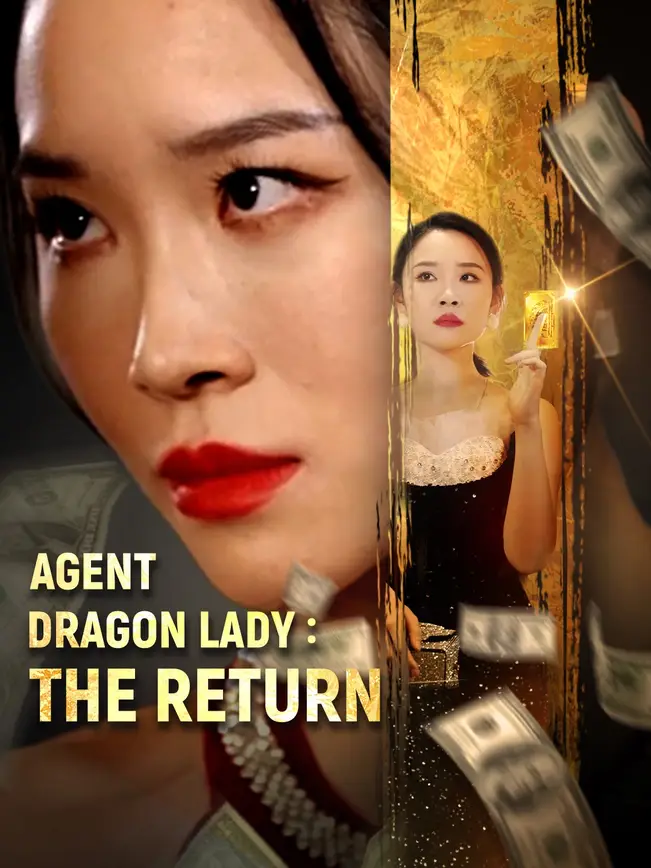
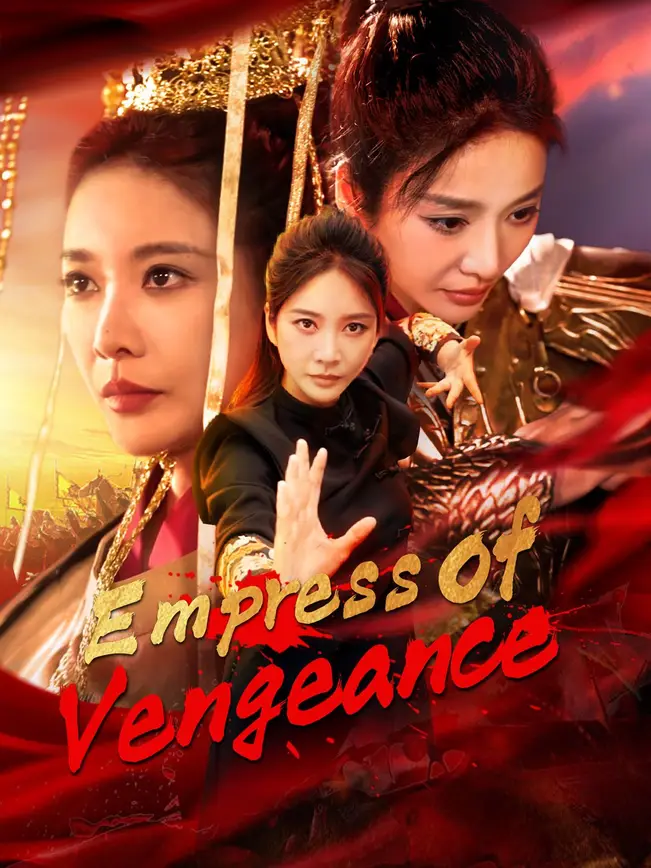
Agent Dragon Lady: The Return Storyline
Agent Dragon Lady: The Return More details
Genres:Revenge/Finding Relatives/Redemption
Language:English
Release date:2024-12-20 12:00:00
Runtime:74min
Agent Dragon Lady: The Return — The Language of Silence and Selfies
There’s a moment in Agent Dragon Lady: The Return—around minute 1:12—where everything stops. Not because of a fight, not because of a revelation, but because Mo Lin pulls out her phone. Not a prop. Not a stylized antique. A pink iPhone, case slightly scuffed, screen glowing with the familiar grid of apps. Chen Wei, still seated in his meditative pose, freezes mid-breath. Li Xueying, who had been adjusting her sleeve, tilts her head like a predator assessing prey. Xiao Man, ever the observer, takes a half-step back, her fingers twitching as if resisting the urge to cover her face. And then—Mo Lin lifts the phone, angles it, and says, ‘One second. Let me get the lighting right.’ The absurdity is so precise, so *deliberate*, that it transcends comedy. It becomes ritual. In that instant, Agent Dragon Lady: The Return reveals its true thesis: identity is performance, and performance is now broadcasted in 4K. Let’s talk about Li Xueying first—because she’s the axis around which this entire universe rotates. Her entrance is understated: no fanfare, no sword drawn, just the quiet click of her sandals on stone. But watch her hands. Always moving. Folding, unfolding, gesturing—not for emphasis, but for *control*. When she clasps Chen Wei’s wrist during their exchange, it’s not affection. It’s calibration. She’s measuring his pulse, his hesitation, his willingness to play along. Her makeup is flawless, yes, but it’s the *smudge* of kohl near her left eye—just barely visible—that tells the real story. She’s been crying recently. Or fighting. Or both. And yet she smiles. That’s the duality Agent Dragon Lady: The Return thrives on: grief wrapped in glamour, trauma dressed in silk. Li Xueying doesn’t wear her pain; she weaponizes it. Every glance she gives Xiao Man is layered: encouragement, warning, invitation. She’s not just teaching her the ropes—she’s grooming her to inherit the silence. Xiao Man, meanwhile, is the audience surrogate. Wide-eyed, earnest, perpetually on the verge of saying too much. Her outfit—a black coat with that oversized white collar—is a visual metaphor: she’s trying to look serious, but the ruffles betray her youth. She fumbles with her gloves, tugs at her sleeves, bites her lip when Li Xueying speaks in that low, melodic tone only she seems to understand. But here’s the twist: Xiao Man isn’t naive. She’s *strategic*. Notice how she positions herself during the group interaction—not in front, not behind, but *between*, where she can read everyone’s micro-expressions. When Chen Wei finally cracks a smile (a rare, genuine one, crinkling the corners of his eyes), Xiao Man’s breath hitches. Not because she’s smitten, but because she’s confirmed a hypothesis: he’s not untouchable. He’s human. And humans can be leveraged. Chen Wei himself is a masterclass in restrained contradiction. His costume is textbook ‘noble scholar’: layered robes, embroidered clouds, hair pinned with a phoenix that symbolizes rebirth. Yet his posture is modern—slightly slouched, shoulders relaxed in a way that suggests he’s spent too many hours hunched over a desk, not a scroll. He holds the flute like it’s a security blanket, not a weapon. And when Mo Lin interrupts his meditation, his reaction isn’t anger—it’s *curiosity*. He studies the phone like it’s a foreign artifact, tilting his head, squinting. Then, almost reluctantly, he leans in. Not for the photo. For the *connection*. That’s the quiet revolution of Agent Dragon Lady: The Return: it refuses to treat technology as an intruder. Instead, it treats it as another dialect—one that even ancient masters can learn, if they’re willing to look up from their scrolls. Mo Lin, though, is the wildcard who rewrites the rules. She enters late, dressed in olive green silk that whispers of forest shadows, her braids heavy with jade and silver. She carries a fan—not as a weapon, but as a prop, a tool for framing her face, for directing attention. And then, the phone. It’s not ironic. It’s *intentional*. In her world, documentation is power. To be seen is to be remembered. To be remembered is to be feared. When she snaps the photo, she doesn’t just capture Chen Wei’s flustered expression—she captures the *shift* in the room’s energy. The sacred space fractures, and something new forms in the cracks: camaraderie, yes, but also complicity. They’re all in on the joke now. Even Li Xueying, who usually operates three steps ahead, allows herself a genuine laugh—head thrown back, eyes crinkled, no filter, no mask. That’s the gift Mo Lin gives them: permission to be ridiculous, together. The setting itself is a character. The alleyway isn’t just backdrop; it’s a liminal space—neither fully ancient nor fully modern. Lanterns hang from eaves, casting pools of amber light, but the ground is paved with smooth concrete, not cobblestone. A CCTV camera peeks from the corner, half-hidden by ivy. The architecture is traditional, yes, but the wires running along the walls tell another story. Agent Dragon Lady: The Return doesn’t pretend the past is pristine. It shows us the seams—the places where time frays and rewinds itself. And in those seams, the characters find their footing. Li Xueying walks with purpose because she knows every crack in the pavement. Xiao Man stumbles once, catches herself, and keeps going—because she’s learning. Chen Wei sits still, but his gaze roams, taking inventory. Mo Lin films it all, not to expose, but to *preserve*. What makes this sequence unforgettable isn’t the costumes or the lighting—it’s the emotional grammar. No subtitles needed. When Li Xueying places her hand on Xiao Man’s shoulder, it’s not comfort; it’s transmission. A transfer of weight, of responsibility. When Chen Wei finally smiles at the camera, it’s not surrender—it’s acknowledgment. He sees them. He sees *her*. And in that seeing, he becomes part of the story, not just its subject. Agent Dragon Lady: The Return understands that power isn’t always held in fists or blades. Sometimes, it’s held in a phone raised at the right moment, in a laugh that breaks the tension, in a silence that speaks louder than any monologue. By the end of the clip, the group disperses—not with grand farewells, but with small gestures: a nod, a tucked strand of hair, a shared glance that says, *We’ll do this again tomorrow.* Because that’s the real promise of Agent Dragon Lady: The Return. It’s not about saving the world. It’s about building a world—brick by brick, selfie by selfie, silence by silence—where women like Li Xueying and Xiao Man don’t have to choose between heritage and humanity. They carry both. And they dare you to keep up.
Agent Dragon Lady: The Return — When Tradition Meets TikTok
The opening sequence of Agent Dragon Lady: The Return doesn’t just set the scene—it drops you into a world where time bends like silk in the wind. Two women walk side by side down a dimly lit alleyway, their footsteps echoing off ancient brick walls that seem to breathe with memory. One wears a modern black coat with a dramatic white ruffled collar and a patterned headband—her look is part schoolgirl rebellion, part avant-garde poet. The other, Li Xueying, moves with quiet authority in a crisp white hanfu top paired with a navy skirt embroidered with mythic figures: dragons, phoenixes, warriors mid-battle—all stitched in threads of crimson and gold. Her hair is coiled high, secured with silver pins shaped like falling leaves, and her red lips are not just makeup—they’re a declaration. She holds the younger woman’s hand, not as a guide, but as an equal. Their conversation isn’t heard, but it’s felt: the tilt of heads, the way Li Xueying glances sideways, then smiles—not the polite smile of obligation, but the kind that flickers with mischief, like she’s already three steps ahead in a game no one else knows the rules of. Then comes the interruption. A third figure enters—not with fanfare, but with the soft rustle of layered fabric. It’s Chen Wei, draped in pale blue and white robes embroidered with cloud motifs and lotus blossoms, his long hair tied back with a silver phoenix hairpin that catches the light like a blade. He doesn’t speak immediately. Instead, he watches. His eyes linger on Li Xueying’s hands as she performs a subtle gesture—palms pressed together, fingers interlaced, then released in a slow, deliberate motion. It’s not prayer. It’s signaling. A coded language only they understand. The younger woman, whose name we later learn is Xiao Man, flinches slightly—not out of fear, but recognition. She knows what that gesture means. In Agent Dragon Lady: The Return, every movement is a sentence. Every pause, a comma waiting for the next clause. What follows is less dialogue, more choreography of tension. Chen Wei speaks at last, his voice low and measured, but his gaze never leaves Li Xueying. She responds with a half-smile, her posture relaxed yet poised—like a cat watching a bird it has no intention of catching… yet. Xiao Man stands between them, caught in the gravitational pull of two people who’ve clearly danced this dance before. There’s history here—not tragic, not romantic, but *complicated*. The kind that lives in shared silences and unspoken agreements. When Li Xueying leans in and whispers something to Xiao Man, the younger woman’s eyes widen, then narrow. She nods once. A pact sealed in breath. Later, the setting shifts. Chen Wei sits cross-legged on a woven mat, holding a white bamboo flute—not playing it, just holding it like a relic. The night air hums with cicadas and distant lantern light. Then, from the shadows, emerges another woman: Mo Lin, dressed in deep olive green silk under a sheer black overdress, her hair in twin braids adorned with jade beads. She carries a folding fan and a smartphone—yes, a smartphone—in her left hand. The juxtaposition is jarring, intentional. Here we are, in a world of silk and ink, and yet Mo Lin snaps open her fan, taps her phone screen, and says, ‘Smile! For the story.’ Chen Wei blinks. Li Xueying, now standing behind him, grins like she’s been waiting for this moment all decade. Mo Lin lifts the phone, angles it just so, and suddenly, the sacred stillness of the scene shatters into something gloriously absurd: Chen Wei flails, trying to duck, while Mo Lin laughs, shouting, ‘No, no—look at me, not the flute!’ The camera lingers on his flushed face, the way his sleeve catches the breeze as he tries to regain composure. This is the genius of Agent Dragon Lady: The Return—not that it blends old and new, but that it *refuses* to choose. It lets tradition be ridiculous, modernity be reverent, and characters be gloriously inconsistent. The emotional core, though, lies in the quiet moments between Li Xueying and Xiao Man. After the photo session collapses into giggles, they walk away together, arms linked. Li Xueying rests her chin on Xiao Man’s shoulder, murmuring something that makes the younger woman roll her eyes—but she doesn’t pull away. That’s the real hook of Agent Dragon Lady: The Return. It’s not about spies or secret missions (though those exist, lurking in the background like smoke). It’s about how women build worlds within worlds, using gestures, glances, and the occasional well-timed selfie. Li Xueying isn’t just a dragon lady—she’s a mentor, a conspirator, a sister-in-arms who knows when to wield a fan and when to wield a phone. Xiao Man, for her part, is learning fast. She’s still wide-eyed, still prone to gasps and nervous laughter, but there’s steel beneath it. You see it when she watches Chen Wei struggle with the phone—her expression isn’t mockery, it’s assessment. She’s calculating how much power she can claim in this ecosystem. And Chen Wei? He’s the wildcard. The man who meditates with a flute but flinches at a camera flash. His costume screams ‘scholar-warrior,’ but his reactions scream ‘mildly traumatized millennial.’ Yet he doesn’t reject the intrusion. He adapts. He even offers the flute to Mo Lin after the chaos, as if to say, ‘Here. Try this instead.’ It’s a small gesture, but it speaks volumes. In Agent Dragon Lady: The Return, masculinity isn’t rigid—it’s fluid, willing to bend when the world demands it. The show doesn’t mock tradition; it reclaims it, stitches it with Wi-Fi signals and Instagram filters, and dares you to call it inauthentic. The final shot of the sequence lingers on Li Xueying’s profile as she watches the others laugh. Her smile is soft, but her eyes are sharp—calculating, always calculating. Behind her, the alley stretches into darkness, lit only by strings of paper lanterns that sway like fireflies. You realize: this isn’t just a scene. It’s a manifesto. Agent Dragon Lady: The Return isn’t about returning to the past. It’s about dragging the past into the present, kicking and screaming, then handing it a phone and saying, ‘Go on. Post it.’ And somehow, against all logic, it works. Because at its heart, the show understands something vital: legacy isn’t preserved in museums. It’s lived—in the way a woman adjusts her sleeve before stepping into frame, in the way a man learns to pose without losing himself, in the way two friends hold hands and walk into the night, knowing full well that tomorrow, the world will demand something new of them. Again. And again. And again.
Agent Dragon Lady: The Return – The Velvet Trap and the Phoenix’s Gambit
There’s a moment—just three seconds, maybe less—where everything changes. Not with a bang, not with a shout, but with a sigh. A woman in a deep red velvet gown, her back to the camera, stands perfectly still while a man in a tailored suit bows deeply before her. His shoulders dip, his head lowers, and for a heartbeat, the world holds its breath. Then she turns. Slowly. Deliberately. Her face is composed, but her eyes—those dark, intelligent eyes—hold a storm. This is not submission. This is surrender *on her terms*. And that, dear viewer, is the core thesis of Agent Dragon Lady: The Return: power isn’t taken. It’s *granted*. And sometimes, the most dangerous people are the ones who let you think you’re in control. Let’s unpack the cast, because each one is a walking contradiction. First, Director Chen—the man in the gray suit with the green-dotted tie. He radiates corporate authority, the kind that comes from decades of boardroom battles and whispered deals. Yet watch how he moves: his posture is rigid, but his hands tremble slightly when he reaches for his pocket. He’s not calm. He’s *contained*. And when he speaks to Liu Feng—the man in the flowing blue-and-white robes—he doesn’t command. He *negotiates*. His voice drops, his stance softens, and for the first time, you see vulnerability beneath the polish. Liu Feng, meanwhile, remains unmoved. His hair is tied high, the silver dragon pin gleaming like a warning. He doesn’t wear armor; he *is* armor. His robes are sheer in places, revealing layers beneath—symbolism, yes, but also strategy. He lets them see *some* of him, just enough to keep them guessing. That’s the brilliance of Liu Feng in Agent Dragon Lady: The Return: he never lies. He simply omits. Then there’s Zhou Wei—the young man whose fall becomes the pivot point of the entire sequence. At first, he seems like comic relief: earnest, slightly overeager, adjusting his tie like a boy playing dress-up. But the moment he points, the moment his voice cracks, the moment he hits the floor—you realize he’s been carrying a secret heavier than any suitcase. His collapse isn’t physical weakness. It’s emotional detonation. And the way he looks up at the woman in red—his eyes wide, his mouth open, not in pain but in *recognition*—tells us everything. He knew her. He feared her. And now, he’s paying the price for underestimating her. Which brings us to her. The woman in crimson. Let’s call her Jing. Because names matter in Agent Dragon Lady: The Return, and hers is written in blood and silk. Her dress is cut to reveal just enough—neckline plunging, back bare except for a delicate lace overlay that spells out nothing and everything. The pearls around her collar aren’t jewelry. They’re *restraints*. A visual metaphor for the gilded cage she’s built around herself. She doesn’t speak much. She doesn’t need to. Her silence is louder than any accusation. When Director Chen leans in, she doesn’t recoil. She *waits*. And when Zhou Wei falls, she doesn’t look away. She studies him, like a scientist observing a specimen. There’s no triumph in her gaze. Only assessment. She’s already moved on. The real revelation comes later, when Yuan Lin enters—white linen, paper fan, jade earrings swaying like pendulums measuring time. She doesn’t interrupt. She *interrupts the interruption*. Her entrance is so quiet, so graceful, that the tension in the room shifts like tectonic plates. She speaks in proverbs, in riddles, in phrases that sound poetic until you realize they’re threats wrapped in silk. ‘The phoenix does not burn for glory,’ she says, ‘but for rebirth.’ And suddenly, you understand: Liu Feng isn’t just a scholar. He’s a survivor. And Jing? She’s not just a hostess. She’s the flame. What elevates Agent Dragon Lady: The Return beyond typical drama is its refusal to simplify. No one is purely good or evil. Director Chen may be ruthless, but he hesitates before delivering the final blow. Liu Feng may be serene, but his fingers tighten around his sleeve when Jing mentions the ‘old ledger.’ Zhou Wei may be weak, but he’s the only one who dares to speak the truth aloud—even if it destroys him. And Jing? She’s the eye of the storm. Calm. Calculated. Deadly. The cinematography reinforces this complexity. Close-ups linger on textures: the crushed velvet of Jing’s dress, the fine weave of Liu Feng’s robe, the slight fraying at Zhou Wei’s cuff. These aren’t accidents. They’re clues. The lighting is soft, but never forgiving—shadows cling to faces like guilt. The background murals—mountains, rivers, clouds—aren’t decoration. They’re mirrors. When Jing stands before them, her silhouette blends with the peaks, suggesting she *is* the landscape: ancient, immovable, indifferent to the petty wars waged at her feet. And let’s talk about the fall. Not Zhou Wei’s physical collapse—that’s just the surface. The real fall happens earlier, in the space between Jing’s first glance and Liu Feng’s first word. That’s when the hierarchy shatters. Director Chen thought he was leading the dance. He wasn’t. He was following her rhythm. The room didn’t react to Zhou Wei’s stumble because they were shocked. They reacted because they *recognized* the pattern. This has happened before. And next time, it might be them on the floor. Agent Dragon Lady: The Return doesn’t give answers. It gives questions—and wraps them in velvet, silk, and silence. Why did Jing invite Liu Feng? What’s in the ledger Zhou Wei mentioned? Who really controls the hall? The show doesn’t rush to explain. It trusts the audience to sit with the discomfort, to read the subtext in a raised eyebrow, a delayed blink, a hand that hovers near a weapon but never draws it. In the final shot, Jing walks away—not toward the door, but toward a balcony overlooking the city. The camera follows her from behind, the red of her dress blazing against the twilight sky. She doesn’t look back. She doesn’t need to. The game is still in play. And this time, she’s not just a player. She’s the dealer. Agent Dragon Lady: The Return reminds us that in worlds where loyalty is currency and truth is a weapon, the most dangerous person isn’t the one who strikes first. It’s the one who waits—patient, poised, and utterly, terrifyingly aware of every move you’re about to make.
Agent Dragon Lady: The Return – When Silk Meets Steel in a Ballroom Standoff
The opening frames of Agent Dragon Lady: The Return don’t just introduce characters—they drop us into the middle of a psychological earthquake. A man in a charcoal-gray pinstripe suit, his hair slicked back with precision, leans forward like a predator assessing prey. His eyes narrow, lips parting slightly—not in anger, but in calculation. He’s not shouting; he’s *measuring*. Behind him, blurred figures shift uneasily, their postures betraying tension. This isn’t a boardroom meeting. It’s a ritual. And every micro-expression is a line in the script. Then—cut. A woman in crimson velvet steps into frame. Her dress hugs her form like liquid fire, the halter neckline edged with a double row of pearls that catch the light like scattered diamonds. Her hair is pulled back, severe yet elegant, revealing high cheekbones and a mouth painted in bold red—a color that screams defiance, not submission. She doesn’t flinch when the man in gray speaks. She listens. Her fingers interlace at her waist, a gesture of control, not fear. In that moment, you realize: she’s not the guest. She’s the architect. The third figure enters like a breath of mist—Liu Feng, draped in layered silk robes of pale blue and white, embroidered with phoenix motifs that shimmer as he moves. His hair is long, tied high with a silver hairpin shaped like a dragon’s claw. He stands still, hands clasped before him, gaze steady. But watch his eyes—they flicker toward the woman in red, then to the man in gray, then back again. There’s no hostility in his posture, only quiet authority. He doesn’t need to raise his voice. His presence alone disrupts the power balance. That’s the genius of Agent Dragon Lady: The Return—it understands that true power isn’t worn on lapels or stitched into gowns; it lives in the silence between words. What follows is a masterclass in nonverbal storytelling. The man in gray—let’s call him Director Chen—leans in again, this time closer, almost invading personal space. His tie, patterned with tiny green dots, seems to pulse under the warm overhead lighting. He’s trying to dominate the frame, to shrink her down. But she doesn’t retreat. Instead, she tilts her chin up, just enough, and exhales—slowly. A subtle act of resistance. The camera lingers on her neck, where the pearls glint like armor. You can almost hear the unspoken challenge: *Try me.* Then comes the twist. A younger man—Zhou Wei, sharp-featured and dressed in a double-breasted gray suit with a black tie adorned with crystal brooches—steps forward. His expression shifts from curiosity to alarm in less than a second. He gestures wildly, voice rising (though we hear no sound, the urgency is palpable in his body language). He points—not at Liu Feng, not at Director Chen—but *past* them, toward something off-screen. His hand trembles. His knees buckle. And then—he falls. Not dramatically, not for effect. He collapses onto the ornate carpet, legs splayed, face twisted in shock and pain. The room freezes. Even the background extras stop breathing. This is where Agent Dragon Lady: The Return reveals its true texture. Zhou Wei doesn’t scream. He *whimpers*, low and guttural, as if his throat has been squeezed shut. His fingers dig into the rug, knuckles white. He looks up—not at the ceiling, not at the others—but directly at the woman in red. His eyes are wide, wet, pleading. It’s not fear of injury. It’s fear of exposure. Of being seen. Of what she knows. In that glance, we understand everything: he wasn’t just a bystander. He was complicit. And now the mask has slipped. Director Chen turns slowly, his expression unreadable. He doesn’t rush to help. He watches. Then, with deliberate slowness, he straightens his jacket, adjusts his cufflink—a small, gold insignia shaped like a coiled serpent—and walks away. Not toward the door. Toward *her*. The woman in red doesn’t move. She simply waits, arms still folded, lips sealed. The air crackles. You can feel the weight of unsaid history pressing down on the room. Cut to Liu Feng. He hasn’t moved. But now he speaks. His voice is soft, melodic, almost poetic—yet each word lands like a stone dropped into still water. He addresses Zhou Wei, not with pity, but with quiet disappointment. ‘You chose the wrong side,’ he says—or at least, that’s what the subtitles imply. His hand lifts, palm open, not in threat, but in offering. A gesture of mercy? Or judgment? The ambiguity is intentional. Agent Dragon Lady: The Return thrives in these gray zones. There are no heroes here, only survivors. Later, a new figure emerges—Yuan Lin, dressed in traditional white linen, holding a folded paper fan like a weapon. Her hair flows freely, pinned only by a single jade hairpin. She smiles—not kindly, but with the knowingness of someone who’s seen too much. Her earrings sway as she speaks, delicate leaves of jade catching the light. She doesn’t address the fallen Zhou Wei. She speaks *to* the room, her voice clear and unhurried. ‘Some debts cannot be paid in cash,’ she says. ‘Only in truth.’ And with that, she closes the fan with a soft click. The sound echoes. What makes Agent Dragon Lady: The Return so compelling isn’t the costumes or the set design—though both are exquisite. It’s the way it treats silence as dialogue. The way a raised eyebrow carries more weight than a monologue. The way the camera lingers on hands: Zhou Wei’s trembling fingers, Liu Feng’s steady grip on his sleeve, Director Chen’s clenched fist hidden behind his back. These aren’t just characters. They’re chess pieces on a board no one else can see. And let’s talk about the setting—the grand hall, all gilded lattice and muted earth tones, feels less like a venue and more like a cage. The lighting is warm, but never comforting. Shadows pool in corners, swallowing movement. Every reflection in the polished floor shows distorted versions of the players—hinting at duality, deception, fractured identities. This isn’t a party. It’s a trial. And everyone present is both witness and defendant. By the final frames, the dynamics have shifted irrevocably. Zhou Wei is helped up—not by Director Chen, but by a silent figure in black, sunglasses hiding his eyes. He stumbles, head bowed, refusing to meet anyone’s gaze. Liu Feng turns away, his robes whispering against the floor. Yuan Lin watches him go, her expression unreadable. And the woman in red? She finally moves. She takes one step forward. Then stops. Looks directly into the lens. Smiles—just once. A flash of teeth, a tilt of the head. And in that instant, you know: the real game hasn’t even begun. Agent Dragon Lady: The Return isn’t about who wins. It’s about who survives long enough to tell the story. And right now? She’s the only one holding the pen.
Agent Dragon Lady: The Return – The Banquet That Never Was
Let’s talk about the wine glasses. Not the liquid inside—though that pale golden hue suggests Chardonnay, possibly aged in oak, subtle vanilla notes—but the way they’re held. In *Agent Dragon Lady: The Return*, a wine glass isn’t a vessel; it’s a psychological barometer. Lin Wei grips his like a shield, fingers wrapped tight around the stem, thumb resting on the bowl as if bracing for impact. Zhou Jian holds his with two fingers, elegant but detached, the glass hovering just below chin level—like he’s weighing evidence, not enjoying a toast. Chen Rui? He lifts his with one hand, wrist cocked, the glass tilted slightly toward the light. He’s not drinking. He’s *displaying*. And when he falls—yes, that moment, the one everyone’s buzzing about—it’s not the stumble that shocks. It’s the fact that his glass *doesn’t shatter*. It stays upright in his grip, even as his body hits the carpet. That’s no accident. That’s intention. The production team didn’t just stage a fight; they staged a *ritual*. Every detail—the H-shaped belt buckle on Lin Wei’s trousers (a subtle nod to heritage brands, or perhaps a coded symbol?), the floral brooch on Zhang Lin’s white dress (a rose, but wilted at the edges), the way Li Xue’s necklace catches the light like a net—is part of a visual lexicon only the initiated can read. This isn’t a party. It’s a tribunal disguised as celebration. The emotional arc of the first act hinges on misdirection. We’re led to believe Chen Rui is the aggressor—his sunglasses, his velvet suit, his dismissive tilt of the chin all scream ‘villain’. But watch his eyes when Li Xue walks in. They don’t narrow. They *soften*. Just for a fraction of a second. And then he looks away, jaw tightening. That’s not guilt. That’s grief. He didn’t expect her to come. Or maybe he hoped she wouldn’t. Meanwhile, Lin Wei’s outburst—pointing, shouting, stepping forward with such force his cufflink nearly snaps—isn’t righteous fury. It’s panic. He’s not defending honor; he’s trying to control the narrative before it spins out of his grasp. His alliance with Zhou Jian is visibly strained; notice how Zhou Jian never places a hand on Lin Wei’s shoulder, never leans in during the confrontation. He stands *beside*, not *with*. There’s a hierarchy here, and Lin Wei is scrambling to prove he still belongs at the top. The younger man—Chen Rui—represents the new order: sleek, ruthless, unburdened by old loyalties. And yet, when he’s on the floor, clutching his ear, his expression isn’t defiance. It’s betrayal. Someone he trusted just pulled the trigger. Then the scene fractures—literally. The transition from the banquet hall to the moonlit courtyard isn’t a cut; it’s a *tear*. One moment, we’re in gilded decadence; the next, stone steps, shadows, the whisper of wind through dried fronds. The characters change costumes, yes—but more importantly, they change *roles*. Wang Mei, who laughed so freely earlier, now stands with her hands clasped, her smile tight, her eyes scanning the group like a sentry. Zhang Lin, previously deferential, now speaks with quiet authority, her hands moving in precise gestures—palms up, then folded, then extended—as if performing a silent incantation. And Yuan Feng? He’s the linchpin. His Hanfu isn’t costume; it’s identity. The silver crown isn’t decoration; it’s a claim. When he bows slightly to Zhang Lin, it’s not subservience—it’s acknowledgment. Of what? Of her knowledge? Of her power? Of the debt he owes? *Agent Dragon Lady: The Return* excels at making silence speak volumes. The absence of music in the outdoor scenes is deafening. All we hear is footsteps, rustling fabric, the occasional creak of wood. In that vacuum, every breath matters. When Zhang Lin adjusts her sleeve, it’s not a nervous tic—it’s a reset. A declaration: I am still here. I am still in control. The final sequence—where the woman in black peeks from behind the wall, fan half-concealing her face—is the masterstroke. She’s not part of the main group. She’s observing. And her smile? It’s not malicious. It’s *relieved*. As if the chaos she anticipated has finally begun. Who is she? A spy? A relative? A former lover? The show refuses to tell us. Instead, it leaves us with the image: her fan, delicately painted with bamboo stalks, trembling slightly in her hand. Bamboo bends but doesn’t break. That’s the theme, isn’t it? In *Agent Dragon Lady: The Return*, no one is truly broken—only reshaped by pressure. Lin Wei’s rage will calcify into strategy. Zhou Jian’s silence will harden into secrecy. Chen Rui’s fall will become his origin story. And Li Xue? She won’t cry. She’ll plan. Because in this world, tears are wasted on the dead—especially when the living are still holding knives. The brilliance of the series lies not in its action, but in its restraint. The most violent moments happen offscreen. The loudest arguments are whispered. The deepest betrayals are signaled by a shift in posture, a hesitation before speaking, a glass held too long in the hand. *Agent Dragon Lady: The Return* understands that power isn’t seized in grand speeches—it’s inherited in the quiet seconds between breaths. And as the camera pulls back, leaving us with the silhouette of Yuan Feng against the moon, his parasol closed, his expression unreadable—we realize the banquet wasn’t the beginning. It was the calm before the storm. And the storm? It’s already here. We just haven’t heard the thunder yet. The real question isn’t who survives. It’s who gets to rewrite the story afterward. Because in this game, the victor doesn’t just win—they erase the loser’s name from the record. And Li Xue? She’s already holding the pen.

Redemption



Finding Relatives






Revenge



 Download