



(Dubbed)A Baby, a Billionaire, And Me


.png~tplv-vod-rs:651:868.webp)
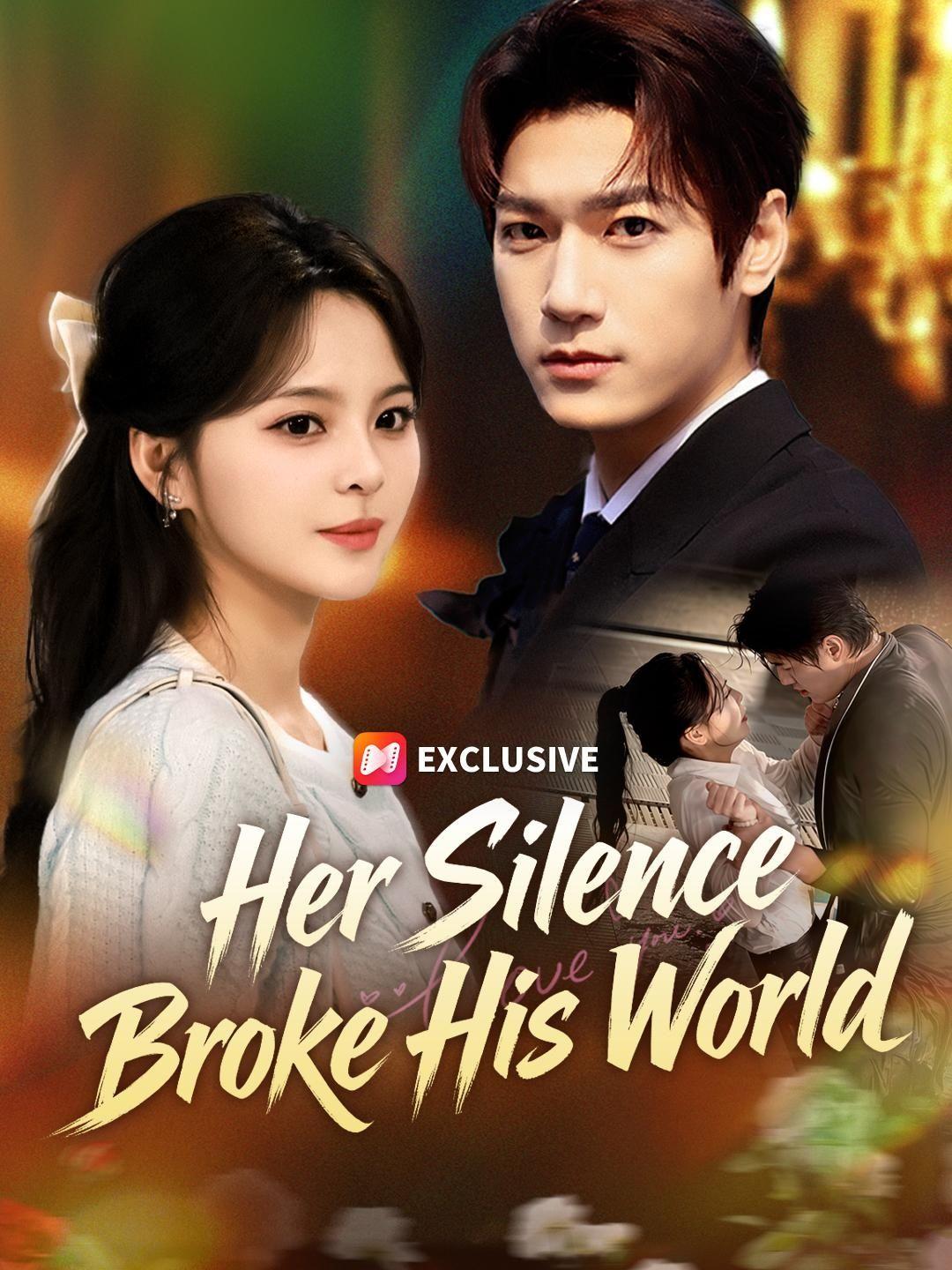
(Dubbed) A Baby, a Billionaire, And Me: The Dress That Broke the Dynasty
If you’ve ever watched a luxury retail scene and thought, ‘This isn’t about clothes—it’s about who gets to wear the crown,’ then (Dubbed) A Baby, a Billionaire, And Me delivers that thesis with surgical precision. The boutique sequence isn’t mere set dressing; it’s a geopolitical summit disguised as a fitting room. Every step Sunny takes on that glossy floor echoes with the weight of legacy, expectation, and the quiet fury of a woman who’s been told her value lies in her womb—not her will. Let’s unpack the layers, because this isn’t just drama. It’s anthropology. We begin with Sunny’s garden interlude—not a pastoral idyll, but a staged resistance. Her white sweater isn’t innocent; it’s armor. Cable knit suggests tradition, warmth, domesticity—qualities the world wants her to embody. Yet paired with that purple skirt (a color historically associated with royalty and defiance), it becomes a statement: *I am soft, but I am not pliable.* When she wields the hose, it’s not irrigation—it’s ritual. Water is life, yes, but also cleansing, renewal, baptism. She’s washing away the role they’ve assigned her: the fragile expectant, the passive heir-bearer. The maid’s repeated interventions—‘Ma’am, let me do it’—are less about service and more about containment. Each offer to relieve her is a reminder: *Your labor is not yours to allocate.* Even her husband’s aide, Jack, appears not as a helper, but as a sentinel. His presence isn’t supportive; it’s supervisory. He’s there to ensure the narrative stays on script: pregnant woman = protected object. Then Mr. Li arrives, and the tonal shift is masterful. His gray jacket, round glasses, silver hair—these aren’t just costume details. They signal wisdom, authority, generational weight. But watch his hands. When he says, ‘Don’t overwork yourself,’ his fingers twitch, as if resisting the urge to physically pull her away. His concern is genuine, but it’s also deeply entangled with fear—not of harm to Sunny, but of disruption to the order he’s built. When he pivots to shopping, it’s not indulgence; it’s damage control. ‘Your clothes are all worn out’ is code for *You’re becoming visible in ways we didn’t plan.* Pregnancy magnifies everything: her body, her choices, her presence. So he outsources the problem to consumption. Let the mall absorb her energy. Let fashion distract her from questioning why she’s the only one pruning the tree while others decide which branches matter. Which brings us to the boutique—the true arena of power. The lighting is soft, the music ambient, the staff trained to smile without blinking. But beneath the polish, it’s a pressure chamber. Miss Yates, in her pinstripe suit and bow-tie blouse, is the conductor of this silent opera. Her line—‘Miss Yates is our most esteemed guest’—isn’t flattery. It’s a landmine. She’s not introducing Sunny; she’s elevating her to a status that demands performance. And Sunny responds not with gratitude, but with a slow, deliberate nod. She knows the game. She’s played it before. When Miss Yates says, ‘Bring out the latest arrivals and let her try them on,’ the implication is clear: *We will dress you in compliance.* Then Mrs. Song enters—and the air changes. Her ivory fringe coat isn’t fashion; it’s heraldry. The pearl Y-necklace? A symbol of lineage, of women who’ve navigated these halls for generations. Her companion, Rachel, wears tweed like a uniform—structured, expensive, emotionally guarded. Their dialogue is a dance of veiled threats: ‘I heard that the dress has arrived, yes? Please wrap it up for me. Rachel will definitely like this.’ Note the possessive ‘my dress,’ though she hasn’t seen it. In their world, desire precedes sight. Ownership is assumed. Which makes the staff member’s confession—‘That dress is already being tried on by another customer’—not just inconvenient, but sacrilegious. It violates the unspoken law: certain garments are reserved for certain bloodlines. And then—the reveal. Sunny, in the black velvet gown, turns. The dress is breathtaking: off-the-shoulder, shimmering subtly, cut to honor her curves without erasing her pregnancy. It’s not maternity wear. It’s *power* wear. When Rachel gasps ‘Mom,’ the camera holds on Sunny’s face—not shocked, not guilty, but *resolved*. She knew this would happen. She chose this dress not to provoke, but to declare: *I am still me. Even now.* Mrs. Song’s command—‘Take that dress off’—is delivered with chilling calm, but her knuckles are white on her purse strap. She’s not angry at the theft; she’s terrified of the precedent. If Sunny wears Rachel’s dress, what else might she claim? Autonomy? Voice? A seat at the table? What makes (Dubbed) A Baby, a Billionaire, And Me so compelling is that Sunny never raises her voice. She doesn’t storm out. She doesn’t cry. She simply *occupies* the space—physically, sartorially, existentially. The dress becomes her manifesto. And in that final mirror shot, where she meets her own gaze with quiet triumph, we understand the core truth of the series: the real inheritance isn’t wealth or title. It’s the right to choose your own silhouette in a world that keeps redrawing your outline. Jason, Jack, Miss Yates, Mrs. Song—they’re all players in a system designed to keep women like Sunny in ornamental roles. But Sunny? She’s rewriting the script, one pruning, one shears, one stolen dress at a time. The babies may be the future, but Sunny—right now, in this velvet gown, under these fluorescent lights—is the revolution. And honestly? We’re all rooting for her.
(Dubbed) A Baby, a Billionaire, And Me: The Garden Rebellion
The opening aerial shot of the suburban estate—lush greenery, symmetrical villas, winding roads like veins in a quiet body—sets the tone for a world where privilege is not just inherited but meticulously landscaped. This isn’t just a neighborhood; it’s a curated ecosystem of control, where even the trees seem pruned to avoid chaos. Enter Sunny, the pregnant protagonist of (Dubbed) A Baby, a Billionaire, And Me, standing barefoot on dew-kissed grass in a cream cable-knit sweater and lavender skirt, wielding a garden hose like a reluctant warrior. Her posture is soft, her expression serene—but there’s tension in the way her fingers grip the nozzle, as if she’s trying to water away something deeper than soil. The sunlight flares behind her, haloing her hair, turning the spray into a misty veil—a visual metaphor for how she’s being gently, persistently obscured by others’ intentions. Then comes the first interruption: a maid in maroon-and-white uniform, stepping in with practiced urgency. ‘Ma’am, let me do it.’ The phrase is polite, but the subtext is unmistakable: *You are not meant to labor.* Sunny resists—not with anger, but with a quiet insistence that borders on defiance. She doesn’t shout; she simply turns her head, lips parted mid-sentence, eyes flickering between duty and desire. When the maid repeats the plea—‘Let’s get you inside to rest’—Sunny’s hesitation isn’t fatigue. It’s calculation. She knows this script. She’s been handed it since the moment her pregnancy was announced. The camera lingers on her face as she exhales, almost smiling, as if amused by the absurdity of being both worshipped and imprisoned by care. The real rupture arrives when she grabs the pruning shears. Not the delicate floral scissors one might expect, but heavy-duty garden clippers with orange grips—tools built for severance, not decoration. Her hands, still delicate, now move with purpose. She lifts them high, aiming at a branch of a Japanese maple, its leaves tinged crimson like spilled wine. In that moment, Sunny isn’t gardening. She’s performing an act of symbolic autonomy: cutting what no one else dares to trim. The maid lunges forward again, voice rising—‘Ma’am, let me do it!’—but Sunny’s gaze is fixed upward, jaw set, breath steady. This isn’t rebellion for spectacle; it’s rebellion for self-preservation. She needs to feel the weight of the tool, the resistance of the wood, the clean snap of separation. In a life where every decision is pre-approved—from prenatal vitamins to nursery color schemes—this is the only thing she controls. Enter Mr. Li, the patriarch, descending stone steps flanked by marble elephants draped in red scarves—a detail so rich it feels like satire. His entrance is theatrical, yet his concern is palpable. ‘Sunny,’ he says, voice warm but firm, ‘Please don’t do any work.’ He doesn’t scold; he pleads. His eyes crinkle not with judgment, but with the exhaustion of a man who’s spent decades managing expectations—his own, his family’s, the world’s. When he adds, ‘The babies… can’t handle it either,’ the plural reveals the stakes: twins. The word hangs in the air like perfume—sweet, intoxicating, dangerous. Sunny’s response—‘It’s fine. The doctor said it’s good to stay active during pregnancy’—is delivered with a smile that doesn’t quite reach her eyes. She’s quoting medical authority not to assert independence, but to disarm him. She knows he’ll relent, because he always does. But she also knows he’ll pivot—just as he does: ‘Then you should go shopping. Your clothes are all worn out. You need a new batch.’ Here lies the genius of (Dubbed) A Baby, a Billionaire, And Me: the battlefield isn’t the garden or the mall—it’s the language of care. Every gesture of protection is a cage lined with velvet. When Mr. Li calls Jason on a crimson smartphone—yes, the color matches the shears, the scarves, the roses—he doesn’t say ‘watch her.’ He says, ‘You should go and keep her company.’ The euphemism is exquisite. ‘Keep her company’ means monitor, redirect, pacify. Jason, the young aide in black suit, appears like a shadow summoned by protocol. His ‘Yes, sir’ is crisp, obedient—and utterly devoid of agency. Sunny watches him approach, her expression unreadable. She doesn’t protest. She simply places a hand on her belly, as if reminding herself—and him—that the center of gravity has shifted. She is no longer just Sunny. She is vessel, heir, liability, treasure. All at once. The scene transitions to the boutique: polished floors, minimalist racks, mannequins frozen in poses of effortless elegance. Sunny walks in wearing a beige trench coat over her sweater and skirt—a concession, not a surrender. Her assistant, Miss Yates, greets her with a smile that’s professional but edged with something sharper: anticipation. ‘President Laws will be here soon,’ she announces, and the phrase lands like a dropped coin. Who is President Laws? A business partner? A political figure? A rival matriarch? The ambiguity is deliberate. In (Dubbed) A Baby, a Billionaire, And Me, power doesn’t announce itself with fanfare; it whispers through appointments and fabric choices. Miss Yates directs Sunny toward the latest arrivals, her tone deferential but her eyes scanning Sunny’s silhouette with the precision of a tailor assessing drape. The staff member in white blouse and black trousers nods eagerly—‘Okay. Please follow me’—and leads them deeper into the store. The camera glides past racks of cashmere, silk, and sequined velvet, each garment a potential armor or alibi. Then, the second wave of guests enters: Mrs. Song, draped in ivory fringe and pearls, arm-in-arm with a younger woman in a tweed blazer—Rachel, we later learn. Their entrance is choreographed: heels clicking in sync, heads held high, gazes sweeping the room like inspectors. Mrs. Song’s line—‘I heard that the dress has arrived, yes? Please wrap it up for me. Rachel will definitely like this’—is delivered with the certainty of someone who assumes ownership before seeing the product. There’s no question, only declaration. The tension crystallizes when the staff member stammers, ‘Sorry, Mrs. Song. That dress is already being tried on by another customer.’ The pause is electric. Mrs. Song’s smile doesn’t falter, but her eyes narrow—just a fraction. ‘I see,’ she says, and the phrase is a blade wrapped in silk. Meanwhile, Sunny, now in a black velvet gown with sheer shoulders and subtle glitter, stands before a mirror. The dress is stunning. It hugs her curves, accentuates her glow, and—crucially—doesn’t hide her pregnancy. It celebrates it. When Rachel spots her, her expression shifts from polite interest to stunned recognition. ‘Mom,’ she breathes—not to Mrs. Song, but to Sunny. The revelation hits like a dropped chandelier. Sunny isn’t just a guest. She’s Rachel’s mother. And the dress she’s wearing? It was meant for Rachel. Mrs. Song’s command—‘Take that dress off’—is not shouted, but spoken with such icy clarity that the air seems to freeze. Sunny doesn’t flinch. She turns slowly, meeting her daughter’s eyes, then her mother-in-law’s, then the staff’s. Her smile returns—not apologetic, but knowing. She doesn’t remove the dress. She simply adjusts the sleeve, lets the light catch the sequins, and says nothing. In that silence, the entire hierarchy trembles. Because in (Dubbed) A Baby, a Billionaire, And Me, the most dangerous weapon isn’t money, or status, or even pregnancy—it’s the refusal to apologize for taking up space. Sunny isn’t stealing Rachel’s dress. She’s reclaiming her right to be seen, desired, and dressed—not as a vessel, but as a woman. The final shot lingers on her reflection: radiant, unapologetic, holding the gaze of a world that keeps trying to write her story for her. And somewhere, offscreen, the shears wait—still sharp, still ready.