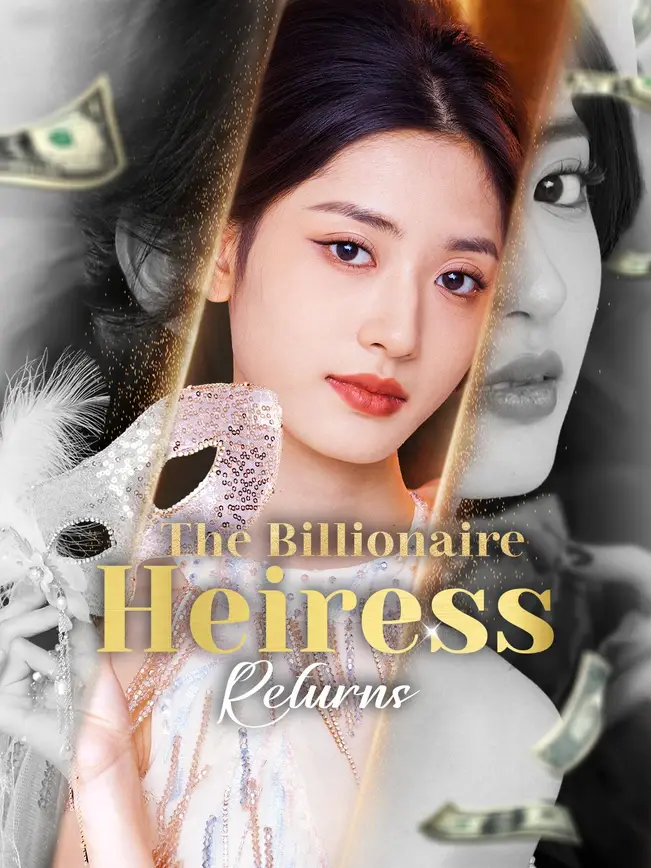
The Billionaire Heiress Returns Storyline
The Billionaire Heiress Returns More details
Genres:Modern Romance/Finding Relatives/Tragic Love
Language:English
Release date:2025-02-20 21:31:00
Runtime:139min
The Billionaire Heiress Returns: When the Knife Isn’t the Weapon—It’s the Mirror
If you blinked during that rooftop confrontation in *The Billionaire Heiress Returns*, you missed the real violence: the kind that leaves no blood, only scars on the soul. Forget the rope, forget the chair, forget even the knife Chen Xiao presses against Jiang Mian’s neck—that’s just set dressing. The true weapon here is *recognition*. The moment Lin Zeyu stops walking and starts kneeling, the entire narrative fractures. He doesn’t collapse because he’s weak. He collapses because he finally sees himself reflected in Chen Xiao’s eyes: not the polished heir, not the stoic protector, but a man who’s spent years building walls only to find they were made of glass. Let’s dissect the choreography of humiliation. Chen Xiao doesn’t strike Lin Zeyu. He *invites* him to fall. First, he points—not at Jiang Mian, but past her, toward the edge of the roof, as if daring Lin Zeyu to jump. Then he leans in, whispers something we’ll never hear (and thank god for that—some truths are better left unsaid), and steps back. Lin Zeyu stumbles. Not from force, but from vertigo. His world tilts. His hands, usually so precise—signing contracts, adjusting cufflinks, holding Jiang Mian’s hand in public—now fumble on the concrete. He tries to rise. Fails. Tries again. Falls harder. Each attempt is louder than the last, not in sound, but in meaning. Chen Xiao watches, knife still in hand, but his expression isn’t triumphant. It’s haunted. Because he didn’t expect this. He expected rage. He got surrender. And surrender is far more dangerous than anger. Jiang Mian’s reaction is the masterstroke. She doesn’t beg. She doesn’t bargain. She *watches*. Her lips tremble, yes—but not from fear. From grief. For the man she thought she knew. For the friendship that curdled into something sour and sharp. When she finally laughs, it’s not hysteria. It’s clarity. That laugh echoes off the gray panels behind them like a verdict. She sees Chen Xiao’s trembling fingers, the way his jaw clenches when Lin Zeyu coughs into his fist, the red thread bracelet peeking from Lin Zeyu’s sleeve—a gift from her, years ago, forgotten until now. The knife is just metal. The real wound is memory. What elevates *The Billionaire Heiress Returns* beyond typical drama tropes is its refusal to moralize. Chen Xiao isn’t a cartoon villain. He’s a man who loved Lin Zeyu like a brother, then watched him become untouchable—wealthy, distant, *different*. His jealousy isn’t petty; it’s existential. He holds the knife not to kill, but to *equalize*. To say: ‘Look at me. I’m still here.’ And Lin Zeyu, in his final crawl, gives him exactly what he wanted: attention. Even if it’s the attention of a man broken on the ground. The setting matters. This isn’t a penthouse or a boardroom. It’s a rooftop—exposed, unfinished, littered with paint cans and cardboard boxes. Symbols of construction. Of things half-built. Jiang Mian sits on a chair that’s clearly been dragged from somewhere else, its legs scuffed, its back cracked. Like their relationships. The wind tugs at Chen Xiao’s jacket, revealing the plaid lining—soft, domestic, incongruous with the threat in his hand. Lin Zeyu’s coat, once immaculate, now drags in the dust. Dignity, it turns out, is the first thing to get dirty when you hit the floor. And then—the silence after the fall. No music. No dialogue. Just Jiang Mian turning her head slowly, her earrings catching the light, her smile fading into something quieter, older. She doesn’t untie herself. She doesn’t run. She waits. Because she knows the real story isn’t about who wins. It’s about who survives the aftermath. *The Billionaire Heiress Returns* doesn’t end with a rescue. It ends with three people staring at the same horizon, realizing they’re no longer the characters they thought they were. Chen Xiao pockets the knife. Lin Zeyu stays on his knees. Jiang Mian closes her eyes—and for the first time, she breathes freely. The heiress returns not to reclaim her throne, but to bury the ghost of who she used to be. And sometimes, the most devastating power move is simply refusing to play the game anymore.
The Billionaire Heiress Returns: A Knife, a Chair, and the Collapse of Dignity
Let’s talk about what just unfolded in that raw, unfiltered rooftop sequence—no score, no slow-mo, just concrete, wind, and three people caught in a psychological vortex. The scene opens with Lin Zeyu standing alone, coat flapping slightly in the breeze, his posture rigid, eyes scanning the horizon like he’s already rehearsed the ending. He’s not here to negotiate. He’s here to witness. And yet—when the camera cuts to Chen Xiao and Jiang Mian, bound and trembling on a rickety wooden chair, something shifts. This isn’t a hostage situation in the traditional sense. It’s a performance. A cruel, intimate theater staged between two men who know each other too well—and one woman caught in the middle like a pawn who suddenly remembers she has teeth. Jiang Mian wears a cream dress adorned with fabric roses—delicate, almost bridal—but her wrists are cinched with coarse rope, her posture slumped not from weakness, but from exhaustion. She doesn’t scream. Not at first. Her lips part, yes, but it’s more gasp than cry. Her eyes dart between Chen Xiao’s manic grin and Lin Zeyu’s frozen disbelief. That’s the key: she’s not afraid *of* Chen Xiao. She’s afraid *for* Lin Zeyu. Because she sees what we see—the way Chen Xiao’s grip on the knife wavers, how his voice cracks when he says ‘You think you’re untouchable?’ His denim jacket is frayed at the cuffs, his glasses slightly smudged, his shirt collar askew—not the look of a villain, but of a man who’s been rehearsing betrayal in front of a mirror for weeks. He’s not holding Jiang Mian hostage; he’s holding *himself* hostage to his own resentment. Lin Zeyu’s descent is the real tragedy. He walks forward, hand outstretched—not to grab, but to plead. His tie pin glints under the overcast sky, a tiny symbol of order crumbling. When Chen Xiao shoves him down, it’s not violent. It’s dismissive. Like swatting away a fly. And Lin Zeyu doesn’t fight back. He *kneels*. Then he *crawls*. Not toward Jiang Mian. Toward the knife. Toward the truth. His knuckles scrape against the concrete, his breath ragged, his face twisted in something worse than pain—it’s shame. He knows he failed her. He knows he failed himself. And Chen Xiao? He laughs. Not triumphantly. Nervously. Almost apologetically. That laugh is the sound of a man realizing he’s gone too far—and loving it anyway. What makes *The Billionaire Heiress Returns* so unnerving is how it refuses melodrama. There’s no music swelling as Lin Zeyu hits the ground. No dramatic zoom on Jiang Mian’s tear-streaked face. Just silence, broken only by Chen Xiao’s uneven breathing and the distant hum of city traffic. The power dynamic flips not with a gunshot or a revelation, but with a single gesture: Lin Zeyu pressing his forehead to the floor, whispering something we can’t hear. Jiang Mian finally breaks—not into sobs, but into bitter, jagged laughter. She’s not crying for herself. She’s laughing at the absurdity of it all: the man who built empires can’t stand up to a boy with a serrated blade and a grudge. The billionaire heiress returns not with vengeance, but with quiet devastation. She watches them both, tied and broken, and for the first time, she looks free. This isn’t about money or inheritance. It’s about the moment you realize the person you trusted most was never on your side—they were just waiting for the right light to step into the frame. Chen Xiao doesn’t want her wealth. He wants her *attention*. Lin Zeyu doesn’t want to save her. He wants to prove he still matters. And Jiang Mian? She’s already moved on. She’s watching them burn, and she’s not reaching for water. She’s holding the match. *The Billionaire Heiress Returns* isn’t a revenge saga. It’s a funeral for illusions—and the guests are still arguing over who gets the last seat.
The Billionaire Heiress Returns: When the Hostage Holds the Power
Forget the knife. Forget the ropes. In *The Billionaire Heiress Returns*, the real weapon is *eye contact*—and Lin Xiao wields it like a master swordsman. Let’s rewind to the moment everything shifts: Li Wei, trembling not from fear but from the sheer weight of his own narrative crumbling, presses the blade to her neck. His mouth moves, forming words we can’t hear, but his eyes? They’re screaming. He’s not threatening her. He’s begging her to confirm what he already knows—that the woman he loved, the woman he helped forge a new identity for, is built on sand. And Lin Xiao? She doesn’t look away. She stares straight into his pupils, her red lipstick slightly smudged, her breathing shallow but controlled. That’s when the audience realizes: she’s not the victim here. She’s the architect. The rooftop isn’t a crime scene. It’s a courtroom, and she’s the judge. The setting matters. This isn’t some sleek penthouse or shadowy warehouse. It’s a derelict rooftop—concrete stained with oil, a broken AC unit groaning in the background, cardboard boxes labeled in faded Chinese characters hinting at past lives, discarded dreams. The contrast is brutal: Lin Xiao’s ivory dress, embroidered with silk roses that look absurdly fragile against the grime, versus Li Wei’s worn denim jacket, frayed at the cuffs, smelling of cheap coffee and regret. Chen Yu enters like a ghost from a different genre—tailored, silent, carrying a black duffel that *clinks* faintly with every step. Not guns. Not drugs. Cash. Stacks of it, bound in rubber bands, the kind you’d see in a mob movie. But this isn’t organized crime. This is personal. Intimate. The kind of betrayal that festers in shared apartments and late-night confessions. What’s fascinating is how the film uses sound—or rather, *silence*. When Li Wei first grabs Lin Xiao, there’s no music. Just the scrape of chair legs on concrete, the rustle of her dress, the sharp intake of her breath. Then, as Chen Yu approaches, the ambient noise fades until all we hear is the *tick-tick-tick* of a distant clock tower. Time is running out. But for whom? Li Wei? Lin Xiao? Or Chen Yu, who stands frozen, his polished shoes inches from the spilled money, his expression unreadable—not angry, not shocked, but *disappointed*. Like a teacher watching a brilliant student cheat on the final exam. Because that’s what this is: a test. And Lin Xiao has failed it. Or passed it, depending on your moral compass. Let’s talk about the knife. It’s not a kitchen knife. It’s tactical—serrated edge, black polymer handle, the kind you’d buy online after watching too many action films. Li Wei holds it like he’s never used one before. His grip is awkward, his wrist stiff. He’s not a killer. He’s a lover who’s been pushed too far. And Lin Xiao knows it. That’s why she doesn’t struggle. She lets him press the blade deeper, just enough to draw a bead of blood—a single ruby drop tracing the curve of her jaw. She doesn’t cry out. She *smiles*. Faint. Sad. Triumphant. Because in that second, she regains control. The blood isn’t a sign of vulnerability; it’s punctuation. A period at the end of a sentence she’s been writing for years. Chen Yu finally speaks, and his voice is calm, almost gentle. ‘You don’t have to do this, Li Wei.’ Not ‘put the knife down.’ Not ‘let her go.’ He acknowledges the emotional core: this isn’t about Lin Xiao. It’s about Li Wei’s shattered self-image. He believed in her. He funded her escape. He helped her erase her past. And now, standing here, he sees the truth reflected in her eyes: she never needed saving. She needed a partner in deception. And he was happy to oblige—until the price became too high. The climax isn’t physical. It’s verbal. Lin Xiao, still bound, turns her head just enough to meet Chen Yu’s gaze. ‘You knew,’ she says. Not accusing. Stating fact. Chen Yu blinks. Once. That’s all it takes. The dam breaks. Li Wei’s hand shakes. The knife wavers. And in that microsecond of doubt, Lin Xiao does the unthinkable: she *leans into the blade*. Not to die. To force the issue. To make him choose—kill her, or admit he never wanted to hurt her at all. The blood spreads, slow and dark, staining the cream fabric like ink on paper. And suddenly, the rooftop feels smaller. The city skyline blurs. All that exists is the triangle: Li Wei’s guilt, Chen Yu’s complicity, and Lin Xiao’s terrifying, beautiful agency. This is why *The Billionaire Heiress Returns* resonates. It refuses to cast anyone as purely good or evil. Li Wei is sympathetic—he loved her, truly—but his love was conditional on her being the person he imagined. Chen Yu is morally ambiguous: he enabled her fraud, yet he’s the one holding the evidence, the one who could destroy her with a single phone call. And Lin Xiao? She’s the most complex. She’s not a villain. She’s a survivor who rewrote her origin story and convinced everyone—including herself—that the new version was real. Until today. Until the rooftop. Until the knife touched her skin and she realized: the greatest lie wasn’t about her past. It was about her capacity for remorse. The final shot lingers on the duffel bag, half-open, money spilling like fallen stars. Chen Yu doesn’t pick it up. Li Wei doesn’t reach for it. Lin Xiao, still seated, watches it with detached curiosity—as if it belongs to someone else. Because in *The Billionaire Heiress Returns*, wealth isn’t power. Truth is. And sometimes, the most dangerous thing you can hold isn’t a knife. It’s the courage to let the lie die—and see who’s left standing in the wreckage.
The Billionaire Heiress Returns: A Knife, a Chair, and the Weight of a Lie
Let’s talk about what happens when a rooftop becomes a stage—not for romance, but for raw, unfiltered psychological theater. In *The Billionaire Heiress Returns*, we’re not just watching a kidnapping; we’re witnessing the collapse of performance, the moment when carefully curated identities crack under pressure. The scene opens with Li Wei, the denim-jacketed man whose glasses reflect more than light—they catch hesitation, calculation, and something dangerously close to desperation. His posture is loose, almost playful at first, leaning forward like he’s sharing a secret rather than threatening a life. But watch his hands: they don’t tremble, yet they never rest. One grips the chair back; the other hovers near the knife—never quite holding it, always *ready*. That’s the genius of this sequence: the weapon isn’t wielded—it’s *implied*, suspended in air like a question no one dares answer aloud. Then there’s Lin Xiao, the so-called heiress, bound not just by rope but by expectation. Her cream dress—adorned with delicate fabric roses—is absurdly incongruous against the gritty concrete floor, paint cans, and discarded cardboard boxes. She doesn’t scream. Not at first. Her fear is quieter, more devastating: a slow blink, a swallowed gasp, the way her lips part as if trying to form words that have already been stolen from her. When she finally cries out, it’s not a wail—it’s a choked sob that rises from her diaphragm, vibrating through her restrained shoulders. And yet, even in terror, she watches Li Wei with unnerving clarity. She knows him. Or thinks she does. That’s the real tension: this isn’t stranger-danger. This is betrayal dressed in flannel and faded jeans. Enter Chen Yu—the third figure, striding onto the roof like he owns the skyline. Black overcoat, crisp shirt, tie pin glinting like a cold star. He doesn’t run. He *arrives*. His entrance isn’t dramatic; it’s deliberate, almost bored—until he sees the knife. Then, for the first time, his face fractures. Not into rage, but disbelief. As if the universe has committed a grammatical error. He drops the duffel bag—not because he’s scared, but because his brain can’t reconcile the image: Lin Xiao, tied to a chair, Li Wei’s arm coiled around her like a vine, the serrated blade pressed to her collarbone. The money inside the bag spills slightly, stacks of bills fanning out like fallen leaves. It’s not about ransom. It’s about proof. Proof that Lin Xiao was never who she claimed to be. Or perhaps, proof that Li Wei was never who *she* thought he was. What makes *The Billionaire Heiress Returns* so gripping here is how it subverts the hostage trope. Li Wei doesn’t demand anything. He *accuses*. His voice shifts between pleading and venomous, each syllable laced with the bitterness of someone who’s been lied to for years. ‘You said you loved me,’ he whispers, pressing the knife just enough to indent her skin—but not break it. ‘You said the money didn’t matter.’ Lin Xiao’s eyes flicker—not toward Chen Yu, but toward the knife. She’s calculating angles, pressure points, the exact moment the rope might fray. She’s not helpless. She’s trapped in a script she didn’t write, but she’s still editing it in real time. Chen Yu doesn’t draw a gun. He doesn’t shout. He takes one step forward, then stops. ‘Put it down, Li Wei,’ he says, voice low, steady. Not a command. A request. A plea disguised as authority. And in that moment, the power dynamic flips. Li Wei, who held the knife, now looks like the one being held. Because Chen Yu isn’t here to save Lin Xiao—he’s here to settle a debt. The duffel bag wasn’t filled with cash for ransom. It was evidence. Bank transfers. Property deeds. A birth certificate with two names crossed out and one rewritten in red ink. The real twist isn’t that Lin Xiao is an imposter—it’s that Li Wei knew. He helped her fake it. And now, standing on this wind-swept rooftop, he’s realizing he’s not the hero of this story. He’s the fall guy. The camera lingers on Lin Xiao’s earrings—silver serpents coiled around her lobes, glittering even in the dull daylight. Symbolism? Maybe. Or maybe it’s just jewelry. But in *The Billionaire Heiress Returns*, nothing is accidental. Every detail is a clue, every gesture a confession. When Li Wei tightens his grip, Lin Xiao doesn’t flinch. She tilts her head, just slightly, and whispers something only he can hear. His breath catches. His knuckles whiten. For three full seconds, the world holds its breath. Then Chen Yu moves—not toward them, but *past* them, toward the edge of the roof, where a ventilation shaft hums like a sleeping beast. He’s not fleeing. He’s buying time. Because the truth, once spoken, can’t be unsaid. And in this story, the most dangerous weapon isn’t the knife. It’s the silence before the confession. This isn’t just a thriller. It’s a dissection of identity, class, and the stories we tell ourselves to survive. Li Wei thought he was protecting Lin Xiao. Chen Yu thought he was rescuing her. But Lin Xiao? She’s been playing both sides since the beginning. The rope around her waist isn’t just binding her body—it’s tying together the lies that built her new life. And as the wind lifts strands of her hair, revealing the faint scar behind her ear (a detail the camera catches only once, in frame 47), we realize: this heiress didn’t inherit her fortune. She stole it. And the man holding the knife? He’s the only one who ever loved her enough to help her disappear. *The Billionaire Heiress Returns* doesn’t ask who’s guilty. It asks: when the mask slips, who are you willing to become to keep the lie alive?
The Billionaire Heiress Returns: When the Knife Is a Mirror
There’s a moment in *The Billionaire Heiress Returns*—around minute 0:41—where Jiang Tao lifts the knife not to threaten, but to *show*. He turns the blade toward the light, and for a split second, Yao Xinyue’s face reflects in the steel: wide-eyed, lips parted, a single tear cutting through her rouge. It’s not a cinematic trick. It’s a thesis statement. The knife isn’t a weapon here. It’s a mirror. And what it reflects isn’t just fear—it’s memory, guilt, the unbearable weight of unspoken vows. Let’s unpack that. Jiang Tao isn’t some rogue ex-bodyguard or disgruntled employee. He’s the boy who used to sit beside Yao Xinyue during piano lessons, humming off-key while she played Chopin. He’s the one who stitched her knee after she fell from the cherry tree, using thread from his own shirt. He’s the ghost in the mansion’s east wing, the name nobody says aloud anymore. And now, he’s holding a tool that once cut ribbon at her debutante ball—and today, it cuts through the illusion that wealth can erase blood. Watch how Lin Zeyu moves. Not like a CEO, but like a man walking through a minefield. When he rises from his chair in the office, he doesn’t rush. He *unfolds*—slow, deliberate, every muscle coiled. His left hand stays near his pocket, where a discreet panic button might be hidden. His right hand? It rests on the desk, fingers splayed, as if bracing for impact. That’s not confidence. That’s trauma protocol. He’s been here before. Not literally—this rooftop confrontation is new—but emotionally? He’s lived this script in his sleep. The way he glances at Chen Wei before speaking tells us everything: Chen Wei isn’t just an assistant. He’s the keeper of secrets, the silent witness to every lie Lin Zeyu told to keep Yao Xinyue safe. And yet, when the crisis erupts, Chen Wei doesn’t move. He stands frozen, not out of loyalty, but out of understanding: some fires can’t be put out. They must burn themselves clean. Now, let’s talk about Yao Xinyue’s dress. Cream silk, puffed sleeves, floral appliqués—designed for a charity gala, not a rooftop standoff. The contrast is intentional. Her elegance isn’t armor; it’s defiance. She could’ve worn black, tactical, ready-to-run. Instead, she chose beauty as resistance. Even bound, she holds her chin high. Even when Jiang Tao presses the knife to her throat, her posture doesn’t collapse. She *leans* into it—not submission, but challenge. ‘Go ahead,’ her eyes say. ‘See what breaks first.’ And that’s when Jiang Tao falters. Not because he’s weak, but because he remembers her laughing as she taught him to braid her hair, how her fingers smelled of lavender soap, how she whispered, ‘You’re not just my brother. You’re my first friend.’ The knife trembles. Not from fear. From grief. The setting matters. This isn’t some sleek skyscraper penthouse with panoramic views. It’s a half-finished rooftop—exposed rebar, peeling paint, a single plastic chair someone forgot to remove. The mess is symbolic. The family’s legacy isn’t polished marble; it’s cracked concrete held together by duct tape and denial. Those cardboard boxes? One has ‘XINYUE – PERSONAL’ scrawled in marker, half-erased. Another bears the logo of a private clinic in Geneva—where Jiang Tao was sent after the ‘incident’. The green jerry can? It’s not fuel. It’s propellant for the fireworks Yao Xinyue ordered for her 25th birthday—the ones that never launched because Lin Zeyu canceled the event ‘for security reasons’. Everything here is a relic of what was sacrificed for stability. *The Billionaire Heiress Returns* doesn’t glorify wealth. It dissects it, layer by layer, until all that’s left is the raw nerve of human connection. What’s brilliant—and deeply unsettling—is how the film uses silence. No music swells when Jiang Tao raises the knife. No dramatic score when Yao Xinyue speaks her first line. Just the wind, the distant hum of traffic, and the soft *click* of Lin Zeyu’s watch as he checks the time. That watch? A gift from Yao Xinyue on her 18th birthday. Engraved: ‘For the man who keeps my seconds safe.’ Now, he’s counting down to disaster. The emotional climax isn’t shouted. It’s whispered: Jiang Tao says, ‘You think you saved her? I watched her cry herself to sleep for three years because you made her forget me.’ And Yao Xinyue doesn’t deny it. She closes her eyes. Nods. Because the worst betrayal isn’t violence. It’s erasure. Lin Zeyu didn’t just hide Jiang Tao from the world. He hid him from *her*. Made her believe the brother she loved was a figment of childhood imagination. And the knife? It’s not meant to kill. It’s meant to *cut through the lie*. To force her to see the truth, even if it bleeds. The final sequence—where Jiang Tao drops the knife and walks toward the railing—isn’t suicidal. It’s surrender. He’s not jumping. He’s stepping out of the narrative Lin Zeyu wrote for him. The camera follows him from behind, his denim jacket flapping like broken wings, and for a heartbeat, we see Yao Xinyue’s reflection in the blade he leaves behind: not helpless, not rescued, but *awake*. She unties herself—not with haste, but with ceremony. Each knot loosened is a vow reclaimed. When Lin Zeyu finally speaks, his voice is stripped bare: ‘I’m sorry.’ Two words. Too late. Too small. But the fact that he says them—after a lifetime of calculated silence—is the only redemption *The Billionaire Heiress Returns* offers. Not forgiveness. Not reunion. Just acknowledgment. The trilogy’s title promises a return, but the real return isn’t Yao Xinyue stepping back into her gilded cage. It’s Jiang Tao choosing to vanish again—not as a ghost, but as a man who finally owns his story. And that, perhaps, is the most radical act of all. In a world obsessed with heirs and empires, *The Billionaire Heiress Returns* dares to ask: What if the most valuable inheritance isn’t money… but the right to be remembered?

Tragic Love






Finding Relatives

Modern Romance


 Download