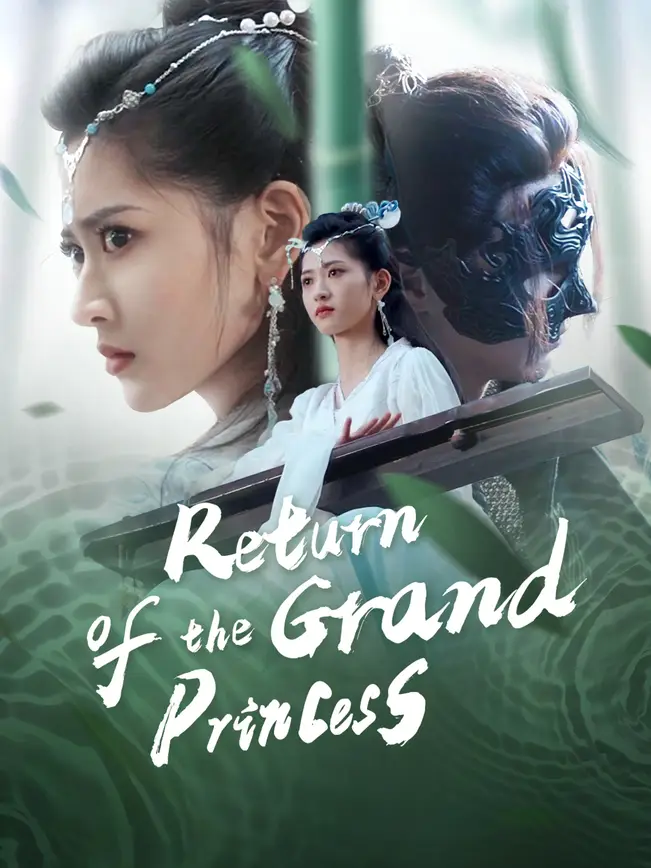
Return of the Grand Princess Storyline
Return of the Grand Princess More details
Genres:Karma Payback/Multiple Identities/Ancient Times
Language:English
Release date:2024-10-20 12:00:00
Runtime:148min
An Underdog Tale That Captivates the Soul
Return of the Grand Princess is an incredible journey of resilience and strength. The transformation of the princess from a vulnerable girl to a powerful leader is mesmerizing. Her character is so well-developed that you can't help but root for h
A Tale of Betrayal and Redemption with a Twist
This short drama is a rollercoaster of emotions! I loved how it delves into themes of betrayal and redemption. The first princess's journey is both heart-wrenching and inspiring. Her husband's betrayal was unexpected, but it added a layer o
Unexpected Twists and a Strong Female Lead
Return of the Grand Princess offers more than just a typical royal drama. The lead character's strength and intelligence shine through in every episode. The betrayal she faces serves as a catalyst for her transformation, and it's portrayed beau
A Riveting Comeback Story That Inspires
I was thoroughly impressed by the storytelling in Return of the Grand Princess. The journey of the first princess is filled with challenges, but her determination to overcome them is truly inspiring. The narrative is rich with unexpected developme
Return of the Grand Princess: When Blood Speaks Louder Than Oaths
There’s a particular kind of silence that settles after violence—not the quiet of emptiness, but the heavy, humming stillness of aftermath, where every breath feels like trespassing. That’s the air thickening in the courtyard of the Jade Serpent Temple as Su Ruyue kneels beside Elder Chen, her fingers pressed to his throat, searching for a pulse that’s already gone. But here’s the thing no synopsis will tell you: she *knows* he’s dead before she checks. She knows because his hand went limp in hers three seconds earlier. She knows because the blood pooling beneath his ear stopped moving. And yet she keeps touching him—not to confirm, but to *delay*. That’s the emotional core of Return of the Grand Princess: not the grand betrayals or political coups, but the micro-decisions we make when the world fractures around us. Do we scream? Do we run? Or do we stay, and hold the dying, even as our own soul begins to hemorrhage? Li Zeyu stands above them, sword in hand, but his stance tells a different story. His feet are planted shoulder-width apart—not aggressive, but grounded, as if bracing for an earthquake he can’t prevent. His gaze flickers between Su Ruyue’s bowed head and the blade in his grip, and for a split second at 00:17, his knuckles whiten. Not from tension, but from *relief*. He expected her to rise, to accuse, to draw her own dagger. Instead, she stays bent over the man who raised her, her hair spilling forward like a curtain hiding her face. That’s when the real tragedy hits: he wanted a fight. He needed one. Because guilt is easier to bear when it’s earned through action, not omission. But here, there’s no battle cry, no last words exchanged—just the soft rustle of silk and the distant chime of a wind bell, mocking the silence with its indifference. Let’s zoom in on Su Ruyue’s earrings—those delicate leaf-shaped pendants of carved aquamarine, dangling just below her jawline. In frame 00:03, they catch the light as she turns her head, and for a fleeting moment, they glint like tears held in suspension. Later, at 00:41, when she finally lifts her face, one earring is askew, the chain twisted, as if she’d gripped it unconsciously during her sobbing. These aren’t props. They’re emotional barometers. In classical symbolism, aquamarine represents clarity and healing—but here, it’s stained with shadow, refracting light unevenly, just like her fractured psyche. She’s not just grieving Elder Chen; she’s grieving the version of herself that believed loyalty could survive truth. And that’s what Return of the Grand Princess does so masterfully: it treats jewelry, fabric, and even the angle of a hairpin as narrative devices. Nothing is incidental. Not the way Li Zeyu’s outer robe drapes over his left arm like a shroud, not the frayed hem of Su Ruyue’s sleeve where she’s been wiping blood, not even the faint crack in the temple’s threshold stone beneath Elder Chen’s outstretched hand. Elder Chen’s death isn’t sudden. It’s *orchestrated* in slow motion. Watch his eyes at 00:29—still lucid, still *seeing*, even as his voice fades. He doesn’t beg. He doesn’t curse. He smiles. A small, tired upturn of the lips, as if remembering something sweet from decades past. And Su Ruyue, ever perceptive, leans closer, her ear near his mouth, catching the final syllables no one else hears. That intimacy is the show’s secret weapon. While other dramas shout their climaxes, Return of the Grand Princess whispers them—and the whisper cuts deeper. His last words, whatever they were, weren’t meant for the audience. They were for *her*. A private transmission across the void of impending loss. And when she pulls back at 00:34, her face is transformed: not just tear-streaked, but *unmoored*. Her pupils dilate, her breath hitches, and for the first time, she looks directly at Li Zeyu—not with hatred, but with dawning comprehension. She sees it now. The sword wasn’t meant for Elder Chen. It was meant for *herself*. Or perhaps, for the future he tried to protect her from. The cinematography here is surgical. Notice how the camera avoids close-ups of Li Zeyu’s face during the critical moments. Instead, it lingers on his hands—the calluses on his palm, the slight tremor in his wrist, the way his thumb strokes the blade’s edge as if soothing a restless spirit. That’s intentional. The show refuses to let us inside his head because his motivation isn’t meant to be understood—it’s meant to be *felt*. Like the ache in your chest when you realize you’ve become the very thing you swore to destroy. And when he finally turns away at 00:19, the shot widens, placing him small against the vast, indifferent architecture of the temple. He’s not walking toward freedom. He’s walking toward consequence. Every step echoes, not with triumph, but with the hollow resonance of inevitability. What elevates Return of the Grand Princess beyond typical period fare is its refusal to sanitize grief. Su Ruyue doesn’t compose herself. She doesn’t deliver a poetic monologue. She *shatters*. At 00:47, her mouth opens in a raw, guttural cry—no music swells, no cutaway to sky—just her, trembling, blood dripping from her lip onto Elder Chen’s robe, mingling with his own. That image—red on gold, life on legacy—is the show’s thesis statement. Power isn’t inherited; it’s *transferred*, often through trauma. And love? Love is the wound that never scabs over. It stays tender, exposed, ready to bleed anew at the slightest touch of memory. Let’s talk about the sword again—not as a weapon, but as a mirror. When Li Zeyu examines it at 00:14, his reflection is distorted along the curve of the blade: one eye clear, the other blurred, as if even his own identity is splitting down the middle. That’s the visual metaphor the series returns to again and again: no one here is whole. Not Su Ruyue, torn between filial duty and personal truth. Not Li Zeyu, caught between oath and instinct. Not even Elder Chen, who loved too wisely to survive. They’re all fragments, orbiting a collapsing center. And the temple? It’s not a sanctuary. It’s a tomb waiting to be sealed. The final frames—Su Ruyue staring into the distance, Li Zeyu descending the steps, Elder Chen’s body half-obscured by shadow—don’t resolve anything. They *deepen* the mystery. Because Return of the Grand Princess isn’t about answers. It’s about the weight of questions we carry long after the last line is spoken. Why did Li Zeyu draw the sword if he didn’t intend to use it? Was Elder Chen protecting someone else? And what did he whisper to Su Ruyue that made her stop crying and start *thinking*? Those unanswered threads are the show’s greatest asset. They don’t leave us satisfied. They leave us haunted. And in an age of bingeable, resolution-driven content, that’s revolutionary. This isn’t entertainment. It’s emotional archaeology. We dig through layers of silk and sorrow, hoping to find meaning—but sometimes, all we uncover is the truth that some wounds were never meant to heal. They were meant to remind us we lived.
Return of the Grand Princess: The Sword That Never Fell
In the dim glow of a moonlit courtyard, where ancient eaves cast long shadows over cracked stone steps, a tragedy unfolds—not with fanfare, but with silence broken only by ragged breaths and the soft clink of silk against steel. This is not just another historical drama trope; this is Return of the Grand Princess at its most visceral, where every gesture carries weight, every glance betrays history, and blood doesn’t stain the fabric—it rewrites it. Let’s talk about what we *actually* saw, because what’s happening here isn’t merely plot—it’s psychological archaeology. The central figure, Li Zeyu—yes, that name rings bells for fans who’ve followed his arc since Season One—is standing tall, robes billowing like a storm cloud held in check. His hair, long and unbound save for a single silver hairpin shaped like a crane in flight, suggests both refinement and rebellion. He looks upward, not in prayer, but in defiance—as if challenging the heavens themselves to intervene. His expression shifts subtly across frames: from solemn resolve to something far more dangerous—resignation laced with sorrow. That’s the first clue. He’s not preparing to strike. He’s preparing to *accept*. And when he finally draws the curved blade—its hilt wrapped in aged leather, its edge catching the faint blue light like a shard of frozen river—he doesn’t raise it toward his enemies. He holds it low, almost reverently, as if weighing its moral gravity in his palm. That moment, between 00:12 and 00:15, is where Return of the Grand Princess transcends costume drama and becomes mythmaking. The sword isn’t a weapon here; it’s a ledger. Every notch on its spine tells a story of choices made, oaths broken, and lives surrendered. Cut to Su Ruyue—her name whispered like incense smoke in temple halls—kneeling beside Elder Chen, whose face is streaked with tears and blood, his beard matted, his golden robe now dull with dust and despair. Her hands tremble as she cradles his head, fingers pressing gently against his jawline, as though trying to hold his soul in place. Her makeup is smudged—not from tears alone, but from the sheer physicality of grief. A single drop of blood trickles from her lower lip, staining the white collar of her inner garment. It’s not accidental. It’s symbolic. In classical aesthetics, red lips signify vitality; when that red bleeds into purity (the white), it signals a rupture in cosmic order. She’s not just mourning a man—she’s mourning the collapse of an era. Her eyes, wide and glassy, dart between Elder Chen’s fading gaze and Li Zeyu’s still form. There’s no accusation in them. Only recognition. She knows what he’s about to do. And she’s already forgiven him. Elder Chen himself—oh, how the camera lingers on him. Not as a victim, but as a vessel. His final words, though unheard in the clip, are written across his face: regret, pride, and a strange kind of peace. When he collapses forward, his body folding like parchment in fire, Su Ruyue catches him—not with strength, but with surrender. Her shoulders bow under his weight, and for a heartbeat, she disappears beneath the folds of his robe. That’s the genius of the framing: she doesn’t dominate the scene; she *absorbs* it. Her grief isn’t performative. It’s geological. You can see the tectonic shift in her posture—from upright protector to broken witness. And yet, even as she sobs, her fingers remain interlaced with his, nails painted pale jade, now smeared with crimson. That detail matters. In traditional court etiquette, jade signifies virtue; blood, transgression. She wears both. She *is* both. Now let’s talk about Li Zeyu’s turning point—the moment he lowers the sword and turns away. At 00:19, he pivots sharply, robes flaring like wings retracting mid-flight. His back is to the camera, but his posture speaks volumes: shoulders squared, chin lifted, one hand still gripping the hilt, the other hanging loose at his side. He doesn’t look back. Not once. That’s the quiet horror of Return of the Grand Princess: the real violence isn’t in the strike, but in the refusal to witness the aftermath. He walks away knowing Su Ruyue will scream, knowing Elder Chen will die in her arms, knowing the world will remember *him* as the one who drew the blade—even though he never used it. That ambiguity is deliberate. The script refuses to let us off the hook with clear villainy or heroism. Instead, it forces us to sit with complicity. Did he intend this? Or did he simply fail to stop it? The answer lies in the way his sleeve brushes the stone step as he descends—a hesitation, barely perceptible, but there. What makes this sequence unforgettable isn’t the blood or the tears—it’s the *sound design*, or rather, the absence of it. No swelling strings. No dramatic percussion. Just the whisper of wind through bamboo, the creak of old wood, and the wet sound of Su Ruyue’s breath hitching as she presses her forehead to Elder Chen’s temple. That intimacy is weaponized. We’re not watching a spectacle; we’re intruding on a sacred collapse. And when she finally lifts her head at 00:46, mouth open in a silent wail, blood dripping from her lip onto his chest, the camera pushes in so close we can count the individual threads in her embroidered sleeve. That’s when Return of the Grand Princess reveals its true ambition: to make costume drama feel like documentary realism. Every stitch, every wrinkle, every bead of sweat on Li Zeyu’s temple is rendered with forensic care—not to glorify, but to *accuse*. Let’s not forget the setting. The temple gate behind them—painted in faded turquoise and vermilion, its carvings worn smooth by centuries of rain—isn’t just backdrop. It’s a character. Its symmetry contrasts violently with the chaos in the foreground. The pillars stand straight while bodies fall crooked. The lanterns hang still while hearts race. This visual dissonance is the core aesthetic of Return of the Grand Princess: order versus entropy, tradition versus truth, duty versus desire. And in that tension, the characters don’t choose sides—they fracture. Li Zeyu becomes both executioner and mourner. Su Ruyue becomes both daughter and widow. Elder Chen becomes both mentor and sacrifice. None of them are reduced to archetypes. They’re layered, contradictory, *human*. The final shot—Li Zeyu standing alone at the bottom of the stairs, sword dragging lightly against the stone—lingers longer than necessary. Why? Because the show knows we’re waiting for the next move. But there is no next move. The story has already ended. What follows is epilogue. And that’s the brilliance of Return of the Grand Princess: it understands that the most devastating moments aren’t the ones where swords clash, but where they’re lowered. Where eyes meet and say everything without speaking. Where blood flows not from wounds, but from the heart’s slow unraveling. If you thought this was just another palace intrigue series, think again. This is grief dressed in silk, justice wrapped in silence, and power that chooses to walk away rather than claim victory. And that, dear viewers, is why we keep coming back—not for the crowns or the conspiracies, but for the unbearable weight of being alive in a world that demands you break before you bend.
Return of the Grand Princess: When Kneeling Speaks Louder Than Swords
There’s a moment—just after the third pluck of the guqin, when the resonance hasn’t yet faded—that the entire bamboo grove seems to hold its breath. Ling Yue’s fingers hover above the strings, not in hesitation, but in control. Below her, Prince Jian and Wei Feng kneel side by side, two men bound by duty but divided by temperament, both reduced to the same posture: heads bowed, backs straight, hands folded or resting on hilts, waiting. This is the core thesis of *Return of the Grand Princess*, delivered not in dialogue, but in posture, lighting, and the unbearable weight of silence: authority isn’t declared. It’s accepted—or refused—in the space between breaths. Let’s talk about the kneeling. Not the act itself—any court drama has that—but the *texture* of it. Jian’s knees hit the earth with a soft thud, his robes bunching awkwardly at the hips, his spine rigid as a drawn bowstring. He doesn’t sink; he resists gravity, as if his body remembers rebellion even as his mind submits. His crown, that intricate flame-shaped ornament, tilts slightly with the motion, catching the dying sun like a shard of broken glass. He doesn’t dare adjust it. To do so would be to break the spell. Meanwhile, Wei Feng kneels with the ease of a man accustomed to low ground—soldier’s discipline, yes, but also something older: respect earned, not demanded. His sword lies across his lap, not threatening, but present, like a vow kept in steel. His gaze, when he lifts it briefly, isn’t defiant. It’s analytical. He’s mapping the emotional topography of the scene: Ling Yue’s calm, Jian’s strain, the way the wind stirs her sleeve like a sigh. Ling Yue, for her part, doesn’t acknowledge their presence until the music ends. Not because she’s indifferent—but because she knows the power of delayed recognition. Every second she plays while they remain prostrate is a silent assertion: *You are here at my discretion. Your status means nothing in this grove.* Her costume reinforces this. The white outer robe is sheer enough to reveal the pale blue undergown beneath, suggesting layers—both literal and metaphorical. Nothing about her is blunt. Everything is implied. Even her hairpiece, with its dangling silver teardrops, moves only when she does, as if reluctant to betray her stillness. What’s fascinating is how the cinematography treats the three characters as equal visual weights—even though their roles are hierarchical. Wide shots frame them in a triangle: Ling Yue elevated, Jian and Wei Feng grounded, the bamboo forming vertical lines that both isolate and connect them. Close-ups alternate rapidly—not to build tension, but to expose vulnerability. Jian’s nostrils flare as he fights to keep his breathing even; Wei Feng’s thumb rubs unconsciously over the sword’s pommel, a nervous tic disguised as readiness; Ling Yue’s eyelids lower just a fraction when she senses Jian’s rising frustration, a flicker of pity or amusement—hard to tell, and that ambiguity is the point. *Return of the Grand Princess* thrives in these micro-moments. When Ling Yue finally lifts her head, her eyes meet Jian’s—not with accusation, but with weary understanding. She sees the conflict in him: the heir trained to command, now forced to yield. And in that glance, something shifts. Jian’s shoulders soften, just barely. He doesn’t speak, but his lips part, and for a heartbeat, we think he might utter the words that could change everything. Then he closes his mouth. Swallows. Nods—once, sharp, like a soldier acknowledging orders. That nod is louder than any declaration. It’s surrender, yes, but also the first step toward alliance. Because Ling Yue didn’t break him. She gave him space to choose. Wei Feng watches this exchange like a man decoding a treaty written in smoke. His expression shifts from detached observation to something warmer—recognition, perhaps, of a kindred spirit who understands that true strength lies not in dominance, but in discernment. He glances at Jian, then back at Ling Yue, and for the first time, a ghost of a smile touches his lips. Not mockery. Appreciation. He sees what Jian is only beginning to grasp: Ling Yue isn’t trying to humiliate them. She’s testing whether they’re worthy of her trust. And in that test, swords are irrelevant. What matters is whether they can sit in silence without breaking. The setting itself is a character. The bamboo forest isn’t just backdrop—it’s complicit. Its tall, narrow trunks create natural framing, isolating the trio from the world beyond. The golden hour light doesn’t illuminate; it *judges*, casting long shadows that stretch like fingers across the ground, pointing toward Ling Yue as if the forest itself bows to her. Dust motes hang in the air, suspended mid-fall, mirroring the suspended judgment of the scene. Even the guqin, dark and ancient, seems to pulse with latent energy, its wood grain glowing faintly in the low light, as if remembering centuries of similar reckonings. This sequence in *Return of the Grand Princess* is masterclass-level visual storytelling. No exposition. No flashbacks. Just three people, one instrument, and the unbearable weight of history pressing down from above. And yet—there’s hope in the stillness. Because when Ling Yue finally speaks (off-screen, implied by her parted lips and the men’s synchronized intake of breath), it won’t be a command. It’ll be an invitation. A question. A chance. That’s the genius of the show: it understands that in a world built on deception, the most radical act is honesty—and sometimes, the most honest thing you can do is play a single note and wait to see who listens. We’ve seen empresses rise with armies, queens seize thrones with poison, princesses escape through secret passages. But Ling Yue? She reclaims her voice with a string and a sunset. And in doing so, she rewrites the rules—not with fire, but with resonance. *Return of the Grand Princess* doesn’t just give us a heroine. It gives us a new grammar for power. One where kneeling isn’t defeat—it’s the first step toward rebuilding.
Return of the Grand Princess: The Bamboo Grove’s Silent Power Play
In the golden hush of a bamboo forest at dusk, where light fractures into shimmering bokeh through slender stalks like celestial lanterns, a scene unfolds that feels less like performance and more like ritual. The central figure—Ling Yue, draped in layered silks of ivory and pale cerulean, her hair coiled high with silver filigree and a delicate blue flower pinned just so—is not merely playing the guqin; she is conducting time itself. Her fingers glide across the strings with unhurried precision, each pluck resonating not just in sound but in posture, in breath, in the very air thick with unspoken consequence. This is not background music. This is sovereignty rendered in melody. What makes *Return of the Grand Princess* so arresting in this sequence is how it weaponizes stillness. Ling Yue sits atop a weathered boulder, elevated not by throne but by presence—a quiet defiance against the rigid hierarchies that usually define imperial drama. Her gown flows like water over stone, its hem pooling around her like a tide held in suspension. The belt at her waist, embroidered with wave motifs and fastened with a silver clasp shaped like a phoenix’s eye, whispers of lineage and restraint. She does not look up until the very end—not out of arrogance, but because her focus is absolute, almost sacred. The instrument rests on her lap like an extension of her spine, and when she finally lifts her gaze, it lands not on the kneeling men before her, but *through* them, as if measuring the weight of their submission against the silence she commands. Enter Prince Jian, clad in olive brocade with gold-threaded clouds swirling across his sleeves, his crown—a stylized flame forged in gilded metal—perched like a challenge atop his neatly bound hair. His entrance is not grand; it is hesitant. He steps forward, then halts, eyes flickering between Ling Yue’s hands and her face, caught between protocol and instinct. When he kneels, it is not with the practiced ease of courtiers, but with the stiffness of a man who has never truly bowed to anyone—not even his own father. His knuckles whiten where they press into his thighs. His mouth opens once, then closes. No words come. Only the tremor in his jaw speaks: he knows what this moment means. In *Return of the Grand Princess*, power isn’t seized in battle—it’s surrendered in silence, and he is learning that lesson in real time. Beside him, Wei Feng—the swordsman with the ornate scabbard resting across his knees, his forearms wrapped in leather bracers carved with dragon scales—offers a counterpoint. Where Jian is tension incarnate, Wei Feng is fluid uncertainty. He watches Ling Yue not with reverence, but with fascination, as if trying to decode a cipher written in sound. His eyes dart sideways, assessing Jian’s discomfort, then back to Ling Yue’s face, searching for cracks in her composure. He shifts slightly, adjusting his grip on the sword hilt—not preparing to draw, but grounding himself. His expression shifts from curiosity to something quieter: recognition. He sees not just a noblewoman, but a strategist. A survivor. Someone who understands that in a world where every word can be twisted into treason, the most dangerous weapon is the one you don’t wield. The camera lingers on details that speak volumes: the way Ling Yue’s sleeve catches the last slant of sun, turning translucent; the faint dust motes dancing above the guqin’s lacquered surface; the way Jian’s robe drags slightly in the dirt as he lowers himself, a small indignity he refuses to correct. These are not accidents. They are annotations. The director doesn’t tell us Ling Yue is powerful—we feel it in the way the wind holds its breath when her fingers lift. We see it in how Jian’s crown catches the light like a warning beacon, yet he remains bowed, unwilling—or unable—to rise. What’s especially brilliant about this sequence in *Return of the Grand Princess* is how it subverts the expected dynamic. Usually, the musician is the ornament, the distraction, the soft counterpoint to martial or political action. Here, Ling Yue *is* the action. Her music isn’t accompaniment—it’s interrogation. Each note is a question. Each pause, a verdict. When she finally stops playing and looks directly at Jian, her lips part—not to speak, but to exhale, as if releasing a spell. And in that instant, Jian flinches. Not from fear, but from realization: he has been listening to her truth all along, and he cannot unhear it. Wei Feng, ever the observer, catches that micro-expression. His brow furrows, not in judgment, but in calculation. He glances at Jian’s clenched fists, then back at Ling Yue’s serene face, and something clicks. He understands now why the palace guards were dismissed. Why the bamboo grove was chosen. Why no witnesses were allowed. This isn’t a meeting. It’s a reckoning disguised as a recital. And Ling Yue? She isn’t pleading for mercy. She’s offering him a choice—one wrapped in silk and silence, far more lethal than any blade. The final shot lingers on Ling Yue’s hands, resting lightly on the guqin’s edge, fingers relaxed but ready. Behind her, the bamboo sways, casting long shadows that stretch toward the kneeling men like fingers of fate. The sun dips lower. The light turns amber, then rust. And in that fading glow, we understand: *Return of the Grand Princess* isn’t about reclaiming a title. It’s about redefining what power sounds like—and who gets to decide when the music stops.
Return of the Grand Princess: When Grief Wears Silk and Steel
Let’s talk about the most unsettling thing in this sequence from *Return of the Grand Princess*: the blood. Not the kind that pools on stone, thick and final. No—this blood is *on her lips*. Jingyu, the titular Grand Princess, kneels in the rain, her turquoise robes shimmering like shallow water, and there it is: a smear of crimson at the corner of her mouth, glistening under the low lantern glow. It’s not hers. We know that. But she hasn’t wiped it off. She hasn’t even looked at it. She’s too busy staring into the dying eyes of Master Lin, the man who raised her, who taught her to read the stars, who—according to fragmented whispers in earlier episodes—may have been the one who ordered her exile. Or protected her from it. The ambiguity is the point. In *Return of the Grand Princess*, truth isn’t revealed in monologues; it’s leaked through stains, through the way a hand trembles when it touches a familiar sleeve, through the split-second hesitation before a tear falls. Master Lin’s collapse isn’t theatrical. It’s visceral. His body folds like parchment, his knees hitting the wet flagstones with a sound that echoes in the silence after the battle. His robes—rich ochre silk embroidered with golden clouds—are torn at the hem, muddied, soaked. Yet his hands, when he reaches for Jingyu, are steady. Not with strength, but with intention. He grips her wrist, not to restrain, but to *confirm*. His voice, when it comes, is a rasp, barely audible over the dripping eaves: “You came back… even after what I did.” Jingyu doesn’t answer. She doesn’t need to. Her silence is louder than any accusation. Her fingers, delicate as porcelain, trace the edge of his collar, where a faint scar peeks through the fabric—a scar she gave him, years ago, in a fit of childish rage. She remembers. He remembers. And now, in this broken moment, memory becomes the battlefield. Meanwhile, Wei Chen stands apart—not because he doesn’t care, but because he cares *too much*. His posture is impeccable, his robes untouched by rain or dust, his hair perfectly arranged beneath the cloud-pin. But watch his eyes. They don’t rest on Master Lin. They track Jingyu’s every movement, every blink, every shift of weight. He knows what she’s thinking. He’s lived inside her silences for a decade. When she finally turns her head—just slightly—toward Kael, Wei Chen’s breath hitches. Not fear. Recognition. Because Kael isn’t just a mercenary. He’s the man who carried Jingyu out of the burning palace the night the emperor ordered her erased. He’s the one who whispered, *“Run. Don’t look back,”* as flames licked the jade pillars. And now, here he is, sword in hand, watching her like a hawk watches prey—not to strike, but to ensure she doesn’t flee again. The genius of this scene lies in its refusal to clarify. Did Master Lin betray her? Did he save her? Did he choose the empire over his daughter? The script gives us fragments: a locket hidden in Jingyu’s sleeve (engraved with the imperial crest and a single character—*li*, meaning ‘reason’ or ‘duty’), the way Kael’s knuckles whiten when Master Lin mentions the “Northern Accord,” the way Wei Chen’s left hand instinctively moves to the small pouch at his waist—where, we later learn, he keeps a vial of poison, meant for himself if Jingyu ever returned and demanded vengeance. These aren’t clues. They’re landmines. And the audience walks through them blindfolded, guided only by the actors’ physical storytelling. Jingyu’s transformation in these few minutes is staggering. She begins as a mourner—head bowed, shoulders slumped, voice choked. By the end, she’s standing, spine straight, eyes alight with something colder than anger: resolve. The blood on her lips? She finally wipes it away—not with her sleeve, but with the back of her hand, slow and deliberate, as if cleansing herself of the past. And then she does the unthinkable: she smiles. Not a happy smile. A *knowing* one. The kind that says, *I see you. All of you. And I’m still here.* That smile terrifies Kael. It makes Wei Chen lower his gaze. It causes Master Lin to sob, not for his own fate, but for the girl he thought he’d lost forever—only to find her sharper, fiercer, and infinitely more dangerous. The fireworks that erupt overhead aren’t celebratory. They’re tactical. A diversion. A signal to allies hidden in the shadows. Jingyu didn’t launch them out of joy. She launched them because she needed time. Time to process. Time to decide. Time to choose: mercy or retribution? In *Return of the Grand Princess*, the most powerful characters aren’t those who wield swords—they’re those who wield *pause*. Who understand that the space between breaths is where empires rise and fall. When Wei Chen finally steps forward and offers her his blade, it’s not submission. It’s trust. He’s saying: *I give you my life. Use it as you will.* And Jingyu? She doesn’t take it. Not yet. She looks past him, past Kael, past the temple gates, into the darkness beyond. Because she knows the real enemy isn’t here. It’s waiting in the capital. And this reunion—this raw, bloody, beautiful mess of love and guilt—is merely the prelude. What lingers after the screen fades isn’t the violence, or the tears, or even the fireworks. It’s the image of Jingyu’s hand, still resting on Master Lin’s chest, her thumb brushing over his heartbeat—slow, uneven, fading. She doesn’t cry. She *listens*. To the rhythm of a man who loved her enough to destroy her, and loved her enough to let her go. In *Return of the Grand Princess*, grief isn’t passive. It’s active. It’s strategic. It’s worn like silk and wielded like steel. And Jingyu? She’s not just returning. She’s *reclaiming*. Not a throne. Not a title. Herself. Every drop of blood on her lips is a vow. Every tear she refuses to shed is a promise. And when the next episode opens with her walking alone down a moonlit road, sword at her side and Master Lin’s locket warm against her skin, you’ll understand: the Grand Princess didn’t come back to forgive. She came back to finish what was started ten years ago—in fire, in silence, and in blood.
Return of the Grand Princess: The Blood-Stained Reunion That Shattered Silence
In the dim, rain-slicked courtyard of an ancient temple—its eaves painted in faded indigo and gold—the air hangs thick with grief, betrayal, and something far more dangerous: recognition. This isn’t just a scene from *Return of the Grand Princess*; it’s a psychological detonation disguised as a reunion. At its center lies Jingyu, the woman in turquoise silk, her hair pinned with pale blue blossoms that seem to weep dew in the cold light. Her lips are smeared with blood—not hers, but someone else’s—and yet she wears it like a badge of honor, a silent confession. She kneels beside the fallen elder, Master Lin, whose robes are stained with mud and old wounds, his beard streaked with gray and grime. His face, once stern and authoritative, now contorts in raw, unguarded agony. He clutches at Jingyu’s sleeve, not for support, but as if trying to anchor himself to reality—or perhaps to prevent her from vanishing again. What makes this sequence so devastating is how the camera refuses to look away. It lingers on Jingyu’s trembling fingers as they press against Master Lin’s shoulder, not in comfort, but in desperate verification: *Is he still breathing? Is he still mine?* Her eyes—wide, wet, impossibly clear—do not blink when he gasps her name. She doesn’t flinch when he coughs blood onto her sleeve. Instead, she leans closer, her voice barely a whisper, yet carrying the weight of years spent in exile, in silence, in waiting. The script never tells us what happened between them before this moment, but the subtext screams louder than any dialogue: she was taken. Or she left. Or she was erased. And now, in the wreckage of whatever war or conspiracy brought them here, she has returned—not as a princess, not as a daughter, but as a ghost stepping back into the world of the living. Enter Wei Chen, the man in layered pale-blue robes, his hair bound with a simple cloud-shaped hairpin—a detail that feels almost mocking in its elegance amid the chaos. He stands above them like a judge, his posture rigid, his expression unreadable. But watch his hands. When he first appears, they hang loose at his sides. Then, as Master Lin begins to speak—his voice cracking like dry bamboo—he shifts his weight. A flicker of pain crosses his face, not for the elder, but for Jingyu. He knows. He *always* knew. And that knowledge is his burden. In *Return of the Grand Princess*, Wei Chen isn’t just the loyal retainer; he’s the keeper of secrets no one asked him to hold. His silence isn’t indifference—it’s penance. Every time he looks down at Jingyu, you see the memory of her childhood laughter, the day she vanished from the palace gates, the night he swore he’d find her… only to realize too late that finding her might mean losing her all over again. The tension escalates when the third figure enters: Kael, the warrior in fur-trimmed brown, his curved blade gleaming under the lantern light. He doesn’t rush. He doesn’t shout. He walks with the deliberate pace of a man who has seen too many deaths to be surprised by one more. His eyes lock onto Wei Chen—not with hostility, but with assessment. He sees the sword at Wei Chen’s hip, the way his fingers twitch toward it, the way his breath hitches when Jingyu finally lifts her head and meets Kael’s gaze. That moment—just three frames—is where the entire narrative pivots. Jingyu doesn’t smile. She doesn’t frown. She simply *sees* him. And in that seeing, something shifts. Kael’s grip tightens on his scimitar. Not to strike. To *remember*. Because he was there, wasn’t he? When the fire took the eastern wing. When the scrolls were burned. When the Grand Princess was declared dead by imperial decree. He didn’t kill her. But he didn’t stop it either. What follows is not a fight—it’s a reckoning. Master Lin, weak but lucid, raises a trembling hand toward Kael, his voice hoarse but insistent: “You swore… on the moonstone…” Jingyu’s breath catches. Wei Chen takes a half-step forward, then stops himself. The camera circles them slowly, capturing the micro-expressions: Jingyu’s pupils dilating, Wei Chen’s jaw tightening, Kael’s nostrils flaring as if smelling old blood in the air. This is where *Return of the Grand Princess* transcends melodrama. It doesn’t rely on grand speeches or heroic declarations. It uses silence, proximity, and the unbearable weight of unsaid things. The fact that Jingyu still wears the same floral hairpins she wore the day she disappeared—that detail alone speaks volumes. Someone kept them. Someone preserved her memory. And now, in this broken courtyard, the past is no longer buried. It’s kneeling in front of her, bleeding, begging for forgiveness—or demanding justice. Then, the fireworks. Not celebration. Not triumph. A signal. A distraction. A final, defiant spark against the encroaching dark. Jingyu rises—not with grace, but with effort, her legs shaking, her robe dragging through the mud. She reaches into her sleeve, not for a weapon, but for a small, lacquered tube. With a twist, she ignites it. The flare shoots upward, golden and furious, illuminating the temple roof, the faces of the three men, and for one suspended second, the truth in Jingyu’s eyes: she is not here to mourn. She is here to reclaim. The explosion of light doesn’t end the scene—it *begins* it. Because as the sparks fade, Wei Chen finally draws his sword. Not at Kael. Not at Master Lin. He holds it out, hilt first, toward Jingyu. A surrender. An offering. A plea: *Take it. Use it. I am yours.* That single gesture redefines everything. In *Return of the Grand Princess*, power isn’t held in fists or thrones—it’s transferred in glances, in gestures, in the quiet handing over of a blade. Jingyu doesn’t take it immediately. She looks at it, then at Wei Chen, then at Master Lin, who nods weakly, tears cutting tracks through the dirt on his cheeks. Only then does she reach out. Her fingers close around the hilt. And in that touch, the real story begins—not of a princess returning, but of a woman stepping into her own legacy, armed not just with steel, but with the unbearable weight of love, loss, and the courage to say: *I remember. And I am no longer afraid.*

Ancient Times



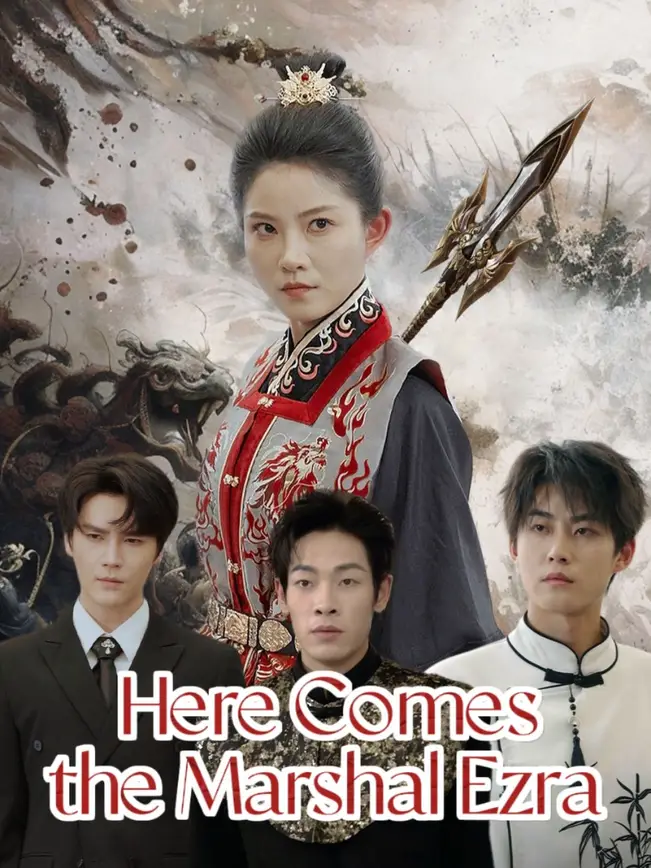
Multiple Identities


Karma Payback



 Download