



(Dubbed)A Baby, a Billionaire, And Me


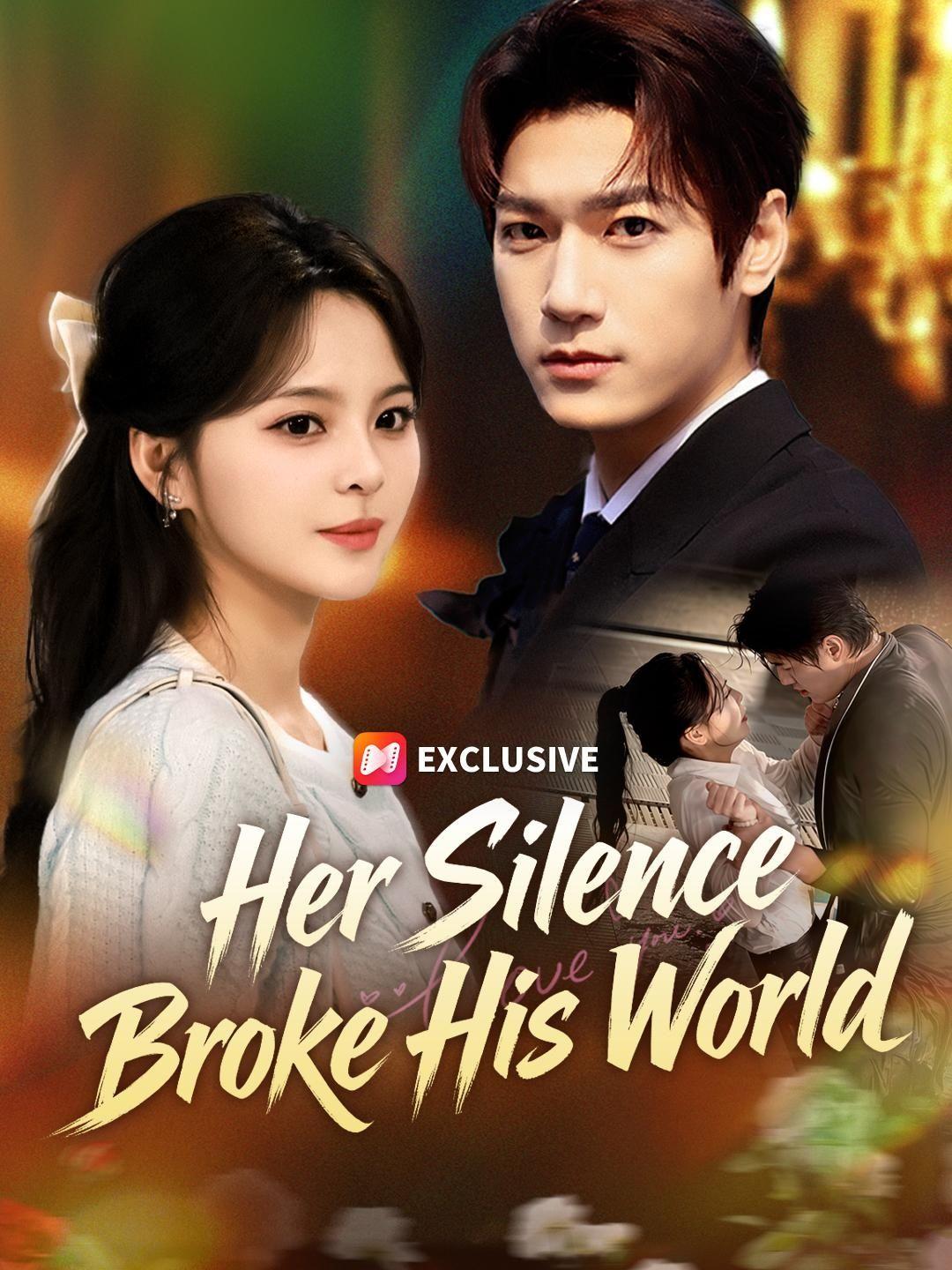
(Dubbed) A Baby, a Billionaire, And Me: When the Bedside Becomes a Confessional
The bed in (Dubbed) A Baby, a Billionaire, And Me isn’t furniture. It’s a stage. A confessional booth draped in embroidered linen and carved wood, where truths are whispered between the rustle of pajamas and the turning of book pages. In this intimate theater, Lin Xiao doesn’t just try on sweaters—she tries on selves. Each garment is a persona: the anxious daughter, the dutiful wife, the woman who fears being deemed ‘too thin’ or ‘too pale’ by the woman who saved her life. The irony is thick enough to choke on: the Reverend Mother, whose name evokes reverence and spiritual authority, has become the unseen director of Lin Xiao’s physical presentation. And yet, the most profound revelation doesn’t come from Lin Xiao’s lips—it comes from Shawn, the five-year-old boy perched on the edge of the mattress, flipping through a children’s book with the gravity of a philosopher. When he asks, ‘Will it make me look fat?’—a question that stops Shen Wei mid-thought—it’s not childish insecurity. It’s the echo of a lifetime of conditional acceptance. He’s learned that worth is measured in silhouette, that love is contingent on fitting into someone else’s idea of ‘healthy.’ Shen Wei’s response is the quiet earthquake of the scene. He doesn’t laugh. He doesn’t deflect. He meets Shawn’s gaze, his voice low and steady: ‘It’s a little bulky, but it makes you look healthy. She will definitely like it.’ Notice the pronoun. Not ‘*I* will like it.’ Not ‘*you* should wear it.’ But *She*. The Reverend Mother’s approval is the North Star of their household. And Shen Wei, for all his polished exterior and billionaire status, doesn’t challenge that hierarchy. Instead, he navigates it with surgical precision—validating Lin Xiao’s anxiety while subtly reinforcing the system that created it. That’s the tragedy of (Dubbed) A Baby, a Billionaire, And Me: the characters aren’t oppressed by external forces alone; they’ve internalized the rules so deeply that they police themselves. Lin Xiao’s rejection of the beige shawl—‘No.’—isn’t defiance. It’s resignation. She already knows the answer before she asks the question. The television in the background, glowing with colorful thumbnails of historical dramas and family sagas, is more than set dressing. It’s a mirror. The shows playing are about loyalty, sacrifice, and the weight of legacy—themes that bleed into Lin Xiao’s reality. She’s living her own period drama, complete with ornate headboards and unspoken contracts. When she finally settles on the white sweater, her smile is tentative, hopeful—a flicker of light in a room lit by inherited shadows. And Shen Wei’s affirmation—‘She will definitely like it’—lands like a benediction. But the real turning point comes later, when the clothes are set aside and the conversation shifts from fabric to feeling. Lin Xiao’s confession—‘I used to care a lot about family, but after having Shawn, I feel content’—isn’t a dismissal of the past. It’s a reclamation. Motherhood has given her a new center of gravity. Shawn isn’t just a child; he’s her anchor, the reason she can finally breathe outside the Reverend Mother’s orbit. Yet the tension doesn’t dissolve. It transforms. When Shen Wei asks, ‘You’ve never thought about your parents?’ the question hangs like smoke. Lin Xiao’s silence speaks volumes. She doesn’t have answers—only fragments of memory, gratitude, and grief. Her identity is built on a foundation of rescue, not origin. And that’s where (Dubbed) A Baby, a Billionaire, And Me achieves its deepest resonance: it doesn’t offer easy solutions. It doesn’t vilify the Reverend Mother or glorify Lin Xiao’s rebellion. It simply holds the contradiction—love and obligation, gratitude and resentment, safety and suffocation—in the same frame. Shen Wei’s final declaration—‘She’s almost like my half-mother-in-law. So, I’m definitely going’—isn’t sarcasm. It’s solidarity. He’s acknowledging the absurdity of the title while affirming his commitment to the relationship. He’s choosing *her*, not the role she plays. The kiss that follows isn’t passionate—it’s tender, almost reverent. Their noses brush, their eyes stay open, as if checking that the other is still there, still real. Behind them, Shawn watches, not with discomfort, but with the quiet awe of a child witnessing love that doesn’t demand performance. In that moment, the bed ceases to be a stage. It becomes a sanctuary. The scarves, the jeans, the pink cardigan—they’re all forgotten. What remains is the unspoken pact: *I see you. Not the daughter, not the wife, not the woman who worries about looking pale. I see Lin Xiao.* And in a world where identity is so often borrowed, that recognition is the rarest, most valuable garment of all. (Dubbed) A Baby, a Billionaire, And Me doesn’t end with a resolution. It ends with a choice—to show up, imperfectly, authentically, together. Because sometimes, the bravest thing you can do is sit beside the people you love, hold their hand, and say, ‘I’ll go with you tomorrow.’ Even if you’re late. Even if the sweater is a little bulky. Even if the world is watching.
(Dubbed) A Baby, a Billionaire, And Me: The Scarf That Changed Everything
In the quiet opulence of a bedroom draped in mahogany and tufted leather, where light filters through sheer curtains like whispered confessions, (Dubbed) A Baby, a Billionaire, And Me unfolds not with grand explosions or corporate takeovers—but with a scarf. Yes, a cream-colored knit scarf with black braided trim, held delicately between the fingers of Lin Xiao, who stands before her husband, Shen Wei, and their son, Shawn, as if presenting evidence in a trial of the heart. The scene is deceptively domestic: pajamas, a TV screen flickering with Chinese drama thumbnails, laundry strewn across the bed like emotional debris. Yet beneath this veneer of routine lies a seismic shift—Lin Xiao isn’t just choosing an outfit for tomorrow’s meeting with her ‘Reverend Mother’; she’s negotiating identity, loyalty, and the fragile architecture of belonging. Shawn, barefoot and cross-legged on the blue quilt, flips pages of a picture book with the solemn focus of a scholar decoding ancient runes. His presence is both grounding and destabilizing—he is the silent witness to every micro-expression, every hesitation. When he asks, ‘Will it make me look fat?’—a question that lands like a pebble in still water—it’s not vanity he’s voicing. It’s vulnerability. He’s internalized the language of self-doubt from the adults around him, and in that moment, Shen Wei doesn’t correct him with logic. He leans in, his voice soft but deliberate: ‘It’s a little bulky, but it makes you look healthy. She will definitely like it.’ That line—‘She will definitely like it’—is the pivot. It’s not about aesthetics. It’s about approval. About survival in a world where love is conditional on performance. Shen Wei, dressed in navy silk pajamas that whisper wealth without shouting it, knows exactly what he’s doing. He’s not just placating his son; he’s reinforcing Lin Xiao’s narrative, stitching together a fragile consensus so she can step into the role she’s been rehearsing since childhood: the grateful daughter-in-law, the dutiful wife, the woman who must be *seen* as worthy. Lin Xiao’s wardrobe audition is a masterclass in performative anxiety. She holds up jeans—‘This one makes me look too thin’—and immediately follows with the fear: ‘She’ll be worried.’ Not ‘I’ll feel insecure.’ Not ‘I don’t like it.’ But *She’ll be worried*. The Reverend Mother’s imagined gaze dictates her silhouette. Then comes the pink cardigan: ‘This one makes me look pale.’ Again, the metric isn’t confidence or comfort—it’s how *she* perceives Lin Xiao. The white sweater? ‘What about this one?’ she asks, almost pleading. And when Shen Wei finally affirms it, her relief is palpable—not because she loves the sweater, but because she’s been granted permission to exist in it. Her smile at 00:30 isn’t joy; it’s surrender. A quiet capitulation to the script she’s been handed since she was found by the roadside as a child, as she later confesses: ‘If it wasn’t for her finding me… I don’t know if I’d be alive today.’ That line hangs in the air, heavy with unspoken debt. The Reverend Mother isn’t just a figure of authority—she’s the architect of Lin Xiao’s second life. To disappoint her is to risk unraveling the very fabric of her identity. What makes (Dubbed) A Baby, a Billionaire, And Me so devastatingly human is how it refuses melodrama. There are no villains here—only people trapped in inherited roles. Shen Wei, often cast as the stoic patriarch in such narratives, reveals surprising emotional literacy. When Lin Xiao says, ‘I used to care a lot about family, but after having Shawn, I feel content,’ he doesn’t dismiss her. He listens. He sees the shift—the way motherhood has recalibrated her compass. And yet, he also recognizes the unresolved wound: ‘But she means as much to me as my real mother.’ His response—‘She’s almost like my half-mother-in-law’—isn’t flippant. It’s a linguistic tightrope walk, acknowledging the complexity without erasing the truth. He’s not denying the bond; he’s naming its ambiguity. That’s the genius of the show: it understands that love isn’t always pure, clean, or linear. Sometimes it’s knotted, frayed at the edges, held together by shared trauma and mutual need. The final exchange—Shen Wei admitting he has a meeting, might be late, and Lin Xiao’s delighted ‘Really?’ followed by his tender ‘So, I’m definitely going’—is where the emotional alchemy happens. He doesn’t say ‘I’ll reschedule.’ He doesn’t promise perfection. He says he’ll *go*, even if imperfectly. That’s the real currency of intimacy: showing up, not just physically, but emotionally present. And when he pulls her close, their foreheads touching, the camera lingers—not on the kiss, but on the breath between them. Shawn watches, not with jealousy, but with the quiet understanding of a child who has learned to read the silences between adults. His expression isn’t confusion; it’s recognition. He knows this moment is sacred, not because it’s romantic, but because it’s *real*. In a world where Lin Xiao must curate her appearance for others, Shen Wei offers her a space where she can simply *be*. That’s the true revolution of (Dubbed) A Baby, a Billionaire, And Me: it suggests that the most radical act of love isn’t grand gestures—it’s choosing, again and again, to see the person behind the performance. The scarf isn’t just clothing. It’s armor. It’s offering. It’s the thread connecting past, present, and the fragile hope of a future where Lin Xiao doesn’t have to ask, ‘Should I wear this?’—because someone finally tells her, ‘Wear whatever you want. I’ll be right here.’